
Choosing the right Swing Drive Manufacturer is a strategic decision that directly affects machine stability, rotational accuracy, lifecycle cost, and aftermarket reliability. For OEMs producing excavators, drilling rigs, cranes, and tracked machinery, swing drives are not just components—they are core motion systems.
As a professional Swing Drive Manufacturer, Kemer specializes in OEM swing drive solutions designed for track undercarriages, hydraulic systems, and heavy-duty mobile equipment. With vertically integrated manufacturing, torque-focused design, and application-driven engineering, Kemer delivers swing drives that perform consistently under extreme loads and long-duty cycles.
This article explains how swing drives work, what truly differentiates a professional swing drive manufacturer, and how OEM buyers can evaluate suppliers beyond basic specifications.
A swing drive is a rotational transmission system that converts hydraulic power into controlled slewing motion. It is widely used in:
* Excavators
* Crane superstructures
* Drilling and piling rigs
* Aerial work platforms
* Forestry and mining equipment
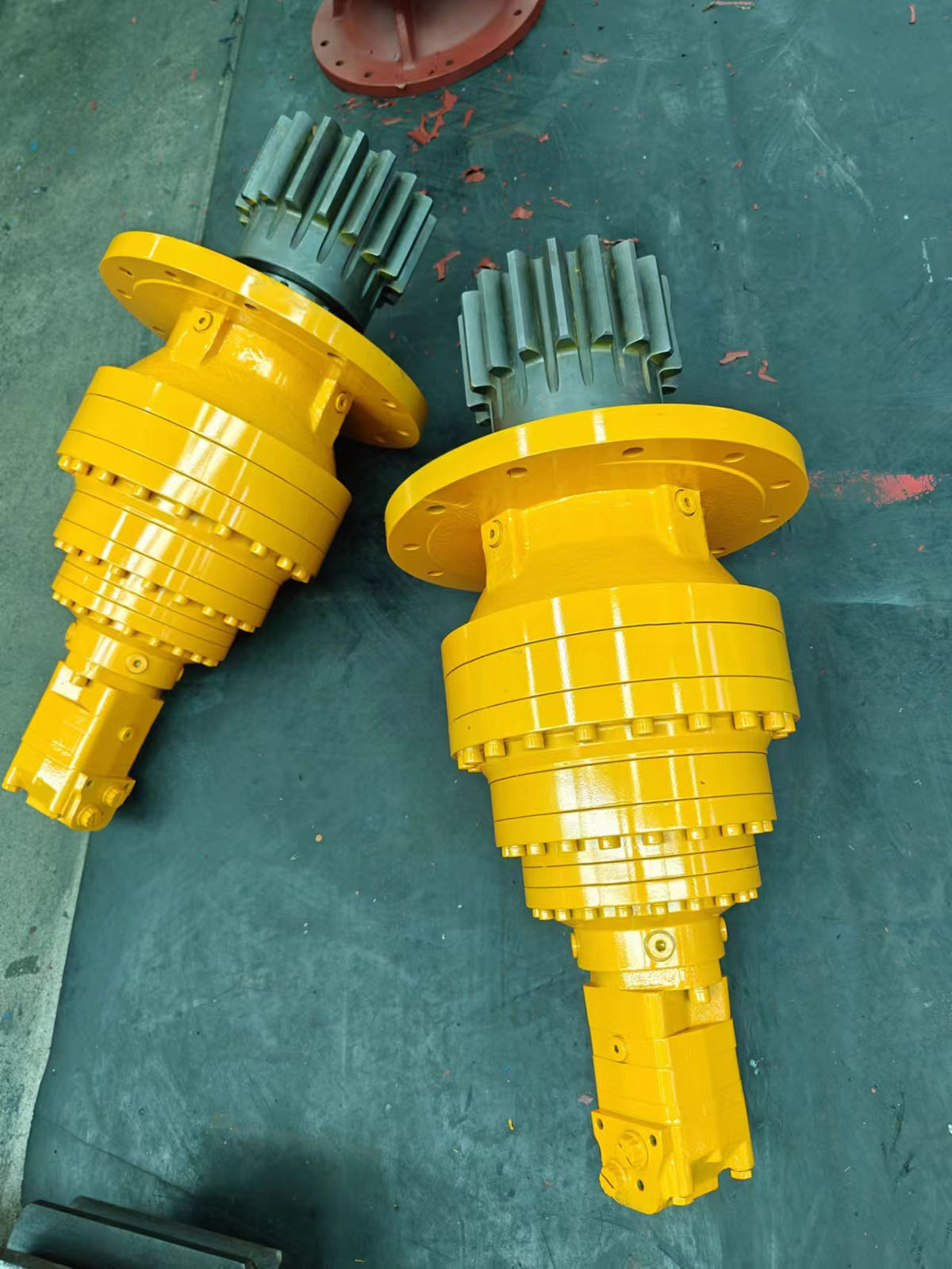
A swing drive system typically integrates:
* Hydraulic motor
* Planetary gearbox
* Output pinion or flange
* Bearing interface (slewing bearing compatible)
Its primary responsibilities include:
* Smooth and precise rotation
* High torque output at low speed
* Shock load absorption
* Long-term durability under axial and radial loads
A reliable Swing Drive Manufacturer must engineer all these elements as a single system, not as isolated parts.

Many OEM failures stem from mismatched swing drive selection rather than improper machine design.
A qualified Swing Drive Manufacturer provides more than products—it provides application engineering support.
* Jerky or unstable slewing motion
* Premature gear wear
* Oil leakage under high pressure
* Overheating during continuous operation
* Excessive backlash affecting control precision
These issues often result from inadequate torque calculation, incorrect gear ratios, or insufficient material strength.
As an OEM-focused Swing Drive Manufacturer, Kemer develops swing drives from an application-first perspective, ensuring compatibility with real-world operating conditions.
* Torque-centric design based on load spectrum analysis
* Planetary gear optimization for high efficiency and low noise
* Material selection for gears, shafts, and housings under cyclic stress
* Seal system design for dusty, wet, and high-pressure environments
Every swing drive is engineered to balance output torque, speed stability, and service life.
Kemer swing drives utilize multi-stage planetary gearboxes that offer:
* High torque density
* Uniform load distribution
* Reduced gear stress
* Compact installation dimensions
This structure allows OEMs to design lighter and more efficient upper structures.
Unlike generic assemblies, Kemer integrates hydraulic motors that are:
* Matched precisely to gearbox torque curves
* Optimized for low-speed high-torque output
* Compatible with multiple hydraulic systems
This integration reduces energy loss and improves machine responsiveness.

A true Swing Drive Manufacturer must support customization at both design and production levels.
* Output torque range
* Gear ratios
* Mounting flange dimensions
* Output pinion or spline configurations
* Hydraulic motor displacement
* Seal materials and temperature ratings
Kemer supports low-volume prototyping and high-volume OEM production, ensuring smooth transition from development to mass manufacturing.
Consistency is critical for OEM customers managing global supply chains.
As a professional Swing Drive Manufacturer, Kemer applies strict quality control across all stages.
* CNC machining for gears and housings
* Heat treatment control for gear hardness and toughness
* Gear meshing inspection
* Pressure and leakage testing
* Load simulation testing before shipment
These measures ensure batch-to-batch consistency, a key requirement for international OEM brands.
Swing drives are designed to handle:
* Frequent start-stop cycles
* High axial loads
* Continuous slewing operations
Kemer swing drives offer:
* Stable torque output under fluctuating loads
* Shock resistance during drilling impact
* Long service intervals
When integrated with Kemer track undercarriages, swing drives deliver system-level compatibility, reducing installation risk for OEMs.
OEM buyers should assess suppliers using engineering and lifecycle criteria, not just unit cost.
* Can the manufacturer provide torque calculation support?
* Is customization available without excessive MOQ?
* Are materials and heat treatment processes documented?
* Is after-sales technical support available?
* Does the manufacturer understand your machine application?
Kemer positions itself not just as a supplier, but as a long-term OEM partner.
Leading Swing Drive Manufacturers are investing in:
* Higher torque density designs
* Improved sealing for extreme environments
* Energy-efficient hydraulic integration
* Modular swing drive platforms
OEMs partnering early with engineering-driven manufacturers gain a competitive advantage in performance and reliability.
Kemer combines:
* In-house manufacturing
* Planetary gearbox expertise
* Hydraulic system integration
* OEM-oriented service mindset
With experience across construction, mining, and industrial equipment sectors, Kemer delivers swing drives engineered for real-world performance, not just catalog specifications.
If you are sourcing a reliable Swing Drive Manufacturer for OEM or aftermarket applications, Kemer offers custom-engineered swing drive solutions backed by technical expertise and manufacturing consistency.
Contact Kemer today to discuss torque requirements, customization options, and long-term supply cooperation.
Q1: What machines commonly use swing drives?
Swing drives are widely used in excavators, cranes, drilling rigs, aerial platforms, and tracked equipment requiring controlled rotational motion.
Q2: How do I choose the correct swing drive torque?
Torque selection depends on machine weight, load radius, working conditions, and duty cycle. A professional swing drive manufacturer should assist with calculations.
Q3: Can swing drives be customized for OEM projects?
Yes. OEM-focused manufacturers like Kemer provide customization for gear ratios, mounting interfaces, and hydraulic configurations.
Q4: What is the typical service life of a swing drive?
With proper design and maintenance, swing drives can operate reliably for thousands of working hours, even under heavy-duty conditions.
Q5: Why is planetary gearbox design important in swing drives?
Planetary gear systems provide high torque density, smooth power transmission, and better load distribution compared to traditional gear designs.
Kemer is a professional Swing Drive Manufacturer specializing in OEM swing drive solutions for excavators, cranes, and tracked machinery. With planetary gearbox expertise, hydraulic integration, and customization capability, Kemer delivers reliable, torque-optimized swing drives for global equipment manufacturers.


