
Views: 222 Author: Robert Publish Time: 2026-02-20 Origin: Site


Table of Contents
VTS track systems are used on machines that require additional traction, stability, and mobility on uneven or soft terrain. Depending on the equipment configuration, a track system can include tracks, rollers, sprockets, idlers, a frame, drive units, and other undercarriage components.
For buyers researching VTS track system parts manufacturers and suppliers in Malaysia, the important factors are not limited to the track itself. Component compatibility, machine weight, track width, drive torque, ground conditions, operating environment, maintenance requirements, and OEM integration should all be considered.
Kemer supplies tracked undercarriages and complementary motion components, including hydraulic winches, planetary gearboxes, travel drives, winch drives, swing drives, and hydraulic motors. These components can be configured for specialized mobile machinery and OEM applications.
VTS track systems provide an alternative to conventional wheeled mobility for equipment operating on soft, uneven, muddy, sandy, or otherwise challenging terrain. By distributing machine weight over a larger contact area, tracked systems can provide increased traction and reduced ground pressure compared with some wheeled configurations.
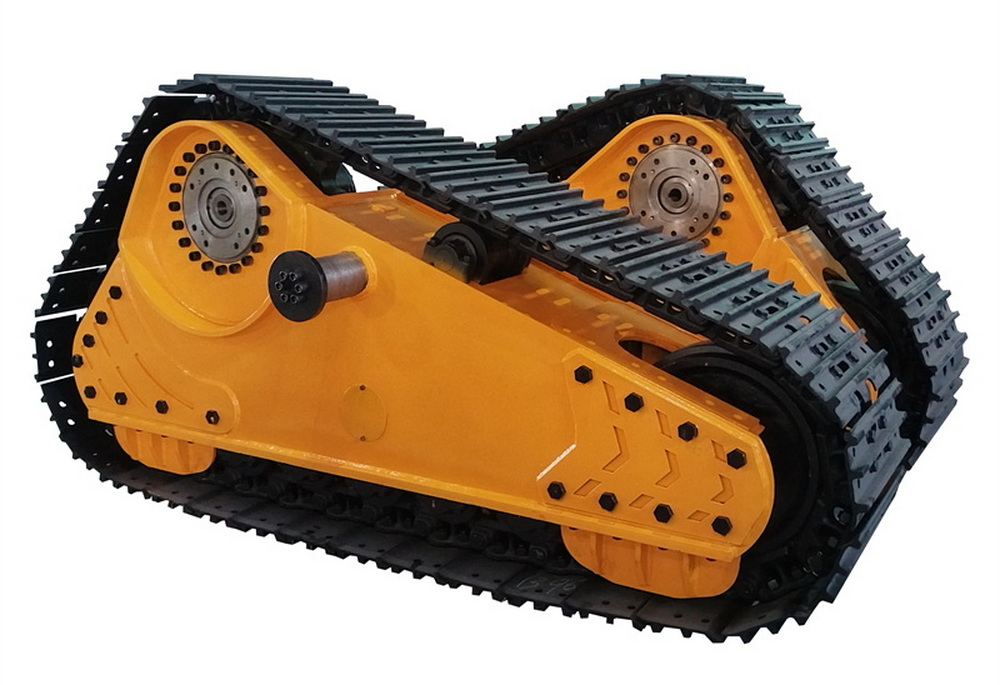
A typical tracked undercarriage consists of a structural frame, track chains or rubber tracks, rollers, idlers, sprockets, tensioning components, and a travel drive. The exact configuration depends on machine weight, operating speed, terrain, required load capacity, and available installation space.
In Malaysia, tracked equipment can be relevant to construction, agriculture, forestry, mining, plantation, infrastructure, and other applications where ground conditions vary significantly.

The performance of a tracked machine depends on the compatibility and durability of its undercarriage components. Track system parts must work together to manage machine weight, traction forces, vibration, shock loads, and repeated movement across uneven terrain.
Important benefits of a properly designed track system include:
Improved traction: Tracks can provide effective contact with the ground on soft or irregular terrain.
Load distribution: A larger contact area can help distribute machine weight and reduce localized ground pressure.
Machine stability: A suitable track width and undercarriage configuration can improve stability during operation.
Application flexibility: Track systems can be configured for different machine widths, weights, speeds, and operating conditions.
Serviceability: Proper access to rollers, idlers, sprockets, tensioning components, and drive units simplifies inspection and replacement.
Rubber and steel track configurations serve different applications. Rubber tracks can be useful where reduced surface impact and lower vibration are important, while steel tracks are often selected for applications requiring high resistance to severe working environments.
Kemer develops tracked chassis and undercarriage systems for mobile and specialized machinery. A complete undercarriage can be engineered around the machine's load, dimensions, center of gravity, drive requirements, and operating environment.
Depending on the application, the chassis can integrate structural frames, rollers, idlers, sprockets, track assemblies, hydraulic travel drives, and other mechanical or hydraulic components.
OEM buyers can work with Kemer on requirements such as:
Track width and overall machine width.
Required load capacity and machine weight.
Track length and undercarriage dimensions.
Travel speed and gradeability requirements.
Motor, gearbox, and hydraulic interface requirements.
Mounting dimensions and machine-frame interfaces.
Steel or rubber track configurations.
Special clearance, packaging, or installation requirements.
This engineering approach is particularly useful for OEM projects where a standard catalog undercarriage does not match the machine's dimensions or operating requirements.
Hydraulic winches can provide pulling, recovery, lifting, positioning, or auxiliary handling functions on tracked machines. Their integration with a tracked undercarriage depends on available hydraulic pressure and flow, mounting space, line pull, duty cycle, rope capacity, and control requirements.
Common tracked-equipment applications include:
Recovery and self-recovery operations.
Pulling equipment or materials across difficult terrain.
Drilling and foundation equipment.
Forestry and specialized off-road machinery.
Construction and maintenance equipment.
Kemer can combine hydraulic winch solutions with tracked chassis and other drive components to create a more integrated machine package. The correct winch should be selected according to required line pull, speed, duty cycle, pressure, flow, and mounting conditions.
Planetary gearboxes are widely used in heavy machinery because they can provide high torque transmission within a relatively compact package. Multiple planet gears share the transmitted load, allowing the gearbox to handle demanding torque requirements when properly designed for the application.
In tracked equipment, planetary gearboxes may be used in travel drives, swing systems, winch drives, and other motion-control applications.
When selecting a planetary gearbox, buyers should consider:
Required input and output speed.
Continuous and peak torque.
Duty cycle.
Radial and axial load requirements.
Installation orientation.
Shaft and mounting interface.
Environmental conditions and sealing requirements.
Kemer supplies planetary gearbox solutions for hydraulic and mechanical drive applications where torque, packaging, and mounting compatibility are important.
Travel drives are a key part of a tracked undercarriage because they transmit hydraulic power into controlled machine movement. The drive must be matched to the machine weight, required travel speed, sprocket dimensions, terrain, gradeability, and available hydraulic power.
Winch drives have different operating requirements. They are generally selected according to pulling force, rope speed, drum dimensions, brake requirements, and duty cycle.
For both applications, the drive should be evaluated as part of the complete hydraulic and mechanical system rather than as an isolated component.
Important compatibility factors include:
Hydraulic pressure and flow.
Motor displacement and output torque.
Gear reduction ratio.
Brake configuration.
Mounting dimensions.
Sprocket or drum interface.
Swing drives are used to rotate upper structures, platforms, booms, or other machine assemblies. In excavators, cranes, drilling machines, and specialized equipment, the swing system must provide controlled torque while supporting the required operating loads.
A swing drive typically combines a hydraulic motor or other prime mover with a reduction gearbox and braking mechanism. The design should be selected according to required torque, speed, load conditions, mounting space, and duty cycle.
For OEM applications, matching the swing drive to the machine's mounting interface and hydraulic circuit is particularly important. Correct sizing can help avoid excessive heat, insufficient torque, or unwanted movement under load.
Hydraulic motors convert hydraulic energy into rotational movement and can drive travel systems, winches, swing mechanisms, and auxiliary equipment.
Motor selection should consider:
Required starting torque.
Continuous and peak operating pressure.
Required rotational speed.
Displacement.
Reversible or bidirectional operation.
Duty cycle and thermal conditions.
Low-speed, high-torque hydraulic motors are commonly relevant to tracked machinery because travel and winching applications can require substantial starting torque and controlled movement.
Kemer provides hydraulic motor solutions that can be integrated with planetary gearboxes, travel drives, winch drives, and other hydraulic systems depending on the equipment architecture.
Buyers sourcing VTS track system parts in Malaysia may work with local distributors, equipment dealers, aftermarket suppliers, or international manufacturers serving the region.
When comparing suppliers, it is useful to look beyond product availability and compare:
Engineering and customization capability.
Product specifications and drawings.
Compatibility with the target machine.
Manufacturing and testing processes.
Spare-parts availability.
Delivery capability.
Technical and after-sales support.
International manufacturers can also serve Malaysian OEMs and equipment companies directly when the project requires a customized tracked undercarriage or integrated motion system.
Kemer can support such projects with track chassis and complementary components for equipment manufacturers that need customized dimensions, mounting interfaces, drive configurations, or load requirements.
Track systems are used across industries where terrain conditions, mobility requirements, or machine weight make tracked platforms suitable.
Construction: Excavators, drilling equipment, cranes, access machinery, and specialized mobile platforms can use tracked undercarriages for improved mobility on uneven sites.
Mining: Tracked equipment can be used in demanding environments where traction, stability, and robust undercarriage components are important.
Forestry: Tracked machines can operate on soft ground and irregular terrain where conventional wheeled equipment may have limitations.
Agriculture and plantations: Rubber-track configurations can be considered where soil protection and flotation are important.
Infrastructure and utility work: Specialized tracked machines can provide mobility for projects involving pipelines, cables, foundations, and remote-site maintenance.
The appropriate track system depends on machine weight, ground conditions, required travel speed, operating frequency, and the specific work environment.
When sourcing tracked undercarriage components, quality assurance should cover both individual components and the assembled system.
Buyers should consider whether the supplier has suitable processes for:
Raw-material inspection.
Dimensional inspection.
Machining and fabrication quality control.
Gearbox and drive testing.
Hydraulic pressure and performance testing.
Track and undercarriage testing.
Final assembly and documentation.
Kemer's manufacturing and testing capabilities cover tracked chassis, hydraulic winches, planetary gearboxes, travel drives, winch drives, swing drives, and hydraulic motors. For OEM projects, test requirements can be discussed according to the intended application and technical specification.
OEM projects often require more than a standard replacement part. The undercarriage and drive system may need to match a specific machine frame, payload, center of gravity, hydraulic circuit, speed, or installation envelope.
A customized project can include:
Custom track width and track length.
Custom overall chassis dimensions.
Machine-specific mounting interfaces.
Selected travel-drive and gearbox configurations.
Hydraulic motor and pressure requirements.
Rubber or steel track selection.
Special load and ground-pressure requirements.
Engineering drawings and three-dimensional models can also be used during the design process to verify mounting dimensions, component clearance, and interface compatibility before manufacturing.
For OEM buyers, a manufacturer that can support the process from technical requirements through design, testing, and production can simplify project coordination and reduce integration risk.
Tracked machinery is developing alongside broader changes in mobile equipment, including automation, electrification, condition monitoring, and improved energy efficiency.
Electric and hybrid drive systems: Electric powertrains may be integrated into selected tracked-machine applications as equipment manufacturers seek alternative power architectures.
Condition monitoring: Sensors can provide information about temperature, pressure, operating cycles, and component condition.
Machine automation: Electronic controls can coordinate travel, swing, winching, and other machine functions.
Weight optimization: Engineering teams continue to investigate materials and structural designs that balance strength, durability, and machine weight.
Integrated motion systems: More machine builders are evaluating the undercarriage, drive, winch, and hydraulic system as one integrated platform.
These developments increase the importance of mechanical, hydraulic, and electrical compatibility when designing future tracked equipment.
When purchasing VTS track system parts for projects in Malaysia or the wider ASEAN region, buyers should evaluate the supplier against the actual machine requirements rather than selecting components solely by price.
A practical supplier evaluation should include:
Technical fit: Confirm dimensions, load capacity, drive requirements, speed, and machine interfaces.
Environmental suitability: Review humidity, rainfall, mud, dust, temperature, and other working conditions.
Documentation: Request drawings, specifications, installation information, maintenance instructions, and relevant test documentation.
OEM support: Confirm whether the supplier can support custom engineering and machine integration.
Parts availability: Consider the availability of wear parts and replacement components throughout the expected machine life.
Logistics: Review production lead times, packaging, shipping arrangements, and delivery requirements.
Malaysian buyers should also consider whether a local distributor, regional supplier, or direct manufacturer relationship provides the most suitable combination of technical support and supply capability for the project.
VTS track system parts are an important part of mobile machinery used in construction, mining, forestry, agriculture, infrastructure, and other demanding applications. A reliable system requires more than durable tracks; the frame, rollers, sprockets, idlers, travel drives, hydraulic motors, gearboxes, and other components must work together as a complete undercarriage.
For buyers researching VTS track system parts manufacturers and suppliers in Malaysia, the most useful evaluation criteria include engineering capability, customization options, technical documentation, testing, component compatibility, production capability, and after-sales support.
Kemer provides tracked chassis and complementary motion components, including hydraulic winches, planetary gearboxes, travel drives, winch drives, swing drives, and hydraulic motors. These products can be combined into customized solutions for OEMs and specialized machinery manufacturers.
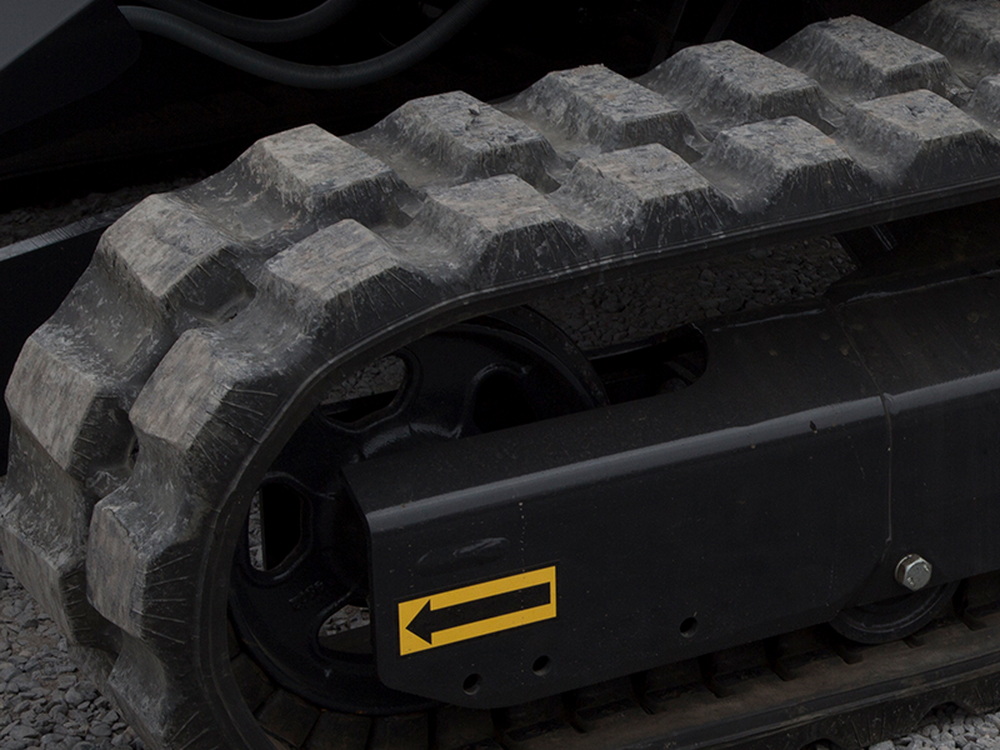
VTS track system parts can include track assemblies, undercarriage frames, rollers, idlers, sprockets, tensioning components, travel drives, hydraulic motors, and related mounting components. The exact configuration depends on the machine and application.
Tracked systems are commonly used in construction, mining, forestry, agriculture, plantation, infrastructure, drilling, and other off-road applications where traction, stability, or reduced ground pressure are important.
Planetary gearboxes provide speed reduction and torque multiplication in a compact package. They can be used in travel drives, swing drives, winch drives, and other applications where high torque and controlled output speed are required.
Tracked equipment can be designed for humid, wet, muddy, and tropical operating conditions. Component selection should take account of corrosion protection, sealing, lubrication, material selection, track type, and the specific working environment.
OEM support may include application engineering, dimensional customization, 3D drawings, mounting interface design, component selection, prototype development, testing, production, and technical documentation. The exact support available should be confirmed with the supplier before the project begins.
Rubber Track and VTS application reference
Malaysia track equipment reference
VTS company and product reference


