
Views: 222 Author: Amanda Publish Time: 2026-01-03 Origin: Site


Content Menu
● How a Hydraulic Winch System Works
● What a Hydraulic Tank Actually Does
● When a Separate Hydraulic Tank Is Essential
● Situations Where You Might Not Add a Second Tank
● How Tank Sizing Relates to Hydraulic Winch Performance
● Design Features Inside a Hydraulic Winch Reservoir
● Cooling Strategies for Continuous Hydraulic Winch Operation
● Integration of Hydraulic Winches into Complex Machines
● Practical Tips for Specifying a Hydraulic Winch and Tank
● Common Mistakes to Avoid in Hydraulic Winch Reservoir Design
● FAQ
>> 1. Does every hydraulic winch system need a reservoir?
>> 2. How big should the hydraulic tank be for my hydraulic winch?
>> 3. Can a hydraulic winch run from a power steering system without a new tank?
>> 4. What happens if the hydraulic tank is undersized for the hydraulic winch?
>> 5. Why are internal baffles important in a hydraulic winch reservoir?
A hydraulic tank (reservoir) is a core component in almost every serious hydraulic winch system because it stores, cools, and conditions the hydraulic oil that powers the winch under load. Only in a few light-duty or specially integrated installations can a hydraulic winch rely on an existing machine reservoir instead of a dedicated tank, and even then the reservoir must still be engineered to meet the winch's flow and cooling needs.[1][2]
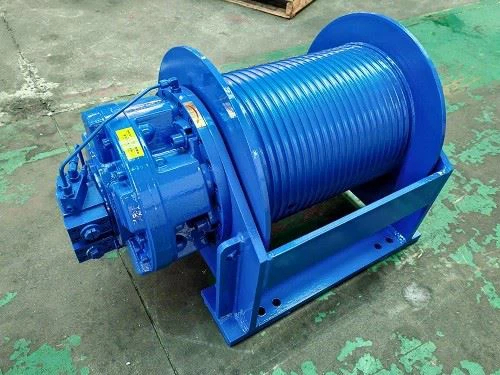
A hydraulic winch converts hydraulic energy in pressurized oil into mechanical pulling force at the drum through a hydraulic motor and planetary gearbox. In practical terms, the hydraulic winch is only one element in a complete hydraulic circuit that also includes a pump, valves, hoses, fittings, and a reservoir.[3]
Key elements in a typical hydraulic winch system:
- Hydraulic pump that draws oil from the reservoir and raises its pressure to feed the hydraulic winch motor.
- Directional and flow-control valves that allow the operator to spool in, pay out, or hold load with precise control.
- Hydraulic motor that drives the winch drum through a planetary gear train to generate high pulling torque.
- Reservoir tank, filters, and coolers that maintain oil volume, cleanliness, and temperature within safe limits.
Because the hydraulic winch depends on continuous, bubble-free oil flow, the reservoir is essential to prevent cavitation at the pump inlet and to maintain stable operating conditions under varying loads. Without that buffer of properly conditioned fluid, even the most robust hydraulic winch and gearbox combination will suffer from accelerated wear and erratic performance.[1]
The hydraulic tank in a hydraulic winch system is more than a container; it is a functional component that directly affects performance, safety, and service life. It interacts with every other hydraulic element, from the pump and motor to the valves and filters.[4]
Core functions of the hydraulic tank for a hydraulic winch:
- Fluid storage and supply – The reservoir stores enough hydraulic oil to ensure the pump feeding the hydraulic winch never runs short of fluid, even during rapid directional changes or volume surges.
- Cooling and heat dissipation – Heat generated by pressure losses and high-load winching is transferred to the oil and then to the tank walls, where it can dissipate to ambient air or to a dedicated cooler.
- Air separation – As oil returns to the tank, entrained air bubbles rise and escape, reducing the risk of spongy response or cavitation at the hydraulic winch motor and pump.
- Contaminant settling – Slower flow inside the tank allows heavier particles to settle, supporting the overall filtration strategy of the hydraulic winch circuit.
- Volume for expansion – Extra space in the tank handles thermal expansion and protects against sudden level changes when cylinders or motors in the hydraulic system move.
A well-designed reservoir for a hydraulic winch also supports good maintenance practices, with clearly visible level indicators, convenient fill and drain points, and integration with breathers and return-line filters. When all these details are coordinated, the hydraulic winch operates more smoothly and requires fewer unplanned service interventions.[5]
In most dedicated hydraulic winch applications, a separate, properly sized hydraulic tank is non-negotiable because of the flow and heat generated during heavy operation. The more demanding the duty cycle and the higher the line pull, the more critical the reservoir volume and cooling capacity become.[6]
Common situations where a stand-alone tank is required:
- Self-contained power packs – Many mobile hydraulic winch systems use engine-driven or electric motor-driven pumps mounted on skids, trailers, or decks, and these power packs always include a matched reservoir.
- Tow trucks and recovery vehicles – Heavy recovery work with a hydraulic winch involves long, slow pulls and high loads, which demand substantial cooling capacity and therefore a robust reservoir.
- Industrial and marine winches – Dockside, offshore, and plant-mounted hydraulic winches often run for long periods and may face high ambient temperatures, making tank size and oil volume extremely important.
- Tracked machinery and special equipment – For machines with tracked undercarriages and multiple hydraulic functions, the hydraulic winch is integrated into a large hydraulic system that already includes a sizable reservoir.
If a hydraulic winch is rated for continuous duty or frequent use near its maximum line pull, a minimal or undersized tank will quickly reveal its weaknesses through rising oil temperatures and unstable winch behavior. For manufacturers and integrators who focus on advanced drive solutions, designing an appropriate reservoir is as important as selecting the right hydraulic winch and planetary gearbox.[7]
There are also scenarios where a separate new tank is not added just for the hydraulic winch, although a reservoir function still exists in the system. These cases are common in lighter-duty or space-constrained applications.[2]
Typical examples include:
- Power-steering based hydraulic winch kits – Some off-road and automotive kits tap into a vehicle's power steering pump, using the existing steering reservoir as the system's tank.
- Add-on to an existing hydraulic circuit – On certain machines, an auxiliary hydraulic winch can share the main machine reservoir so long as that tank is already sized for the combined flow and heat load.
However, these configurations have clear limits. The small power-steering reservoir is usually designed for intermittent steering use, not for sustained high-load hydraulic winch pulls that generate much more heat. When a hydraulic winch is added without upgrading the reservoir capacity or cooling, the system can overheat quickly, leading to reduced performance and potential component damage.[2]
Reservoir sizing is one of the most practical questions in designing or upgrading a hydraulic winch system, because volume directly influences cooling and de-aeration time. For integrators, simple rules of thumb are often combined with application experience to reach a reliable tank volume.[7]
Common guidelines for reservoir sizing in hydraulic winch circuits:
- Many designers start by matching reservoir volume to pump flow; for example, a pump delivering 20 liters per minute for the hydraulic winch might use a tank of roughly 20 liters as an initial reference.[6]
- In more demanding systems, design practice tends toward 3–5 times pump flow per minute, with larger multiples when the hydraulic winch operates continuously or in hot environments.[7]
- Designers consider factors such as oil type, ambient temperature, duty cycle, and whether an external cooler is installed when finalizing tank size.
Too small a reservoir limits the time oil spends in the tank between cycles through the pump and hydraulic winch motor, which reduces cooling and air separation. Too large a reservoir may add cost, weight, and packaging complications, so careful balancing is needed to support the hydraulic winch duty cycle without over-engineering the system.[7]
Beyond volume, internal design details of the reservoir play a big role in how well it supports a hydraulic winch under changing conditions. The way oil enters, flows, and leaves the tank influences cooling efficiency, de-aeration, and suction quality.[5]
Important internal features for a hydraulic winch tank:
- Baffles – Plates inside the tank guide oil flow, prevent direct short-circuiting between return and suction lines, and give oil more time to cool and release air.
- Return-line arrangement – Return oil is often directed below the fluid surface and away from the suction area to avoid foaming and vortex formation.
- Suction zone – The suction port to the pump feeding the hydraulic winch is placed where oil is cleanest and least aerated, often shielded by baffles or strainers.
- Breather and fill neck – The breather allows the tank to exchange air with the environment while filtering dust, and the fill neck provides convenient access for top-ups and fluid changes.
- Drain and clean-out – Drain plugs, clean-out covers, or inspection ports help operators remove sludge and inspect the tank without major disassembly.
Together, these small details help ensure that the oil reaching the hydraulic winch pump is cool, clean, and free of air, which significantly increases the reliability of the pump, motor, and valves. For a high-power hydraulic winch working in remote or severe conditions, such internal reservoir design choices can be the difference between smooth operation and frequent downtime.[4]
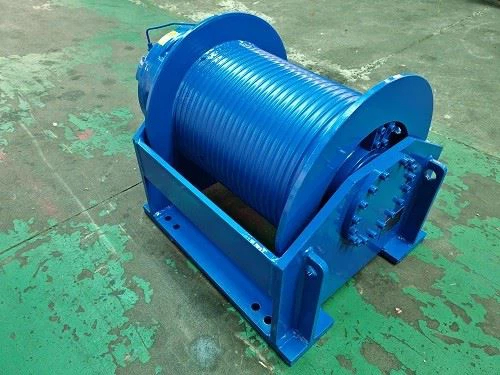
Continuous or heavy-duty hydraulic winch applications often require more than just a generously sized reservoir to manage heat. As line pull, system pressure, and duty cycle rise, thermal management becomes a key part of the engineering process.[7]
Common cooling strategies include:
- Increased reservoir surface area – Larger tanks with exposed surfaces improve passive air-cooling, which supports moderate duty cycles.
- External oil coolers – Air-to-oil or water-to-oil coolers are added into the return line to rapidly remove heat generated by the hydraulic winch.
- Optimized flow paths – Routing hot return oil through coolers and baffles before it mixes with the bulk fluid ensures more uniform tank temperature.
- Monitoring and protection – Temperature sensors and alarms warn operators if the hydraulic winch system is overheating, prompting load reduction or rest periods.
For manufacturers who provide complete hydraulic winch packages, integrating reservoir design with cooling hardware and control logic ensures that the system can sustain the expected workload in real-world conditions. This holistic approach is particularly important for tracked undercarriages, marine deck equipment, and industrial hoists where access for retrofits may be limited.[4]
On complex machines, a hydraulic winch rarely operates in isolation; it shares space, power, and sometimes fluid with other hydraulic functions such as travel drives, swing drives, and auxiliary tools. This integration adds both opportunities and challenges when sizing and placing the reservoir.[1]
Key integration considerations:
- Shared versus dedicated reservoir – Designers must decide whether the hydraulic winch uses the main machine reservoir or requires its own dedicated tank.
- Power source compatibility – The pump driving the hydraulic winch may be mounted on an engine, gearbox, or electric motor, which affects where the reservoir can be placed.
- Structural and packaging constraints – Tracked undercarriages, winch drives, slewing drives, and gearboxes all occupy space, so the reservoir must fit within the available envelope without compromising service access.
- Serviceability and safety – Access to filters, breathers, level gauges, and drain points must remain acceptable, particularly in harsh environments where hydraulic winches are often used.
When these factors are considered early in the design phase, the result is a hydraulic winch system with cleaner hose routing, better cooling, and simpler maintenance routines. This integrated approach also reduces the risk of later modifications that might compromise reservoir performance or hydraulic winch reliability.[8]
When selecting or specifying a hydraulic winch system, paying attention to reservoir details from the beginning helps avoid costly redesigns or premature failures later. Even if a project starts from standard catalog components, tuning the tank and cooling to the specific duty cycle often yields significant benefits.[9]
Practical steps include:
1. Define the application profile – Identify maximum line pull, typical load range, expected line speed, and how long the hydraulic winch will run continuously.
2. Determine pump flow and pressure – These parameters dictate not only winch performance but also the heat load that the reservoir and cooler must handle.
3. Estimate reservoir volume – Use flow-based rules of thumb as a starting point and adjust based on duty cycle, environment, and available cooling.
4. Plan for future expansion – If the machine might later add another hydraulic winch or auxiliary function, allow some margin in reservoir size and cooling capacity.
5. Specify filtration levels – Choose return, pressure, and suction filtration that match the cleanliness requirements of the hydraulic winch motor, valves, and precision components.
By following these steps, system integrators ensure that the hydraulic winch is not only powerful and responsive but also supported by a reservoir that can sustain long-term operation.[8]
Even experienced teams occasionally make reservoir-related mistakes that affect hydraulic winch performance and reliability. Recognizing these pitfalls helps improve the design and integration process.[5]
Frequent issues include:
- Underestimating heat generation – Assuming that the hydraulic winch will be used intermittently while real-world use is closer to continuous duty leads to undersized tanks and coolers.
- Poor return-line placement – Allowing hot return oil to dump near the suction line can reintroduce air and heat directly into the pump feeding the hydraulic winch.
- Inadequate breathing and filtration – Oversized pumps and winches with undersized breathers and filters can pull contaminants or moisture into the tank.
- Difficult service access – Placing the reservoir where level gauges, breathers, and drains are hard to reach discourages regular checks and maintenance.
Avoiding these issues helps ensure that the hydraulic winch achieves its expected service life and maintains consistent performance under load.[4]
A dedicated hydraulic tank is a crucial part of almost every serious hydraulic winch installation because it stores, cools, and conditions the oil that powers the winch under demanding conditions. Only in limited, carefully engineered situations can a hydraulic winch rely on an existing reservoir without adding a separate tank, and even then the reservoir must still be sized and configured correctly for flow, cooling, and cleanliness. For modern mobile, marine, and industrial equipment that combines tracked undercarriages, planetary gearboxes, travel drives, winch drives, slewing drives, and hydraulic motors, successful hydraulic winch solutions always treat the reservoir as a central design element rather than an afterthought.[2][1][4]
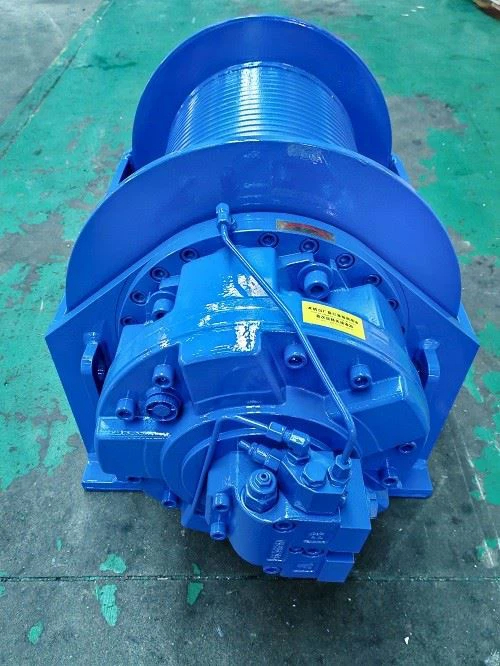
Yes, every hydraulic winch system needs a reservoir function to provide oil storage, cooling, air separation, and contaminant management, whether that is a dedicated tank or a shared machine reservoir. Without an appropriate reservoir, the pump and hydraulic winch motor are at higher risk of cavitation, overheating, and premature wear.[1][4]
A common baseline is to size reservoir volume approximately equal to the pump flow rate driving the hydraulic winch, then increase that volume for heavier duty cycles or hotter environments. Many designers use three to five times pump flow per minute as a typical range for more demanding hydraulic winch applications.[6][7]
Some light-duty kits allow a hydraulic winch to run from an existing power steering pump and reservoir, eliminating the need for a new tank. However, these systems are limited in duty cycle and pulling power, and extended high-load winching can overheat the small steering reservoir and reduce reliability.[2][7]
If the reservoir is too small, oil heats up quickly and has little time to release air or settle contaminants before returning to the pump and hydraulic winch motor. This can lead to high temperatures, unstable winch behavior, noise from cavitation, and shorter service life for pumps, motors, and valves.[4][7]
Internal baffles slow down returning oil, direct it across a longer flow path, and separate the suction and return areas so the oil feeding the hydraulic winch pump is cooler and less aerated. This improves de-aeration, cooling, and suction quality, which all contribute to smoother and more reliable hydraulic winch operation.[5][4]
[1](https://www.ini-hydraulic.com/news/what-are-the-five-major-components-of-a-hydraulic-system)
[2](https://apollooffroad.com/blogs/default-blog/blog-how-does-a-hydraulic-winch-work)
[3](https://landmarktools.com/blogs/guides/how-does-a-hydraulic-winch-work)
[4](https://epichydraulic.com/ultimate-guide-of-hydraulic-tank/)
[5](https://www.target-hydraulics.com/hydraulic-reservoirs/)
[6](https://garlway.com/faqs/what-are-the-cooling-and-reservoir-requirements-for-hydraulic-winches)
[7](https://www.powermotiontech.com/hydraulics-at-work/article/21884901/how-to-size-a-hydraulic-tank)
[8](https://pcihydraulics.com/hydraulic-system-components-guide/)
[9](https://www.bloommfg.com/blog/post/everything-you-need-to-know-about-hydraulic-winches)


