
Language
Views: 222 Author: Robert Publish Time: 2026-03-24 Origin: Site


Content Menu
● Top Tracks and Undercarriage Manufacturers in Russia: Real‑World Rankings and OEM Insights
● Why Undercarriage Quality Matters More in Russia
>> Harsh Jobsite Conditions from Moscow to the Far East
>> How Undercarriage Affects Total Fleet Cost
>> Why Real Customer Feedback Beats Catalog Data
● How Russian Users Rank Undercarriage Suppliers
>> Core Evaluation Dimensions Used by Professionals
● Real User Pain Points and What "Good" Suppliers Deliver
>> Fast Wear, Leaks, and Unplanned Downtime
>> Long Lead Times and Weak Regional Coverage
>> Technical Support and Warranty Friction
● Snapshot of Leading Undercarriage Brands in the Russian Market
● Where Kemer Fits – A Behind‑the‑Scenes OEM Partner
>> Engineering for Harsh Undercarriage and Hydraulic Conditions
>> OEM Partnerships: How Russian Brands Use Factories Like Kemer
● How Top Russian Buyers Evaluate Undercarriage Suppliers
>> A Practical 5‑Step Process Used by Experienced Fleet Managers
● Comparing Supplier Types: OEM, Aftermarket, and OEM‑Backed Brands
>> OEM vs High‑Quality Aftermarket
>> Why Undercarriage‑Focused Specialists Have an Edge
● New Trend: Data‑Driven Undercarriage Strategy and Digital Tracking
● Practical Checklist – Choosing the Right Undercarriage Supplier in Russia
● Call to Action – Partnering with an OEM Like Kemer
● FAQs
>> 1. How often should I inspect my excavator undercarriage in Russian conditions?
>> 2. Is it safe to mix OEM and aftermarket undercarriage parts on the same machine?
>> 3. Why do some low‑priced undercarriage parts fail so quickly in Russia?
>> 4. What should a serious undercarriage supplier provide besides parts?
>> 5. Why work with an OEM factory like Kemer instead of a trading company?
Top Russian contractors, rental fleets, and OEM partners now treat undercarriage decisions as a strategic lever for uptime and project profit, not just a spare‑parts purchase. In this guide, we look at how real users rank track and undercarriage manufacturers in Russia – and how a specialized OEM partner like Kemer can quietly support those brands as their hydraulic undercarriage manufacturing backbone. [julimachinery]
The undercarriage components market is forecast to reach around USD 16.7 billion globally by 2035, driven by infrastructure, mining, and agriculture projects. Russia is part of this demand surge, especially in construction and resource extraction, where harsh climates and long logistics chains punish low‑quality tracks and rollers. For fleets operating in these conditions, choosing the right supplier determines whether they enjoy predictable uptime or face repeated breakdowns and costly delays. [factmr]

Russian excavators, dozers, and drilling rigs work in extreme cold, abrasive rock, deep mud, and remote regions with limited workshop access. Components such as track chains, rollers, idlers, and sprockets face high impact loads and major temperature swings that accelerate wear if metallurgy and heat treatment are not precisely controlled. In practice, any weakness in steel grade, surface hardness, weld quality, or seal design quickly becomes oil leaks, cracked shoes, or stretched chains that take machines out of service. [ynfmachinery]
Industry sources indicate that undercarriage can represent up to 50% of a tracked machine's lifetime maintenance cost in some heavy‑duty fleets. Repeated undercarriage failures do not only add parts and labor expenses; they also trigger unplanned downtime that disrupts roadworks, pipeline projects, and mining operations. A global market study highlights that buyers are shifting from price‑only decisions to total cost of ownership (TCO) models that factor in lifetime hours per set, failure risk, and logistical impact. [researchandmarkets]
Parts catalogs and brochures rarely show how a track chain behaves after 2,000 hours in frozen overburden or on abrasive granite. Fleet managers increasingly cross‑check suppliers using peer feedback, online resources, and internal failure statistics before switching brands. Content and evaluations based on direct operating experience, backed with clear reasoning and real‑world examples, are far more reliable than generic marketing claims alone. [zkmparts]
For this ranking‑style guide, the evaluation logic aligns with how fleet professionals, not marketers, assess suppliers:
- Rental fleets that track undercarriage cost per hour across mixed brands and applications. [constructionequip]
- Contractors and mine operators working in Siberia, the Urals, and Northwest Russia.
- Dealers and distributors supplying multi‑brand fleets with both OEM and aftermarket solutions. [yintaiparts]
Their feedback typically stems from service records, failure logs, warranty outcomes, and structured purchase reviews.
Professionals in Russia repeatedly converge on six practical criteria when they shortlist and rank undercarriage suppliers:
1. Product quality and durability – hours until replacement, visible wear patterns, seal performance, and failure modes. [xtptrack]
2. Compatibility and product range – coverage for popular brands such as Caterpillar, Komatsu, Hitachi, Doosan, SANY, and various imported models. [ynfmachinery]
3. TCO versus unit price – cost per operating hour, not just invoice price and discounts. [julimachinery]
4. Local stock and lead time – warehouse presence in Central, Northwest, Ural, Siberian, and Far Eastern districts. [factmr]
5. After‑sales support and warranty – clarity, responsiveness, technical competence, and fairness of claims handling.
6. Customer satisfaction and reorder rate – repeat purchase behavior and willingness to recommend. [constructionequip]
In practice, Russian fleets tend to weight quality and lifetime highest, followed by lead time, service, and then price. A practical scoring split used by many professional buyers looks like this: [julimachinery]
- Quality and durability – 35%
- Lifetime hours and reliability – 25%
- Stock and logistics – 15%
- Service and warranty – 15%
- Price and commercial terms – 10%
The discussion in this article follows a similar logic so that the ranking mindset reflects how real buyers think rather than a simple "cheapest first" list.
Fleet operators often report premature chain stretch, cracked track shoes, and leaking carrier rollers when they purchase purely based on low price. Many note that low‑grade steel and inconsistent heat treatment can cut expected lifetime by 30–40% compared with reputable brands, especially in high‑impact quarrying and mining work. [zhuri-machinery]
Another recurring issue is limited local inventory, especially beyond Moscow and St. Petersburg. Contractors in the Far East or Arctic regions may wait weeks for critical parts, absorbing high transport costs and idle‑fleet losses. Experienced buyers therefore prioritize suppliers with Russian‑based warehouses or strong local partners, even when the list price is slightly higher, because the real cost is driven by availability and downtime risk. [zkmparts]
Some fleets describe warranty discussions where claims are quickly labeled "wrong installation" or "misuse" without clear technical argument. High‑performing suppliers behave differently: they provide field inspections, wear measurements, and written recommendations, and they use this data to make fair, transparent warranty decisions. This expert‑driven approach builds trust and often leads to multi‑year agreements and higher share of wallet. [constructionequip]
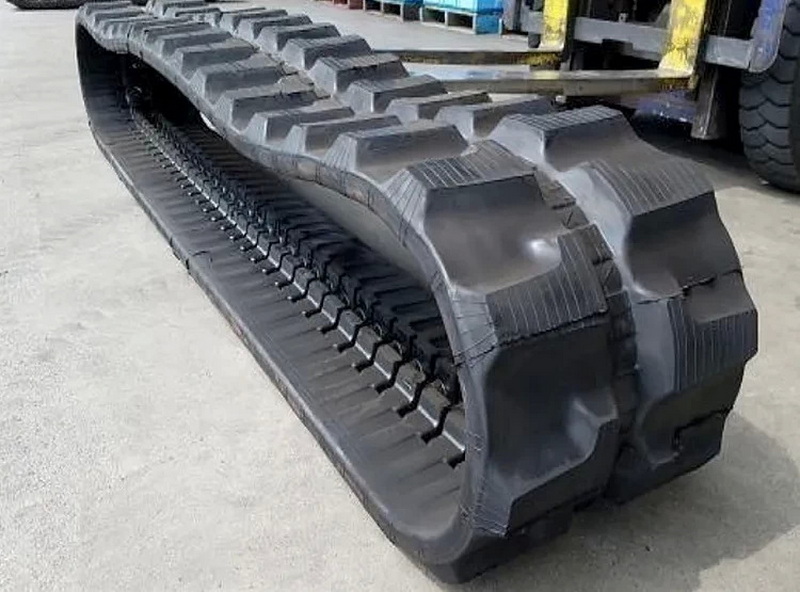
The table below summarizes how many fleets perceive major undercarriage brands available in Russia, combining global positioning with regional experience. [ynfmachinery]
| Brand / Supplier | Perceived Strengths | Typical Positioning |
|---|---|---|
| Berco (Italy) | High durability, strong OEM heritage | Premium / long‑life |
| ITM / ITR | Broad range, good availability in EMEA | Upper mid‑range aftermarket |
| OEM brands (e.g., CAT) | Strong quality, best fit and warranty | OEM premium |
| Yintai / YNF / similar Chinese specialists | Strong value, improving quality, flexible MOQ | Value‑oriented aftermarket |
| Local Russian importers | Stock and service close to customer | Region‑driven, mixed brand |
Global studies confirm that European and premium OEM brands still dominate the top end of the market, while Chinese specialists are rapidly gaining ground by combining better metallurgy, more consistent process control, and attractive pricing. [researchandmarkets]
From a sourcing perspective, many successful Russian importers and European brands cooperate with focused Chinese OEM factories rather than generic trading companies. Kemer is positioned precisely in this niche: a track undercarriage and hydraulic sub‑system manufacturer that produces to foreign brands' specifications and labeling for B2B use. [factmr]
Modern undercarriage specialists emphasize several technical pillars:
- High‑strength alloy steel and controlled heat treatment for links, bushings, and shoes. [ynfmachinery]
- Precision machining of idlers, rollers, and sprockets to reduce vibration and uneven wear. [yintaiparts]
- Robust sealing systems for rollers and idlers exposed to mud, water, and fine dust.
Kemer's role as an OEM supplier is to build these principles into every private‑label product that ultimately operates in Russian climates under a local or European brand name.
Professional sourcing guides recommend that buyers favor suppliers who can show technical documentation, process control, and traceability, even when those suppliers work under private labels. For Russian brands, partnering with a factory like Kemer typically allows them to: [zkmparts]
- Co‑develop track and roller designs for specific excavator and dozer platforms and duty cycles.
- Secure stable quality with audited production, inspection reports, and material certificates.
- Offer Russia‑specific variants such as cold‑climate seals or reinforced shoes tuned for local conditions.
When a regional brand ranks high in user reviews for undercarriage, there is often a specialized OEM such as Kemer behind the scenes, providing the manufacturing depth that supports those results.
Industry guides for fleet operators outline a structured approach to undercarriage sourcing. The following five‑step process reflects how experienced managers in Russia compare suppliers: [julimachinery]
1. Define duty cycles and climate
- Clarify whether your main work involves quarrying, pipeline construction, road building, or utility projects.
- Document the temperature range and ground conditions (for example, –30°C winters, rocky or abrasive soils).
2. Record current undercarriage lifetime and failures
- Track hours to failure for chains, rollers, idlers, and shoes on each machine.
- Identify common failure modes such as leaks, cracks, irregular wear, or broken bolts.
3. Compare suppliers based on TCO
- Ask candidates for lifetime expectations and references from similar job sites. [zkmparts]
- Calculate cost per operating hour for each brand you test rather than relying on unit price alone.
4. Audit local stock, service, and logistics
- Verify Russian warehouse locations, typical delivery times, and emergency order capabilities.
- Understand who will support you in the field: the distributor only, or also the manufacturer.
5. Run controlled trials, then standardize
- Start with 1–2 machines on a given site as a test bench.
- If results are positive over several maintenance cycles, gradually expand usage across the fleet.
This kind of structured process aligns with best‑practice advice from undercarriage experts and helps fleets avoid decisions based purely on short‑term discounts. [ynfmachinery]
Recent expert guides underline that the core question is not "OEM or aftermarket?" but risk management per machine and application. [julimachinery]
- OEM undercarriage
- Pros – consistent fit and finish, strong warranty compatibility, and high technical support level. [researchandmarkets]
- Cons – higher price and potential supply bottlenecks in volatile markets or remote regions.
- High‑quality aftermarket (often OEM‑backed)
- Pros – near‑OEM quality, shorter lead times, and more competitive pricing. [zkmparts]
- Cons – quality varies by supplier; detailed due diligence is necessary.
Experts advise requesting technical specifications, material test reports, and field case studies from any aftermarket supplier; reluctance to share these is a serious warning sign. [julimachinery]
Market research indicates that suppliers focused mainly on undercarriage products often offer deeper stock, better technical guidance, and more consistent quality than generalist parts traders. Such specialists usually: [yintaiparts]
- Maintain wide inventories of chains, rollers, idlers, sprockets, and track shoes in core sizes.
- Provide engineering support covering track tension, wear measurement, and failure analysis.
- Work closely with dedicated OEM factories to adjust designs and materials for specific regions.
For Russian buyers, this often translates into shorter lead times, more accurate product selection, and fewer installation‑related issues.
One area that many older undercarriage articles do not emphasize is data‑driven undercarriage management. Recent market reports note that fleets are increasingly tracking component lifetime per machine and per site, then using this data during supplier negotiations and technical discussions. [factmr]
Forward‑looking undercarriage and hydraulic OEMs, including Chinese manufacturers, are:
- Adding QR codes and serial numbers to components for traceability and batch tracking.
- Encouraging clients to log hours and wear measurements at each service interval.
- Using aggregated data to refine designs and recommend more suitable compounds or profiles for each region.
This digital feedback loop allows OEM factories like Kemer to move beyond basic production and act as engineering‑driven partners for Russian brands and fleet operators.
Use this condensed checklist during supplier meetings or RFQ rounds to keep discussions focused on long‑term value:
- Quality and lifetime
- Can the supplier share field data for climates and applications similar to yours? [ynfmachinery]
- Do they provide hardness and material certificates, as well as documented process control?
- Compatibility and range
- Do they cover your main excavator and dozer models, including imported brands and older machines? [yintaiparts]
- TCO and commercial terms
- Are they willing to discuss cost per hour and lifecycle performance, not just unit price?
- Local stock and logistics
- Where are their warehouses in Russia, and how fast can they ship to your jobsites?
- Service and technical support
- Do they offer on‑site inspections, training, and clear, written warranty procedures?
When you work with a regional brand that sources from a dedicated OEM such as Kemer, it is important to confirm that both the brand and the factory can maintain these standards over the long term.
If you are a Russian importer, regional undercarriage brand owner, or equipment manufacturer, your competitive edge increasingly depends on:
- Stable OEM production with proven metallurgy, machining, and process control.
- The ability to develop Russia‑specific variants for cold climate and heavy‑duty use.
- Reliable logistics and after‑sales documentation that satisfy demanding fleet customers.
Kemer focuses on track undercarriage and hydraulic equipment as an OEM partner for overseas brands, wholesalers, and manufacturers. By cooperating on private‑label or co‑branded solutions, you can offer your Russian customers high‑performance undercarriage products backed by a factory that understands both engineering requirements and global supply chains.
If you are planning your next undercarriage product line or looking for a more reliable manufacturing backbone for an existing brand, this is a good time to open a conversation with an undercarriage‑focused OEM partner like Kemer and build a long‑term, data‑driven cooperation model.
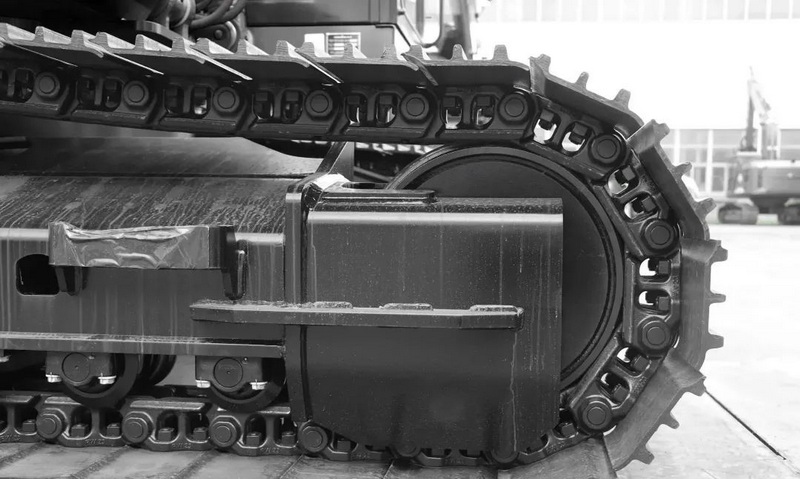
Most industry sources recommend at least a weekly detailed inspection in standard construction conditions and more frequent checks for mining, quarrying, or extreme cold operations. At a minimum, verify track tension, look for leaks on rollers, tighten shoe bolts if necessary, and monitor visible wear so you can react before major failures occur. [xtptrack]
Mixing is technically possible, but experienced fleet managers avoid random combinations because different hardness levels and geometry can cause uneven wear and unexpected failures. If you must mix components, plan it in a controlled way, follow technical guidance, and monitor wear closely, ideally with input from a specialist supplier. [zkmparts]
Low‑cost parts often rely on inferior steel, inconsistent heat treatment, and weaker seals, which may perform acceptably in light urban work but fail quickly in cold, abrasive Russian job sites. Any short‑term savings on purchasing are usually offset by more frequent replacements, extra labor, and costly downtime. [ynfmachinery]
Reliable suppliers provide engineering support, wear analysis, clear warranty terms, and robust regional logistics solutions. Many will help interpret wear data, train your maintenance team, recommend track tension practices, and maintain stock tailored to your specific fleet profile and region. [constructionequip]
An OEM factory can offer stronger engineering control, better traceability, and tailored solutions because it directly manages production, testing, and continuous improvement. For Russian brands and distributors, this translates into more consistent quality, more credible technical documentation, and a stronger foundation for long‑term customer relationships. [ynfmachinery]
1. YNF Machinery – "How to Choose the Best Excavator Undercarriage Parts Manufacturers" (2025).
https://www.ynfmachinery.com/best-excavator-undercarriage-parts-manufacturers/ [ynfmachinery]
2. Juli Machinery – "A 5-Step Actionable Guide to Undercarriage Parts for Fleet Operators" (2025).
https://www.julimachinery.com/udm/a-5-step-actionable-guide-to-undercarriage-parts-for-fleet-operators-slash-costs-in-2025/ [julimachinery]
3. Fact.MR – "Undercarriage Components Market Share and Statistics – 2035" (2025).
https://www.factmr.com/report/1623/undercarriage-components-market [factmr]
4. Research and Markets – "Undercarriage Component Market Size & Forecast to 2030".
https://www.researchandmarkets.com/report/undercarriage-component [researchandmarkets]
5. Yintai Parts – "The Ultimate Buyer's Guide to Excavator Undercarriage Parts" (2025).
https://www.yintaiparts.com/blog-the-ultimate-buyer-s-guide-to-excavator-undercarriage-parts.html [yintaiparts]
6. ZKM Parts – "Ultimate Guide to Sourcing Undercarriage Parts for Your Heavy Equipment" (2025).
https://www.zkmparts.com/blog/guide-to-sourcing-undercarriage-parts/ [zkmparts]
7. Zhuri Machinery – "6 Things to Consider When Buying Excavator Parts" (2025).
https://www.zhuri-machinery.com/6-precautions-for-purchasing-excavator-parts-to-6-things-to-consider-when-buying-excavator-parts [zhuri-machinery]
8. YNF Machinery – "Understanding the HS code for excavator spares" (2025).
https://www.ynfmachinery.com/excavator-spares-hs-code-guide-for-correct-classification/ [ynfmachinery]
9. ConstructionEquip – "Heavy Equipment Parts: A Fleet Manager's Essential Guide" (2025).
https://constructionequip.com/heavy-equipment-parts-a-fleet-managers-essential-guide/ [constructionequip]
10. Spherical Insights – "Undercarriage Component Market Size, Share, Forecast 2033" (2025).
https://www.sphericalinsights.com/our-insights/undercarriage-component-market [sphericalinsights]


