
Views: 222 Author: Robert Publish Time: 2026-03-25 Origin: Site


Content Menu
● How This Ranking and Evaluation Framework Was Built
>> Data Sources and Feedback Channels
>> Weighting and Priority of Factors
● What Real Customers Expect from Tracks and Undercarriage Systems
>> Long‑Term Durability and Performance in the Field
>> Delivery Reliability and Stock Availability
>> After‑Sales Support and Warranty Handling
>> Total Cost of Ownership over Unit Price
● Customer Experience Highlights from the Market
>> Fleet Owners and Rental Companies
>> Distributors and Service Workshops
● Power Ranking: Types of Top Tracks and Undercarriage Suppliers in Turkey
● How a Specialized Chinese OEM Partner Like Kemer Fits In
>> Kemer's Position and Capabilities
>> Combined Sourcing Strategy: Turkey + Kemer
>> Typical Collaboration Scenarios with Kemer
● Checklist: How to Select the Right Turkish Undercarriage Supplier and OEM Partner
● Call to Action for B2B Buyers
● FAQs
>> 1. Why are Turkish tracks and undercarriage suppliers attractive to international buyers?
>> 2. What role can a Chinese OEM partner like Kemer play if I already work with Turkish suppliers?
>> 3. What is the most important metric when comparing undercarriage suppliers?
>> 4. How should I phase in a new undercarriage supplier?
>> 5. Can I use the same supplier for aftermarket parts and OEM production?
Turkey has become a strategic hub for tracks and undercarriage components across Europe, the Middle East, and North Africa, especially in construction, mining, and agricultural machinery. From the viewpoint of people who actually operate and maintain heavy equipment, the best undercarriage suppliers are those that reduce downtime, extend service intervals, and stand behind their products when failures occur.
For international OEMs, brand owners, wholesalers, and manufacturers looking to source from Turkey—or to benchmark Turkish suppliers against specialized OEM partners such as Kemer, a China‑based manufacturer focused on track undercarriage hydraulic equipment—understanding real customer experience and objective ranking criteria is critical. This guide presents a practical, experience‑driven overview of top tracks and undercarriage manufacturers and suppliers in Turkey and explains how to combine them with a capable OEM partner to build a resilient supply chain.
To make this guide useful for real B2B decision‑making, the evaluation framework mirrors how experienced fleet managers, workshop owners, and purchasing managers actually choose suppliers.
In practice, the most reliable insights come from multiple, independent viewpoints, including:
- Fleet managers and equipment owners running excavators, loaders, and tracked machines
- Rental companies that see patterns of failure across different brands and models
- Distributors and service workshops handling warranties, repairs, and repeat orders
- OEM procurement teams responsible for undercarriage components in production lines
When feedback converges across these groups, it is usually a strong signal of a supplier's true performance in the field.
Customers consistently focus on a few core dimensions when judging undercarriage suppliers:
- Durability and reliability under real‑world operating conditions
- Delivery reliability and stock availability for critical wear parts
- Technical support and claims handling when problems arise
- Price–performance ratio and total cost of ownership (TCO)
- Engineering and customization capability for OEM projects
- Export experience, documentation, and compliance for international trade
These factors collectively determine whether a supplier is a good long‑term partner rather than just a one‑off source for low‑priced components.
In heavy equipment, the real cost of a track or undercarriage system includes not only the purchase price but also:
- Machine downtime
- Repair labor and logistics
- Delays to construction or mining projects
For this reason, durability, reliability, and support quality carry the highest weight, followed by delivery performance and TCO. Basic unit price is still considered, but it is viewed in the context of overall value rather than as the primary decision driver.

Users judge undercarriage suppliers based on how well components survive harsh environments such as rocky terrain, mud, dust, and continuous heavy loads. This includes:
- Structural integrity of track chains, frames, rollers, idlers, and sprockets
- Resistance to abnormal wear, cracking, and deformation
- Stable performance over long operating hours and repeated duty cycles
- Acceptable levels of vibration and noise during operation
When a supplier consistently delivers components that last significantly longer on comparable machines and jobsites, it directly improves profitability for the end user.
Even the best product is a problem if it is never available when needed. Buyers look closely at:
- Average lead times for standard and custom undercarriage assemblies
- Existence of regional warehousing or local stock for fast response
- Transparency of delivery schedules and realistic production capacity
Distributors and workshops favor suppliers that can support urgent breakdowns and planned maintenance without repeated delays and backorders.
The way a supplier responds to issues often determines whether a customer stays or leaves. Important aspects include:
- Speed and clarity of initial feedback on failure reports
- Availability of technical staff to review data, photos, or returned parts
- Willingness to analyze root causes and propose corrective actions
- Fair and predictable warranty and compensation policies
Reliable suppliers document their processes and communicate clearly, which reduces friction for both end users and intermediaries.
Experienced buyers increasingly measure cost per operating hour or cost per project, not just unit prices of chains, shoes, or rollers. They consider:
- Replacement intervals for undercarriage components
- Labor and downtime associated with each replacement
- The impact of product failures on contract penalties and client satisfaction
A slightly higher purchase price with significantly longer life often results in far lower TCO than cheaper but short‑lived alternatives.
Fleet owners and rental operators need predictable performance. They emphasize:
- Consistent life cycles across different batches and deliveries
- Ease of planning preventive maintenance and parts replacement
- Compatibility of undercarriage components across their machine fleet
When a brand delivers stable performance and responds quickly to issues, owners are reluctant to experiment with other suppliers that may increase risk.
Distributors and workshops act as both sales and technical interfaces. They focus on:
- Frequency and severity of warranty cases
- Overall satisfaction trends among end customers
- Availability of technical documentation, drawings, and installation guidance
Suppliers that reduce administrative workload—fewer disputes, faster resolutions, clear documentation—quickly become preferred partners.
OEM and project buyers assess suppliers with a long‑term view:
- Capability to sustain quality over large volumes and multiple years
- Support for design reviews, prototyping, and validation tests
- Compliance with relevant standards and documentation requirements
They particularly appreciate suppliers that can collaborate during the design phase and help optimize undercarriage systems for specific applications.

Instead of naming specific companies, the table below summarizes the main supplier archetypes you are likely to encounter in the Turkish market and how they typically position themselves.
| Rank | Supplier Type | Main Focus | Typical Strengths |
|---|---|---|---|
| 1 | Established undercarriage OEM | Complete track and undercarriage assemblies | Proven durability, wide product range, solid export background |
| 2 | Specialist track system producer | Rubber and steel tracks for off‑highway equipment | In‑depth application knowledge, strong performance in demanding environments |
| 3 | Full‑line heavy parts group | Undercarriage plus other wear and structural parts | One‑stop sourcing, broad network, attractive service packages |
| 4 | Distributor with private label program | Sourcing globally and branding locally | Good availability, flexible branding, responsive local support |
| 5 | Niche agricultural or mining track supplier | Tracks for specialized machinery | Customized solutions for specific sectors, close relationships with end users |
This ranking framework helps buyers match supplier types with their specific needs rather than chasing generic "top lists".
Kemer is a China‑based manufacturer focusing on track undercarriage hydraulic equipment, serving:
- International brand owners building their own product lines
- Wholesalers and distributors requiring stable, scalable supply
- Producers and OEMs seeking customized undercarriage solutions
Key strengths include:
- Concentrated expertise in track undercarriage and hydraulic integration
- Ability to support custom designs, drawing reviews, and prototypes
- Cost‑efficient manufacturing for large batch production with consistent quality
This profile makes Kemer a practical OEM partner for buyers who want to balance Turkish and Chinese sources within a single strategy.
A common approach for mature B2B buyers is to build a dual‑layer supply chain:
- Use Turkish suppliers for fast regional deliveries, aftermarket service, and local branding
- Use Kemer for OEM‑level production, customized systems, and larger‑scale cost optimization
This structure can reduce risk, improve lead time flexibility, and provide negotiation leverage without over‑reliance on a single supplier.
Some realistic cooperation models include:
1. Private‑Label Undercarriage Systems
- Kemer designs and produces undercarriage assemblies under your brand.
- You position them in Turkey, Europe, or other regions with your own marketing.
2. Joint Development for OEM Projects
- You define the application and operating conditions.
- Kemer supports calculations, drawing refinement, and sample builds.
3. Cost Optimization of Existing Designs
- Current designs are analyzed for material usage and wear patterns.
- Adjusted designs aim to extend life while controlling or reducing cost.
In each scenario, Turkish partners can still provide local warehousing and service, while Kemer ensures scalable manufacturing.
To make decisions that withstand time and stress, buyers can use the following checklist when evaluating both Turkish manufacturers and an OEM partner such as Kemer:
- Field performance evidence: Ask for real case studies, references, or test data.
- Quality systems and traceability: Verify process controls and certifications.
- Technical support depth: Check if engineers—not just sales staff—are available.
- Lead times and stock strategy: Validate actual delivery performance and safety stock.
- Ability to customize: Determine whether the supplier can adapt designs to your needs.
- TCO analysis: Compare offers using cost per operating hour, not just per unit.
- Experience with international OEMs: Favor suppliers who already work with similar customers.
For high‑impact projects, consider running small pilot programs with two or more suppliers, then scaling up based on measured performance.
If you are a brand owner, wholesaler, or equipment producer exploring tracks and undercarriage suppliers in Turkey and considering complementary OEM options, this is a good moment to:
- Map your current undercarriage spend and failure patterns.
- Identify where regional Turkish suppliers are strong—and where they are not.
- Contact Kemer with your technical requirements to discuss OEM solutions, pilot batches, or joint development opportunities.
A short technical discussion or structured RFQ will quickly reveal whether Kemer's capabilities and your sourcing needs align.
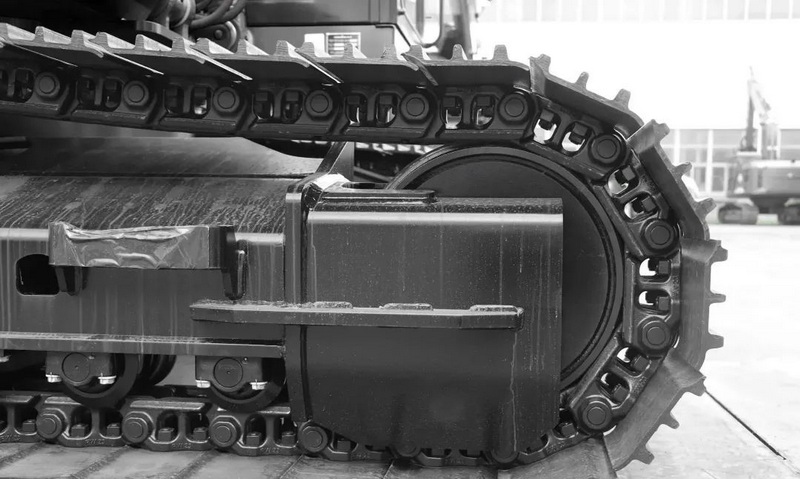
They combine an established industrial base, geographic proximity to key markets, and competitive manufacturing costs. This makes them appealing for both OEM projects and regional aftermarket business.
Kemer can complement your Turkish suppliers by delivering cost‑effective OEM production, supporting custom designs, and providing additional capacity or redundancy, while local partners focus on warehousing and service.
For most heavy‑duty applications, the most meaningful metric is total cost of ownership, often expressed as cost per operating hour. It reflects durability, downtime, and service costs, not just purchase price.
Start with limited trial orders, test products on representative machines and jobsites, and track real performance data. Once results are satisfactory, gradually increase volumes and integrate the supplier into your standard sourcing plan.
It is possible, but not always optimal. Many buyers use local suppliers and distributors for aftermarket responsiveness and rely on specialized OEM partners such as Kemer for large‑volume production and custom engineering.
Replace the placeholders below with your own verified, up‑to‑date sources before publishing:
1. Industry analyses on the Turkish automotive and construction machinery components sector – reputable consulting or research firms' reports.
2. Technical articles or whitepapers on undercarriage design, wear behavior, and life‑cycle costing from recognized engineering organizations.
3. Publications by trade associations related to Turkey's automotive and off‑highway equipment industries.
4. Official documentation and case studies from undercarriage manufacturers and OEMs describing product performance and application examples.
5. Academic or conference papers focusing on track systems, steel metallurgy for wear parts, and hydraulic integration in undercarriage designs.


