
Views: 222 Author: Amanda Publish Time: 2026-01-04 Origin: Site


Content Menu
● What Is a Planetary Gearbox?
● Key Components and Tooth Relationships
● Willis Equation for Planetary Gearbox
● Common Input–Output Configurations
● Case 1: Ring Fixed, Sun Input, Carrier Output
● Case 2: Sun Fixed, Carrier Input, Ring Output
● Case 3: Carrier Fixed, Sun Input, Ring Output
● Step-by-Step Calculation Example
● Practical Design Tips for Planetary Gearbox Ratio
● Using Online Tools and Simulations
● Application Examples in Drive Systems
● Common Mistakes When Calculating Ratios
● FAQ
>> 1. What basic data is needed to calculate a planetary gearbox ratio?
>> 2. How does a higher ratio affect torque in a planetary gearbox?
>> 3. Can one planetary gearbox stage provide very high reduction?
>> 4. Why is the planet gear tooth count not always needed in ratio formulas?
>> 5. How can software help when designing a planetary gearbox?
Planetary gearbox design depends heavily on getting the gear ratio right, because the ratio directly controls speed reduction, torque multiplication, and efficiency of the drive. A clear, step-by-step method for calculating the gear ratio of a planetary gearbox helps engineers, buyers, and maintenance teams choose or verify the correct transmission solution for their applications.[1][2][3][4]
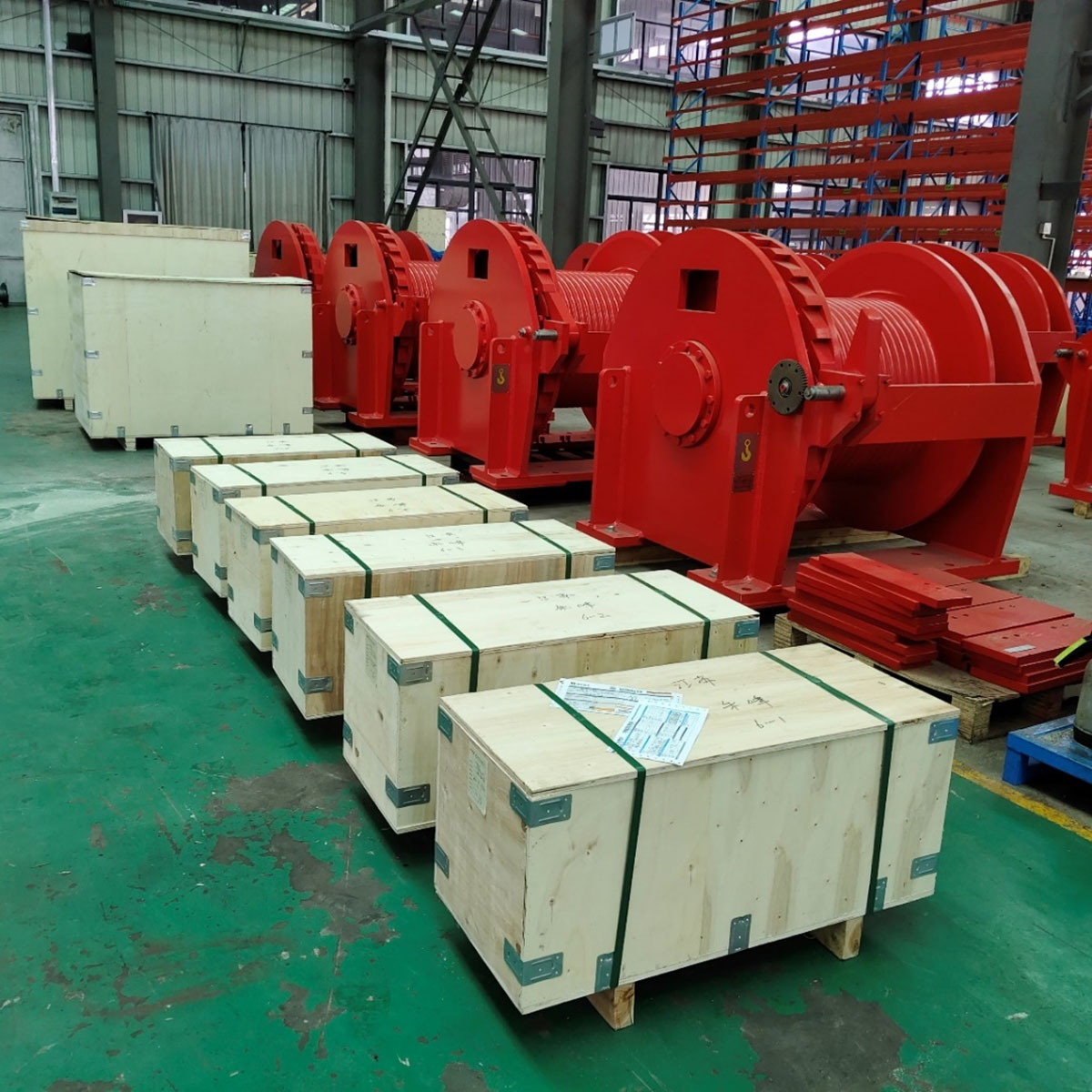
A planetary gearbox is a compact gear train that consists of a central sun gear, several planet gears mounted on a carrier, and an outer ring gear with internal teeth. This structure allows the planetary gearbox to transmit high torque within a small volume while keeping the load distributed across multiple planet gears.[5][3][4]
In a typical planetary gearbox, one element (sun, ring, or carrier) acts as the input, another is the output, and the remaining element is held stationary or constrained by the housing. By selecting which element is fixed and which is driven, the planetary gearbox can provide speed reduction, speed increase, or even reversing of rotation direction.[2][3][6][5]
The core components of a planetary gearbox are:
- Sun gear (center gear)
- Planet gears (usually 3 or more)
- Planet carrier (holds and supports planets)
- Ring gear (internal gear around the planets)
In a standard planetary gearbox, the numbers of teeth on the sun, planet, and ring gears are linked geometrically. A common design relationship is that the number of ring teeth equals the number of sun teeth plus twice the number of planet teeth, which keeps the planets evenly spaced inside the ring.[7][5]
Designers often describe a planetary gearbox by tooth counts such as Zs for the sun gear, Zp for planet gears, and Zr for the ring gear, and these values are the basis for calculating the gear ratio. Because the tooth counts are integers, only certain gear ratios are achievable with a given planetary gearbox architecture.[4][6][2][5]
For any gear train, including a planetary gearbox, the gear ratio is the relationship between input speed and output speed. In simple terms, the overall ratio can be written as[3][4]
GearRatio=Inputspeed/Output speed
which shows how many revolutions of the input are needed for one revolution of the output.[8][3]
When discussing a planetary gearbox, the ratio is often defined from the perspective of a particular application, such as “sun input, carrier output, ring fixed.” In that configuration, a ratio greater than 1 means the planetary gearbox reduces speed and increases torque, which is usually desirable in tracked chassis, winches, and travel drives.[2][5][4]
The motion of sun, ring, and carrier in a planetary gearbox is described by the Willis equation, which links their angular speeds and tooth counts. In a common form, the fundamental planetary gearbox relationship can be expressed as[5][2]
{ωs−ωc}/{ωr−ωc} = - {Zr}/{Zs}
where ωs, ωr, and ωc are the angular speeds of sun, ring, and carrier, and Zs and Zr are their tooth counts.[2][5]
This compact equation applies regardless of which element of the planetary gearbox is fixed, and it becomes a practical gear ratio formula once one of the speeds is set to zero. By choosing the stationary member and rearranging the equation, it is possible to quickly compute the speed ratio between the remaining two elements of the planetary gearbox.[6][2]
A planetary gearbox can operate in many configurations, but three arrangements are particularly common in drive and winch applications. These configurations differ in which element of the planetary gearbox is fixed, which receives input torque, and which acts as the output.[3][4][5]
Typical configurations include:
- Ring fixed, sun as input, carrier as output
- Carrier fixed, sun as input, ring as output
- Sun fixed, carrier as input, ring as output
Each configuration yields a distinct planetary gearbox ratio and often a different rotation direction for the output shaft. Selecting the correct arrangement allows the planetary gearbox to match the speed and torque requirements of tracked vehicles, hydraulic winches, and swing drives.[4][6][5][3]
This is one of the most widely used configurations for a speed-reducing planetary gearbox. In this case, the ring gear is bolted to the housing, the sun gear is driven by the motor, and the carrier delivers the reduced-speed, higher-torque output.[5][3][4]
With the ring gear stationary in a simple planetary gearbox, the speed ratio between the sun input and carrier output can be calculated with a simple tooth-based formula. The resulting gear ratio of the planetary gearbox is:[4][5]
Gear Ratio = {Zr+Zs}/{Zs}
which means the ring and sun tooth counts together determine the overall reduction of the planetary gearbox when the ring is fixed.[5][4]
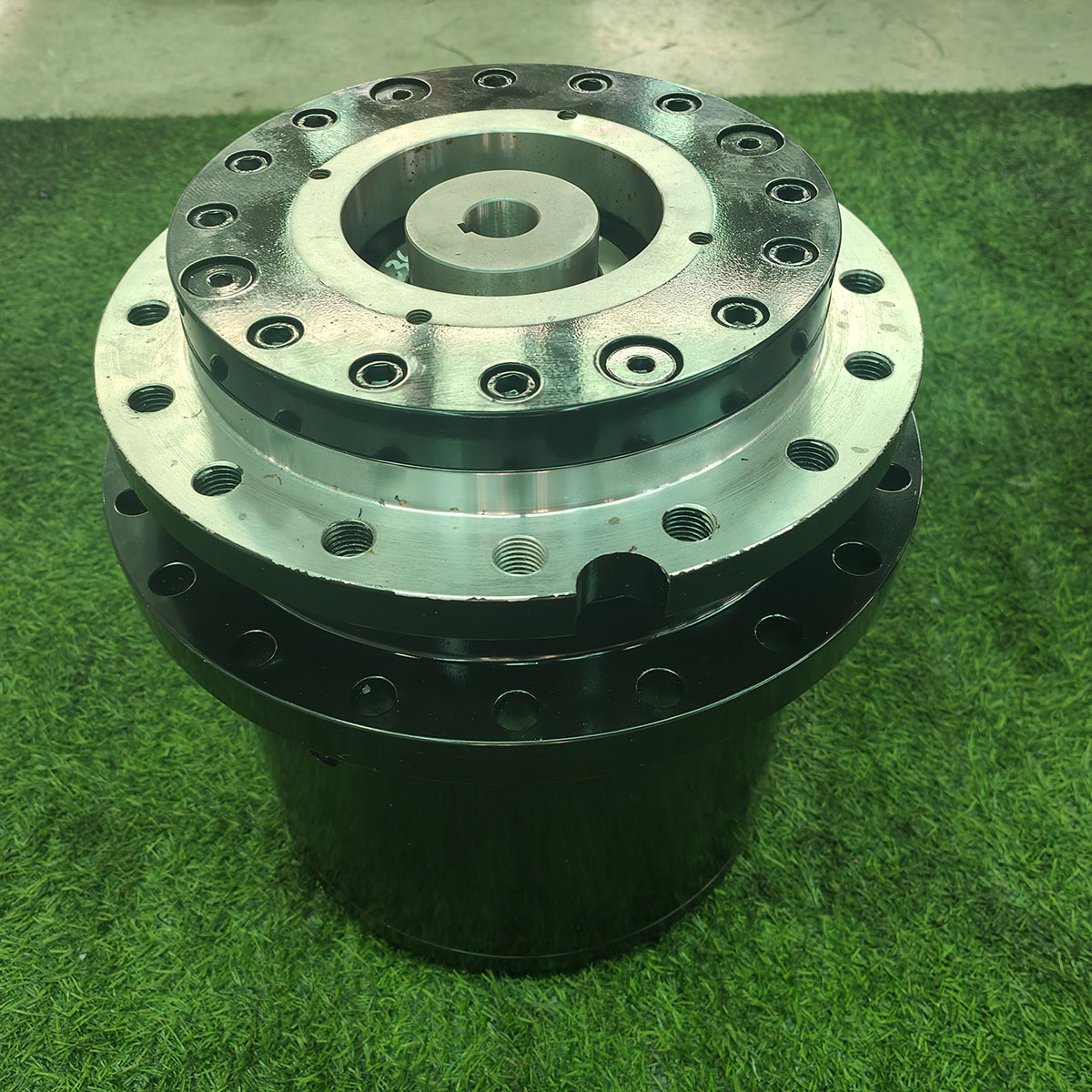
Another useful planetary gearbox mode fixes the sun gear, drives the carrier, and takes output from the ring gear. This configuration can provide an overdrive or speed-increasing effect in the planetary gearbox depending on tooth counts.[6][2][5]
Using Willis equation with the sun gear stationary yields a different expression for the speed ratio between carrier and ring in this planetary gearbox arrangement. The exact formula depends on sign convention, but in magnitude the ratio relates the ring gear speed to the carrier speed as a function of the ring and sun tooth counts.[6][2]
When the carrier is held fixed, the planetary gearbox behaves more like a differential gear pair between sun and ring. In that configuration, the planet gears act as idlers and simply transmit motion between the sun and ring gears in the planetary gearbox.[6][5]
For a planetary gearbox with the carrier fixed, the speed ratio between the sun and ring simplifies to the ratio of their tooth counts. The magnitude of the ratio is approximately[3][5]
|{Gear Ratio}| = {Zr}/{Zs}
and the negative sign in full derivations indicates that the sun and ring of the planetary gearbox rotate in opposite directions.[3][5]
Consider a planetary gearbox designed with a sun gear of 20 teeth and a ring gear of 80 teeth, operating in the common configuration of ring fixed, sun input, carrier output. In this case, the planetary gearbox gear ratio can be found using the simple formula:[8][4]
Gear Ratio = {Zr + Zs}/{Zs} = {80 + 20}/{20} = 5
so the sun must rotate five times for the carrier to rotate once.[8][4]
Interpreting this result, a motor running at 1500 rpm on the sun of this planetary gearbox will produce 300 rpm at the carrier while significantly increasing available torque. A similar procedure can be applied to any planetary gearbox as long as the tooth counts and the fixed component are known.[2][4][3]
When selecting or designing a planetary gearbox, several practical points help ensure the gear ratio works as intended in real machines. Engineers usually start with the target output torque and speed, then use the planetary gearbox ratio to back-calculate the required input speed and motor size.[9][4][3]
Key practical guidelines include:
- Verify that tooth counts produce an integer number of planets that fit evenly around the sun and inside the ring.[7][6]
- Keep the planetary gearbox ratio within a reasonable limit per stage (often in the range of 3:1 to 10:1) to avoid excessive size or poor efficiency.[4][2]
- Combine multiple planetary gearbox stages for very high overall reduction, while checking total efficiency and thermal limits.[9][2]
Modern engineering practice often combines analytical formulas with digital tools when working with a planetary gearbox. Online planetary gearbox calculators allow users to enter tooth counts and instantly compute gear ratios, speeds, and even some preliminary design constraints.[9]
3D-CAD and multibody simulation software also help visualize the motion inside the planetary gearbox and validate calculated ratios. With digital models, the designer can animate sun, carrier, and ring movement, check clearances, and export results for integration into tracked chassis, winch drives, or swing transmissions that rely on a planetary gearbox.[9][3]
A planetary gearbox is common in tracked undercarriages, where it forms the final drive between hydraulic motor and sprocket. In such applications, the planetary gearbox ratio is chosen to deliver high torque at low travel speeds while sharing the load across multiple planet gears.[3][4]
Similarly, compact hydraulic winches use a planetary gearbox in the drum drive to combine high pulling force with smooth low-speed control. Swing drives in excavators or cranes also rely on a planetary gearbox to provide the necessary torque amplification and positioning accuracy under varying loads.[8][4][3]
Several recurring errors appear when engineers or technicians calculate the gear ratio of a planetary gearbox for the first time. A frequent mistake is to confuse which member is fixed, which leads to applying the wrong formula and mis-interpreting the planetary gearbox behavior.[2][8][6]
Another issue is mixing up input and output when writing the speed ratio, which can invert the numerical value of the planetary gearbox ratio. Finally, some users forget to include the sum of ring and sun teeth in the formula for the common ring-fixed configuration, which significantly underestimates the reduction of the planetary gearbox.[10][4][8]
Calculating the gear ratio of a planetary gearbox begins with identifying the tooth counts of sun and ring gears and clearly defining which element is fixed, which is driven, and which delivers output. Using Willis equation and simple derived formulas, especially the widely used (Zr + Zs) / Zs expression for a ring-fixed planetary gearbox, designers can determine speed reduction, torque multiplication, and rotation direction with confidence. For demanding applications such as tracked vehicles, hydraulic winches, and swing drives, a correctly calculated planetary gearbox ratio ensures efficiency, durability, and smooth operation across the full working range.[5][4][2][3]
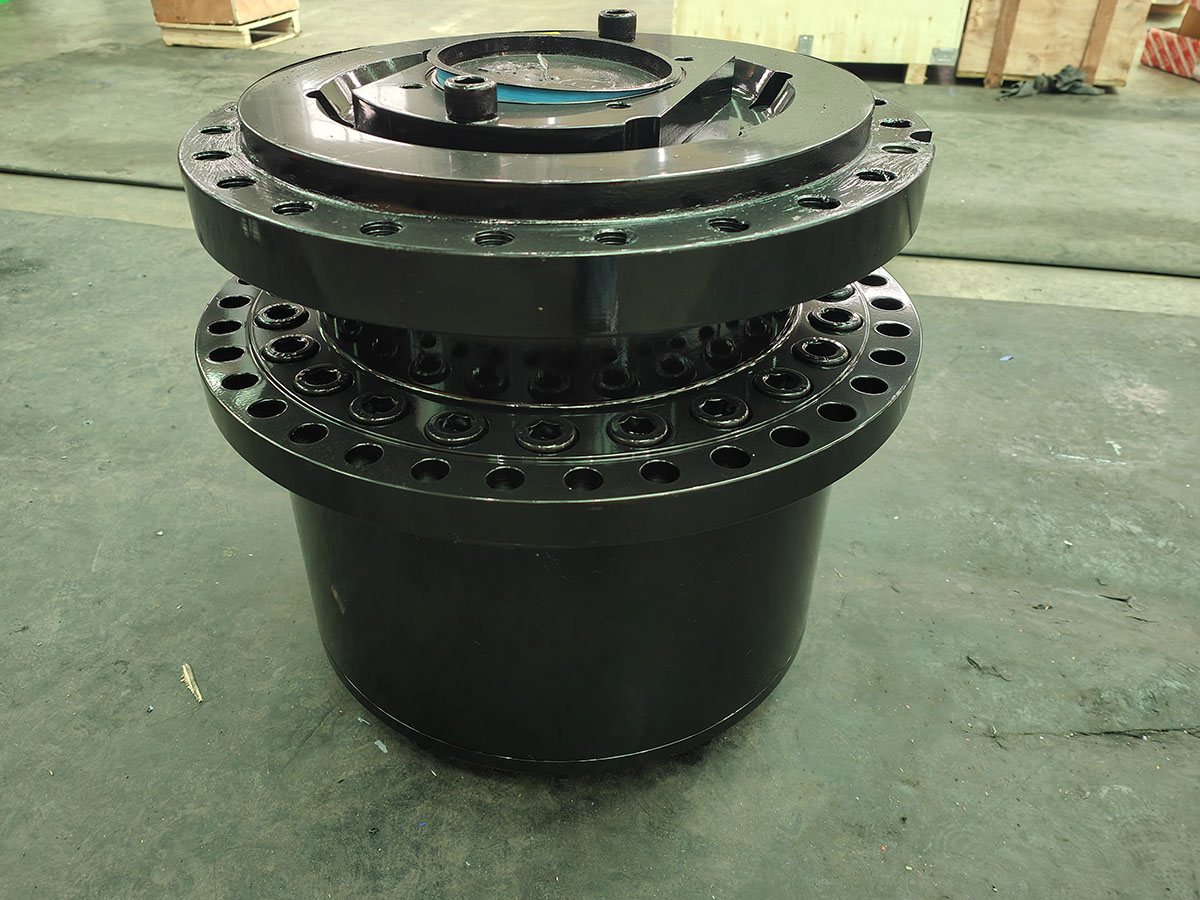
To calculate the ratio of a planetary gearbox, the minimum required data are the number of teeth on the sun gear and the ring gear, plus a clear definition of which member is fixed. With those values, it is possible to apply the correct planetary gearbox formula for the specific input–output configuration.[4][6][2][5]
In a speed-reducing planetary gearbox, a higher numerical ratio means the output turns more slowly but delivers proportionally higher torque compared with the input. This is why a planetary gearbox with a large reduction is ideal for heavy-duty drives such as winches and tracked undercarriages where high torque at low speed is required.[2][3][4]
A single stage of a planetary gearbox is usually limited to a moderate ratio for reasons of geometry, efficiency, and load distribution. To achieve very large reductions, designers often connect multiple planetary gearbox stages in series, while paying attention to cumulative losses and mechanical constraints.[9][4][2]
In many standard calculations for a simple planetary gearbox, the fundamental relationship between sun and ring tooth counts already incorporates the planet geometry, so the planet gear acts effectively as an idler. As a result, the basic planetary gearbox ratio can often be expressed using only sun and ring teeth, provided the planets fit correctly and maintain proper meshing.[7][5]
Software tools and online calculators make it faster to explore different tooth count combinations and instantly see the resulting planetary gearbox ratios. By integrating these tools with CAD and simulation, engineers can optimize the planetary gearbox for efficiency, strength, and smooth operation before cutting any metal.[3][9]
[1](https://khkgears.net/new/gearknowledge/geartechnicalreference/gearsystems.html)
[2](https://www.tec-science.com/mechanical-power-transmission/planetary-gear/transmission-ratios-of-planetary-gears-willis-equation/)
[3](https://www.alibre.com/blog/the-inputs-and-outputs-of-planetary-gears/)
[4](https://mevirtuoso.com/gears/planetary-gears-a-comprehensive-guide/)
[5](https://en.wikipedia.org/wiki/Epicyclicgearing)
[6](https://roymech.org/UsefulTables/Drive/Epicyclicgears.html)
[7](https://woodgears.ca/gear/planetary.html)
[8](https://www.youtube.com/watch?v=lQODRNBki0)
[9](https://mevirtuoso.com/planetary-gear-calculator/)
[10](https://www.vexforum.com/t/planetary-gearbox-calculations/34091)
[11](https://www.youtube.com/watch?v=9c1CyklAN5A)
[12](https://www.youtube.com/watch?v=bWtK5mzuddo)


