
Views: 222 Author: Amanda Publish Time: 2026-01-09 Origin: Site


Content Menu
● What Is a Planetary Gearbox?
● Are Orbital and Planetary Gearboxs the Same?
● Performance and Application Comparison
● Planetary Gearbox in Kemer Solutions
● Visualizing Orbital and Planetary Gearbox Mechanisms
● Advantages of Planetary Gearbox Technology
● When to Use Orbital Drives, Planetary Gearbox, or Both
● FAQ
>> (1) Are orbital drives and planetary gearbox units interchangeable?
>> (2) Why do many heavy machines use a planetary gearbox with a hydraulic motor?
>> (3) What are the main benefits of a planetary gearbox compared with traditional gearboxes?
>> (4) In which applications is an orbital hydraulic drive most suitable?
>> (5) How does Kemer integrate planetary gearbox technology into complete drive solutions?
Orbital and planetary gearbox designs are related but not the same, especially in hydraulic and mobile machinery such as construction equipment, winches, and tracked undercarriages. An orbital drive normally describes a low‑speed hydraulic motor, while a planetary gearbox is a mechanical reduction unit that can be combined with many different prime movers, including hydraulic motors.
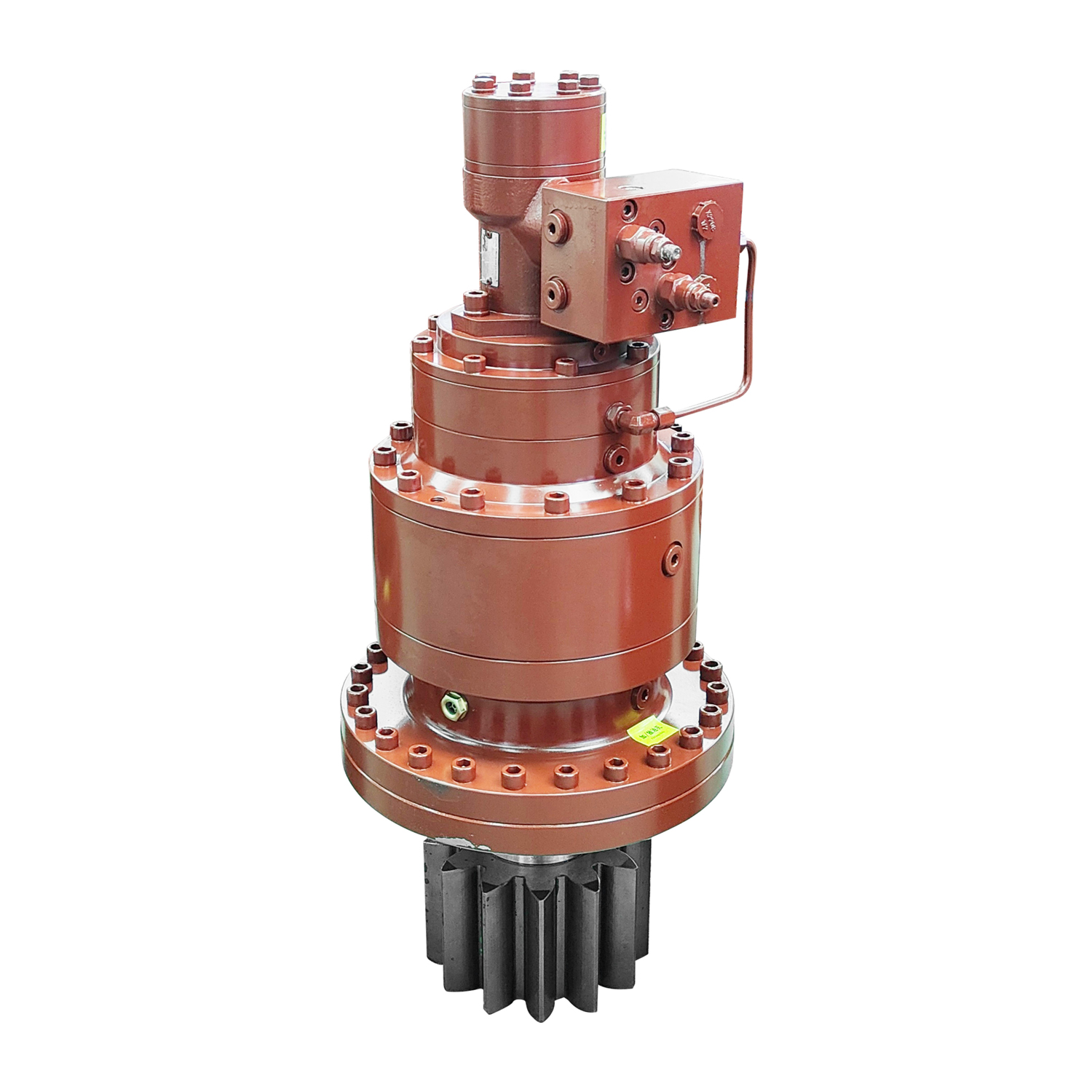
A planetary gearbox is an epicyclic gear set where several planet gears rotate around a central sun gear inside an internal ring gear. This architecture gives a planetary gearbox high torque density, compact size, and excellent load sharing because multiple teeth are in mesh at the same time.
A planetary gearbox typically consists of three core elements:
- A sun gear in the center that receives input from the driving motor.
- Several planet gears mounted on a carrier that mesh with the sun gear.
- An internal ring gear that surrounds the planets and provides the outer meshing surface.
Because the load is distributed across several planet gears, a planetary gearbox can transmit more torque than many traditional parallel‑shaft gearboxes of the same size. This makes the planetary gearbox ideal for applications where high power must fit into a tight envelope, such as travel drives, swing drives, and winch drives.
A planetary gearbox also offers great flexibility in terms of gear ratio. By choosing which member (sun, carrier, ring) is the input, which is fixed, and which is the output, designers can create different ratios and rotational directions without changing the basic geometry. This makes the planetary gearbox a very attractive solution for OEMs that need both versatility and performance.
In hydraulic systems, the term “orbital” usually refers to a low‑speed, high‑torque hydraulic motor that uses internal gear or gerotor principles. The rotor “orbits” inside a stator with a different number of lobes, creating multiple chambers whose volume changes with rotation. Pressurized oil flows into and out of these chambers, generating torque on the rotor and delivering slow, powerful shaft rotation.
Key characteristics of an orbital hydraulic drive include:
- High torque at relatively low speed, often suitable for direct drives on wheels or drums.
- Good starting torque and the ability to operate under high pressure.
- Compact cylindrical design that simplifies integration into mobile equipment.
Orbital drives are widely used in small to medium machinery such as agricultural implements, compact construction equipment, conveyors, and light winches. When the application needs more torque than the orbital unit alone can provide, the motor is commonly combined with a planetary gearbox to further reduce speed and multiply torque.
Although both technologies are linked to epicyclic motion, orbital drives and planetary gearbox assemblies are not the same component. An orbital device is primarily a hydraulic motor that converts hydraulic energy into mechanical rotation, while a planetary gearbox is a purely mechanical transmission that changes speed and torque between input and output shafts.
In practice:
- The orbital unit is responsible for converting pressure and flow into shaft power.
- The planetary gearbox is responsible for adapting that power to the required speed and torque at the machine interface, such as a track sprocket, winch drum, or slewing ring.
Sometimes people refer casually to an “orbital gearbox” when they mean a compact hydraulic drive module that includes both an orbital motor and an integrated planetary gearbox. Technically, however, engineers treat the motor and the planetary gearbox as separate functional elements, even if they are delivered in a single housing.
Despite some conceptual similarities, the internal geometry of an orbital unit and a planetary gearbox is significantly different.
In a planetary gearbox:
- Power flows through a sun gear into several planet gears.
- The planet gears roll between the sun and ring gear and are carried by the planet carrier.
- The fixed and rotating members define the reduction ratio and direction.
In an orbital hydraulic motor:
- The rotor and stator have different numbers of lobes or teeth, creating displacement chambers.
- Hydraulic oil entering the chambers forces the rotor to roll around the stator in an orbiting path.
- The rotor's orbiting motion is transformed into shaft rotation via a drive link and output shaft.
This difference means that the planetary gearbox focuses on precise mechanical ratio control, whereas the orbital device focuses on fluid displacement and torque generation. When combined correctly, the orbital motor provides efficient hydraulic energy conversion, and the planetary gearbox refines the speed and torque to match the machine's demands.
Both orbital units and planetary gearbox systems are used to deliver high torque, but their performance profiles and typical use cases are distinct.
A planetary gearbox:
- Achieves very high torque density with excellent efficiency per stage.
- Offers accurate, repeatable gear ratios that suit servo drives, industrial gearmotors, and heavy mobile drives.
- Handles shock loads and frequent reversals when properly sized and manufactured.
An orbital hydraulic drive:
- Provides high torque directly at low speed, often eliminating the need for separate gear reduction in light‑duty applications.
- Can be compact and cost‑effective for standard duty tasks such as wheel drives, augers, and small winches.
- Is especially attractive in systems where hydraulic power is already available and electric or mechanical drives would be difficult to package.
When combined, an orbital motor and a planetary gearbox deliver high output torque, smooth low‑speed control, and strong durability in extreme duty applications like drilling rigs, tracked equipment, and heavy lifting winches.
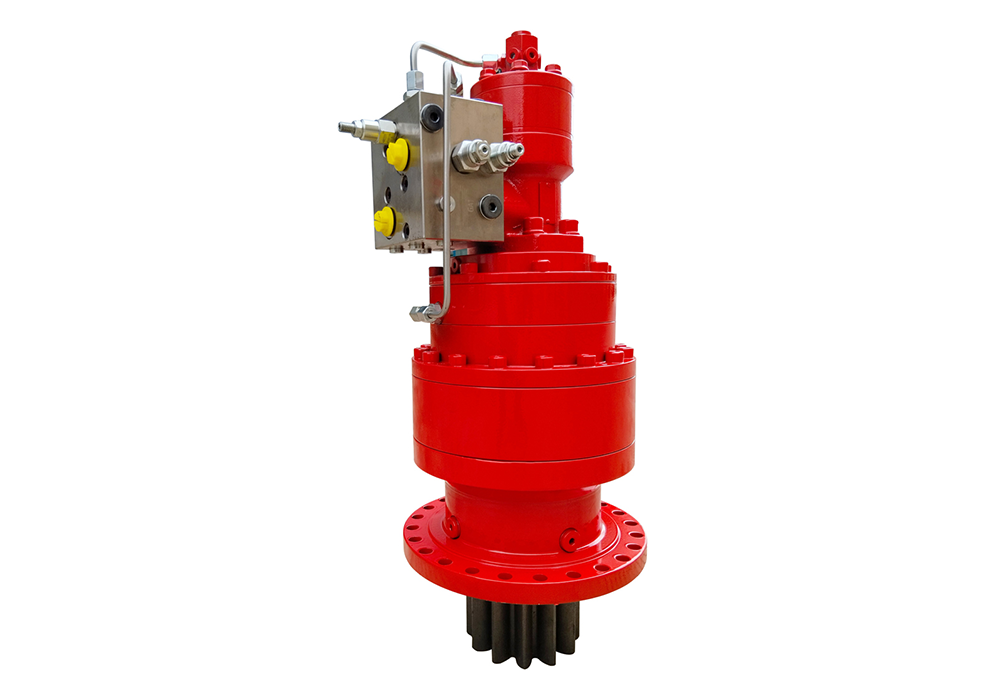
Kemer focuses on advanced drive technologies that integrate planetary gearbox solutions with hydraulic components to serve global customers in demanding industries. The planetary gearbox is a central element in several product lines designed to work in harsh environments and continuous duty cycles.
Typical uses of a planetary gearbox in Kemer's offerings include:
- Travel drives for crawler undercarriages, where the planetary gearbox multiplies motor torque to move the track, overcome obstacles, and handle steep grades.
- Winch drives, where the planetary gearbox allows the drum to pull heavy loads with precise control over speed and braking behavior.
- Swing drives, where a planetary gearbox converts motor power into controlled rotational motion for cranes, excavators, and drilling rigs.
By calibrating planetary gearbox ratios to match hydraulic motor displacement and operating pressure, Kemer delivers drive assemblies that balance speed, torque, and efficiency for specific working conditions.
While this text does not embed actual files, it is helpful to imagine a series of engineering visuals and dynamic animations that illustrate how orbital drives and planetary gearbox systems work internally. A clear mental picture makes it much easier to understand the roles of each component in the overall powertrain.
Useful conceptual visuals could include:
- A cutaway view of a planetary gearbox, showing the sun gear at the center, planet gears rotating on the carrier, and the internal ring gear forming the outer circle.
- An exploded diagram of a hydraulic motor plus planetary gearbox module used as a travel drive, illustrating how the motor output shaft connects to the sun gear and how the planetary gearbox output drives the track sprocket.
Animated sequences would be particularly effective for demonstrating how the planets roll around the sun, how load is shared, and how the orbiting motion in a hydraulic motor converts oil pressure into mechanical torque. These mental “videos” help engineers, buyers, and technicians appreciate why combining an orbital unit with a planetary gearbox can be so powerful.
Planetary gearbox technology delivers multiple advantages that explain its popularity in modern machinery.
Key benefits include:
- High torque density: Because several planet gears share the load, a planetary gearbox can transmit more torque than many parallel‑shaft designs with similar dimensions.
- Compact, coaxial layout: Input and output shafts are aligned, which simplifies machine layout and helps keep the overall package short.
- Good efficiency: With proper design and lubrication, a planetary gearbox can achieve high efficiency, supporting energy‑efficient machinery.
- Versatile ratios: Different combinations of fixed and rotating members allow designers to obtain a wide range of gear ratios without completely redesigning the gear set.
For Kemer, these advantages allow the planetary gearbox to become a modular building block in different drive solutions, from travel drives on tracked machines to integrated winch drives and swing drives.
Deciding whether to use an orbital motor alone, a planetary gearbox driven by another motor, or a combined module depends on several factors, including load, duty cycle, available power source, and required speed control.
Situations where an orbital motor alone may be enough:
- Light‑duty applications where torque demands are moderate, and the available hydraulic pressure is sufficient.
- Systems where low speed is acceptable without additional speed reduction.
Situations where a planetary gearbox is essential:
- Heavy‑duty applications where extremely high torque is needed at the final output, such as large winches, track drives, and slewing drives.
- Cases where precise speed control and robust resistance to shock loads are required.
In many high‑performance designs, the best solution is to combine an appropriate hydraulic motor with a well‑matched planetary gearbox. The motor converts energy, while the planetary gearbox adapts that energy to the mechanical requirements of the machine.
Aspect | Orbital hydraulic drive | Planetary gearbox unit |
Primary role | Convert hydraulic energy into low-speed, high torque | Provide mechanical speed reduction and torque multiplication |
Energy input | Pressurized hydraulic oil | Mechanical power from a motor (hydraulic, electric, etc.) |
Internal principle | Orbiting rotor/stator chambers | Sun, planet, and ring gears in epicyclic mesh |
Speed range | Typically low | Wide range, depending on ratio and stages |
Typical applications | Compact hydraulic drives, wheels, small winches | Travel drives, winch drives, swing drives, industrial gearboxes |
industrial gearboxes|
This comparison shows that orbital devices and planetary gearbox assemblies complement each other rather than replace each other. Understanding their strengths helps designers configure efficient and reliable drive systems.
Orbital drives and planetary gearbox solutions share some epicyclic concepts but are not the same. An orbital unit is a hydraulic motor that turns fluid power into mechanical rotation, whereas a planetary gearbox is a mechanical transmission that modifies speed and torque between an input and an output shaft.
In modern mobile and industrial machinery, the most efficient and powerful systems often combine a hydraulic motor with a planetary gearbox, especially in travel drives, winch drives, and swing drives. By focusing on well‑engineered planetary gearbox technology and its integration with hydraulic components, manufacturers like Kemer help global customers achieve compact designs, high torque density, and long‑term reliability in demanding applications.
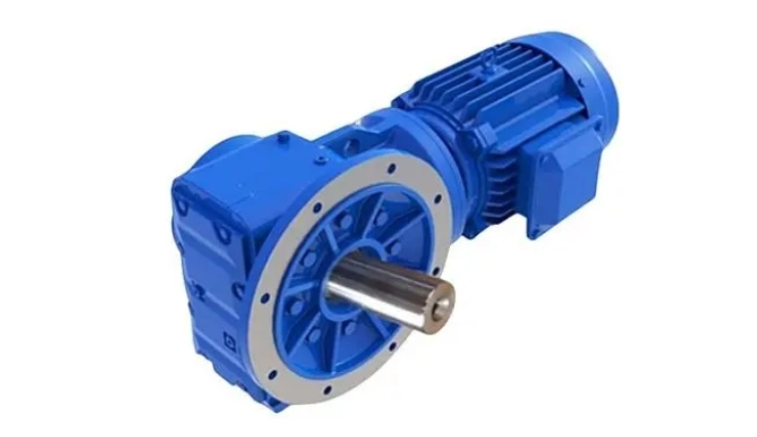
Orbital drives and planetary gearbox units are not interchangeable because they perform different functions. The orbital device is a hydraulic motor that generates torque from oil flow, while the planetary gearbox is a mechanical reduction stage that adjusts speed and torque. They are often used together rather than as substitutes.
Heavy machines frequently need extremely high torque at low speed within a compact space, which is difficult to achieve with a motor alone. By combining a hydraulic motor with a planetary gearbox, designers obtain large torque multiplication, smooth low‑speed control, and improved durability under shock loads and harsh working cycles.
Compared with many traditional parallel‑shaft gearboxes, a planetary gearbox offers higher torque density, better load sharing between gears, and a more compact coaxial layout. These advantages make the planetary gearbox particularly suitable for applications where space is limited but high torque and reliability are essential.
An orbital hydraulic drive is most suitable for low‑speed, high‑torque applications where a compact and economical solution is needed. Typical examples include wheel motors on small machinery, auger drives, compact winches, and light slewing drives where the available hydraulic power can be converted directly into shaft torque without large external gear reducers.
Kemer can integrate planetary gearbox stages with hydraulic motors to build travel drives, winch drives, and swing drives that match specific customer requirements. By selecting appropriate planetary gearbox ratios, motor displacements, and operating pressures, Kemer delivers complete drive packages that optimize torque, speed, and efficiency for real‑world working conditions.


