
Views: 222 Author: Amanda Publish Time: 2026-01-09 Origin: Site


Content Menu
● What Is a Planetary Gearbox?
● Core Elements of a Drill Planetary Gearbox
● How Planetary Gearbox Ratios Work
● Step‑by‑Step: Calculating a Drill Planetary Gearbox Ratio
>> 1. Define drill performance targets
>> 2. Choose a target planetary gearbox ratio
>> 3. Calculate single‑stage planetary gearbox ratio from tooth counts
>> 4. Combine stages for multi‑stage planetary gearboxes
● Torque Calculation in a Drill Planetary Gearbox
>> 1. Ideal torque multiplication
● Practical Design Tips for Drill Planetary Gearboxes
● Example: Calculating a Two‑Stage Drill Planetary Gearbox
>> 1. Determine overall planetary gearbox ratio
>> 2. Select tooth counts per stage
● Multi‑Speed Drills and Planetary Gearbox Arrangements
● Noise, Vibration, and Comfort in Planetary Gearbox Drills
● Reliability and Safety Factors in Planetary Gearbox Design
● Kemer Expertise in Planetary Gearbox Solutions
● FAQ
>> 1) How do you calculate a planetary gearbox ratio for a drill?
>> 2) Why do drills use a planetary gearbox instead of simple spur gears?
>> 3) How many stages are typical in a drill planetary gearbox?
>> 4) How is torque related to planetary gearbox ratio in a drill?
>> 5) What factors affect the durability of a drill planetary gearbox?
Designing a planetary gearbox for a drill means balancing torque, speed, size, and durability so the tool can deliver high power in a compact package. This article explains, step by step, how to calculate the main parameters of a planetary gearbox for a drill, from basic concepts to gear ratio and torque calculations, and then extends into material selection, safety factors, and noise control for real‑world engineering.[1][2]
In the following sections, you will see how the elements of a planetary gearbox work together in a drill, how to size and calculate each stage, and how to turn performance targets into a reliable gearbox design.[3]
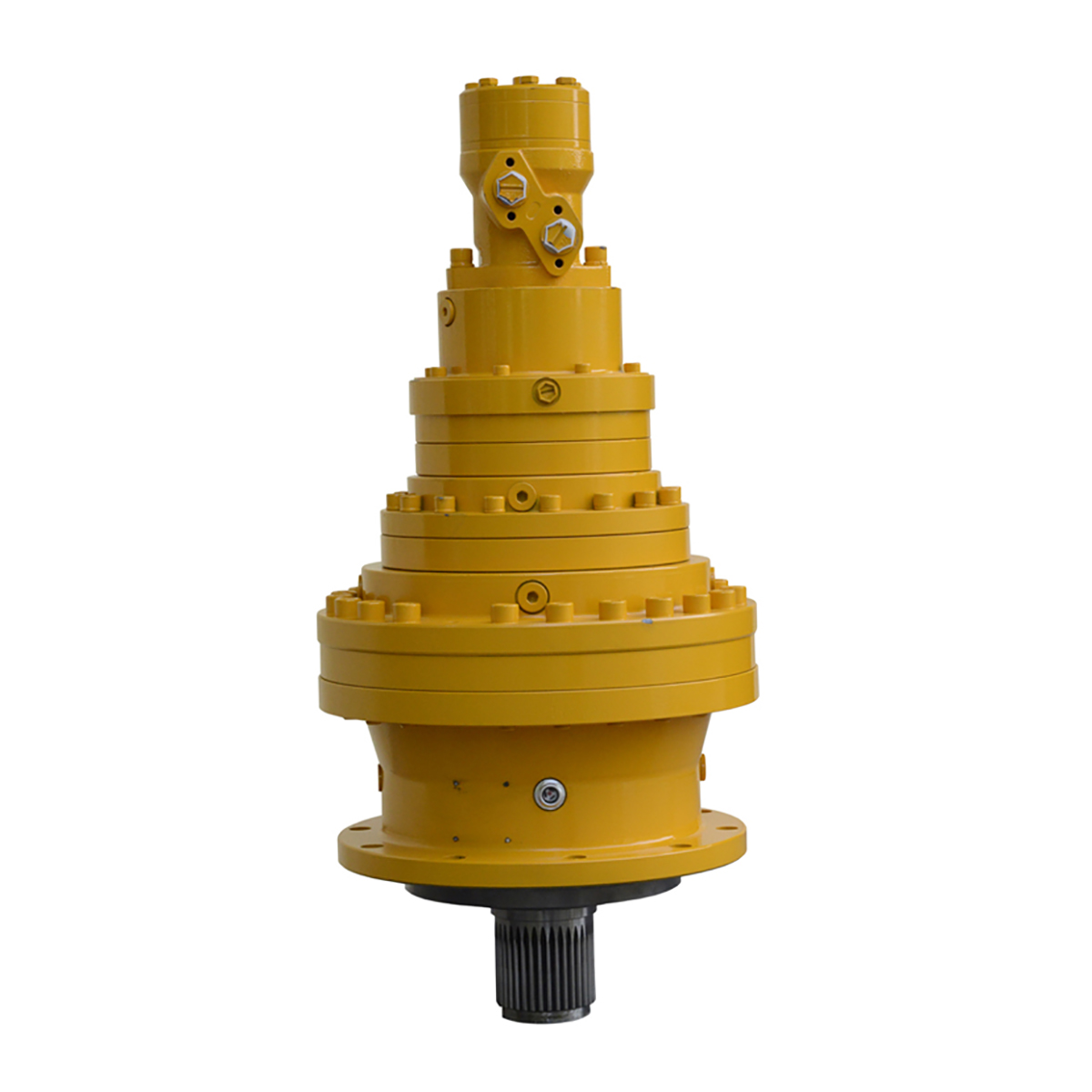
A planetary gearbox is a compact gear system consisting of a central sun gear, several planet gears, a ring gear with internal teeth, and a carrier that supports the planets. In a drill, this structure allows very high torque transmission in a small cylindrical housing that fits directly behind the electric motor.[4][1]
Because the load is shared among multiple planet gears, a planetary gearbox can transmit more torque than a simple parallel shaft gearbox of similar size. This makes planetary gearbox technology ideal for cordless drills, winches, track drives, and many other demanding applications.[5][1]
A planetary gearbox can also achieve multiple gear ratios by combining stages or by switching which element (sun, carrier, or ring) is held fixed or used as input and output. In drills, the simplest and most common choice is to keep the ring fixed, drive the sun with the motor, and take power from the carrier.[2][6]
A planetary gearbox for a drill usually uses a fixed ring gear, a rotating sun gear as the input, and a rotating carrier as the output. This configuration produces speed reduction and torque multiplication while keeping all gears on the same axis, which is ideal for a hand tool.[1][3]
Key elements of a drill planetary gearbox include:[4]
- Sun gear: Mounted on the motor shaft, delivering input speed and torque into the planetary gearbox.
- Planet gears: Typically three or more, sharing torque and running between sun and ring gear.
- Ring gear: Internal gear fixed to the housing in a typical drill planetary gearbox.
- Carrier: Output member holding the planet shafts and connected to the drill's output shaft or chuck.
The coaxial arrangement of a planetary gearbox keeps the drill compact and balanced, reducing vibration in the operator's hand. By placing the planetary gearbox directly behind the motor, manufacturers minimize overhang and improve ergonomics for continuous use.[2][1]
For a standard single‑stage planetary gearbox with the ring gear fixed, the sun as input and the carrier as output, the speed ratio is determined by the tooth counts of the ring and sun gears. The basic relationship for this configuration is:[2]
Gear ratio i (input speed / output speed) = Zr/Zs+1, where Zr is the ring gear teeth and Zs is the sun gear teeth.
This means that as the ring gear tooth count increases relative to the sun gear, the planetary gearbox provides a larger reduction and therefore higher output torque at the carrier. In a multi‑stage drill planetary gearbox, the overall ratio is the product of the ratios of each stage, which allows very high reductions in two or three compact stages.[3][2]
Different planetary arrangements—such as using the carrier as fixed, or using the ring as output—can yield different ratios and even reversal of rotation. However, for drill applications, the fixed‑ring, sun‑input, carrier‑output planetary gearbox remains dominant due to its simplicity and robustness.[6][2]
Designing a planetary gearbox for a drill often starts with speed and torque requirements at the chuck. Once those are known, the designer works backward to find the planetary gearbox ratio and tooth counts.[8]
For a typical cordless drill, common performance targets are:[9]
- No‑load chuck speed in low gear: about 300–600 rpm.
- No‑load chuck speed in high gear: about 1500–2000 rpm.
- Maximum torque at chuck in low gear: often 40–135 Nm for powerful professional drills.[9]
Assume an electric motor with a no‑load speed of 20 000–30 000 rpm and relatively low torque; the planetary gearbox must reduce this speed and increase torque to match drill requirements. These basic numbers guide the required planetary gearbox ratio range.[3]
The ratio required is approximately:[3]
i≈motorspeed/chuckspeed.
For example, if the motor speed is 20 000 rpm and the desired low‑speed chuck speed is 500 rpm, the total reduction needs to be about 40:1. Many drills achieve this with multiple planetary gearbox stages, for instance two stages each providing about 6:1, leading to an overall 36:1 ratio close to the target.[2][3]
Using the common configuration (ring fixed, sun input, carrier output):[7]
i=Zr/Zs+1 .
For a practical example:[2]
- Sun gear teeth Zs = 20.
- Ring gear teeth Zr = 80.
Then the planetary gearbox ratio is:
i=80/20+1=4+1=5:1.
So one stage of this planetary gearbox gives a 5:1 reduction: 5 motor revolutions produce 1 carrier revolution. If a drill uses two such stages in series, the overall planetary gearbox ratio is 5 × 5 = 25:1.[3][2]
The overall ratio of a multi‑stage planetary gearbox is the product of the individual stage ratios. If stage 1 has ratio i1 and stage 2 has ratio i2, then:[3]
itotal = i1×i2 .[6]
In a drill planetary gearbox example:[3]
- Stage 1 ratio: 6:1.
- Stage 2 ratio: 6:1.
- Overall planetary gearbox ratio: 36:1.
This means 36 input revolutions at the motor create 1 output revolution at the chuck, significantly boosting torque for drilling into wood, steel, or masonry.[3]
After determining the planetary gearbox ratio, you can estimate output torque based on the input torque and efficiency. Neglecting losses, torque multiplication ideally equals the gear ratio.[8]
In an ideal planetary gearbox with no losses:
Tout,ideal=i×Tin
However, real planetary gearboxes have efficiency less than 100 % due to friction and gear meshing losses. A single high‑quality planetary gearbox stage can have efficiency around 95–98 %, and multi‑stage gearboxes multiply these efficiencies, reducing overall efficiency slightly.[5][2]
To include efficiency η in the calculation:[8]
Tout=i×Tin×η.
For example, with:[8]
- Motor torque Tin=0.5 Nm.
- Overall planetary gearbox ratio i=36.
- Overall efficiencyη=0.9 (90 %).
Then:
Tout=36×0.5×0.9=16.2 Nm.
This illustrates how a drill planetary gearbox converts modest motor torque into the high torque required at the chuck for heavy duty drilling. In design practice, additional safety margins are added to account for transient loads such as jamming or impact.[8][3]
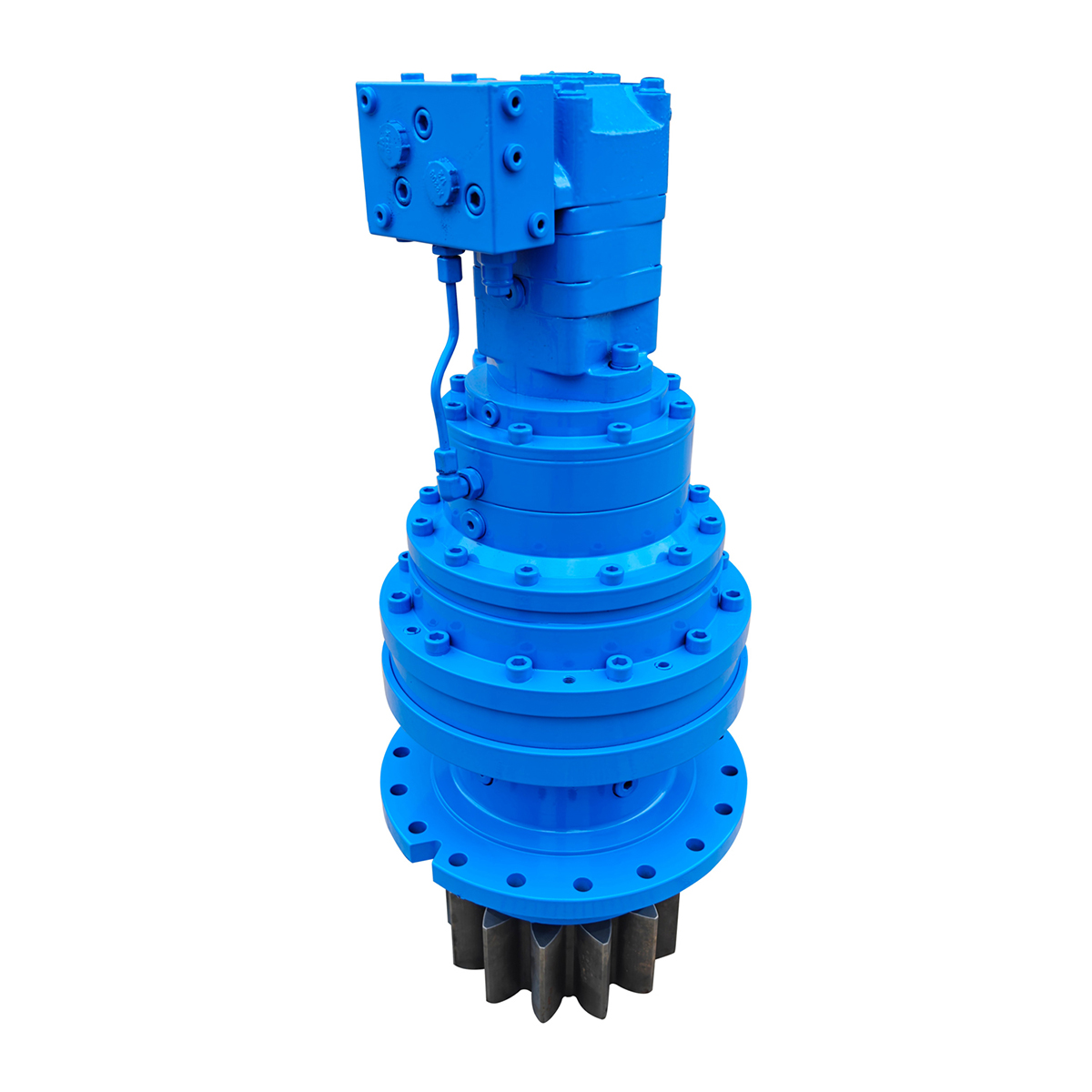
When designing or selecting a planetary gearbox for a drill, engineers must look beyond ratio and torque to consider geometry, strength, and noise. Proper tooth counts, gear module, material choice, and bearing support determine whether a planetary gearbox can survive repeated torque peaks and impact loads.[10]
Useful selection and design tips for a drill planetary gearbox include:[10]
- Ensure tooth counts satisfy geometrical constraints such as ring diameter versus sun and planet diameters, and maintain proper center distances.
- Use tooth numbers that allow the planets to be evenly spaced and avoid interference; the sum of ring and sun teeth often must be divisible by the number of planets.[11]
- Choose ratios per stage (often between 3:1 and 10:1) to maintain good efficiency and moderate gear sliding speeds.[2]
- Pay attention to lubrication, as the compact structure and high tooth contact frequency in a planetary gearbox require good lubrication for long life.[1]
- Design carriers and planet pins with sufficient stiffness to prevent misalignment under load, which can otherwise lead to premature wear.[8]
Material selection is also critical; drill planetary gearbox components are commonly made from alloy steels, sometimes with surface hardening treatments such as carburizing or nitriding for improved wear resistance. Housing and ring gear elements can often be integrated or formed from high‑strength steels or engineered plastics, depending on target cost and duty cycle.[1][2]
Consider designing a two‑stage planetary gearbox for a cordless drill motor rated at 25 000 rpm no‑load, targeting about 700 rpm at the chuck in low gear.[3]
The nominal total ratio required is:[3]
itotal≈25000/700≈35.7.
A two‑stage planetary gearbox with approximately 6:1 ratio per stage gives:[3]
itotal=6×6=36,, which closely matches the requirement.
For each stage, choose tooth counts that yield a ratio of about 6:1:[7]
- Using i=Zr/Zs+1≈6.
- Then Zr/Zs≈5, so pick Zr=5Zs.
For practical integer values, one might choose:[10]
- Sun gear Zs = 18 teeth.
- Ring gear Zr=90 teeth.
Theni=90/18+1=5+1=6:1.
Using similar proportions for the second stage creates a consistent two‑stage planetary gearbox with the required overall ratio.[3]
If the motor provides 0.4 Nm under load and the overall planetary gearbox ratio is 36:1 with efficiency 90 %, the output torque is:[8]
Tout=36×0.4×0.9=12.96 Nm.
This value falls within the range suitable for many general‑purpose drills using a compact planetary gearbox. In more powerful drills, higher motor torque or slightly higher planetary gearbox ratios are used to reach torque levels above 50 Nm.[9]
Many cordless drills offer at least two mechanical speed ranges, typically labeled “1” for low speed high torque and “2” for high speed lower torque. This is often achieved by combining a planetary gearbox with a shift mechanism that reconfigures which members are locked or engaged.[9]
Common strategies in a multi‑speed drill planetary gearbox include:[3]
- Using a sliding gear or clutch to bypass one planetary stage for the high‑speed mode.
- Locking different gear components in different positions to change the effective planetary gearbox ratio.
The result is that the same planetary gearbox can deliver both a high reduction for heavy drilling and a lower reduction for fast screw driving or light drilling. Correct calculation of each configuration ensures the planetary gearbox remains within safe speed and torque limits in every mode.[9][8]
Beyond basic strength and torque, a well‑designed planetary gearbox in a drill must also run quietly and smoothly for user comfort. Noise in a planetary gearbox is influenced by tooth profile, contact pattern, manufacturing accuracy, and bearing quality.[10][1]
Key approaches for reducing noise and vibration in a drill planetary gearbox include:[1]
- Using high‑precision gears with optimized tooth profiles such as corrected involute forms.
- Ensuring uniform load sharing among planets so that no single gear carries excessive load.
- Balancing the carrier and chuck assembly to minimize vibration felt by the user.
- Selecting suitable lubrication that dampens gear impacts and reduces sliding friction in the planetary gearbox.
These refinements allow a planetary gearbox to deliver high torque with a smooth, refined sound, which is important for professional tools used for long periods.[1]
A drill planetary gearbox is routinely exposed to sudden stalls when a bit jams, so reliability cannot be based on average torque alone. Designers typically include safety factors on tooth bending stress, surface contact stress, and bearing loads.[8]
Important reliability principles for a planetary gearbox include:[8]
- Calculating gear tooth stresses under peak torque and applying suitable safety margins according to standards such as ISO or AGMA.
- Checking fatigue life for repeated loading cycles so that the planetary gearbox can survive years of regular use.
- Designing failsafe mechanisms such as slip clutches or electronic current limits to prevent catastrophic overload.
For manufacturers that also design winches, travel drives, and swing drives, experience with heavy‑duty planetary gearbox applications helps refine drill gearbox designs to withstand harsh conditions and operator abuse.[5]
Manufacturers that specialize in track undercarriages, winches, planetary gearboxes, travel drives, hoist drives, swing drives, and hydraulic motors can optimize planetary gearbox designs for drill and similar applications. By combining hydraulic and mechanical transmission know‑how, such suppliers can deliver planetary gearbox solutions that handle high loads with excellent efficiency and long service life.[5][1]
For drill applications, this expertise translates into:[2]
- Tailored planetary gearbox tooth geometries for low noise and smooth operation.
- Robust carriers and bearings for resistance to shock loads and start‑stop duty.
- Integrated planetary gearbox and motor packages that simplify installation for OEM tools and power equipment manufacturers.
By leveraging experience from demanding industrial planetary gearbox systems, such a manufacturer can create compact, reliable gearboxes that keep handheld tools powerful yet easy to control.[5]
Calculating the planetary gearbox of a drill means translating chuck speed and torque requirements into appropriate gear ratios, tooth counts, and multi‑stage configurations. Using fundamental formulas for planetary gearbox ratios, carefully selecting sun and ring gear tooth numbers, and accounting for efficiency, designers can create compact planetary gearbox solutions that deliver high torque from fast electric motors in modern drills. When material selection, noise control, and safety factors are added to the calculation process, the result is a planetary gearbox that is not only powerful but also reliable, quiet, and comfortable for the end user.[1][2][3]
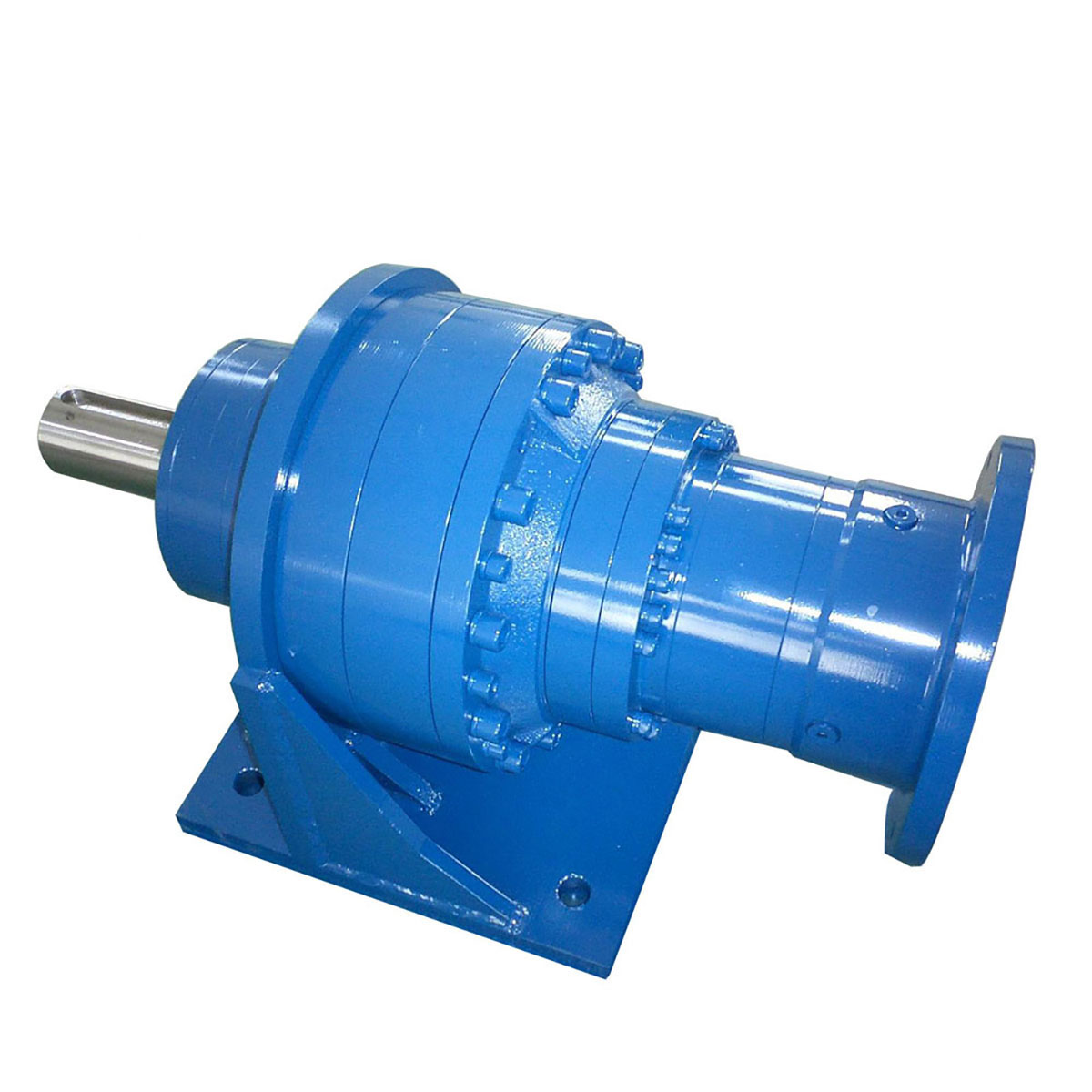
The most common drill configuration fixes the ring gear, uses the sun gear as input, and the carrier as output, resulting in a ratio i=Zr/Zs+1. In a drill, you choose sun and ring gear tooth counts so that the overall planetary gearbox ratio (including multiple stages) matches the required motor speed to chuck speed reduction.[7][3]
A planetary gearbox allows high torque in a compact, coaxial package that fits neatly behind the motor while sharing load among several planets. This load sharing and compactness make planetary gearbox designs ideal for handheld drills where space and weight are limited but torque demand is high.[1][2]
Most cordless drills use two or sometimes three planetary gearbox stages to reach ratios around 20:1 to 40:1 for low gear. Each stage of the planetary gearbox typically has a ratio between about 3:1 and 10:1, and the overall ratio is the product of the stages.[9][3]
Ignoring losses, the output torque of a planetary gearbox is the input torque multiplied by the gear ratio. When efficiency is included, the drill planetary gearbox output torque is Tout=i×Tin×η, where ηη is the efficiency of the planetary gearbox.[2][8]
Durability depends on gear material, heat treatment, lubrication, tooth geometry, and how well the planetary gearbox distributes load across its planets. High‑quality bearings, precise machining, and well‑chosen tooth counts for smooth meshing also extend the life of the drill planetary gearbox.[10][1]
[1](https://www.machinedesign.com/mechanical-motion-systems/article/21834331/planetary-gears-the-basics)
[2](https://www.sgrgear.com/news/industry-news/planetary-gearbox-design-ratios-applications-selection-guide.html)
[3](https://mentoredengineer.com/calculate-planetary-gear-ratios/)
[4](https://khkgears.net/new/gearknowledge/geartechnicalreference/gearsystems.html)
[5](https://www.lancereal.com/planetary-gears-principles-of-operation/)
[6](https://www.tec-science.com/mechanical-power-transmission/planetary-gear/transmission-ratios-of-planetary-gears-willis-equation/)
[7](https://mevirtuoso.com/gears/how-to-calculate-gear-ratio-for-planetary-gear/)
[8](https://www.reckondrives.com/blog/correct-sizing-of-a-planetary-gearbox)
[9](https://www.reddit.com/r/Motors/comments/yvts36/motorsizingforelectricdrillsthrough/)
[10](https://drivetrainhub.com/notebooks/gears/geometry/Chapter%204%20-%20Planetary%20Gears.html)
[11](https://woodgears.ca/gear/planetary.html)


