
Views: 222 Author: Robert Publish Time: 2026-01-17 Origin: Site


Content Menu
● Overview of Sailing Hydraulic Winches
● Core Hydraulic Winch Technology
● Hydraulic Power Packs on Sailing Yachts
● Control Valves and Winch Operation
● Self‑Tailing and Multi‑Speed Gear Ratios
● Mechanical Structure and Materials
● How Sailing Hydraulic Winches Integrate on Board
● Performance Advantages of Sailing Hydraulic Winches
● Typical Sailing Applications for Hydraulic Winches
● Hydraulic Winch vs Electric Winch on Yachts
● Safety and Control Features in Sailing Hydraulic Winches
● Maintenance Considerations for Sailing Hydraulic Winches
● Why OEMs Choose Hydraulic Winch Solutions
● Using Sailing Hydraulic Winches in Harsh Marine Environments
● Advanced Design Trends in Sailing Hydraulic Winches
● Installation and Commissioning Considerations
● Operational Best Practices for Crews
● FAQ About Sailing Hydraulic Winches
>> 1. How does a sailing hydraulic winch actually work?
>> 2. When should a yacht use a hydraulic winch instead of an electric winch?
>> 3. What maintenance does a sailing hydraulic winch need?
>> 4. Are sailing hydraulic winches safe for short‑handed or solo sailing?
>> 5. How do builders size a hydraulic winch for a particular yacht?
Hydraulic winch systems on sailing yachts use pressurized oil, high‑torque hydraulic motors, and efficient gearing to turn the winch drum, giving sailors powerful, smooth, push‑button sail handling under heavy loads that manual or small electric winches cannot handle. By combining advanced hydraulic power packs, self‑tailing drum designs, and smart control valves, a modern sailing hydraulic winch delivers precise sheet control, long duty cycles, and reliable performance on performance cruisers, superyachts, and offshore racing boats.
A sailing hydraulic winch is a powered sheet and halyard winch driven by hydraulic pressure instead of manual grinding or a standalone electric motor. The hydraulic winch is usually integrated into the yacht's central hydraulic system, sharing pumps, reservoirs, and valves with windlasses, thrusters, and other onboard hydraulic functions.
To illustrate how this looks on a real yacht, imagine a deck layout diagram showing several sailing hydraulic winch units around the cockpit and mast, all plumbed to a central hydraulic power pack below deck in the engine room. A second schematic could show the hydraulic winch drum in cross‑section, highlighting the hydraulic motor, planetary gearbox, shaft, and drum shell with a self‑tailing top for line handling.

At the heart of a sailing hydraulic winch is a hydraulic motor that converts pressurized oil into high‑torque rotation to drive the winch drum. The hydraulic winch drum is often coupled to the motor through a compact planetary gearbox, which multiplies torque and delivers smooth, controllable speed under varying sheet loads.
A simple animation could show oil flowing from a pump to the hydraulic motor, the motor shaft turning the planetary gears, and the drum of the hydraulic winch winding or unwinding rope as sailors trim sails. Another cutaway rendering of a hydraulic winch motor might label the rotor, stator, inlet ports, and shaft seal to explain how hydraulic torque is generated inside the winch drive.
A sailing hydraulic winch requires a hydraulic power source, typically a power pack driven by the main engine, generator, or electric motor that supplies pressurized oil to multiple hydraulic winches. The hydraulic winch circuit includes a reservoir, filters, pump, relief valve, pressure line, return line, and often accumulators that store energy and smooth pressure peaks during rapid trimming.
One useful technical illustration would show the full hydraulic circuit that feeds each sailing hydraulic winch, including pump, valves, manifold, hoses, and quick‑connects for service. A second diagram could zoom in on the hydraulic manifold that distributes flow to several hydraulic winch stations, indicating how individual valves isolate or prioritize different winches.
Directional and proportional control valves manage how oil flows to a sailing hydraulic winch, setting the direction and speed of the drum rotation. When the operator presses a cockpit switch, foot pedal, or pushes a remote control button, the valve opens to send pressurized oil to the hydraulic winch motor, and closes or shifts position to stop or reverse drum motion.
To make this easy to understand, a control panel mock‑up could show labeled rocker switches for each sailing hydraulic winch, with indicator lights for “pressurised” and “in use.” A simple flow diagram near the helm could depict how a small electrical signal from a control switch actuates a solenoid valve, which then changes the oil path to power the hydraulic winch.
On most yachts, each sailing hydraulic winch is a self‑tailing winch that grips the line with built‑in jaws, freeing one hand and allowing safer, more efficient operation. Many sailing hydraulic winch models also offer multiple effective gear ratios through the hydraulic motor and gearbox, combining high‑torque low‑speed modes for heavy hoists with faster modes for light trimming.
A 3D rendering could show a self‑tailing head on a hydraulic winch with the line wrapped around the drum and exiting through the jaws, illustrating how the self‑tailer works at different load angles. Another comparative graphic might place a manual self‑tailing winch next to a hydraulic winch of similar size, highlighting the compact motor housing and gearbox integrated under the hydraulic winch drum.
The casing, drum, and gear housing of a sailing hydraulic winch are generally manufactured from marine‑grade aluminum alloys or stainless steel for strength and corrosion resistance in saltwater. Inside the hydraulic winch, hardened steel gears, high‑strength shafts, roller bearings, and sealed seals allow continuous duty, shock loading, and long service intervals.
An exploded‑view diagram of a hydraulic winch assembly would clearly show the drum, self‑tailing top, gearbox, hydraulic motor, bearings, and mounting base as individual components. A finish‑comparison image could present polished stainless and hard‑anodized aluminum hydraulic winch drums side by side to show how material choice affects aesthetics and long‑term durability on deck.
On larger yachts and superyachts, a shared hydraulic system powers multiple hydraulic winch units along with windlasses, backstay adjusters, furlers, and thrusters, allowing centralized control and reduced electrical cabling. The hydraulic winch lines are typically routed to key trimming positions—cockpit, mast base, and foredeck—so crew can control sheets, halyards, and control lines from safe, ergonomic locations.
A full‑boat side‑view graphic could map hydraulic lines from the central power pack to each sailing hydraulic winch and other hydraulic functions, illustrating system integration. A deck plan image could then highlight color‑coded sheet and halyard paths leading to the appropriate hydraulic winch stations to help readers understand sail handling ergonomics.
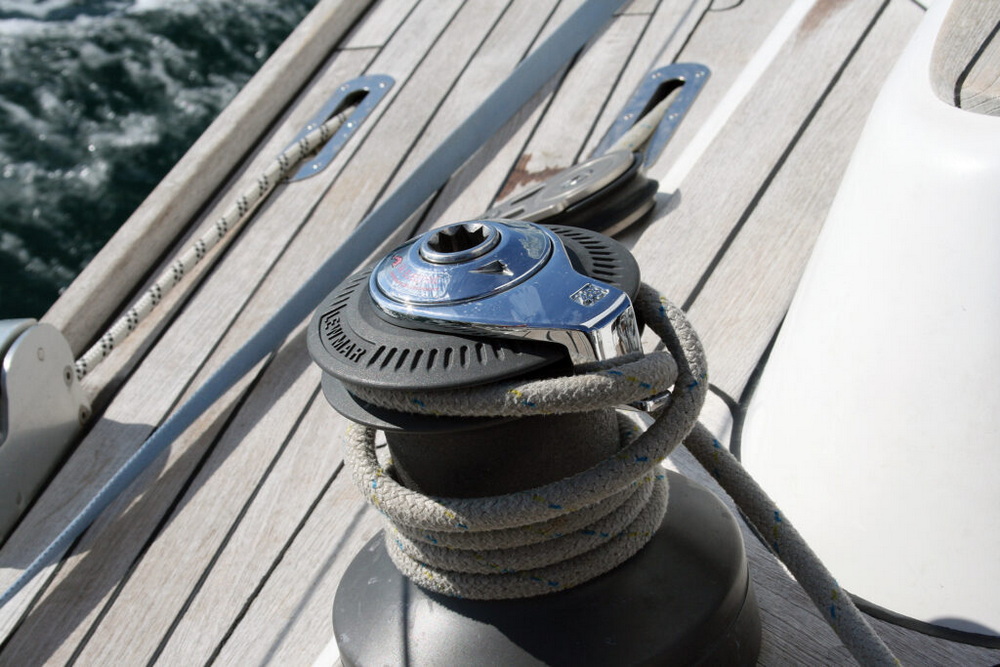
The main advantage of a sailing hydraulic winch is its ability to deliver high torque and pulling power continuously without overheating, making it ideal for large sail areas and offshore racing loads. A hydraulic winch also provides fine speed control, high efficiency, and the ability to hold heavy loads without consuming power, which is critical when sheets are locked under strong wind pressure.
A performance chart illustration could plot line pull versus speed for a typical sailing hydraulic winch, showing how flow and pressure settings change operating points. A second chart could compare duty cycle and temperature rise between an electric and a hydraulic winch of similar capacity, emphasizing the continuous‑duty advantage of the hydraulic winch.
Hydraulic winches are most common on performance cruisers, maxi racers, and superyachts where sail loads exceed what manual or small electric winches can handle and where long duty cycles are routine. Offshore and blue‑water sailors also favor the hydraulic winch for tasks like heavy genoa trimming, mainsheet systems, running backstays, and hoisting large asymmetric spinnakers under demanding conditions.
A photo set concept could show a powerful sailing hydraulic winch trimming a genoa on a racing yacht at high heel angles, emphasizing load control on the primary winches. Another sequence could depict the same hydraulic winch hoisting a mainsail, highlighting constant line speed and reduced crew effort compared with manual grinding.
For many mid‑size cruising yachts, an electric winch is sufficient, but on high‑load or large‑sail applications, a hydraulic winch offers higher pulling capacity, better duty cycle, and smoother control. An electric unit is simpler to install but may struggle with repeated high‑load operations, while a hydraulic winch requires more complex plumbing but excels in heavy, continuous use.
Here’s the table formatted properly:
| Aspect | Hydraulic Winch | Electric Winch |
|---|---|---|
| Power Source | Pressurized hydraulic oil from a central system. | Onboard DC or AC electrical supply. |
| Pulling Capacity | Very high; ideal for large sails and continuous load. | Moderate; better for lighter, intermittent loads. |
| Duty Cycle | Continuous or long duty with minimal overheating. | Limited by motor heating and battery capacity. |
| Installation | More complex with hoses, valves, and a power pack. | Simpler, mainly wiring and control cabling. |
| Best Use | Superyachts, racing boats, heavy offshore use. | Smaller cruisers, moderate sail loads. |
A comparative diagram could show the different system layouts for a hydraulic winch and an electric winch, emphasizing the central power pack versus distributed electric motors. A second visual might overlay energy‑flow arrows on both systems to highlight how a hydraulic winch shares power with other hydraulic devices while an electric winch draws current directly from batteries.
Modern sailing hydraulic winch systems incorporate load‑holding brakes, relief valves, and overload protection to prevent sudden runaway or structural damage when loads spike. Some advanced hydraulic winch controls also monitor pressure, temperature, and line speed so operators can stay within safe working limits and record data for maintenance planning.
A safety‑focused schematic could highlight the brake module and relief valve location within a hydraulic winch circuit, explaining how they engage during overload events. Another illustrative graphic might show safe crew positions around a hydraulic winch under load, marking danger zones where hands and clothing should never be placed.
Routine maintenance of a sailing hydraulic winch includes checking oil level and cleanliness, inspecting hoses and fittings for leaks, and lubricating mechanical parts per manufacturer guidelines. Crews should periodically inspect hydraulic winch drums, jaws, and bearings for wear, while also verifying that seals and brake components function correctly in both directions.
An instructional maintenance infographic could show key inspection points on a deck‑mounted hydraulic winch, including fasteners, seals, and self‑tailing jaws. A second service‑oriented visual might depict safe lock‑out procedures and how to isolate the hydraulic winch from the hydraulic power pack before disassembly.
Original equipment manufacturers and yacht builders often specify hydraulic winch solutions because they can integrate multiple high‑power functions into one efficient hydraulic system, saving weight and space. By combining a central power pack with optimized hydraulic winch units, designers also gain flexibility in deck layout and can tailor winch torque, speed, and control logic to different sailing styles.
A design‑engineering style diagram could show a yacht systems block layout where hydraulic winch units, thrusters, and windlasses share the same pressure rail and return line. Another concept visual might present parameter sheets comparing different hydraulic winch models (drum size, torque rating, line speed) used in various yacht sizes.
Because sailing hydraulic winches operate in salty, wet, and UV‑intense conditions, their housings, seals, and surfaces are engineered to resist corrosion and water ingress. The hydraulic winch's closed motor and gearbox, combined with high‑quality surface treatments, help maintain performance even under heavy spray, green water, and extreme temperatures typical of offshore passages.
A weather‑exposure image concept could show a sailing hydraulic winch on an ocean‑crossing yacht, coated with spray but operating smoothly under load. Another educational graphic might highlight sacrificial anodes, drainage paths, and protective coatings on a hydraulic winch assembly designed for long‑term marine exposure.
New‑generation sailing hydraulic winch systems increasingly use compact, high‑efficiency hydraulic motors and optimized planetary gear sets to reduce weight while maintaining high torque. Designers continually refine the hydraulic winch drum profile, self‑tailing geometry, and bearing arrangements to minimize friction, improve line handling, and reduce noise under load.
Another important trend is integrating electronic control into hydraulic winch systems, using pressure sensors and position feedback to create semi‑automatic trimming modes that maintain target line tension. These smart hydraulic winch solutions can be linked to sailing instruments and autopilots, helping crews optimize sail shape, reduce workload, and improve safety during shorthanded passages.
When installing a sailing hydraulic winch, builders must ensure robust structural backing plates and correct fastener sizing so deck loads are safely transferred into the hull structure. Proper hose routing with adequate bend radii, chafe protection, and secure clamps is critical so the hydraulic winch operates reliably and does not introduce leaks.
During commissioning, technicians bleed air from the hydraulic lines, verify system pressure and flow, and test each hydraulic winch under light and heavy loads. They also calibrate control valves and safety devices, confirm correct line routing to each hydraulic winch drum, and train crew members in safe operating procedures before the yacht begins regular service.
Crew members using a sailing hydraulic winch should always keep clear of the drum and self‑tailer, avoiding loose clothing and jewelry that could catch on rotating parts. Before applying power, the operator should confirm that the line is properly wrapped, the tail exits cleanly, and all crew are in safe positions.
It is also wise to start the hydraulic winch slowly, especially when taking up slack or approaching the limit of sail travel, to avoid shock loads on rigging and deck hardware. After maneuvers, crews should secure lines on cleats or jammers as appropriate, and check that the hydraulic winch control has fully returned to neutral so the system is safely depressurized.
The core technology behind a sailing hydraulic winch combines a high‑torque hydraulic motor, efficient planetary gearbox, robust drum structure, and advanced hydraulic controls to manage powerful sail loads safely and precisely. Integrated into a yacht's central hydraulic system, a hydraulic winch offers higher pulling capacity, better duty cycle, and smoother control than most electric or manual alternatives, making it the preferred solution on performance, offshore, and large yacht platforms. For yacht builders, operators, and component manufacturers, understanding this hydraulic winch technology is essential to designing safe, reliable, and efficient sail‑handling systems that meet the demands of modern sailing.

A sailing hydraulic winch works by sending pressurized hydraulic fluid from a power pack through hoses and valves to a hydraulic motor, which turns the winch drum via a gearbox. As the hydraulic winch drum rotates, it winds or unwinds the sheet or halyard, with valves controlling direction and built‑in brakes and relief valves ensuring safe stopping and overload protection.
A yacht should use a hydraulic winch when it has large sail areas, high sheet loads, and frequent trimming cycles that demand continuous duty and high torque. In such cases, a hydraulic winch offers better durability, smoother control, and the ability to share a central hydraulic power source with other onboard systems, even though installation is more complex than with electric winches.
Regular maintenance of a sailing hydraulic winch includes inspecting hoses, fittings, and seals for leaks, monitoring oil condition and level, and cleaning and lubricating mechanical parts. Periodic checks of the hydraulic winch brake, gearbox, and self‑tailing jaws, along with scheduled oil and filter changes, help prevent failures and extend service life in harsh marine environments.
Properly designed and installed sailing hydraulic winch systems are safe for short‑handed and solo sailing because they reduce physical effort and allow controlled push‑button operation from protected positions. However, operators must learn correct line handling, stay clear of the hydraulic winch drum and self‑tailer under load, and respect system limits to avoid accidents during heavy weather maneuvers.
Yacht designers and builders size a hydraulic winch by analyzing sail loads, line diameters, required line speed, and available hydraulic pressure and flow from the power pack. They then select a hydraulic winch model with suitable drum dimensions, gearbox ratio, motor displacement, and safety margin so the system can handle peak loads and duty cycles encountered in real sailing conditions.
1. https://www.fawcettboat.com/blogs/articles/sailing-winch-buying-guide
2. https://www.nauticexpo.com/boat-manufacturer/hydraulic-sailboat-winch-1905.html
3. https://www.ronstan.com/us/products/winches/andersen-winches/single-speed-hydraulic.html
4. https://www.velasailingsupply.com/our-brands/harken-store/harken-winches/harken-hydraulic-winches/
5. https://atlanticriggingsupply.com/collections/lewmar-hydraulic-winches
6. https://www.upffront.com/shop/category/self-tailing-winches-407
7. https://www.mauripro.com/blogs/knowledge-base/the-ultimate-self-tailing-winches-selection-guide
8. https://www.lofrans.com/hydraulic-systems
9. https://www.hydrauvision.com/en/products/hydraulic-winches/
10. https://as-scan.com/info/the-as-scan-blog/hydraulic-vs-electric-winch
11. https://www.ini-hydraulic.com/news/how-hydraulic-winches-work-and-their-applications
12. https://neumannequipment.com.au/a-guide-to-selecting-the-right-winch-for-specific-marine-applications/
13. https://www.virtuemarine.nl/post/hydraulic-vs-electric-ship-winches-which-one-reigns-supreme
14. https://www.youtube.com/watch?v=arQlX2mQ_jQ
15. https://www.youtube.com/watch?v=jd5SLCTn-Vw


