
Views: 222 Author: Amanda Publish Time: 2026-01-09 Origin: Site


Content Menu
● Basics of the Planetary Gearbox
● How a Planetary Gearbox Works
● Two-Shaft Configurations in a Planetary Gearbox
● Role of Each Element in a 2-Shaft Planetary Gearbox
● Common Two-Shaft Planetary Gearbox Configurations
● Beyond Two Shafts: Multi-Shaft Planetary Gearbox Designs
● Why Use a Planetary Gearbox for Two-Shaft Systems?
● Planetary Gearbox in Winch Drives
● Planetary Gearbox in Travel Drives and Swing Drives
● Design Considerations for a 2-Shaft Planetary Gearbox
● Lubrication and Cooling in a Planetary Gearbox
● Reliability and Maintenance of Two-Shaft Planetary Gearbox Units
● Planetary Gearbox and System Integration
● FAQ
>> 1. Why does a planetary gearbox often use only 2 external shafts?
>> 2. Can a planetary gearbox be reversed simply by reversing the input rotation?
>> 3. How does a planetary gearbox compare with a parallel shaft gearbox?
>> 4. What factors determine the gear ratio of a planetary gearbox?
>> 5. When should a multi-stage planetary gearbox be used instead of a single stage?
A planetary gearbox can absolutely be configured with 2 shafts by assigning one internal gear element as the input and another as the output, while the third element is fixed or controlled. This flexible architecture is the reason a planetary gearbox is widely used in winch drives, travel drives, swing drives, and many other compact, high‑torque transmission systems in mobile and industrial machinery.
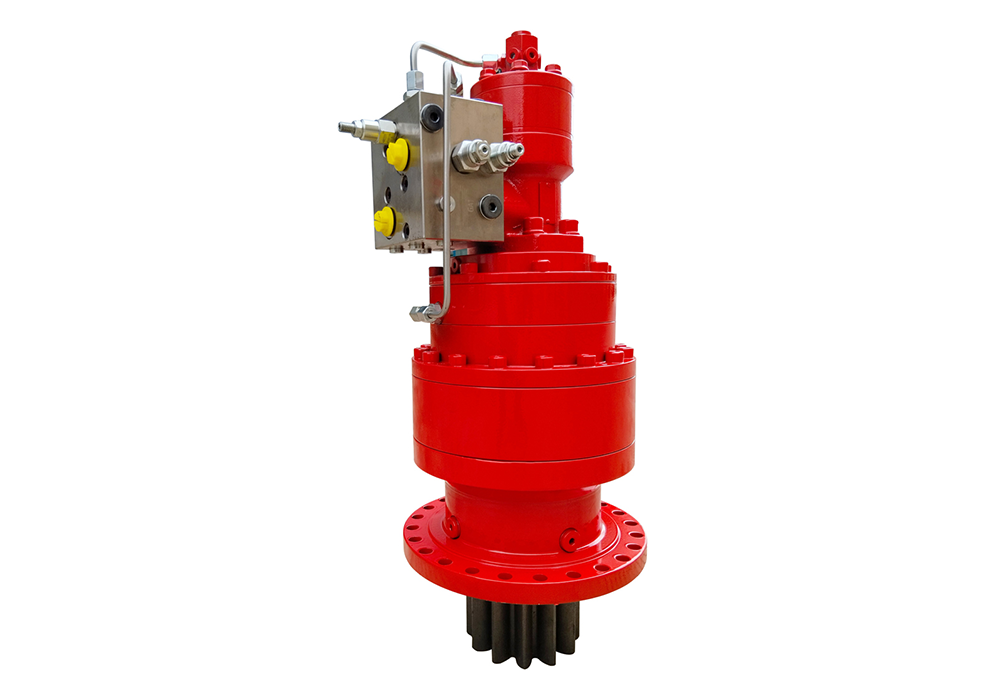
A planetary gearbox is built around three key elements: a central sun gear, several planet gears mounted on a carrier, and an internal ring gear that surrounds the planets. The sun gear is typically coaxial with the input or output shaft, while the planet carrier and ring gear can also serve as input or output elements depending on the design. In a well‑engineered planetary gearbox, torque is shared among multiple planet gears, reducing tooth stress and enabling high power density in a compact housing.
The planetary gearbox geometry offers:
- A coaxial layout where input and output can be on the same axis.
- Multiple contact points between gears, improving load sharing and durability.
- Flexible gear ratio options by changing tooth counts and which element is fixed, driving, or driven.
Because of these structural advantages, a planetary gearbox is favored in applications where space is limited but high torque and reliability are essential.
In operation, a planetary gearbox transmits power through rolling contact of the sun, planet, and ring gears. When one of these elements is powered, another is used as the output, and the remaining element is held stationary or controlled through a brake or clutch. The relative motion between gears determines the speed ratio, torque multiplication, and direction of rotation.
Typical operating patterns include:
- Sun gear driven, carrier output, ring gear fixed.
- Carrier driven, sun output, ring fixed.
- Sun driven, ring output, carrier fixed.
In each case, the planetary gearbox relies on the same internal geometry but delivers different speed and torque characteristics. This makes a planetary gearbox extremely adaptable across many machines and duty cycles.
When discussing whether a planetary gearbox can have 2 shafts, the most common scenario is a gearbox with:
- One input shaft connected to a selected element.
- One output shaft connected to another element.
- One element fixed to the housing or controlled via braking.
In a simple two‑shaft planetary gearbox:
- The sun gear may be splined to the input shaft, receiving power from a hydraulic motor or electric motor.
- The planet carrier may be connected to the output shaft, delivering reduced speed and increased torque to a winch drum or track drive.
- The ring gear may be bolted to a non‑rotating housing, providing the reaction needed for torque transmission.
This arrangement allows the planetary gearbox to work like a compact, high‑reduction two‑shaft unit, ideal for heavy pulling, lifting, or rotating applications.
To better understand how a 2‑shaft planetary gearbox works, it is useful to look at each internal element:
- Sun gear: Often connected to the input shaft; when driven, it causes the planet gears to orbit around it.
- Planet gears: Mounted on pins in the carrier, they mesh with both the sun and ring gear, sharing the transmitted load.
- Carrier: Often connected to the output shaft, it supports the planets and rotates as they orbit.
- Ring gear: Typically fixed to the housing in simple reduction designs, but it can also act as an input or output element in other configurations.
In a two‑shaft planetary gearbox, the design choice of which element to drive and which to use as output controls the overall ratio and torque. This makes the planetary gearbox a powerful tool for engineers who need precise mechanical performance from compact components.
Several classic planetary gearbox configurations can be implemented using just 2 shafts:
1. Sun as input, carrier as output
- Ring gear fixed to the housing.
- Provides high reduction and high torque output.
- Very common in winch drives and travel drives.
2. Carrier as input, sun as output
- Ring gear fixed.
- Can provide special speed‑increasing or reduction characteristics depending on tooth counts.
- Used in some industrial drive systems.
3. Sun as input, ring as output
- Carrier fixed.
- Suitable for particular ratio and torque requirements where the ring must rotate.
In each case, the planetary gearbox still has only two externally visible mechanical connections (input shaft and output shaft), even though three internal elements are involved in torque transmission.
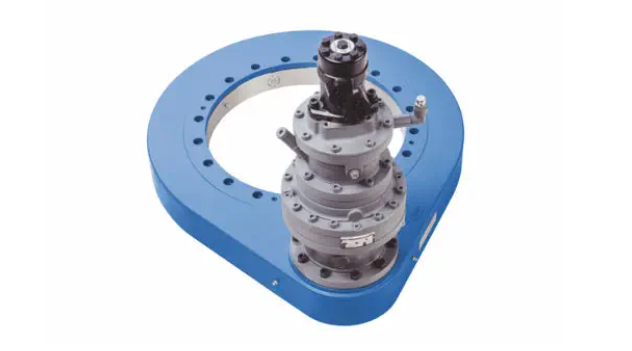
Although many applications use a 2‑shaft planetary gearbox, more complex systems may employ multiple shafts and clutches. This is common in advanced transmissions where a planetary gearbox is used for power splitting or combining different power sources.
Examples include:
- Hybrid powertrains where an engine and an electric motor share a planetary gearbox.
- Automatic transmissions using multiple planetary gearbox stages and clutches to create several forward and reverse speeds.
- Compound planetary gearbox sets that combine two or more gear trains on a shared axis.
Even in such systems, designers frequently expose only a limited number of external shafts, while internal connections are handled through clutches, brakes, and couplings integrated around the planetary gearbox.
There are several reasons designers choose a planetary gearbox instead of a traditional parallel shaft gearbox when two shafts must be connected:
- High torque density: A planetary gearbox can transmit high torque through multiple planets, allowing smaller outer diameters for confined spaces.
- Coaxial arrangement: Input and output can be aligned on the same axis, simplifying installation and layout.
- Smooth power transmission: Load is shared among many teeth in contact, which reduces vibration and improves noise behavior.
- Versatile ratios: Small design changes in tooth counts enable a wide range of gear ratios without drastically changing overall dimensions.
These benefits are particularly useful in heavy‑duty winch drives, crawler travel drives, swing drives, and compact industrial gear units.
In winch drives, a planetary gearbox is usually paired with a hydraulic motor or electric motor to deliver high torque at low speed. The two‑shaft planetary gearbox typically connects:
- Motor shaft (input) to the sun gear.
- Winch drum (output) to the carrier or sometimes the ring gear.
The planetary gearbox reduces motor speed and multiplies torque, enabling the winch to pull heavy loads safely and smoothly. When combined with a brake system mounted on the planetary gearbox or motor, the assembly can hold loads securely and control lowering operations with precision.
Advantages of planetary gearbox use in winch drives:
- Compact dimensions for mounting inside or near the drum.
- High load capacity and long service life under shock loads.
- Options for integrating free‑fall, dynamic braking, or load‑holding devices.
For tracked machines and rotary structures, the planetary gearbox provides a compact way to match motor characteristics to the needs of the machine:
- Travel drives: A planetary gearbox sits in the track hub and connects the hydraulic motor shaft to the sprocket or wheel hub. The two‑shaft connection allows efficient transmission of motor torque to move the machine with controlled speed and high tractive effort.
- Swing drives: A planetary gearbox connects the motor to the slewing ring of excavators, cranes, and other rotating equipment. The planetary gearbox delivers high swing torque and fine speed control for safe operation and precise positioning.
In both cases, a well‑designed planetary gearbox ensures high reliability and smooth operation under varying loads and environmental conditions.
When developing or selecting a two‑shaft planetary gearbox, engineers must consider several design parameters:
- Required reduction ratio and speed: The planetary gearbox must deliver the correct output speed at the available input speed.
- Continuous and peak torque: The planetary gearbox must handle normal working loads and occasional peaks without damage.
- Duty cycle: Long or frequent operation at high load requires robust materials, heat treatment, and lubrication systems.
- Shaft and bearing design: Input and output shafts of the planetary gearbox must withstand bending and axial forces while maintaining alignment.
- Housing and mounting: The outer structure must support internal loads, protect components from contamination, and provide simple mounting options.
A carefully engineered planetary gearbox will balance weight, size, cost, and performance according to project requirements.
Reliable lubrication is vital for any planetary gearbox, especially in high‑torque, continuous‑duty applications. The choice between grease, splash oil, and forced lubrication depends on speed, load, and installation orientation.
Typical lubrication considerations:
- Oil viscosity suited to operating temperature and gear speed.
- Adequate oil level or grease quantity to cover gears and bearings.
- Provision for oil drains, breathers, and inspection plugs in the planetary gearbox housing.
- In high‑power applications, optional cooling systems or external oil circulation may be used.
Good lubrication reduces friction, lowers temperature, and protects gear teeth and bearings, extending the service life of the planetary gearbox.
A planetary gearbox is designed for long life, but consistent maintenance is required to keep performance at its best. For two‑shaft planetary gearbox units, regular checks focus on lubrication, seals, and mounting.
Typical maintenance tasks:
- Checking lubricant level and condition at specified intervals.
- Inspecting seals around the input and output shafts for leakage or wear.
- Listening for abnormal noise or vibration during operation, which can indicate misalignment, bearing wear, or gear damage.
- Verifying the tightness of mounting bolts connecting the planetary gearbox to the machine frame or drum.
- Scheduling periodic overhauls to inspect gears, bearings, and seals in high‑duty or safety‑critical applications.
By following a structured maintenance plan, operators can maximize uptime and reduce the risk of unexpected planetary gearbox failures.
A planetary gearbox does not operate in isolation. It must be integrated into a complete system that includes motors, brakes, couplings, and structural supports. Effective integration ensures that the planetary gearbox delivers its full potential.
Key system integration points:
- Matching motor torque and speed to the planetary gearbox input rating.
- Ensuring couplings and flanges between motor, planetary gearbox, and driven component are properly aligned and sized.
- Designing mounting structures that resist reaction torque without distortion.
- Coordinating brakes and controls with the planetary gearbox characteristics to avoid shock loads.
By considering the planetary gearbox as an integral part of the drive system, designers can achieve efficient, reliable, and safe performance.
A planetary gearbox can certainly have 2 shafts, using one internal element as the input and another as the output while the remaining element is fixed or controlled. This configuration allows a planetary gearbox to offer high torque density, compact size, and coaxial shaft alignment, making it ideal for winch drives, travel drives, swing drives, and many other industrial applications. Thanks to its modular structure, a planetary gearbox can be adapted to a wide range of gear ratios, loads, and duty cycles, helping equipment manufacturers deliver high‑performance, space‑saving drive solutions for demanding working conditions.
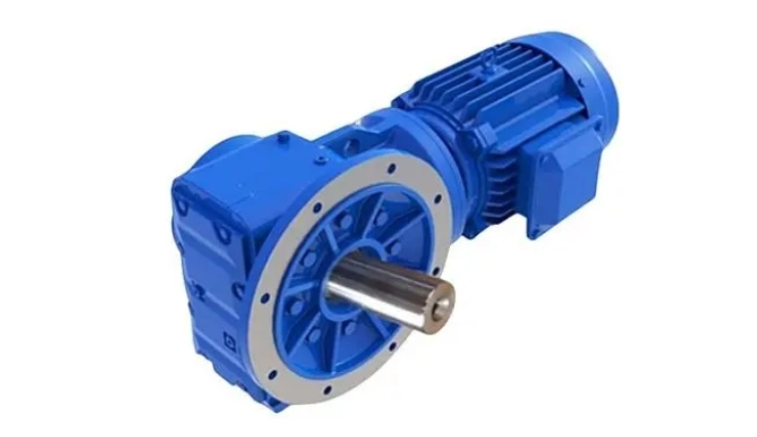
A planetary gearbox uses three internal elements—sun, planets with carrier, and ring gear—but only two of them need external connections as input and output. The third element is usually fixed to the housing or controlled by a brake, so only 2 external shafts are required for torque transmission in many standard planetary gearbox designs.
Yes, in most configurations a planetary gearbox can run in both directions, so reversing the input shaft rotation reverses the output rotation. The internal gear mesh of the planetary gearbox is symmetrical, but designers must ensure lubrication, bearings, and any non‑symmetric brakes or clutches are suitable for bidirectional operation.
A planetary gearbox typically offers higher torque density and a more compact, coaxial layout than a parallel shaft gearbox. While parallel shaft gearboxes can be simpler to manufacture for certain ratios, a planetary gearbox provides better load distribution, smaller outer diameter, and excellent suitability for integrated motor‑gearbox modules in mobile machinery.
The gear ratio of a planetary gearbox is determined by the tooth counts of the sun and ring gears and by which element is chosen as input, output, and fixed. By adjusting these parameters, engineers can design a planetary gearbox that offers a wide range of speed reductions or increases to match motor characteristics with load requirements.
A multi‑stage planetary gearbox is used when a single stage cannot provide the required high reduction ratio or torque within reasonable size limits. By connecting two or more planetary stages in series, designers can achieve very high reductions while maintaining the compact, coaxial benefits of a planetary gearbox, which is particularly valuable in heavy winch drives and travel drives.


