
Views: 222 Author: Amanda Publish Time: 2026-01-01 Origin: Site


Content Menu
● What Are Excavator Undercarriage Parts?
● Key Excavator Undercarriage Components
>> Track Chains
>> Track Shoes
>> Sprockets
>> Idlers and Track Tension Systems
>> Rubber Pads and Rubber Tracks
● Undercarriage Component Overview Table
● How Quality Undercarriage Parts Improve Return on Investment
● Best Practices for Excavator Undercarriage Maintenance
>> Daily and Weekly Maintenance Checklist
>> Operating Techniques That Reduce Wear
● Advanced Tips: Matching Undercarriage Setups to Applications
● Partner with Kemer for Complete Undercarriage and Drive Solutions
● FAQs About Excavator Undercarriage Parts
>> 1. How often should excavator undercarriage parts be inspected?
>> 2. What is the most effective step to extend undercarriage life?
>> 3. When should chains and sprockets be replaced together?
>> 4. Are wider track shoes always the best choice?
>> 5. When are rubber pads or rubber tracks recommended?
Excavator undercarriage parts carry the full weight of the machine, deliver traction, and stabilise the excavator on challenging terrain, so optimising them is essential for controlling operating costs and downtime. When contractors understand each component, select suitable specifications, and follow a disciplined maintenance routine, undercarriage systems can last significantly longer and deliver a better total cost of ownership.

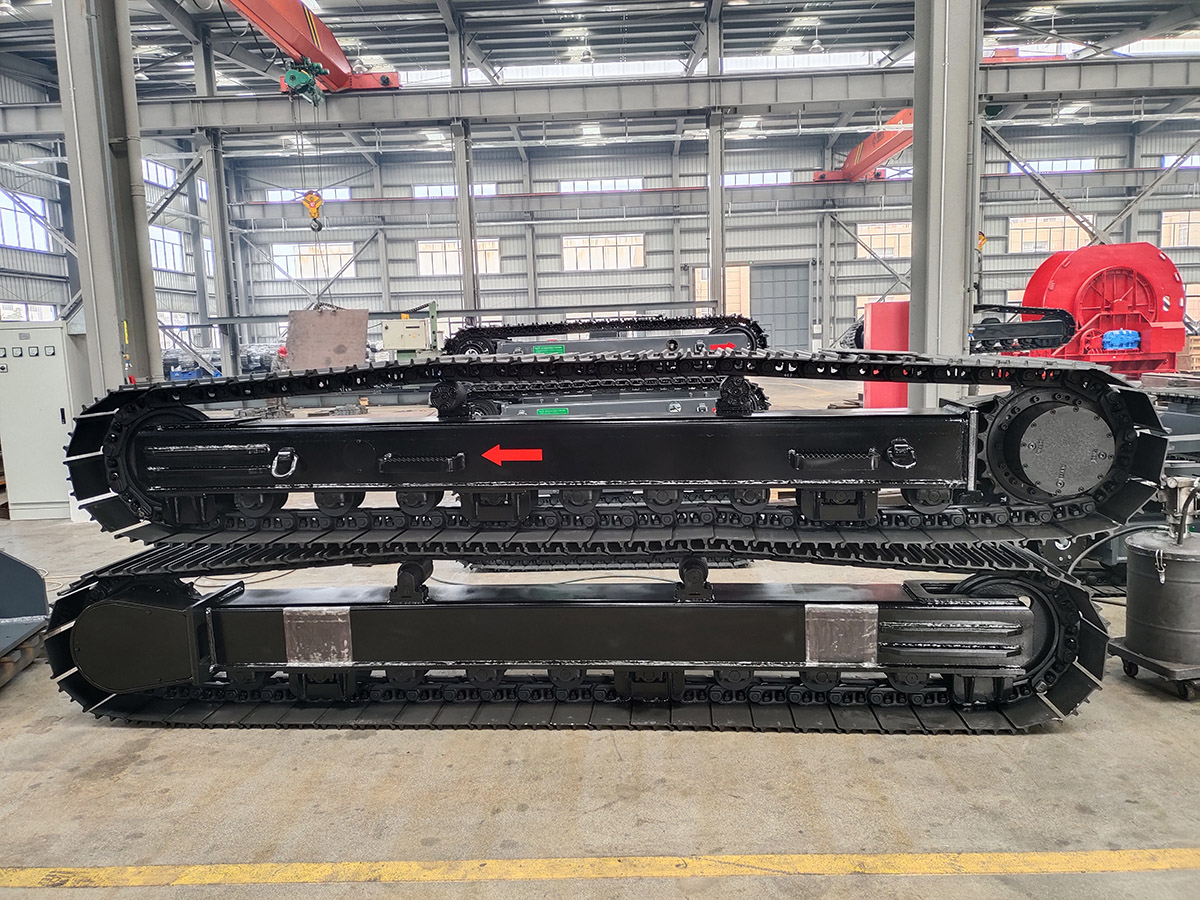
Excavator undercarriage parts include track chains, track shoes, rollers, idlers, sprockets, final drives, and related support structures located beneath the upper frame of the machine. Together, these elements provide support, traction, impact absorption, and directional control during digging, travelling, and turning operations.
Because undercarriage systems can account for a large share of lifetime maintenance spending on tracked machines, small improvements in component selection and care often result in substantial cost savings. Neglecting even one element, such as track tension or roller condition, tends to accelerate wear across the entire system and increase the risk of unplanned stoppages.
Each major undercarriage component has a specific role, typical wear pattern, and preferred maintenance strategy. Understanding how these parts interact helps operators and fleet managers make better decisions about inspection intervals and replacement timing.
Track chains form a continuous loop of steel links wrapped around the undercarriage to support the excavator and transmit drive power to the ground. These components carry most of the operating load and experience constant movement under abrasive site conditions.
Key points about track chains include:
- High quality steel and heat treatment improve resistance to wear and deformation.
- Effective sealing and lubrication help protect pins and bushings from contaminants.
- Matching chain pitch with sprocket design reduces vibration, noise, and premature tooth damage.
Track shoes bolt onto the chain links and deliver ground contact, traction, and flotation. Shoe width, thickness, and grouser pattern should align with the most common ground conditions where the excavator operates.
Practical selection tips for track shoes:
- Wider shoes lower ground pressure on soft, muddy surfaces but can increase bending stress on hard rock.
- Narrower shoes typically offer better traction and manoeuvrability on rocky or compacted ground.
- Multi-grouser designs can provide a balance between grip and surface protection on mixed sites such as urban construction areas.
Bottom rollers support the weight of the excavator and help maintain track alignment, while carrier rollers guide the upper section of the chain and prevent excessive sag. Both types influence travel smoothness and load distribution.
Important roller considerations:
- Shell wear, flat spots, and uneven surfaces often signal misalignment or contamination.
- Oil leaks at roller seals indicate loss of lubrication and a high risk of bearing failure.
- Prompt replacement of damaged rollers prevents abnormal loading on links and idlers.
Sprockets engage the chain bushings and convert hydraulic drive torque into track movement. Because they remain in constant contact with moving metal surfaces, sprockets are exposed to continuous abrasive wear.
Sprocket best practices:
- Hooked or sharply pointed teeth are signs of advanced wear that increases stress on chain bushings.
- Replacing chains and sprockets together is often the most economical approach once either is heavily worn.
- Accurate tooth profile and proper heat treatment improve engagement and reduce noise.
Idlers guide the chain and keep track tension within the desired range using springs or hydraulic adjusters. Correct tension is one of the most important factors in undercarriage service life.
Key points about idlers and tension:
- Tracks that are too tight increase friction, fuel usage, and accelerated wear on roller and chain components.
- Tracks that are too loose may derail, slap against the frame, and damage guides or guarding.
- Regular sag checks at the midpoint of the bottom rollers help keep tension within the specified range.
Rubber pads and rubber tracks are common in applications where surface protection and lower noise are important. They allow excavators to work on asphalt, concrete, and landscaped areas with less damage.
Typical benefits of rubber options:
- Reduced noise and vibration when travelling on paved or hard surfaces.
- Less risk of scarring driveways, car parks, and finished lawns.
- Different pad mounting configurations (clip-on, bolt-on, or road-liner) offer flexibility in installation and replacement.

Undercarriage part | Primary function | Typical wear risks | Key maintenance action |
Track chains | Support machine load and transmit drive torque. | Bushing wear, pin seizure, chain stretch. | Maintain correct tension and remove packed debris. |
Track shoes | Provide traction and ground flotation. | Grouser wear, bending, loose or broken bolts. | Match shoe width to ground conditions and check bolt torque. |
Bottom rollers | Carry the excavator's weight during travel. | Shell wear, flat spots, oil leaks. | Inspect for leaks and replace worn or seized units. |
Carrier rollers | Support the upper run of the chain. | Seizure, uneven wear patterns. | Check free rotation, noise, and alignment. |
Sprockets | Engage chain and drive the tracks. | Hooked or broken teeth, abnormal wear. | Inspect tooth profile and renew with chains when heavily worn. |
Idlers & adjusters | Guide chain and control tension. | Face wear, seized adjuster components. | Verify sag and keep adjusters lubricated and functional. |
Rubber pads | Protect sensitive surfaces. | Chunking, tearing, de-bonding. | Avoid sharp debris and excessive pivoting on the spot. |
This table gives operators a compact reference showing how each part contributes to performance and which actions protect the largest portion of undercarriage investment.
High quality undercarriage parts can significantly influence lifetime operating costs by extending service life, reducing emergency repairs, and supporting predictable maintenance planning. For fleets in demanding sectors such as quarrying, demolition, and forestry, the difference between premium and low-cost components often becomes clear in downtime statistics and labour hours.
Advantages associated with premium components include:
- Consistent metallurgy and heat treatment that reduce the risk of sudden breakages.
- Tight manufacturing tolerances for improved fit between chains, sprockets, and rollers.
- Integrated system solutions that ensure compatibility across all undercarriage and drive elements.
A structured maintenance program is one of the most effective ways to extend undercarriage service life in real jobsite conditions. Cleaning, visual inspections, and track adjustment are relatively simple tasks that deliver outsized benefits when performed consistently.
Use the following checklist as a practical guide for operators and workshop personnel:
1. Daily cleaning
- Remove mud, stones, and debris from around rollers, links, idlers, and guards.
- Pay attention to trapped material that can grind between moving components.
2. Visual inspection before each shift
- Look for leaking rollers, missing bolts, cracked shoes, or damaged pads.
- Note any unusual vibration, noise, or tracking issues when the machine moves.
3. Track tension checks
- Measure track sag at the midpoint of the frame and adjust according to the manufacturer's instructions.
- Reduce tension when working in soft mud where material tends to pack inside the chain.
4. Weekly documented inspection
- Record wear measurements and look for patterns such as uneven wear on one side.
- Plan replacements before the busiest season instead of waiting for failures.
Operator technique has a direct effect on how quickly undercarriage parts wear out. Training and clear operating rules can significantly reduce premature degradation.
Helpful habits include:
- Avoiding unnecessary high-speed travel, especially on hard or rocky surfaces.
- Minimising tight spin turns that impose heavy side loads on shoes and links.
- Working with the machine orientation recommended by the manufacturer to maintain proper load distribution across idlers and rollers.
Different working environments benefit from specific undercarriage configurations that balance productivity, stability, and ground protection. Adjusting track width, shoe design, and rubber options to suit the main application usually improves both performance and component life.
Examples of application-driven setups:
- Urban and roadwork projects: Narrow shoes with bolt-on rubber pads to protect paved surfaces and maintain precise control in confined spaces.
- Forestry, pipeline, and wetland projects: Wider or “swamp” style shoes to increase flotation, combined with sealed chains to keep contaminants out.
- Quarrying and mining: Heavy-duty shoes, reinforced grousers, and deeply hardened rollers and sprockets designed to withstand impact and abrasive rock.
To turn undercarriage best practices into reliable performance gains, it is important to work with a specialist that understands track systems and drive technology as a whole. Kemer focuses on crawler undercarriages, planetary gearboxes, travel drives, winch drives, swing drives, and hydraulic motors, enabling you to source matched components engineered to work together on demanding jobsites.
If you want to extend undercarriage life, reduce unplanned downtime, and optimise the entire travel and swing system of your machines, contact the Kemer team today. Share your excavator models, typical ground conditions, and operating hours, and request a tailored undercarriage and drive solution designed specifically for your fleet.
Most fleets carry out a quick visual check before every shift and a more detailed inspection at least once a week, increasing frequency for machines working in abrasive or muddy environments. Regular inspections help detect problems early, reducing the likelihood of sudden failures and high repair costs.
Consistent cleaning is one of the most effective steps because it removes abrasive material that accelerates wear on chains, rollers, and idlers. Combined with correct tension, this simple habit can significantly increase component life in harsh conditions.
Chains and sprockets are often replaced together when sprocket teeth are visibly hooked or chain bushings are close to their wear limits. Installing new sprockets on severely worn chains, or vice versa, can cause rapid wear of the new part and reduce the benefit of replacement.
Wider shoes are not always the best option. They work well on soft soil by reducing ground pressure, but on hard or rocky surfaces they can increase bending stress and wear, so shoe width should match the dominant site conditions.
Rubber pads or rubber tracks are recommended when the machine regularly operates on asphalt, concrete, or landscaped surfaces where surface protection and reduced noise are priorities. They help prevent scarring, lower vibration, and make tracked machines more acceptable in urban or residential areas.


