
Views: 222 Author: Amanda Publish Time: 2026-01-10 Origin: Site


Content Menu
● What Excavator Attachments Do
● Bucket Attachments and Their Uses
>> Popular Heavy-Duty Bucket Designs
● Other Core Excavator Attachments
>> Compaction, Thumbs, Augers, and Ground-Engaging Tools
>> Demolition, Piling, Dredging, and Mulching Tools
● Couplers and Quick-Change Systems
● Power Systems for Excavator Attachments
>> Electric, Pneumatic, Diesel, and Combined Systems
● Choosing Excavator Attachments and Power Systems
>> Practical Selection Framework
>> Job Type and Attachment Reference Table
● Mini Excavator Attachments and Best Practices
● Attachment Compatibility, Maintenance, and Safety
>> Compatibility and Maintenance Fundamentals
>> Safety Essentials for Attachment Operation
● Expert Practices to Maximize Productivity and ROI
● Build a High-Performance Excavator Attachment Package
● FAQ
>> 1. How can I quickly check if an attachment fits my excavator?
>> 2. Which attachments should a general contractor prioritize first?
>> 3. Do hammers significantly increase wear on excavators?
>> 4. When is a mulcher preferable to traditional land-clearing methods?
>> 5. In which situations is an external Hydraulic Power Unit necessary?
Excavator attachments turn a standard machine into a highly specialized tool for digging, demolition, dredging, land clearing, compaction, and precision grading when the right tools and power systems are correctly matched to each application. A clear understanding of attachment types, power options, and selection criteria helps contractors, rental fleets, and equipment owners increase productivity, reduce operating costs, and extend machine life.

Excavator attachments are interchangeable work tools installed on the boom or stick to perform specific tasks such as digging, cutting, breaking, compacting, lifting, mulching, and dredging. With appropriate couplers and auxiliary power, one excavator can handle tasks that would otherwise require several dedicated machines.
Common attachment families include: buckets, thumbs, augers, grapples, mulchers, compaction tools, rippers, hammers, pile drivers, dredge pumps, shears, and multiple styles of couplers. This variety allows operators to adapt quickly to different phases of construction, mining, landscaping, utilities, and environmental work.
Buckets remain the most widely used excavator attachments and are engineered for specific soil conditions, material types, and finish requirements. Choosing correctly affects cycle times, fuel consumption, and wear on the machine.
Main bucket categories and typical roles include:
- Digging bucket – Teeth-equipped bucket for foundations, trenching, and stump removal in compact or rocky soils.
- Rock bucket – Reinforced shell and hardened teeth for quarry work, mining, and heavy demolition in extremely abrasive environments.
- Grading (ditching) bucket – Wide, toothless edge for smooth grading, ditch shaping, and final surface finishing.
- Trenching bucket – Narrow profile to create accurate, deep trenches for utilities and drainage while minimizing backfill volume.
- V or trapezoidal bucket – V‑shaped design that forms stable trench walls for drainage channels and utility corridors.
- Riddle / skeleton bucket – Perforated or tined structure that lets fines fall through while retaining rocks and larger debris for on-site sorting.
Pairing buckets with hydraulic thumbs significantly improves the handling of irregular materials such as demolition debris, rocks, and logs.
Several bucket configurations are especially common because they cover a wide range of project needs. Understanding their core strengths helps in specifying a base set for most fleets.
1- Heavy-duty digging bucket
- Teeth penetrate compact soil and mixed rock, making it suitable for general construction, foundations, and trenching.
- Available in multiple widths so operators can balance productivity with precision in confined areas.
2- Rock bucket
- Hardened teeth and a robust structure handle abrasive rock, reinforced concrete, and mining conditions.
- Frequently used in quarries and demolition where standard buckets would wear out quickly.
3- Grading bucket
- Flat cutting edge and wide profile improve finish quality and reduce passes during leveling and ditch cleaning.
- Tilting variants enable operators to form accurate slopes and banks without constant machine repositioning.
Beyond buckets, several attachment groups address compaction, drilling, and material handling tasks that frequently appear on infrastructure and utility projects. These tools often turn a single excavator into a complete jobsite solution.
1- Compaction wheel (mechanical)
- Used to compact soil at the bottom of trenches or in narrow spaces where vibratory plates or rollers are ineffective, especially in hard soils or clay.
- Requires no power, simplifying setup and reducing maintenance points.
2- Thumbs
- Provide clamping force over a bucket or rake, allowing secure handling of rocks, stumps, scrap, and demolition debris.
- Depend on auxiliary hydraulics for actuation and greatly expand material handling capability.
3- Augers with various bits
- Hydraulic augers drill holes for foundations, posts, landscaping, and tree planting with interchangeable bits.
- Standard, industrial, tree, and rock head bits cover everything from soft soils to frozen ground and fracturable rock.
4- Rippers
- Single or multi-shank tools that tear through frozen ground, compacted clay, and old pavements before excavation or loading.
- Operate without added power and significantly reduce bucket wear in very hard materials.
For more specialized worksites, heavy-duty attachments provide high-impact breaking, precision cutting, piling, dredging, and vegetation control. Correct sizing and power management are critical to avoid overstressing the carrier machine.
1- Hammers
- Break concrete, rock, and pavement in roadwork, quarrying, and structural demolition.
- Generally require a dedicated Hydraulic Power Unit (HPU) or high-flow auxiliary circuit.
2- Pile drivers (vibratory hammers)
- Drive or extract piles, posts, and sheet piles for foundations, shoring, and marine structures.
- Operate with HPUs to generate strong vibration and driving force.
3- Dredge pumps
- Pump heavy slurries, sediment, and solids from rivers, lakes, ponds, and harbors using a cutter head and high-capacity pump.
- Often paired with standard or amphibious excavators and usually powered by HPUs.
4- Hydraulic shears
- Cut steel beams, plates, and rebar in structural demolition, scrap processing, and ship breaking.
- Provide spark-free cutting in environments where flames must be avoided.
5- Mulchers
- Cut, grind, and mulch trees, brush, and dense vegetation into fine material for land clearing, right-of-way work, forestry, and habitat restoration.
- Heavy-duty rotors and hydraulic drives deliver high throughput and efficient biomass recycling.
Couplers are central to an efficient attachment strategy because they control change-out speed, safety, and compatibility with multiple tool brands. Standardizing couplers across a fleet allows work tools to move easily between machines.
1- Mechanical (manual) coupler
- Pins directly to the boom, delivers high breakout force, and is often chosen for smaller excavators or applications demanding maximum force.
- Requires manual change-out, increasing time on the ground and reducing productivity.
2- Hydraulic coupler
- Operated from the cab to switch attachments quickly, improving safety and minimizing downtime.
- Well suited for larger excavators and jobs where attachments change frequently.
3- Pin grabber coupler
- Mechanical or hydraulic design that “grabs” pins with a slide, enabling compatibility with attachments from different manufacturers.
- May reduce breakout force slightly because of the extra length added to the linkage.
4- Tilt coupler
- Provides side-to-side tilt capability, combining aspects of a coupler and tilt bucket for complex grading and shaping tasks.
- Requires hydraulic power and is particularly useful in landscaping, roadwork, and drainage projects.
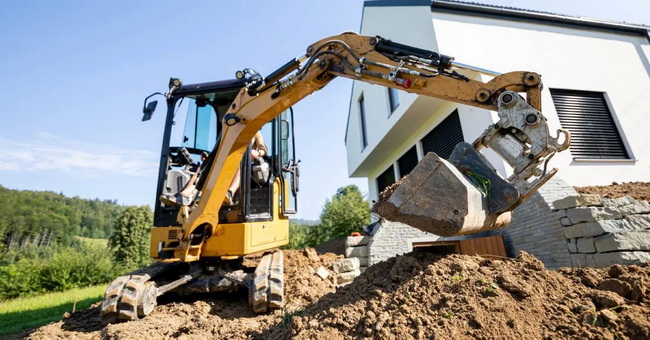
Hydraulic systems remain the primary power source for most excavator attachments because they deliver high power density and precise control through pressurized fluid. Excavators are typically equipped with integrated hydraulic circuits that can drive many tools directly.
Key characteristics:
- Support for hammers, shears, thumbs, augers, mulchers, and tilt mechanisms.
- High force output suitable for heavy-duty applications and continuous operation.
- Fine control over flow and pressure for accurate tool positioning.
Main considerations include regular maintenance of hoses and fluid quality plus monitoring for leaks that can create both environmental and cost issues.
Certain attachments rely on alternative or supplemental power sources to meet specific safety, environmental, or performance requirements. Matching the power system to site constraints is essential for compliance and reliability.
1- Electric power
- Used with electric excavators or plug-in tools such as augers and grapples where lower force is acceptable.
- Provides low emissions, reduced noise, and simplified maintenance but depends on batteries or external power supply.
2- Pneumatic power
- Compressed air drives breakers and drills in applications where hydraulic leaks or sparks present elevated risk.
- Tools are generally lighter but require a compressor and deliver less force than hydraulic systems.
3- Diesel power
- Self-contained engines power large winches, pile drivers, and other heavy-duty attachments when machine hydraulics are insufficient.
- Offer very high output and independence in remote locations but increase fuel use, noise, and emissions.
4- Combined or hybrid systems
- Merge electric drives with hydraulic or diesel components to balance precision and peak force.
- Deliver strong performance but involve more complex designs and higher upfront cost.
A structured selection process reduces the risk of underperforming or incompatible setups and helps extend the life of both attachments and carriers. Integrating tasks, environment, and machine specifications leads to the best match.
Key steps:
1. Define the primary function
- Digging, grading, trenching, demolition, land clearing, dredging, compaction, or material handling.
2. Match attachment size to carrier
- Check operating weight, lifting capacity, and hydraulic flow/pressure against manufacturer recommendations.
3. Verify power availability
- Confirm hydraulic circuits, electrical supply, or need for an external HPU according to attachment requirements.
4. Assess jobsite constraints
- Consider space, access, ground conditions, noise regulations, and environmental rules.
5. Evaluate lifecycle cost
- Factor in purchase price, wear parts, maintenance intervals, and expected service life or resale value.
> Suggested visual: a flowchart illustrating decision steps from “job type” through “machine capacity” to “final attachment and power choice.”
The following table presents a concise view of typical job types, matching tools, and preferred power systems for quick planning.
Job type | Primary attachment(s) | Preferred power system | Key consideration |
Foundation and trench work | Digging, trenching, V, grading buckets | Hydraulic | Ensure correct trench width, depth, and tooth configuration. |
Rock excavation | Rock bucket, ripper, hammer | Hydraulic or diesel + HPU | Reinforced tools and high flow required in abrasive rock. |
Finish grading | Grading or tilt ditching bucket | Hydraulic | Flat edge and tilt for smooth slopes and finishes. |
Land clearing / forestry | Mulcher, grapple, thumb, ripper | Hydraulic | Verify continuous-duty hydraulic capacity and cooling. |
Structural demolition | Hydraulic shears, hammer | Hydraulic or diesel + HPU | Choose shear size for steel thickness and reach. |
Dredging and slurry work | Dredge pump, long-reach tools | Hydraulic or diesel HPU | High solids handling and appropriate discharge planning. |
Trench compaction | Compaction wheel | Mechanical | Best where vibratory rollers cannot reach. |
Urban utility installation | Narrow trenching bucket, compaction wheel | Hydraulic and mechanical | Balance precision trenching with targeted compaction. |
Mini excavators achieve high productivity in tight or urban spaces when paired with compact, correctly sized attachments. They are widely used for utilities, residential construction, landscaping, and light demolition.
Typical mini attachments:
- Buckets for digging, grading, and backfilling in constrained access conditions
- Augers for fence posts, small foundations, and planting
- Grapples and thumbs for handling debris, rocks, and green waste
- Compact mulchers or flails for lighter vegetation management
Best practices emphasize respecting the machine's smaller hydraulic and weight limits, using quick couplers to reduce change-out time, and matching attachment width to gates, sidewalks, and indoor clearances. Regularly checking pins, bushings, and hydraulic hoses is especially important on smaller machines that often operate close to their capacity.
Correct compatibility and proactive maintenance extend attachment life, reduce failures, and protect the main machine from avoidable damage. A simple inspection and service routine adds substantial reliability.
Key practices:
- Verify pin diameter, spacing, and coupler style against the excavator model before purchase.
- Confirm hydraulic flow, pressure, and return requirements for each tool, especially hammers, pumps, and mulchers.
- Schedule routine cleaning, greasing, tooth or bit replacement, filter changes, and wear-part inspection.
Ignoring compatibility and maintenance can result in premature structural damage, hydraulic contamination, and unexpected downtime.
Safe operation is critical whenever attachments are installed, changed, or used near personnel and structures. Clear procedures and operator training significantly reduce risk.
Important safety guidelines:
- Follow all installation and operating instructions from attachment and carrier manufacturers.
- Inspect couplers and locking mechanisms before every shift and after each attachment change.
- Maintain a clear exclusion zone around the machine and use appropriate PPE for operators and ground crews.
- Train operators on tool-specific behavior, including stopping distances, swing hazards, and maximum rated loads.
- Avoid exceeding rated capacities, especially with heavy, offset, or long-reach tools that change machine balance.
Treating attachments as strategic assets rather than simple accessories helps extract far greater value from every excavator in a fleet. This approach often delivers more output than adding additional base machines.
Practical optimization ideas:
- Standardize couplers, pin dimensions, and hydraulic connections across machines so attachments can be shared easily.
- Plan project-specific attachment kits (such as digging bucket, hammer, compaction wheel, and grading bucket) when bidding work.
- Track utilization and maintenance per attachment to time replacement before critical failures occur.
- Combine specialized undercarriages, long-reach solutions, and advanced positioning systems where projects involve dredging or high-accuracy excavation.
A focused attachment strategy allows each excavator to deliver more work per hour, adapt to new project types, and maintain high resale value. Review current and upcoming jobs, identify where better-suited buckets, ground-engaging tools, demolition attachments, dredging systems, or land-clearing solutions could reduce passes, shorten timelines, or expand your service offering, and then work directly with your preferred manufacturer or engineering partner to configure a tailored attachment and power package that aligns with your fleet, operators, and project pipeline.

Confirm the excavator's operating weight range, hydraulic flow and pressure, and the pin or coupler geometry against the specifications provided by the attachment manufacturer, and never exceed recommended limits. Ensuring alignment across these parameters greatly reduces the risk of structural damage and hydraulic issues.
Most general contractors start with a set that includes digging and grading buckets, a hydraulic hammer, a compaction solution, and a universal quick coupler. Additional tools such as shears, mulchers, or specialized pumps are added later as project types diversify.
Hydraulic hammers introduce high-impact loads and heat into the boom, pins, and hydraulic system, so correct sizing, proper setup, and strict maintenance routines are essential to manage wear. Using appropriate working techniques and following service schedules helps maintain reliability over time.
Mulchers are particularly effective when rapid clearing, on-site biomass recycling, and reduced hauling are priorities, such as along rights-of-way, pipelines, and access roads. They also help improve safety by reducing manual cutting and handling of trees and brush.
An external Hydraulic Power Unit becomes important when an attachment's flow or pressure requirements exceed what the excavator can safely supply, as with large dredge pumps, heavy pile drivers, and industrial shears. Using an HPU ensures full performance from these tools without overloading the carrier machine's hydraulic system.


