
Views: 222 Author: Amanda Publish Time: 2026-01-07 Origin: Site


Content Menu
● What “Motor Size” Really Means
● Step 1 – Define the Job of the Hydraulic Winch
● Step 2 – Convert Line Pull to Required Drum Torque
● Step 3 – Convert Drum Torque to Motor Torque
● Step 4 – Link Motor Torque to Pressure and Displacement
● Step 5 – Match Line Speed with Motor Speed and Flow
● Step 6 – Estimate Hydraulic Power and Prime Mover Demand
● Step 7 – Duty Cycle, Efficiency, and Safety Margins
● Typical Motor Ranges for Common Hydraulic Winch Uses
● System Integration with Track Undercarriages and Drives
● How to Specify a Hydraulic Winch Motor to Kemer
● Using Catalogs and Calculators as a First Check
● Common Sizing Mistakes to Avoid
● How Big Should the Motor Be? – Practical View
● FAQ – Hydraulic Winch Motor Sizing
>> 1. How do I calculate the torque needed for a Hydraulic Winch motor?
>> 2. What hydraulic pressure is usually required for a Hydraulic Winch?
>> 3. How does required line speed influence the choice of Hydraulic Winch motor?
>> 4. Is it safe to oversize the motor for a Hydraulic Winch?
>> 5. What information should I send to Kemer to get a Hydraulic Winch motor recommendation?
Choosing the right motor size for a Hydraulic Winch is critical for safety, performance, and lifecycle cost. A correctly matched hydraulic winch motor must satisfy required line pull, line speed, drum geometry, and the available hydraulic pressure and flow from the carrier machine. Well‑designed Hydraulic Winch systems also integrate gearboxes, brakes, and hydraulic motors so that the entire package operates reliably under real‑world conditions.[1][2]
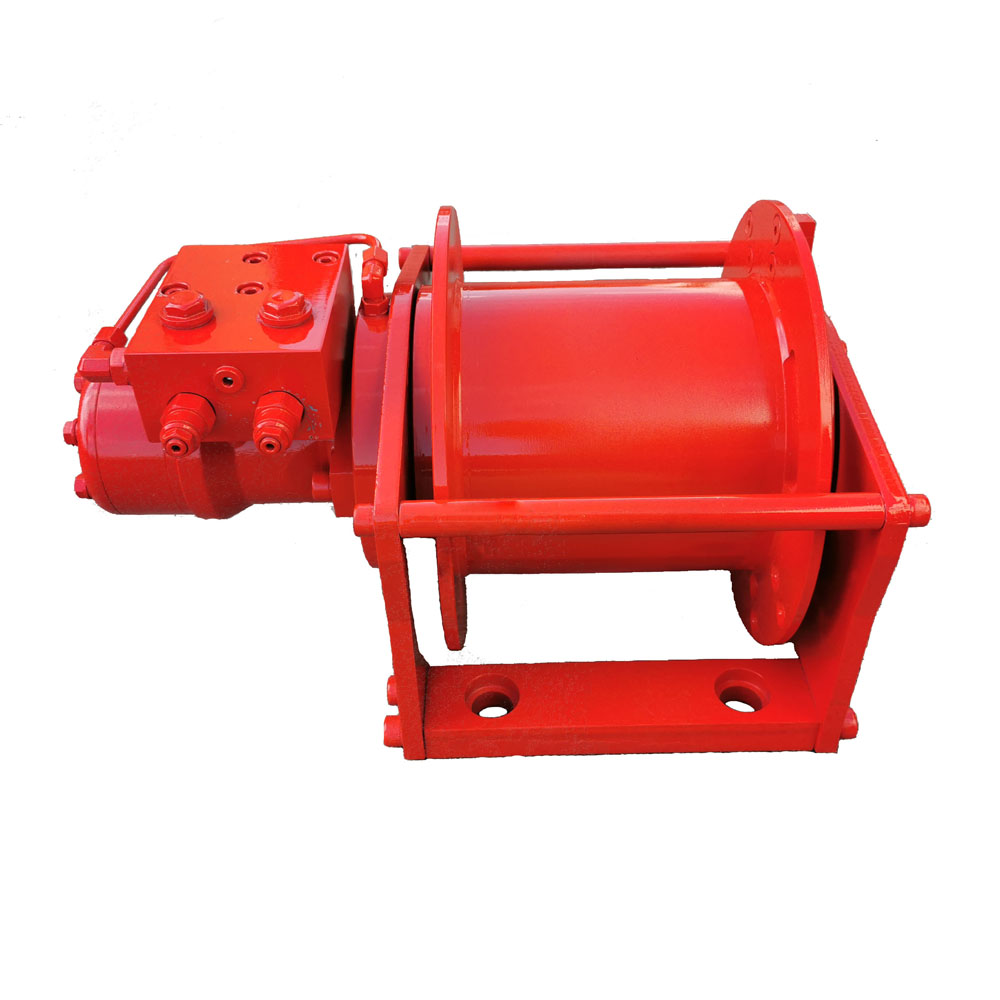
When asking “how big of a motor for a Hydraulic Winch?”, motor size should be understood in terms of torque, displacement, speed capability, and power rating rather than just physical dimensions. For a Hydraulic Winch, motor displacement and pressure determine torque, while displacement and flow determine speed and line speed at the drum.[3][4]
- Torque capability must be sufficient to provide the required line pull on the drum, with a safety margin for starting loads and inefficiencies.[2]
- Displacement defines how much torque the motor produces at a given pressure and how much flow is needed to reach a target speed for the Hydraulic Winch.[3]
- Power rating ensures the motor can deliver that torque and speed continuously or intermittently without overheating or premature wear in the Hydraulic Winch system.[4]
The sizing process for a Hydraulic Winch motor begins by clearly defining what the winch must do in your application. Without good input data, even the best formulas will yield an unreliable motor selection for the Hydraulic Winch.[1][2]
Key points to define include:
- Maximum required line pull (on the bare drum, first layer) and typical working pull.[1]
- Required line speed at that pull, expressed in m/min or ft/min, depending on whether the Hydraulic Winch is for lifting, recovery, hauling, or tensioning.[5]
- Drum geometry: core diameter, flange diameter, and rope diameter, which together determine the effective radius and therefore torque demand on the Hydraulic Winch.[1]
- Duty cycle: short occasional pulls, frequent intermittent use, or long continuous operation, especially for industrial or marine Hydraulic Winch applications.[6]
Different sectors call for different priorities: a vehicle‑recovery Hydraulic Winch might require very high peak pull with relatively short duty, while a marine mooring or lifting Hydraulic Winch may focus on continuous duty at moderate speeds.[7]
With line pull defined, the next step is to convert it into drum torque for the Hydraulic Winch. The fundamental relationship is simple but critical, because every subsequent calculation depends on getting this right.[8][2]
- Drum torque equals line force multiplied by the effective drum radius.[2]
- Calculations are usually made on the bare drum (first layer), because this is where the Hydraulic Winch produces its rated maximum line pull.[1]
In practice:
- As rope builds up in layers, the effective radius increases and the available line pull decreases.[1]
- Many catalogs specify a Hydraulic Winch line pull at the first layer and show how performance drops at higher layers; designers must check that this still meets real working requirements.[7]
Ignoring the influence of drum radius and layers can lead to under‑performing Hydraulic Winch installations where actual line pull is far below the nameplate rating.[1]
A Hydraulic Winch typically uses a planetary gearbox or other reduction stage between the motor and drum. This means motor torque is lower than drum torque by the gear ratio, allowing a compact motor to produce high drum torque.[9][2]
- Motor torque equals drum torque divided by the gear ratio, adjusted for gearbox efficiency.[2]
- Planetary gearboxes used in a Hydraulic Winch commonly have ratios from around 5:1 up to well above 100:1, depending on the application.[9]
Important considerations:
- Gearbox efficiency (usually between about 85% and 95%) must be included so the Hydraulic Winch motor is not undersized.[2]
- Both continuous and intermittent torque ratings of the motor must be checked against expected duty in the Hydraulic Winch application.[10]
This step is where an optimized balance between motor size and gearbox ratio is found for the Hydraulic Winch.[9]
Motor torque in a Hydraulic Winch drive comes from system pressure acting over motor displacement. Motor sizing therefore depends heavily on the maximum working pressure and displacement choice.[4][3]
Key relationships:
- Torque is proportional to pressure times displacement, divided by a constant factor related to units and efficiency.[3]
- Higher pressure allows a smaller displacement motor to produce the same torque for the Hydraulic Winch.[3]
Practical implications for a Hydraulic Winch:
- High‑pressure mobile systems (for example 250–350 bar) can use more compact motors and moderate gear ratios for a given line pull.[11]
- Lower‑pressure circuits require larger displacement motors or higher gear ratios to achieve equivalent Hydraulic Winch torque.[10]
This step links the Hydraulic Winch torque requirement with realistic hydraulic supply from the base machine or power unit.[3]
Line speed is just as important as line pull when deciding how big a motor should be for a Hydraulic Winch. Line speed requirements dictate the necessary drum speed, which in turn dictates motor speed and flow.[12][1]
The sequence is:
- Convert desired line speed into drum rpm using drum circumference.[1]
- Convert drum rpm to motor rpm via the gear ratio used in the Hydraulic Winch.[1]
- Use motor displacement and rpm to determine the hydraulic flow requirement at the chosen speed.[3]
For the Hydraulic Winch:
- Higher flow or lower displacement increases motor speed and line speed, but may reduce torque if pressure limits or power limits are reached.[3]
- Lower flow or higher displacement reduces speed but helps produce higher torque for heavy Hydraulic Winch pulls.[12]
A successful design balances torque and speed so that the Hydraulic Winch pulls strongly enough while reeling fast enough for the job.[4]
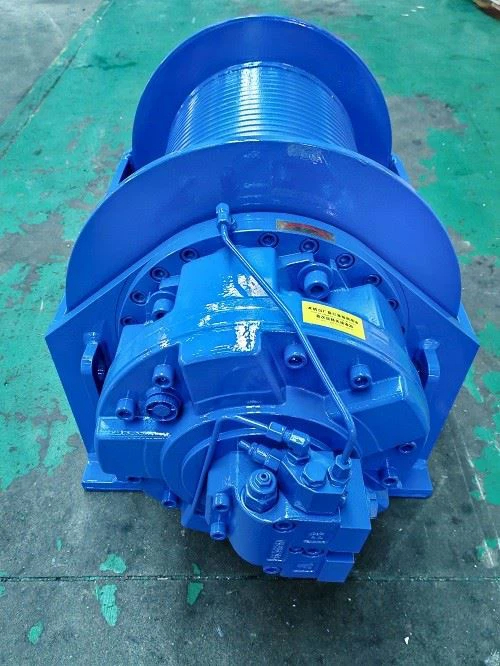
Once torque and speed figures are known, power requirements for the Hydraulic Winch can be estimated. This helps determine the size of the pump and prime mover (engine or electric motor) needed to supply the Hydraulic Winch.[13][14]
Key points:
- Hydraulic power is directly related to pressure and flow; higher line pull and higher speed quickly increase power demand.[13]
- Prime mover size must cover not only the Hydraulic Winch but any other hydraulic consumers if they operate simultaneously.[14]
For heavy industrial or marine Hydraulic Winch duty, power calculations often reveal that a dedicated power unit is necessary, especially for continuous operation at high load. For mobile machinery, the Hydraulic Winch must share power with travel and working functions, requiring careful prioritization and flow management.[6][11]
No Hydraulic Winch works in perfectly steady conditions, so safety margins and duty cycles must be considered when selecting motor size. Correct allowances ensure the Hydraulic Winch runs reliably instead of frequently stalling or overheating.[4][3]
Recommended practices:
- Include a torque safety margin, often 10–15% or more, over the calculated requirement to handle starting friction, load variability, and efficiency losses in the Hydraulic Winch system.[3]
- Check continuous and intermittent pressure, torque, and speed ratings of the motor against expected operation and ambient conditions.[10]
- Ensure the brake, gearbox, bearings, and drum are all rated appropriately so the Hydraulic Winch remains safe under maximum line pull and worst‑case scenarios.[6]
Without these margins, even a theoretically correct motor could be too small for the actual Hydraulic Winch duty profile.[4]
Although each project is unique, experience from different industries suggests typical ranges of motor performance for Hydraulic Winch applications. These ranges help guide expectations before detailed calculation.[7][9]
Examples:
- Light‑duty 4x4 recovery and utility Hydraulic Winch solutions typically operate in moderate pressure ranges with compact gear or gerotor motors and relatively high drum speeds.[7]
- Medium‑duty towing and industrial Hydraulic Winch systems (around 20,000–30,000 lb pull) often use larger displacement motors and multi‑stage planetary gearboxes for robust torque but still acceptable speed.[9]
- Heavy‑duty marine, offshore, and mining Hydraulic Winch applications use high‑torque radial piston or large‑frame motors with high system pressure and carefully engineered structural components.[6]
These examples show that “how big” a Hydraulic Winch motor must be is strongly linked to sector, safety regulations, and operating environment.[6]
A Hydraulic Winch rarely operates alone; many machines also rely on crawler undercarriages, travel drives, swing drives, and other hydraulically driven systems. Kemer specializes in integrating Hydraulic Winch units, planetary gearboxes, travel drives, swing drives, and hydraulic motors with track undercarriages into complete solutions for OEM customers.[15]
Advantages of this integrated approach include:
- Coordinated design, so the Hydraulic Winch motor, gearbox, and brake match the same pressure, flow, and control strategy as travel and swing drives on crawler equipment.[6]
- Simplified installation and commissioning for OEMs, with common mounting interfaces and unified hydraulic schematics.[2]
- Easier lifecycle support, with a single partner providing Hydraulic Winch components, track undercarriage parts, and drive modules.[16]
For tracked drilling rigs, crawler cranes, and special carriers, such integration helps ensure that the Hydraulic Winch does not overload the shared hydraulic system and that all functions work harmoniously.[6]
To obtain an accurate recommendation for how big a motor is needed for your Hydraulic Winch, providing structured technical information is essential. Detailed specifications allow engineers to quickly select suitable motor sizes, gear ratios, and brake options.[2][1]
Useful information to provide:
- Maximum and typical line pull, including safety factors requested by your standards or internal rules.[1]
- Target line speeds for different operating modes of the Hydraulic Winch, such as low‑speed high‑pull and higher speed for empty reeling.[12]
- Drum dimensions, rope diameter, and required rope capacity (length and number of layers).[1]
- Available hydraulic pressure and flow, whether the Hydraulic Winch has a dedicated circuit, and whether any flow sharing or priority valves are already planned.[11]
- Duty cycle, ambient conditions, mounting orientation, and special requirements such as emergency lowering, constant tension, or hazardous‑area operation for the Hydraulic Winch.[6]
With these details, Kemer can configure a Hydraulic Winch package that balances motor displacement, torque margin, speed, and power consumption for your specific application.[15]
Before contacting a manufacturer, many engineers perform preliminary checks using catalogs and online calculators for Hydraulic Winch motor sizing. This helps to understand whether expectations for pull and speed are realistic for a given hydraulic supply.[12][3]
Typical resources include:
- Motor sizing charts that correlate displacement, pressure, and torque, making it easier to estimate how big a motor a Hydraulic Winch may need.[3]
- Winch drive calculation notes that describe step‑by‑step methods for converting line pull and drum geometry into motor torque and speed requirements.[2]
- Online calculators that link hydraulic pressure, flow, torque, speed, and power for different Hydraulic Winch scenarios.[12]
While helpful, these tools should not replace a detailed review with the Hydraulic Winch supplier, especially for critical lifting or personnel‑related applications.[6]
Some recurring mistakes can undermine the performance and safety of a Hydraulic Winch even when basic calculations seem correct. Being aware of these issues helps engineers specify motor sizes more confidently.[4][3]
Common errors include:
- Assuming constant line pull regardless of rope layer and ignoring the reduced pull at higher layers on the Hydraulic Winch drum.[1]
- Forgetting to account for starting torque, friction, or inclined pulls, which can substantially increase real load compared with simple static calculations.[2]
- Ignoring duty cycle and thermal limits, which leads to motors that overheat or suffer reduced lifespan in continuous Hydraulic Winch operations.[10]
- Over‑simplifying the hydraulic circuit, for example not considering pressure drops, relief valve settings, and efficiency losses that reduce effective pressure at the Hydraulic Winch motor.[11]
Addressing these issues early prevents costly redesigns and downtime after the Hydraulic Winch is installed.[6]
Putting all these factors together, the answer to “how big of a motor for a Hydraulic Winch?” is ultimately application‑specific, but it follows a clear logic. Start from the required line pull and speed, translate them through drum and gearbox to torque and speed at the motor, then verify that available pressure and flow can supply those values with adequate margins.[2][1]
From a practical standpoint:
- A well‑sized Hydraulic Winch motor is large enough to handle the job with reserve but not so large that it causes unnecessary cost, control complexity, or power demand.[3]
- Final selection should always combine calculation with field experience and manufacturer guidance, especially for demanding or safety‑critical Hydraulic Winch applications.[6]
By following this structured approach and working with a specialist such as Kemer, OEMs and equipment owners can ensure their Hydraulic Winch systems achieve the desired performance and reliability over many years of service.[15]
Selecting how big a motor should be for a Hydraulic Winch requires more than guessing or copying another machine's specification. The process must start with line pull, drum geometry, and line speed, then move through torque, pressure, flow, and power calculations to arrive at a balanced motor and gearbox combination. When duty cycle, efficiency, and safety margins are included, the result is a Hydraulic Winch motor that is powerful, efficient, and reliable rather than merely “large.” By combining sound engineering methods with support from integrated undercarriage and power‑transmission specialists like Kemer, OEMs can design Hydraulic Winch systems that deliver dependable performance in construction, mining, marine, and industrial applications worldwide.[3][1]
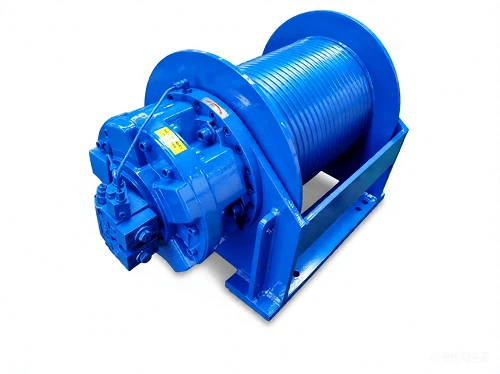
Start by multiplying the required line pull by the effective drum radius to obtain drum torque, then divide by the gearbox ratio and include efficiency to find the motor torque for the Hydraulic Winch. Always add a safety margin above this calculated value to cover starting loads, friction, and real‑world variations in the Hydraulic Winch duty.[2][3]
Many mobile and industrial Hydraulic Winch systems operate in pressure ranges from roughly 140 bar up to 350 bar, depending on the base machine and application. Higher pressures allow smaller motors for a given torque, while lower pressures require larger displacement motors or higher gear ratios to achieve the same Hydraulic Winch pull.[11][3]
Required line speed determines drum rpm, which then sets the needed motor rpm once gearbox ratio is considered for the Hydraulic Winch. Motor rpm, combined with displacement, defines the hydraulic flow demand, so high line speeds generally mean more flow or smaller displacement, as long as torque and power limits are still respected.[3][1]
Moderate oversizing is beneficial and provides necessary margin, but excessive oversizing can make the Hydraulic Winch harder to control and increase system cost and power demand. Oversized motors may also run inefficiently at low loads and could force the use of an unnecessarily large hydraulic power unit.[13][4]
To receive a tailored proposal, provide maximum and typical line pull, required line speeds, drum and rope dimensions, available hydraulic pressure and flow, and an outline of duty cycle and ambient conditions for the Hydraulic Winch. With this data, Kemer can engineer a compatible Hydraulic Winch package, including motor, gearbox, brake, and hydraulic integration, optimized for your specific machine and market requirements.[15][1]
[1](https://emce.com/about-winches/winch%20calculation)
[2](https://www.hydraulicsupermarket.com/upload/db_documents_doc_13.pdf)
[3](https://www.hydrastore.co.uk/guides/hydraulic-motor-sizing)
[4](https://www.mobilehydraulictips.com/how-do-you-select-the-right-hydraulic-motor-for-your-application/)
[5](https://www.cranestodaymagazine.com/analysis/pulling-a-line/)
[6](https://www-assets.liebherr.com/media/bu-media/lhbu-cot/documents/systems/liebherr-design-manual-winch-systems-product-catalogue-en-web.pdf)
[7](https://zips.com/blog/how-to-choose-a-winch-sizes-motors-gears)
[8](https://expansionmarine.com/how-to-calculate-the-drum-and-power-and-line-pull-and-brake-of-mooring-winch/)
[9](https://www.ramseywinch.com/wp-content/uploads/2016/10/Ramsey-Winch-Industrial-Selection-Guide.pdf)
[10](https://www.eagle-hydraulic.com/pdf/catalogs/Eagle-Hydraulic-Motors.pdf)
[11](https://www.fpes.net.au/wp-content/uploads/2020/06/Select-the-Right-Motor-for-your-Hydraulic-Applications-2.pdf)
[12](https://windusthydraulics.co.nz/motor-calculators/)
[13](https://www.ihservice.com/PDF's/Pump%20Selection%20Charts.pdf)
[14](https://www.ifpusa.com/formula/horsepower-calculator/)
[15](https://www.perplexity.ai/search/fb42ba86-1539-442c-a746-c0ae62787812)
[16](https://www.perplexity.ai/search/01068b44-26b9-4395-8f57-1d19ec40988c)


