
Language
Views: 222 Author: Robert Publish Time: 2026-01-19 Origin: Site


Content Menu
● Market overview in Philippines
● Why rubber track undercarriages are growing
● Typical applications for rubber track undercarriages
● How Philippines buyers source undercarriages
● What to look for in a supplier
● Role of integrated system providers like Kemer
● Technology trends in rubber track undercarriages
● Example sourcing workflow for Philippine OEMs
● Maintenance best practices in Philippine conditions
● How Philippine distributors cooperate with global suppliers
● How Kemer can support the Philippines market
● FAQ – Rubber Track Undercarriage Manufacturers and Suppliers in Philippines
>> 1. How do I choose the right rubber track undercarriage for Philippine projects?
>> 2. Are rubber track undercarriages better than steel tracks in the Philippines?
>> 3. What information do suppliers need to design a custom undercarriage?
>> 4. How does climate in the Philippines affect rubber track life?
>> 5. Can Kemer support local Philippine OEMs and dealers?
The Philippines is an attractive market for global Rubber Track Undercarriage Manufacturers and Suppliers thanks to strong construction, infrastructure, and agricultural equipment demand. For OEMs and distributors, understanding how Rubber Track Undercarriage Manufacturers and Suppliers serve this market is key to building a resilient crawler undercarriage supply chain.
The Philippines construction equipment market is expanding steadily, supported by investments in highways, ports, bridges, airports, and urban development projects. This growth directly increases demand for compact track loaders, excavators, crawler dumpers, and other machinery that rely on Rubber Track Undercarriage Manufacturers and Suppliers for reliable traction with low ground disturbance.
Agricultural mechanization is another important driver, as rice and high‑value crop farms need rubber‑tracked tractors and harvesters to operate in wet fields with minimal soil compaction. As a result, distributors and OEMs in the Philippines actively source from regional and global Rubber Track Undercarriage Manufacturers and Suppliers to secure stable quality, competitive cost, and consistent supply.
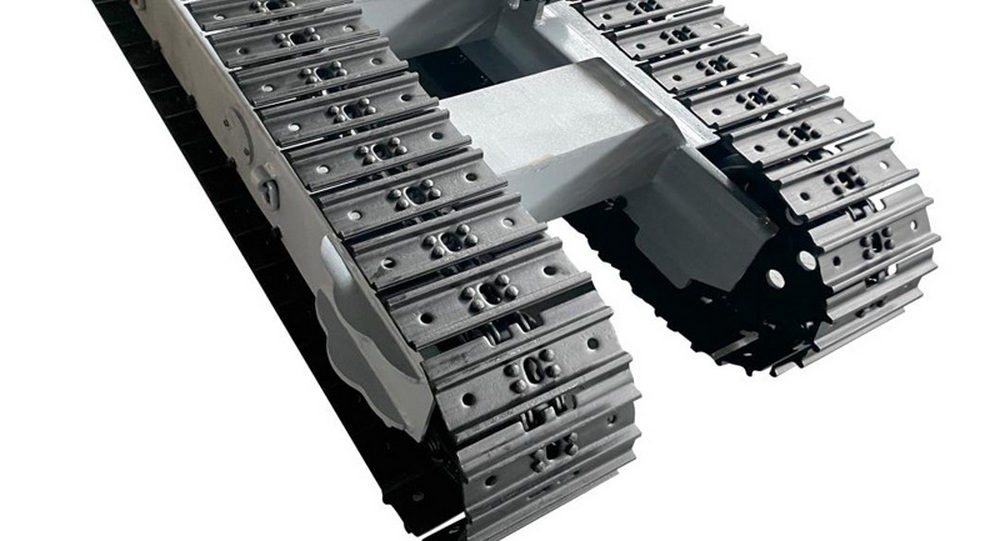
Rubber tracks distribute machine weight over a larger contact area, reducing ground pressure and preventing damage on soft soil, finished roads, and landscaped surfaces. This matches the needs of the Philippines' dense urban environments, where contractors prefer machines supplied by experienced Rubber Track Undercarriage Manufacturers and Suppliers to minimize surface repair costs after projects.
Compared with steel, rubber track undercarriages offer lower vibration, less noise, and better operator comfort, which is very important for long operating hours in construction and agriculture. Modern Rubber Track Undercarriage Manufacturers and Suppliers also integrate high‑tensile steel cords, reinforced carcass designs, and self‑cleaning tread patterns to extend service life in muddy, rocky, and abrasive local conditions.
Rubber track undercarriages are widely used on a range of machines that operate across the Philippines:
- Mini and midi excavators working in congested urban sites, residential zones, and tight job sites.
- Compact track loaders used for landscaping, road maintenance, building renovation, and small infrastructure jobs.
- Agricultural tractors, sprayers, and harvesters operating in paddy fields and soft agricultural land where low ground pressure is essential.
- Crawler dumpers and carriers for mining, quarrying, and infrastructure projects in hilly, wet, or soft terrain.
- Specialized equipment such as drilling rigs, aerial platforms, and pipeline equipment requiring stable traction and low ground damage.
In all of these segments, OEMs and fleet owners depend on Rubber Track Undercarriage Manufacturers and Suppliers that can customize track width, pitch, and undercarriage geometry to match machine weight, center of gravity, and duty cycle.
Most local buyers in the Philippines follow a mix of sourcing models:
- Importers and trading companies specializing in rubber tracks, rollers, sprockets, and complete undercarriage sets for excavators and compact machinery.
- Regional hubs in China and other Asian countries where Rubber Track Undercarriage Manufacturers and Suppliers export complete crawler systems, components, and replacement rubber tracks.
- Direct partnerships with specialist undercarriage factories that design and produce complete rubber track undercarriage assemblies for OEM machinery.
By working closely with Rubber Track Undercarriage Manufacturers and Suppliers, Philippine dealers can maintain stock of popular sizes while arranging custom production for special equipment or heavy‑duty applications. This combination of ready‑stock items and engineered‑to‑order solutions keeps fleets running with minimal downtime.
When evaluating Rubber Track Undercarriage Manufacturers and Suppliers for the Philippines market, buyers usually focus on several key dimensions:
- Engineering capability: Ability to design rubber track undercarriages from light 0.8 ton platforms to 30 ton and above, with optimized frames, track rollers, and sprockets.
- Material quality: Use of premium rubber compounds, high‑tensile steel cords, heat‑treated rollers and sprockets, and robust welds to handle tropical climates and high workloads.
- Customization: Support for different track widths, bogie configurations, mounting interfaces, and frame geometries to fit excavators, drill rigs, concrete equipment, and agricultural machines.
- Delivery and logistics: Reasonable production lead times, flexible shipping arrangements, and clear communication for both sample and mass orders.
- After‑sales service: Technical documentation, spare parts lists, installation guidance, and troubleshooting support for local dealers and end users.
Strong Rubber Track Undercarriage Manufacturers and Suppliers also provide engineering advice on load distribution, ground pressure, and stability so that machines perform reliably on Philippine job sites with varied soil conditions.
Integrated solution providers that combine rubber track undercarriages with hydraulic drives, planetary gearboxes, travel motors, winch drives, swing drives, and hydraulic winches offer major advantages to OEMs and equipment builders. Instead of sourcing the track frame from one supplier and the final drives or winches from another, OEMs can cooperate with a single partner that understands the entire crawler system architecture.
Such Rubber Track Undercarriage Manufacturers and Suppliers can:
- Match hydraulic travel drives and swing drives precisely to the undercarriage geometry, gear ratios, and machine duty cycle.
- Integrate winch drives and auxiliary hydraulic functions on crawlers used in drilling rigs, foundation equipment, marine engineering, and material handling.
- Optimize efficiency, torque delivery, and load capacity so that machines operate reliably on steep slopes, muddy fields, or sandy coastal terrain.
- Coordinate design of rubber track undercarriages with electronic control systems, ensuring smooth acceleration, braking, and steering performance.
For Philippine OEMs and system integrators, working with integrated Rubber Track Undercarriage Manufacturers and Suppliers reduces design risk, simplifies project management, and makes it easier to standardize components across different machine models.
Rubber Track Undercarriage Manufacturers and Suppliers are constantly upgrading their technology to improve durability, comfort, and performance. Some of the key trends include:
- Advanced tread and pattern design
Block patterns, multi‑bar treads, and hybrid designs balance traction, flotation, and stability on mixed terrain such as clay, sand, and gravel. Manufacturers fine‑tune tread depth and spacing to reduce slippage and improve self‑cleaning in wet soil.
- Reinforced carcass structures
Multiple layers of steel or fiber cords, improved bonding techniques, and stronger sidewalls help resist cuts, punctures, and internal fatigue. This is especially important in the Philippines, where machines often work in rocky or debris‑filled sites.
- Noise and vibration reduction
Rubber Track Undercarriage Manufacturers and Suppliers develop compounds and internal structures that reduce vibration transmitted to the cab, improving operator comfort and reducing fatigue over long shifts.
- Extendable and adjustable undercarriages
Some undercarriages can be hydraulically widened for work and narrowed for transport, improving machine stability without sacrificing mobility. This is useful for large drills, cranes, and special equipment that must pass through narrow urban streets.
- Smart maintenance and monitoring
As machines become more connected, some OEMs link undercarriage maintenance schedules and inspections to telematics data. While rubber tracks themselves may not be fully “smart,” Rubber Track Undercarriage Manufacturers and Suppliers increasingly design their products to be compatible with digital maintenance tools.
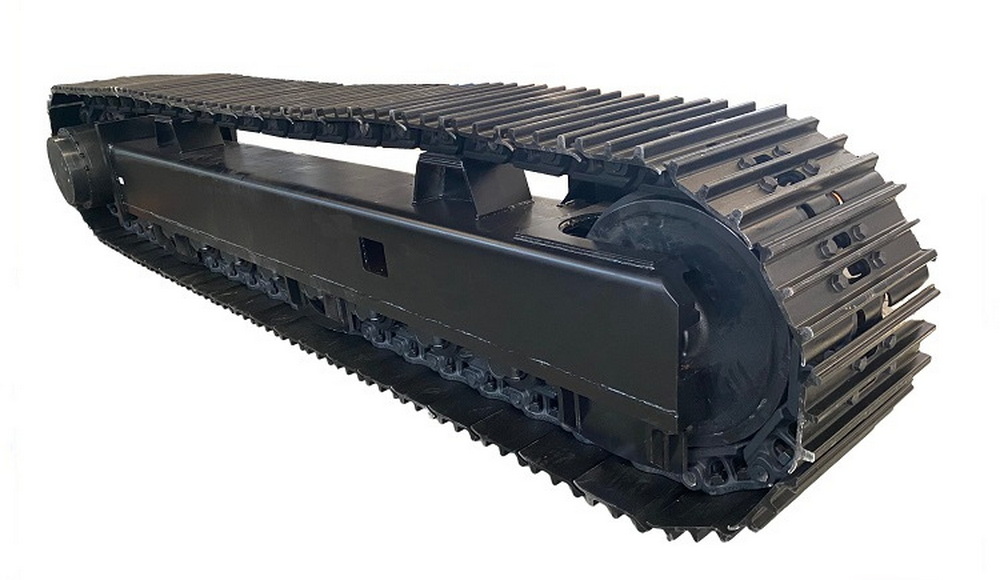
A typical workflow when collaborating with Rubber Track Undercarriage Manufacturers and Suppliers looks like this:
1. The OEM prepares basic machine data, including operating weight, desired payload, maximum travel speed, and intended applications such as construction, agriculture, or mining.
2. The supplier's engineering team proposes a rubber track undercarriage configuration, including track size, frame dimensions, roller layout, and sprocket design.
3. Preliminary calculations are performed to verify ground pressure, stability, and drawbar pull, ensuring the design meets safety and performance targets for Philippine terrain.
4. The parties align on technical drawings, interface dimensions, and any custom features such as extendable frames, additional support rollers, or protective guards.
5. Prototypes are produced and tested, often with pictures, diagrams, and videos used to document performance and facilitate remote design reviews.
6. After successful testing, mass production begins, and a spare parts list is created so Philippine distributors can stock key service items such as tracks, rollers, and sprockets.
This structured process helps Philippine OEMs secure rubber track undercarriages specifically matched to their machines, rather than relying on generic parts that may compromise performance or safety.
To maximize the life of rubber track undercarriages supplied by global Rubber Track Undercarriage Manufacturers and Suppliers, owners in the Philippines should focus on several maintenance practices:
- Regular tension checks
Rubber tracks that are too tight can cause accelerated wear on rollers and sprockets, while tracks that are too loose may de‑track during operation. Operators should follow the supplier's tensioning guidelines and adjust regularly.
- Cleaning after operation
Mud, clay, and stones trapped in the undercarriage can increase wear and reduce service life. Cleaning the undercarriage after working in harsh conditions helps protect both rubber and metal components.
- Visual inspection
Regularly checking for cuts, exposed cords, missing lugs, uneven wear patterns, and cracked rollers allows early intervention before failures occur on site.
- Operating discipline
Avoiding sharp turns on dry concrete, high‑speed travel over sharp rocks, or constant operation at maximum load reduces stress on the rubber track undercarriage. Trained operators help protect the investment made in high‑quality components from leading Rubber Track Undercarriage Manufacturers and Suppliers.
Local importers and distributors in the Philippines usually maintain relationships with multiple Rubber Track Undercarriage Manufacturers and Suppliers across Asia and Europe. This multi‑sourcing approach allows them to:
- Balance price and quality by offering different product tiers for various customer segments.
- Secure supply resilience, so that stock remains available even if one supplier experiences temporary capacity or logistics issues.
- Offer a broad size range of rubber tracks and undercarriages for mini excavators, skid steers, track loaders, agricultural machines, and crawler carriers.
Distributors also provide feedback on field performance, sharing details of common failure modes such as sidewall cuts, de‑tracking incidents, or rapid wear in specific soil conditions. With this feedback, Rubber Track Undercarriage Manufacturers and Suppliers adapt their designs, tread patterns, and compounds to better match real operating conditions in the Philippines.
As a specialist aligned with crawler undercarriages, hydraulic winches, planetary gearboxes, travel drives, winch drives, swing drives, and hydraulic motors, Kemer is well positioned to serve Philippine OEMs and dealers that require integrated rubber track undercarriage solutions. Instead of buying a chassis from one vendor and drives from another, buyers can work with Kemer as a single systems partner.
For customers in the Philippines, Kemer can act as one of the Rubber Track Undercarriage Manufacturers and Suppliers that:
- Designs custom rubber track undercarriages for excavators, drilling rigs, crawler cranes, agricultural machines, and special vehicles.
- Integrates travel drives, swing drives, and hydraulic winches to create compact, efficient, and robust tracked platforms optimized for local construction, mining, and agricultural conditions.
- Provides technical support from concept design through to prototype testing and mass production, including online communication, CAD data exchange, and video‑based installation guidance.
- Helps local OEMs design export‑ready machines by harmonizing undercarriage and drive system specifications with global standards.
By partnering with global Rubber Track Undercarriage Manufacturers and Suppliers like Kemer, Philippine OEMs and distributors can strengthen their product portfolios, shorten development cycles, and better serve their end customers across Southeast Asia.
The Philippines is a dynamic market where infrastructure growth and agricultural modernization drive strong demand for high‑quality rubber track undercarriages. To serve this demand, OEMs, dealers, and fleet owners must work closely with experienced Rubber Track Undercarriage Manufacturers and Suppliers that understand local terrain, climate, and application requirements.
By concentrating on engineering capability, material quality, customization, and long‑term support, buyers in the Philippines can secure rubber track undercarriage solutions that reduce downtime and total cost of ownership. Integrated providers such as Kemer, offering complete crawler undercarriages with matched hydraulic drives and gearboxes, give OEMs a powerful way to simplify machine design and deliver reliable tracked equipment to both domestic and export markets.
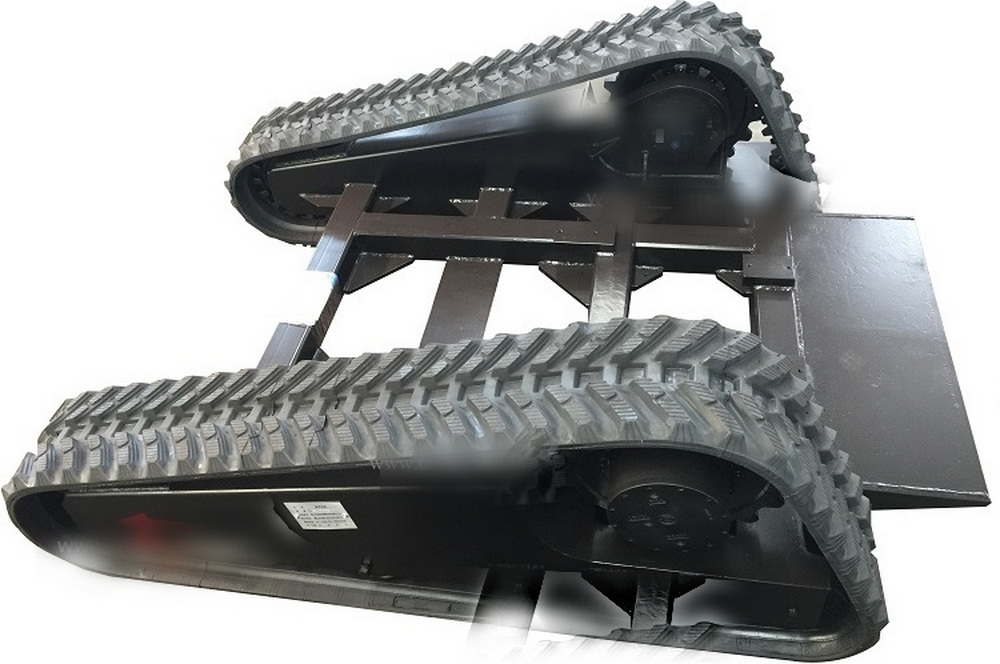
Selecting a rubber track undercarriage starts with accurate machine data: operating weight, desired payload, track gauge, working speed, and typical ground conditions. After this, Rubber Track Undercarriage Manufacturers and Suppliers can propose track dimensions, frame layouts, roller configurations, and sprocket designs that keep ground pressure, stability, and traction within safe ranges for local soils and climates.
Rubber tracks are often preferred for urban construction, landscaping, agriculture, and utility projects because they reduce ground damage, vibration, and noise. Steel tracks still dominate in extreme mining, heavy dozing, and some quarry applications where maximum durability is required, but many fleet owners now combine both systems and rely on specialized Rubber Track Undercarriage Manufacturers and Suppliers for each type.
Rubber Track Undercarriage Manufacturers and Suppliers typically request machine weight, undercarriage weight, desired load capacity, center of gravity, mounting interface details, and application information. With this data, they can create a tailored design, calculate ground pressure and drawbar pull, prepare drawings, and provide a quotation that matches the project's technical and commercial requirements.
High temperatures, intense sunlight, heavy rainfall, and frequent wet or muddy conditions can accelerate rubber aging and mechanical wear. To compensate, leading Rubber Track Undercarriage Manufacturers and Suppliers use heat‑resistant compounds, reinforced carcass structures, and tread patterns designed to shed mud and reduce internal heat build‑up, extending track life under tropical conditions.
Kemer can support Philippine OEMs and distributors by providing complete rubber track undercarriages combined with matched travel drives, swing drives, winch drives, hydraulic winches, and hydraulic motors. This integrated approach allows local customers to work with one partner that understands the entire crawler system, simplifying design, procurement, and after‑sales service compared to sourcing from multiple independent suppliers.


