
Views: 222 Author: Robert Publish Time: 2026-01-17 Origin: Site


Content Menu
● Why Choose A Hydraulic Winch?
>> Hydraulic vs Electric Winch Overview
● Typical Applications Of Hydraulic Winches
● Key Components Of A Hydraulic Winch
● How To Choose The Best Hydraulic Winch
● Why Planetary Hydraulic Winches Stand Out
● Safety And Control Features In Hydraulic Winches
● Matching Hydraulic Winch Solutions To Your Equipment
● How Media-Rich Content Helps Specify Hydraulic Winches
>> 1. What makes a hydraulic winch better than an electric winch?
>> 2. How do I calculate the required capacity for my hydraulic winch?
>> 3. What is a planetary hydraulic winch and why is it popular?
>> 4. Can a hydraulic winch operate underwater or in very harsh environments?
>> 5. What maintenance does a hydraulic winch require?
The best hydraulic winch is not a single universal model but the one that matches your load, duty cycle, environment, mounting space, and hydraulic system. In heavy-duty, continuous, and harsh working conditions, a planetary hydraulic winch with a quality hydraulic motor, robust gearbox, and proven safety system usually offers the most balanced performance.
A hydraulic winch is a pulling and lifting device driven by pressurized oil from a hydraulic power source instead of electricity. It typically consists of a hydraulic motor, planetary or worm gearbox, winch drum, brake, clutch, and control valves integrated into the machine's hydraulic circuit.
Hydraulic winches generate high torque at low speeds, making them ideal for moving very heavy loads over long work cycles. They are widely used in construction, marine, mining, oil and gas, towing, and rescue equipment where reliability and continuous duty are essential.

Hydraulic winches are preferred over electric winches when operations demand maximum pulling power and continuous working time. They deliver consistent line pull without overheating and maintain torque even as the job becomes more demanding.
Key advantages include:
- High load capacity for extremely heavy loads in offshore towing, dredging, and large construction projects.
- Durability in harsh conditions such as immersion, mud, dust, and extreme temperatures.
- Precise control of line speed and tension, reducing shock loads and improving operational safety.
- Long service life when paired with properly filtered and cooled hydraulic oil.
In many industrial projects, using a hydraulic winch instead of a purely electric solution reduces downtime, maintenance frequency, and the risk of overload-related failures.
Different hydraulic winch designs exist to fit specific tasks and mounting constraints. Understanding the main types helps narrow down the best solution for each project.
Common hydraulic winch types:
- Single-drum hydraulic winch for general lifting and pulling tasks in construction and plant operations.
- Double-drum hydraulic winch for simultaneous operations, such as lifting and tensioning or dual-line control.
- Planetary hydraulic winch using planetary gears to multiply torque for very heavy loads in a compact layout.
- Capstan hydraulic winch providing continuous pulling force for mooring, towing, or cable handling.
- Offshore hydraulic winch engineered for marine environments with corrosion-resistant materials and special sealing.
- Hydraulic hoist winch designed specifically for vertical lifting with enhanced safety features and braking systems.
For OEM equipment builders, the planetary hydraulic winch is often the preferred structure because it integrates high torque, compact size, and flexible mounting.
When selecting the best hydraulic winch, many buyers first compare hydraulic and electric technologies. This comparison usually focuses on power, duty cycle, environment, and installation complexity.
- Power and torque
Hydraulic winches deliver very high torque and line pull, especially suitable for heavy-duty industrial jobs. Electric winches are often adequate for light to medium-duty tasks but may struggle with continuous high-load operations.
- Duty cycle
A well-sized hydraulic winch can operate continuously without overheating, as long as the hydraulic system is properly cooled and maintained. Electric winches rely on motor thermal limits and battery or power-supply capacity, making them better for intermittent use.
- Environment
Hydraulic winches perform well in harsh, wet, or dirty environments because the hydraulic system can be sealed and protected. Electric winches are more sensitive to water ingress, mud, and corrosion unless specially engineered and protected.
- Installation
A hydraulic winch requires a hydraulic power source, hoses, and system integration. This increases initial complexity but allows centralized power on large machines. Electric winches are easier to install but can demand heavy cabling and power management at higher capacities.
- Control
Hydraulic winches provide smooth, precise control of speed and tension with the help of hydraulic valves and proportional control. Electric winches also offer good control but may lose pulling power as voltage drops or heat builds.
For high-load, professional, and industrial applications, a hydraulic winch is usually the best choice despite higher initial system complexity.
The best hydraulic winch design depends heavily on the industry and application. Each sector has unique requirements for line pull, speed, environment, and duty cycle.
Common application areas:
- Marine and offshore
Hydraulic winches are used for heavy lifting, towing, mooring, anchor handling, dredging, offshore pipe laying, and marine construction. They can be configured as anchor winches, towing winches, mooring winches, and umbilical handling winches.
- Construction and civil engineering
Projects such as bridge building, foundation piling, tunnel excavation, and dam construction rely on hydraulic winches for lifting materials, positioning equipment, and tensioning cables.
- Oil and gas
Hydraulic winches serve in rig skidding systems, pipe handling, subsea operations, pulling cables and hoses, and positioning heavy modules on platforms and vessels.
- Mining and tunneling
In mines and tunnels, hydraulic winches move large machines, haul ore cars, handle support equipment, and assist in shaft sinking or drift development.
- Rescue, towing, and utility work
Heavy recovery trucks, utility vehicles, and emergency equipment deploy hydraulic winches to pull stranded vehicles, clear debris, and handle cables in demanding conditions.
In all these environments, a carefully configured hydraulic winch improves safety, reduces manual labor, and increases overall productivity.
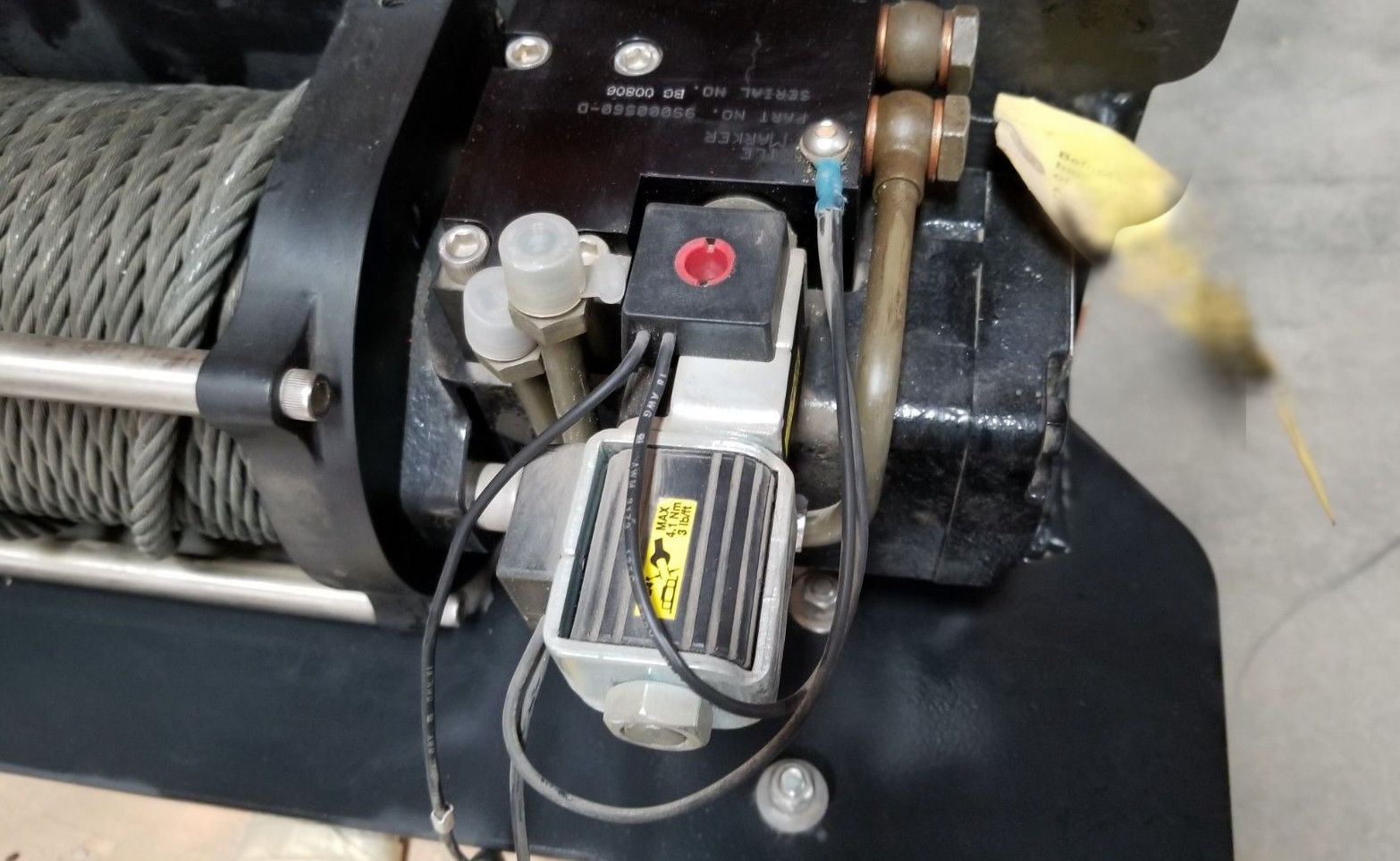
A high-quality hydraulic winch combines several critical components engineered for heavy-duty performance. The way these components are designed and matched determines the reliability and efficiency of the system.
Important components:
- Hydraulic motor
Converts hydraulic pressure and flow into mechanical rotation. Low-speed high-torque motors are common for hydraulic winch applications because they provide strong pulling force at controlled speeds.
- Planetary gearbox
Multiplies torque while keeping the gearbox compact. Planetary gears share the load across multiple gear paths, which improves strength and efficiency. This is the heart of a planetary hydraulic winch.
- Winch drum
Stores and guides the wire rope or synthetic rope. Drum diameter and width must be matched to rope diameter and length to ensure correct bending radius and safe spooling.
- Brake system
Spring-applied, hydraulically released disc brakes or drum brakes provide fail-safe holding capacity. When the hydraulic pressure stops, the brake automatically engages, securing the load.
- Control valves
Directional and proportional valves manage flow to the hydraulic motor, setting line speed and controlling direction. They are often grouped in valve manifolds or integrated into the machine's main hydraulic block.
- Safety devices
Overload protection devices, pressure relief valves, limit switches, emergency stop circuits, and sometimes load-sensing controls protect the winch, the machine, and the operators.
When evaluating any hydraulic winch, special attention should be paid to motor quality, gearbox design, surface treatments, bearing selection, and sealing arrangements, as these factors directly affect service life and reliability.
The best hydraulic winch for your project is the one that accurately matches your technical requirements and duty cycle. Selecting by price alone may lead to failures, downtime, and safety risks.
- Required line pull capacity
Define the minimum line pull based on load weight, friction, slope, and environmental resistance. For vehicle recovery, a common guideline is to choose a hydraulic winch rated at least 1.5 times the gross vehicle weight, and even higher in deep mud or steep terrain.
- Line speed and productivity
A faster hydraulic winch improves productivity but must remain controllable and safe. Line speed depends on hydraulic flow and motor displacement, so the hydraulic winch must be matched to the available pump output.
- Rope capacity and drum size
Consider the required rope length and diameter, along with the drum's geometry. Long-distance pulling, deep-well lifting, or marine mooring tasks require drums capable of supporting several rope layers without causing excessive crushing or bending.
- Hydraulic system compatibility
Check available pressure, flow, and return-line capacity from your existing hydraulic system or independent power pack. The hydraulic winch must reach its rated line pull within this window, and the system must be capable of proper cooling and filtration.
- Mounting and space constraints
Review installation envelope, mounting pattern, and orientation. A planetary hydraulic winch is often chosen when space is tight but power requirements are high, because the planetary gearbox offers high torque density.
- Duty cycle and environment
For continuous, demanding applications in offshore, mining, or steel plants, select a heavy-duty hydraulic winch with robust cooling and enhanced sealing. In corrosive or submerged environments, choose protective coatings, stainless components, and sealed bearings.
- Control and automation requirements
If the application needs remote control, synchronized operation with other winches, or integration into automated systems, opt for hydraulic winches that support advanced control valves, sensors, and electronic interfaces.
For many modern heavy-duty applications, the planetary hydraulic winch is considered a benchmark design. Its planetary gearbox uses multiple planet gears around a central sun gear inside a ring gear, distributing torque across several paths.
Key benefits of planetary hydraulic winch designs:
- Very high line pull capacity suitable for lifting equipment, pulling vehicles, and handling large construction loads.
- High efficiency, with more hydraulic power converted into useful pulling force and less wasted as heat.
- Compact, space-saving design that integrates easily into tracked undercarriages, crane booms, drilling rigs, and marine decks.
- Stable operation with lower vibration and smoother torque transmission compared with some traditional gear arrangements.
- Flexibility in speed ratio selection, allowing manufacturers to offer different combinations of line speed and pulling capacity.
Because of these advantages, planetary hydraulic winches are widely used in applications such as crawler cranes, drilling rigs, pipe layers, tracked vehicles, and offshore handling systems.
A best-in-class hydraulic winch offers not only power but also safe, predictable control. Safety features play a crucial role in preventing accidents and protecting both equipment and personnel.
Critical safety and control aspects:
- Overload protection
Pressure relief valves and load-limiting controls are used to prevent the hydraulic winch from pulling beyond its rated capacity. This protects the gearbox, drum, rope, and structure.
- Fail-safe brakes
Spring-applied brakes automatically clamp when hydraulic pressure is lost. This ensures that the load remains secured if the system stops unexpectedly or if there is a hose failure.
- Smooth acceleration and deceleration
Precise hydraulic control reduces shock loads, especially important when handling fragile loads, working near people, or operating in rough seas.
- Emergency stop
Emergency stop functions allow operators to halt winch movement instantly in case of unexpected obstacles, unsafe conditions, or equipment faults.
- Monitoring and diagnostics
Sensors for pressure, flow, temperature, and rope tension support condition monitoring and predictive maintenance, helping operators avoid unscheduled downtime.
In sectors such as offshore, mining, and tunneling, these safety functions are not optional; they are fundamental requirements for any hydraulic winch installed on site.
Manufacturers that specialize in hydraulic winch systems often supply complementary components such as planetary gearboxes, travel drives, swing drives, and hydraulic motors. An integrated approach allows each hydraulic winch to be tuned precisely to the undercarriage, hoist system, or slewing mechanism of the equipment.
By combining:
- A planetary hydraulic winch,
- A compatible planetary gearbox,
- A robust hydraulic motor, and
- A purpose-designed winch transmission,
engineers can build compact and powerful modules that mount directly onto crawler chassis, cranes, drilling rigs, and other mobile machinery. This reduces installation time, simplifies piping and wiring, and improves overall machine performance.
For example, on a tracked undercarriage, a hydraulic winch can be integrated into the travel drive or auxiliary system to handle additional pulling tasks, pipe laying, or tool handling. On cranes and lifting equipment, multiple hydraulic winches can be synchronized to control complex lifting operations with high precision.
When evaluating hydraulic winch options, technical drawings, dimensional drawings, and application videos are extremely valuable. Visual demonstrations of hydraulic winch performance on tracked machines, cranes, and marine equipment help users understand line speed, control behavior, and mounting details more clearly than text alone.
In engineering and purchasing workflows, animations and videos showing hydraulic winch assembly, component interfaces, and maintenance procedures also support training and long-term reliability. Demonstrating real projects where a planetary hydraulic winch operates under load gives customers confidence that the system can withstand demanding conditions.
Although this article does not embed specific media links, using videos and diagrams on product pages, catalogs, and training materials is an effective way to communicate the true capabilities of each hydraulic winch solution to global customers.
The best hydraulic winch is not a single product but the model that accurately matches your load, duty cycle, environment, hydraulic power, control requirements, and installation space. For most demanding industrial, marine, and construction applications, a planetary hydraulic winch with a high-torque hydraulic motor, robust planetary gearbox, high-capacity brake, and advanced safety controls offers the strongest combination of power, reliability, and control.
By carefully defining line pull, line speed, rope capacity, and system compatibility, users can select a hydraulic winch that operates safely and efficiently for many years. Working with a specialist manufacturer that also provides planetary gearboxes, travel drives, swing drives, and hydraulic motors ensures that each project benefits from integrated, heavy-duty solutions engineered for real-world conditions.
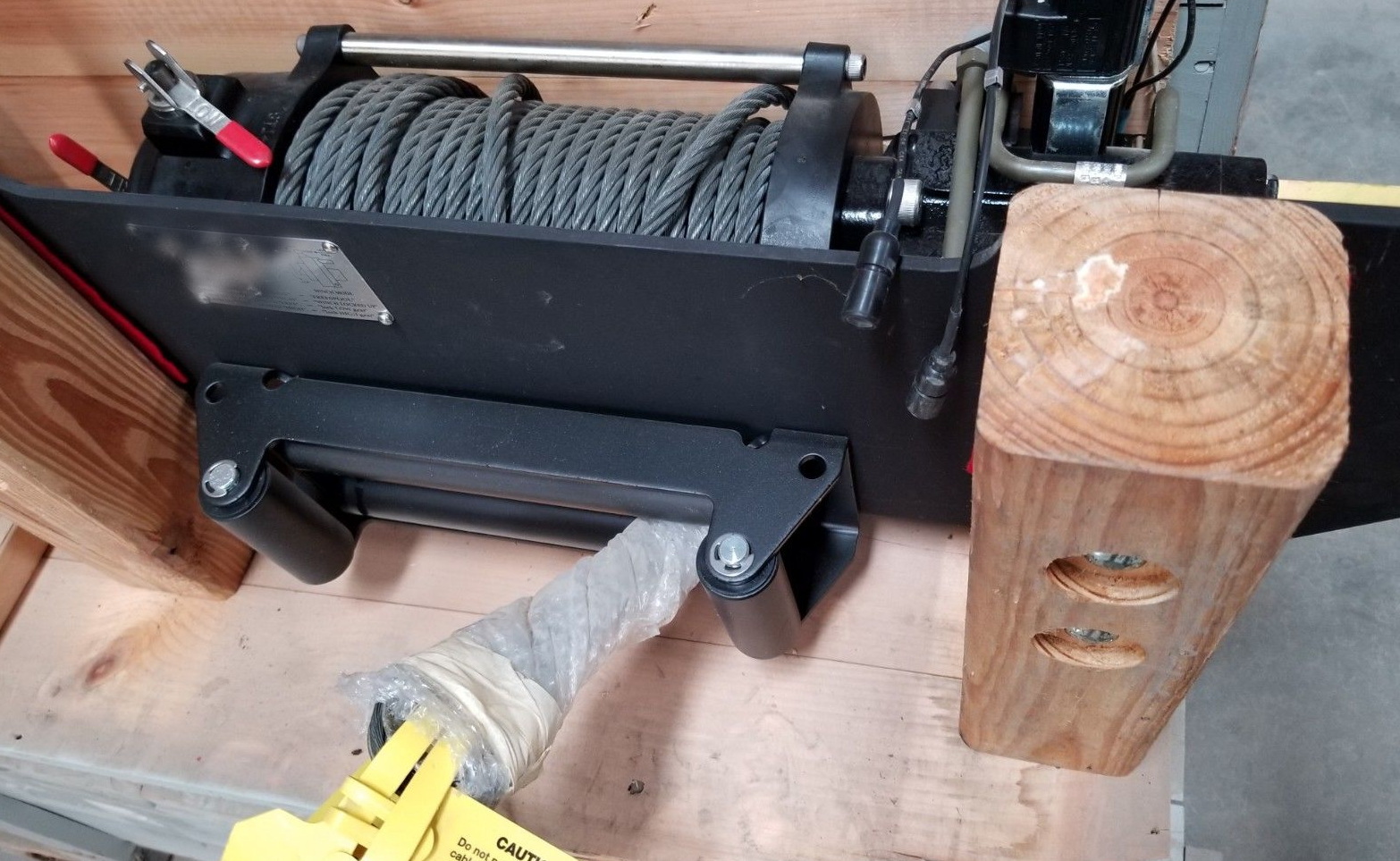
A hydraulic winch provides higher continuous line pull, better torque at low speeds, and superior resistance to overheating compared with most electric winches. It is therefore preferred for heavy-duty, long-duration tasks in construction, marine, mining, and industrial applications, where reliability and duty cycle are more important than simple installation convenience.
Start by calculating the total load, including the object's weight, friction, and any slope or resistance factors. Then apply a safety factor, commonly 1.5 or more, to ensure that the hydraulic winch can handle real-world variations, such as sudden load spikes, mud, steep inclines, or additional attachments.
A planetary hydraulic winch uses a planetary gear set to multiply torque, distributing the load across multiple gears inside a compact housing. This design delivers very high line pull, high efficiency, and a small footprint, making it especially popular on mobile equipment, tracked vehicles, cranes, and offshore handling systems where space and weight are limited.
Yes, a properly designed hydraulic winch with sealed bearings, corrosion-resistant materials, and suitable hoses can operate in wet, muddy, dusty, and even submerged environments. This capability explains why hydraulic winches are widely used in offshore, dredging, and marine construction projects where electric systems would be more vulnerable to water and corrosion.
Routine maintenance for a hydraulic winch includes inspecting hoses and fittings, checking oil cleanliness and level, verifying brake performance, and monitoring for leaks, noise, or vibration. Keeping the hydraulic system within recommended pressure, temperature, and filtration limits significantly extends the service life of the motor, gearbox, bearings, and brake components, helping the hydraulic winch remain reliable over many years of operation.
1. https://www.ini-hydraulic.com/news/how-hydraulic-winches-work-and-their-applications
2. https://www.bloommfg.com/blog/post/understanding-different-types-of-winches
3. https://www.manitou.com/en-US/our-range-of-hydraulic-winch
4. https://www.vevor.com/diy-ideas/types-of-winches/
5. https://www.winchhire.co.uk/why-hydraulic-winches-are-ideal-for-heavy-lifting-operations/
6. https://m.ini-hydraulic.com/news/top-5-factors-to-consider-when-choosing-a-hydraulic-winch
7. https://www.bloommfg.com/blog/post/what-to-look-for-in-a-heavy-duty-winch-a-buyer-s-guide
8. https://www.bloommfg.com/blog/post/understanding-planetary-winches-key-features-and-benefits-for-your-heavy-duty-operations
9. https://hydraulicwinchco.com/industry-uses/
10. https://www.winchhire.co.uk/unmatched-power-your-ultimate-guide-to-hydraulic-winches/
11. https://www.4wheelparts.com/articles/a-detailed-comparison-of-hydraulic-vs-electric-win
12. https://winchesinc.com/types-of-winches/planetary-hoists/
13. https://as-scan.com/info/the-as-scan-blog/hydraulic-vs-electric-winch
14. https://zhihete.com/understanding-the-benefits-of-a-hydraulic-hoist-winch-for-your-needs/
15. https://www.tractorbynet.com/forums/threads/hydraulic-winch-advice.635699/


