
Views: 288 Author: Kemer Publish Time: 2026-07-11 Origin: Site


Content Menu
● Customer Case: Rapid Track Roller Wear in Drilling Equipment
● Failure Analysis: What the Wear Patterns Really Mean
● Root Cause: Undercarriage Design Mistakes (Not Manufacturing Defects)
>> 1. Incorrect Load Calculation
>> 2. Insufficient Roller Quantity
● How Kemer Solved the Problem: Engineering-Based Optimization
>> Step 1: Dynamic Load Calculation
>> Step 2: Upgraded Roller Specifications
>> Step 3: Optimized Roller Layout
>> Step 4: Correct Track Shoe Selection
>> Step 5: Maintenance Optimization
● Results: Measurable Performance Improvement
● New Insight: Industry Trends in Crawler Undercarriage Design (2024–2026)
● Practical Checklist: How to Choose the Right Crawler Undercarriage
● FAQ: Track Rollers & Crawler Undercarriage
>> 1. Why do track rollers wear out faster than expected?
>> 2. How do I calculate the correct roller load?
>> 3. How many rollers should a crawler undercarriage have?
>> 4. Does track width really affect roller wear?
>> 5. Can improper operation damage rollers?
In the world of crawler undercarriage systems, premature track roller wear is one of the most common—and misunderstood—problems faced by OEM buyers, equipment manufacturers, and industrial operators. Many assume the issue lies in poor component quality. However, based on real-world engineering experience at Kemer (China hydraulic undercarriage manufacturer), the root cause is often far more complex.
This article combines field failure analysis, engineering insights, and OEM best practices to help you understand why track rollers fail early and how to correctly select a crawler undercarriage system for long-term durability and cost efficiency.
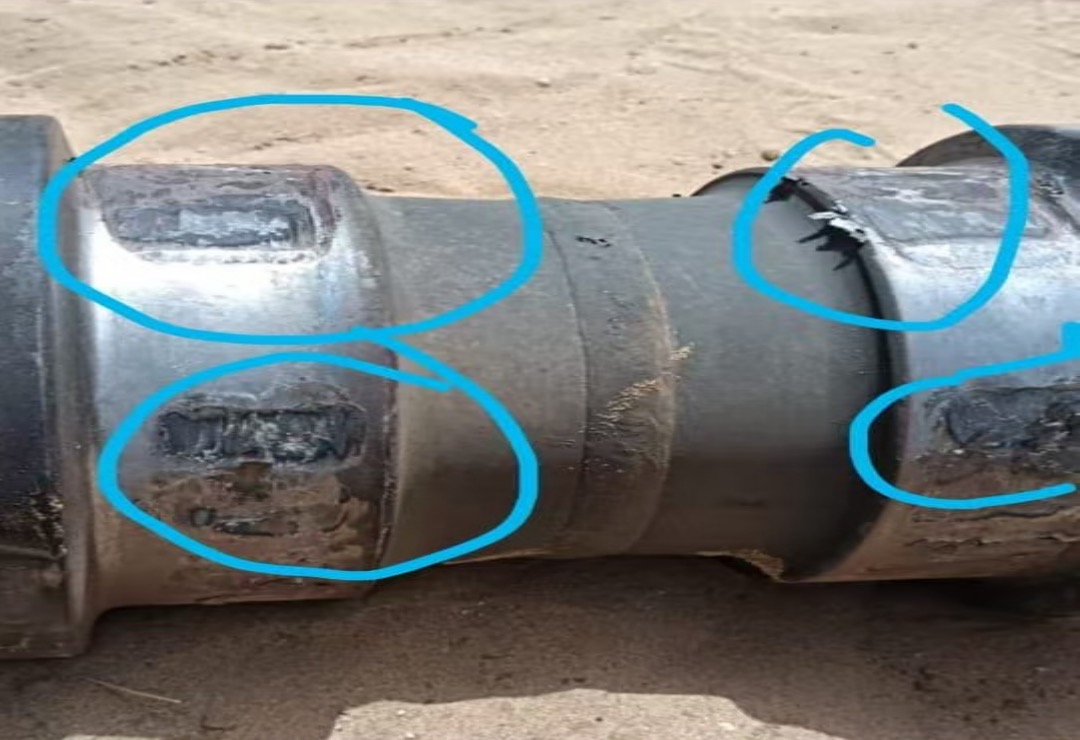
A global drilling equipment manufacturer approached us after experiencing unusually fast wear on their track rollers (bottom rollers). Despite limited operating hours, multiple rollers exhibited:
- Severe flange wear
- Uneven tread wear
- Edge chipping
- Surface cracking near flanges
- Metal deformation
At first glance, the issue appeared to be a manufacturing defect. However, after a full engineering assessment, we identified that the crawler undercarriage design and application mismatch was the real cause—not the roller quality.
Understanding wear patterns is critical for diagnosing undercarriage problems. Each type of damage reveals specific mechanical or operational issues.
When roller flanges are heavily worn, it indicates that the track chain is not centered.
Common causes include:
- Misaligned track frame
- Incorrect roller spacing
- Poor guide wheel positioning
- Excessive lateral force during operation
- Frequent pivot turns on hard ground
This type of wear is not a material failure—it is a system alignment issue.
If one side of the roller wears faster than the other, it signals uneven load distribution.
Typical reasons:
- Offset center of gravity
- Poor machine layout design
- Insufficient number of rollers
- Incorrect load calculation
This leads to localized overloading, drastically reducing service life.
Cracks near the flange edge usually result from repeated impact loading, not rolling fatigue.
High-risk applications include:
- Rock drilling
- Quarry operations
- Climbing slopes
- Obstacle crossing
In these cases, rollers experience shock loads instead of smooth rotation, accelerating failure.
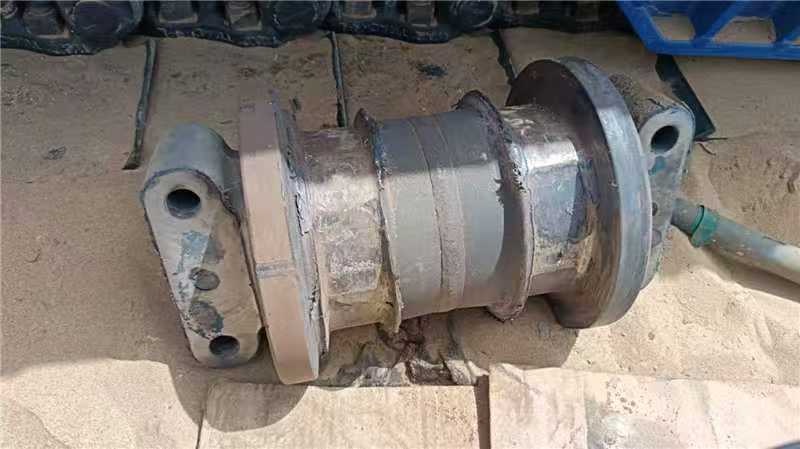
Many OEMs select rollers based only on machine weight. This is a critical mistake.
The actual working load should include:
- Dynamic load
- Drilling force
- Impact coefficient
- Travel speed
- Operating slope
- Duty cycle
In drilling applications, true roller load can exceed static weight by 30–80%.
Reducing roller count to cut costs often backfires.
Example:
- 30-ton machine with 6 rollers per side → overloaded system
- Proper design: 8–9 rollers per side → balanced load distribution
Fewer rollers = higher stress per unit = faster wear.
Track shoe width directly affects ground pressure and stability.
- Narrow tracks → higher pressure, more sinkage, increased side load
- Wide tracks → better load distribution, reduced wear
Soft ground applications especially require wider track shoes.
Zero-radius turning under full load causes:
- Extreme side pressure on flanges
- Continuous friction between track links and rollers
- Accelerated wear
This is one of the most overlooked operational causes.
Improper machine design can shift weight unevenly:
- Front-heavy machines wear front rollers first
- Rear rollers may remain underutilized
This is common in custom drilling rigs and modified equipment.
Instead of replacing damaged parts, we redesigned the entire crawler undercarriage system.
We analyzed:
- Machine structure
- Working conditions
- Drilling reaction forces
- Terrain and slope
- Shock factors
This allowed us to determine true operational load, not just static weight.
We implemented:
- Larger shaft diameters
- High-capacity bearings
- Advanced heat treatment
- Improved sealing systems
- Increased surface hardness
Result: Higher fatigue resistance and longer service life
We improved:
- Roller spacing
- Roller quantity
- Track alignment
- Guide wheel positioning
Goal: Even load distribution across the entire undercarriage
Based on terrain:
- Soft ground → wider track shoes
- Rocky terrain → reinforced shoes
This reduced ground pressure and impact stress.
We advised:
- Proper track tension control
- Routine inspections
- Avoiding pivot turns under load
- Cleaning debris regularly
- Early replacement of worn parts
After optimization:
- Roller lifespan increased significantly
- Wear patterns became uniform
- Maintenance costs decreased
- Machine downtime reduced
- Operational reliability improved
Most importantly, the customer eliminated frequent roller replacement cycles.
To stay competitive in global OEM markets, modern undercarriage systems are evolving rapidly.
Key trends include:
- Smart Load Monitoring: Sensors detect uneven load distribution in real time.
- Advanced Materials: Use of boron steel and improved alloy compositions for wear resistance.
- Sealed-for-Life Rollers: Enhanced sealing technology reduces maintenance needs.
- Simulation-Based Design: Finite Element Analysis (FEA) is now standard for load optimization.
For OEM buyers, this means selecting a supplier with engineering capability—not just manufacturing capacity—is critical.
Before selecting a supplier, evaluate these factors:
1. Does the supplier calculate dynamic load or only use machine weight?
2. Is roller quantity optimized or minimized for cost?
3. Is track width matched to your working environment?
4. Can they analyze center of gravity and load distribution?
5. Do they provide application-specific engineering support?
If the answer to any of these is "no," you risk premature failure and higher lifecycle costs.
At Ningbo Kemer, we specialize in custom crawler undercarriage solutions for:
- Drilling rigs
- Piling machines
- Crushers and screening plants
- Tracked conveyors
- Forestry equipment
- Special-purpose machinery
Our approach is different:
- Engineering-first design (not catalog-based selection)
- Accurate load calculation models
- Application-specific customization
- Proven performance in high-impact environments
If you are experiencing track roller wear issues or planning a new equipment project, the right undercarriage design can significantly reduce your total cost of ownership.
Contact Kemer today to receive a customized crawler undercarriage solution tailored to your machine specifications and working conditions.
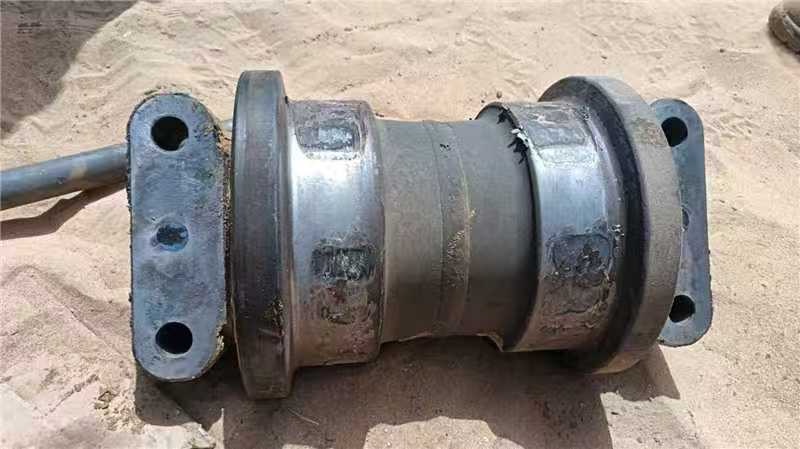
Premature wear is usually caused by incorrect undercarriage design, uneven load distribution, or harsh operating conditions, not poor manufacturing quality.
You must consider dynamic factors, including impact loads, slope, speed, and working conditions—not just machine weight.
It depends on the machine, but generally more rollers improve load distribution and extend service life.
Yes. Wider tracks reduce ground pressure and side loads, significantly improving durability in soft terrain.
Absolutely. Frequent pivot turning under load and poor maintenance are major contributors to accelerated wear.
1. Caterpillar – Undercarriage Maintenance Guide https://www.cat.com/en_US/articles/ci-articles/undercarriage-maintenance.html
2. Komatsu – Excavator Undercarriage Overview https://www.komatsu.com/en/products/excavators/undercarriage/
3. ScienceDirect – Rolling Contact Fatigue (Engineering topic overview) https://www.sciencedirect.com/topics/engineering/rolling-contact-fatigue
4. ISO – Standard ISO 6336 (Calculation of load capacity of spur and helical gears) https://www.iso.org/standard/iso-6336.html
5. Machinery Lubrication – Roller Bearing Failure Analysis https://www.machinerylubrication.com/Read/31123/roller-bearing-failure-analysis


