
Views: 222 Author: Amanda Publish Time: 2026-01-03 Origin: Site


Content Menu
● Core Components of a Hydraulic Winch
● Hydraulic Power and Pascal's Law
● Step‑by‑Step Working Process
● Types and Configurations of Hydraulic Winches
● Advantages of a Hydraulic Winch
● Typical Applications of Hydraulic Winches
● Safety and Maintenance for Hydraulic Winches
● FAQ
>> 1. What is a hydraulic winch used for?
>> 2. How is a hydraulic winch different from an electric winch?
>> 3. What components make up a hydraulic winch system?
>> 4. How do you control the speed and direction of a hydraulic winch?
>> 5. What maintenance does a hydraulic winch require?
A hydraulic winch is a heavy-duty pulling and lifting device that converts hydraulic energy from pressurized fluid into powerful rotational motion at the winch drum. In demanding environments such as marine, construction, mining, and industrial plants, a hydraulic winch offers high torque, smooth control, and continuous duty that is difficult for other drive systems to match. For manufacturers like Kemer, integrating hydraulic winch technology with planetary gearboxes, travel drives, and hydraulic motors creates robust solutions for global customers who need reliable, high-performance motion systems.[1][2][3][4][5]
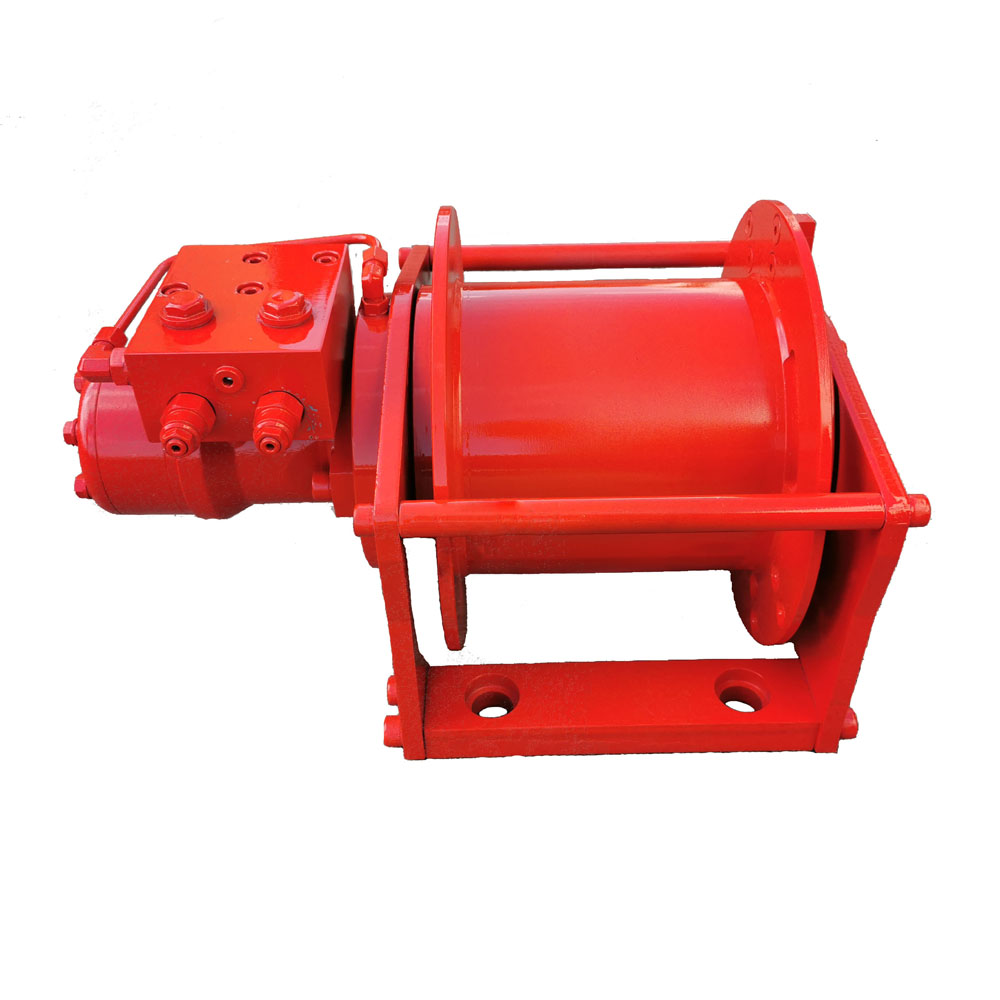
A hydraulic winch is a mechanical device that uses pressurized oil from a hydraulic power source to drive a motor connected to a drum that winds or unwinds rope or cable. Unlike electric winches, a hydraulic winch can run for long periods under high load without overheating, making it ideal for industrial and off‑road applications.[2][4][6][7]
Key characteristics of a modern hydraulic winch include:
- A hydraulic motor providing high starting torque and smooth low‑speed control.[1][2]
- A compact planetary gearbox that multiplies torque and reduces speed at the drum.[8][1]
- Integrated multi‑disc brake systems and valves for safe, precise load handling.[9][1]
To help users understand how a hydraulic winch works, many technical resources add diagrams, schematics, and animated clips that show fluid flow, motor rotation, and drum movement step by step. Instructional videos often walk through a complete hydraulic winch, from the power pack and control valves to the drum and rope path, making the working principle easy to visualize.[10][3][11]
A hydraulic winch is built from several coordinated components, each of which plays a specific role in the energy conversion process. Understanding these parts makes it much easier to select, operate, and maintain a hydraulic winch in the field.[12][13][2]
Main components commonly found in industrial hydraulic winch systems include:
- Hydraulic power source: pump, reservoir, filters, and power‑take‑off or motor drive.[2][12]
- Hydraulic motor: converts pressurized fluid into rotational motion to drive the winch.[13][2]
- Planetary gearbox: multiplies torque and reduces speed for controlled drum rotation.[8][1]
- Winch drum: cylindrical spool that stores the rope or wire and transmits pulling force.[9][8]
- Brake system: typically a closed multi‑disc brake mounted on the drum or motor shaft.[1][9]
- Control valves: directional, flow‑control, and relief valves that regulate speed, direction, and system pressure.[12][2]
- Structural frame and mounting: base, fairlead, and support bearings that keep the hydraulic winch aligned and stable.[9][1]
Technical articles and training materials often use exploded-view renderings of the hydraulic winch assembly to show how the hydraulic motor, planetary gear train, brake, and drum are packaged into a compact drive unit. Close‑up animations of the gear stages and multi‑disc brake illustrate how torque is transmitted and how the brake safely locks the drum when the hydraulic winch stops.[3][11][8][1]
The operating principle of any hydraulic winch is based on Pascal's law, which states that pressure applied to a confined fluid is transmitted undiminished in all directions. When a pump forces oil into a closed circuit at high pressure, the hydraulic motor at the winch receives this energy and converts it into torque at the shaft.[6][14][2]
In a typical hydraulic winch circuit:
- The pump draws low‑pressure oil from a reservoir and pressurizes it to the required system pressure.[6][2]
- This pressurized fluid travels through hoses and directional valves toward the hydraulic winch motor.[2][12]
- The hydraulic motor produces torque proportional to both the fluid pressure and the motor displacement, which then drives the gearbox and drum.[13][2]
- A pressure relief valve protects the hydraulic winch by diverting excess pressure back to tank when loads become too high.[6][2]
Training videos often overlay pressure values, flow arrows, and color‑coded fluid paths on schematics of a hydraulic winch to show how Pascal's law leads to powerful yet controllable drum rotation. Visual comparisons between electric and hydraulic winch systems help highlight why a hydraulic winch can deliver higher continuous torque with better overload protection.[4][11][7][3]
When operators activate a hydraulic winch, a sequence of events takes place in the hydraulic circuit and mechanical drive train. Each step transforms hydraulic energy into controlled pulling force at the rope, allowing the hydraulic winch to move heavy loads with precision.[3][2][6]
Typical operating sequence of a hydraulic winch:
1. Power on and pump start
- The engine or electric motor drives the hydraulic pump connected via PTO or coupling.[12][2]
- The pump sends pressurized oil into the hydraulic winch circuit, bringing it to operating pressure.[2][6]
2. Directional valve engagement
- The operator moves a lever or actuates an electro‑hydraulic valve to choose spool‑in or spool‑out on the hydraulic winch.[12][2]
- The directional valve routes fluid to one side of the hydraulic motor, reversing flow direction when the winch must change direction.[3][2]
3. Hydraulic motor rotation
- Pressurized oil enters the motor, pushing against internal elements such as gears, vanes, or pistons depending on the motor type.[13][2]
- The motor shaft starts rotating, producing torque that is transmitted directly to the hydraulic winch gearbox.[13][2]
4. Planetary gearbox torque multiplication
- A planetary gear train connected to the motor reduces speed and multiplies torque to match winch drum requirements.[8][1]
- This arrangement allows a compact hydraulic winch unit to deliver very high pulling forces even with relatively small motors.[1][8]
5. Drum spooling and rope movement
- The drum rotates, winding or unwinding rope or wire through the fairlead and onto the load.[8][9]
- The hydraulic winch maintains steady line speed and tension by controlling motor flow and pressure through valves.[2][12]
6. Braking and holding the load
- When the control lever returns to neutral, flow to the motor stops and a multi‑disc brake engages automatically to hold the drum.[9][1]
- Counterbalance or load‑control valves may be used in the hydraulic winch to prevent runaway loads and provide smooth lowering.[4][12]
Animated tutorials often show this entire working cycle of a hydraulic winch from side and cutaway views so users can see the rope motion, drum rotation, and internal gear movement simultaneously. Real‑world clips overlay these animations onto live footage from cranes, winch trucks, or marine winch decks to connect theory with actual hydraulic winch performance.[11][10][4][3]
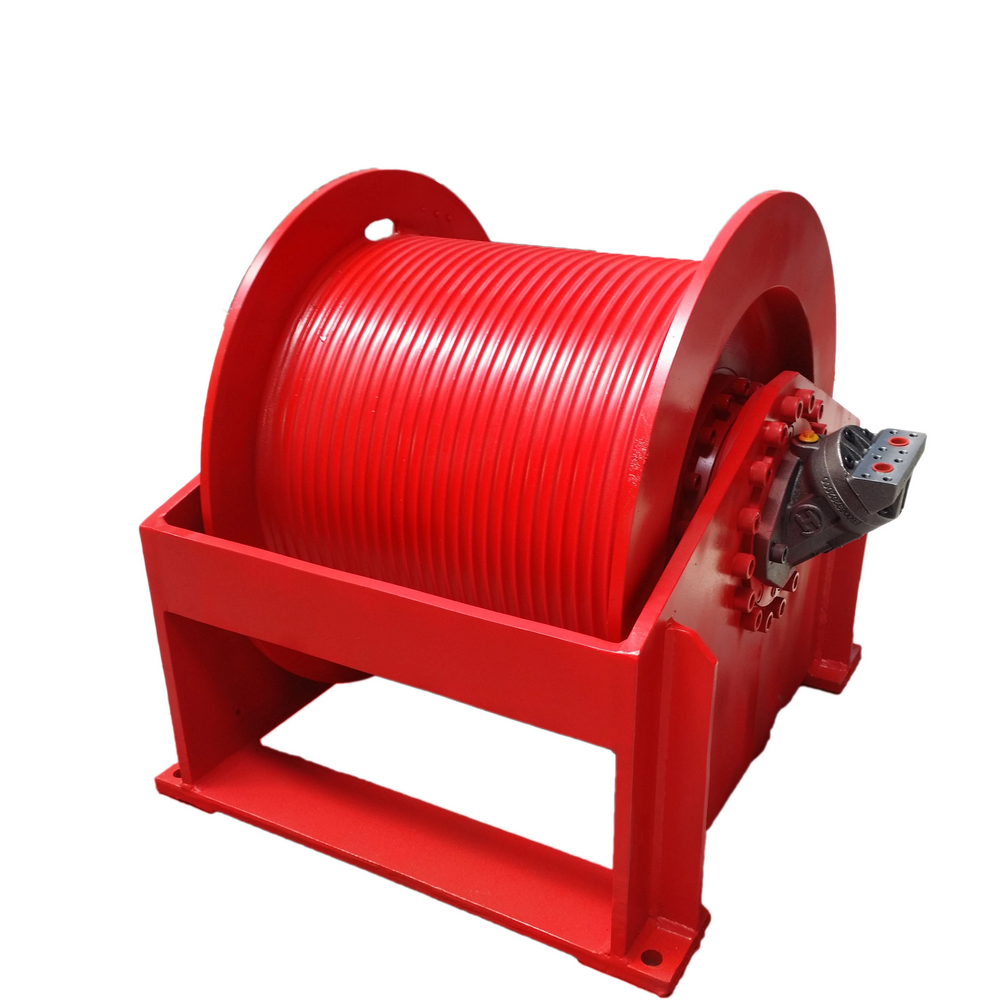
Hydraulic winches come in many configurations tailored to specific sectors, from compact off‑road recovery units to large multi‑drum marine mooring winches. Each configuration uses the same fluid power principles but adapts motor size, gearbox ratio, drum design, and controls to match the application.[5][7][4][9]
Typical hydraulic winch configurations include:
- Marine hydraulic winch for anchoring, towing, and mooring operations on ships and offshore platforms.[14][9]
- Construction and crane hydraulic winch for lifting heavy building materials, machinery, and structural components.[15][5]
- Mining and industrial hydraulic winch systems used to haul ore, move equipment, and position large machines in harsh environments.[7][5]
- Vehicle‑mounted hydraulic winch solutions integrated with truck PTO systems for recovery, utility, and pipeline work.[7][4]
Technical brochures often place side‑by‑side diagrams of different hydraulic winch types, comparing drum sizes, motor options, and planetary gear stages. Product demonstration videos present these hydraulic winches in real projects—on decks, on cranes, or on tracked undercarriages—to show how configuration affects pulling speed, capacity, and duty cycle.[10][5][4][9]
Choosing a hydraulic winch instead of other drive types offers several performance and reliability advantages in heavy‑duty tasks. These benefits are especially important when continuous operation, high loads, or harsh environments are involved.[16][5][4][7]
Key advantages of a hydraulic winch include:
- High torque and pulling capacity, ideal for demanding industrial and marine loads.[5][4]
- Continuous duty capability with minimal risk of motor overheating compared to many electric winches.[15][4]
- Fine speed and tension control through variable flow and pressure, enabling precise positioning of heavy components.[12][2]
- Excellent durability in wet, dirty, or explosive environments, where sealed hydraulic winch systems perform better than exposed electric drives.[4][7]
- Flexible integration with other hydraulic systems, such as travel drives, slewing drives, and hydraulic motors on tracked or mobile equipment.[13][12]
Marketing materials and case‑study videos often highlight how upgrading to a hydraulic winch increased uptime, reduced maintenance, and improved safety on projects like bridge construction, offshore lifting, and heavy recovery. Side‑by‑side footage of electric and hydraulic winches under full load frequently demonstrates smoother starts, steadier speed, and stronger pulling force from the hydraulic winch.[10][5][7][4]
Hydraulic winch technology appears in many sectors where controlled heavy lifting or pulling is essential. Because a hydraulic winch can be scaled for different sizes and line pulls, manufacturers can tailor solutions for everything from small utility trucks to massive offshore platforms.[16][5][4]
Common application areas for a hydraulic winch:
- Marine and offshore: mooring, anchoring, towing, pipe laying, and positioning subsea equipment.[14][9]
- Construction: lifting building materials, moving formwork, handling rebar bundles, and operating on cranes and hoists.[15][7]
- Mining: hauling ore cars, repositioning mining equipment, and stabilizing loads on steep gradients.[5][7]
- Industrial plants: moving presses, turbines, and heavy machinery inside factories and workshops.[15][5]
- Rescue and recovery: winch trucks and recovery vehicles use a hydraulic winch for pulling disabled machines or clearing debris.[7][4]
Application notes often use on‑site photographs with overlays pointing to each hydraulic winch and its load path so readers can see how winch positioning and anchoring affect safety and efficiency. Time‑lapse project videos show how hydraulic winch systems accelerate tasks like bridge launches, barge positioning, or tower assembly by providing dependable, repeatable pulling power.[4][5][15]
Safe operation and long service life of a hydraulic winch depend on correct installation, regular inspection, and adherence to operating limits. Because a hydraulic winch can generate extremely high forces, any failure in the rope, anchor points, or circuit can pose serious risk.[7][4][2][12]
Best‑practice guidelines for a hydraulic winch include:
- Routine inspections of hoses, fittings, and valves for leaks, abrasion, and damage before operation.[2][12]
- Checking drum, rope, anchor points, and brakes to ensure the hydraulic winch can safely hold the maximum expected line pull.[1][9]
- Monitoring oil level, cleanliness, and temperature in the hydraulic system to avoid cavitation and component wear.[6][2]
- Following manufacturer load charts, duty cycles, and maintenance schedules for the specific hydraulic winch model.[16][1]
- Training operators on emergency stop procedures, safe line handling, and proper communication signals when using a hydraulic winch in teams.[4][7]
Instructional safety videos frequently show correct and incorrect line‑of‑fire positions, demonstrating how operators should stay clear of the rope path and stored energy zones around a hydraulic winch. Maintenance animations depict proper drum re‑spooling techniques, filter changes, and brake adjustments to keep the hydraulic winch in optimal condition.[10][3][6][4]
A hydraulic winch transforms pressurized fluid power into controllable, high‑torque drum rotation that can pull or lift heavy loads in some of the world's toughest environments. By combining a hydraulic motor, planetary gearbox, robust brake, and advanced valve control, a hydraulic winch delivers continuous duty performance, precise speed control, and exceptional reliability for marine, construction, mining, industrial, and recovery operations. For technology‑driven manufacturers such as Kemer, integrating hydraulic winch systems with track undercarriages, planetary gearboxes, and travel drives creates complete motion solutions that help global customers handle critical lifting and pulling tasks with confidence.[3][1][4][2]
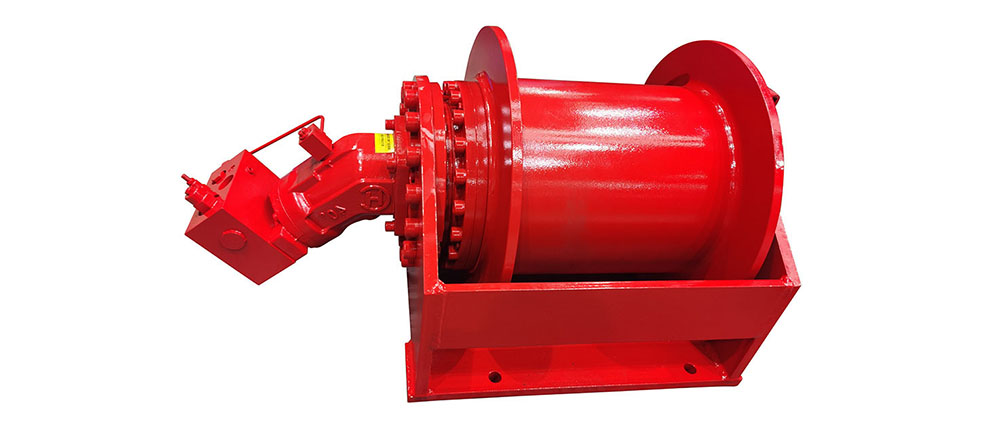
A hydraulic winch is used for lifting, pulling, and positioning heavy loads in applications such as construction, marine, mining, industrial plants, and vehicle recovery. Its high torque and continuous duty capability make a hydraulic winch especially suitable for demanding projects where electric winches may overheat or lack sufficient pulling power.[5][7][4]
A hydraulic winch uses pressurized oil from a hydraulic system to drive its motor, while an electric winch uses an electric motor powered by batteries or mains supply. Compared with electric models, a hydraulic winch typically offers higher continuous torque, better heat management, and improved durability in harsh environments such as offshore or heavy construction sites.[6][7][4][2]
A typical hydraulic winch system includes a power source (pump and reservoir), hydraulic motor, planetary gearbox, winch drum, brake, hoses, and control valves. Many advanced systems add safety components such as pressure relief valves, counterbalance valves, and remote controls to improve the performance and safety of the hydraulic winch.[1][12][2]
The speed and direction of a hydraulic winch are controlled by varying fluid flow and routing through directional and flow‑control valves. By adjusting pump output or valve settings, operators can make a hydraulic winch spool in or out at different speeds, allowing delicate positioning or fast retrieval as needed.[3][12][2]
Routine maintenance of a hydraulic winch includes checking hoses and fittings for leaks, inspecting the drum and rope, verifying brake function, and monitoring oil level and cleanliness. Following the manufacturer's service schedule for filters, seals, and component inspections ensures that the hydraulic winch remains reliable and safe throughout its service life.[16][6][1][2]
Short description (≈300 characters):
[1](https://www.bloommfg.com/blog/post/everything-you-need-to-know-about-hydraulic-winches)
[2](https://landmarktools.com/blogs/guides/how-does-a-hydraulic-winch-work)
[3](https://www.tu.biz/video-blog/english/how-does-a-hydraulic-winch-work)
[4](https://hydraulicwinchco.com/industry-uses/)
[5](https://cpwinch.com/top-benefits-of-using-a-hydraulic-winch-in-heavy-lifting/)
[6](https://winchmachines.com/how-does-a-hydraulic-winch-work/)
[7](https://www.winchhire.co.uk/why-hydraulic-winches-are-imperative-for-industrial-projects/)
[8](https://apollooffroad.com/blogs/default-blog/blog-how-does-a-hydraulic-winch-work)
[9](https://www.tytanmarine.com/products/winches/hydraulic-mooring-winch)
[10](https://www.youtube.com/watch?v=ruPYTUdY3Sw)
[11](https://www.youtube.com/watch?v=BAgkE5FXUCE)
[12](https://winchesinc.com/hydraulic-system-design/)
[13](https://www.hpsx.com/blog/basic-components-of-a-hydraulic-system/)
[14](https://miseamachinery.com/hydraulic-winch/)
[15](https://zhihete.com/understanding-hydraulic-crane-winches-applications-and-benefits/)
[16](https://www.ini-hydraulic.com/news/how-hydraulic-winches-work-and-their-applications)
[17](https://www.facebook.com/groups/410043010859506/posts/1286132113250587/)
[18](https://www.linkedin.com/pulse/hydraulic-winch-drives-real-world-5-uses-youll-9al8c)
[19](https://zhihete.com/new-post/)
[20](https://www.bloommfg.com/blog/post/how-hydraulic-winches-enhance-efficiency-in-the-oil-gas-industry)


