
Views: 222 Author: Amanda Publish Time: 2026-01-07 Origin: Site


Content Menu
● Key Components of a Hydraulic Winch
>> Planetary gearbox and winch drum
>> Control valves and safety elements
● Working Principle of a Hydraulic Winch
>> Step-by-step working process
● Hydraulic Winch Circuit Types
>> Closed-center and load-sensing systems
● Control Modes for Hydraulic Winch
>> Manual and proportional control
>> Remote and automation options
● Advantages of Hydraulic Winch vs. Electric Winch
>> Power density and harsh environments
● Hydraulic Winch with Planetary Gearbox and Track Systems
● Typical Applications of Hydraulic Winch
>> Mobile and off-road equipment
>> Marine, offshore, and industrial applications
● Basic Operation Guide for Hydraulic Winch
● Maintenance of Hydraulic Winch Systems
>> Mechanical and rope maintenance
● Safety Considerations for Hydraulic Winch Use
>> Load rating and structural checks
● Integration of Hydraulic Winch into OEM Equipment
>> Matching hydraulic power and load demand
>> Mounting, alignment, and rope path
>> 1. What is the basic principle of a Hydraulic Winch?
>> 2. Why choose a Hydraulic Winch instead of an electric winch?
>> 3. What factors determine the capacity of a Hydraulic Winch?
>> 4. How often should a Hydraulic Winch be serviced?
>> 5. Can a Hydraulic Winch be integrated with planetary gearboxes and track drives?
Hydraulic Winch technology converts hydraulic fluid power into high-torque rotation on a drum to pull, hold, or lower heavy loads in demanding conditions. For global OEMs, contractors, and equipment builders, understanding how a Hydraulic Winch works is essential to design safe, efficient lifting and recovery systems.
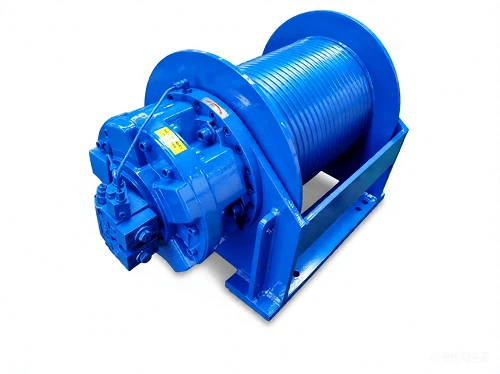
A Hydraulic Winch is a pulling and lifting device driven by pressurized hydraulic fluid instead of an electric motor. It is widely used on construction machinery, crawler undercarriages, cranes, marine deck equipment, recovery trucks, forestry machines, and mining equipment.
- The core of a Hydraulic Winch is a drum, hydraulic motor, planetary gearbox, brake, and control valves integrated into a robust frame for heavy-duty applications.
- Compared with electric winches, a Hydraulic Winch offers higher continuous pulling power, better duty cycle, and more stable performance under long, demanding pulls.
A modern Hydraulic Winch is a complete hydraulic transmission system, not just a motor and drum. Understanding each component helps engineers correctly size, install, and maintain the system.
The power source provides pressurized oil to the Hydraulic Winch circuit.
- Typical sources include an engine-driven pump, vehicle PTO-driven pump, or a centralized hydraulic power pack on large machines.
- The hydraulic reservoir stores oil, allows air separation, and helps with cooling during intense winching cycles.
The hydraulic motor converts pressure and flow into rotational torque to drive the winch drum.
- High-torque, low-speed motors are preferred in heavy-duty Hydraulic Winch applications for smooth low-speed control and strong starting torque.
- The motor is often combined with a spring-applied, hydraulically released brake to safely hold the load when the Hydraulic Winch is stopped.
Between the motor and the drum, a planetary gearbox multiplies torque and reduces speed.
- Planetary winch gearboxes are compact, highly efficient, and can be integrated inside the drum to save space and protect the gears.
- The drum itself is sized to match rope diameter, drum capacity, and required line pull, and may embed the brake and planetary gearbox in the hub area.
The Hydraulic Winch relies on valves to control oil direction, pressure, and speed.
- Directional control valves route oil to either side of the hydraulic motor, providing forward and reverse rotation of the Hydraulic Winch.
- Pressure relief valves, counterbalance valves, and overcenter valves prevent overload, runaway loads, or shock loads that can damage the Hydraulic Winch or structure.
A Hydraulic Winch operates on the principle of converting hydraulic energy into mechanical torque on the drum using Pascal's law. When the pump pressurizes the fluid, this energy is transferred to the motor, which drives the gearbox and drum.
During pulling operations, the Hydraulic Winch follows a clear energy path.
- The hydraulic pump draws oil from the reservoir and pressurizes it to the working pressure set for the Hydraulic Winch.
- The directional control valve sends pressurized oil to the motor inlet, while return oil flows back to the reservoir through the outlet port.
- The hydraulic motor converts pressure and flow into torque and speed, which is transmitted through the planetary gearbox to rotate the winch drum.
- As the drum turns, wire rope or synthetic rope winds in or out, pulling or releasing the load with controlled line speed and line pull.
Safe operation of a Hydraulic Winch depends on precise load control, especially when lowering or holding a suspended load.
- A spring-applied, hydraulically released brake keeps the drum locked when the Hydraulic Winch is not powered, providing fail-safe holding capability.
- Counterbalance or overcenter valves modulate oil flow when lowering loads, preventing uncontrolled acceleration and ensuring smooth, stable motion.
Different hydraulic circuit configurations are used to match the duty cycle, control requirements, and safety level needed by the Hydraulic Winch.
In many mobile machines, the Hydraulic Winch is connected to an open-center hydraulic system.
- In an open-center layout, oil flows continuously through the valve to tank when the Hydraulic Winch is not operating, reducing energy waste at low duty cycles.
- When the operator actuates the valve, the flow is redirected to the Hydraulic Winch motor, while other functions may momentarily receive less flow, so circuit balancing and priority valves become important.
For advanced equipment, closed-center or load-sensing circuits are often used with the Hydraulic Winch.
- Closed-center systems maintain pressure in the lines and only supply flow on demand, improving efficiency when the Hydraulic Winch and other actuators work together.
- Load-sensing control further adjusts pump output based on the highest load signal in the system, allowing smoother, energy-efficient operation of the Hydraulic Winch under varying loads.
The way the operator controls the Hydraulic Winch has a major impact on productivity, precision, and safety.
Basic systems use simple lever-operated directional valves to run the Hydraulic Winch.
- A manual valve allows the operator to start, stop, and reverse the Hydraulic Winch with relatively low cost and robust reliability.
- Proportional valves upgrade control by varying flow in response to lever or joystick input, giving the Hydraulic Winch smoother acceleration, deceleration, and fine positioning.
Modern equipment often integrates the Hydraulic Winch into remote or automated control architectures.
- Radio remote or wired remote panels allow operators to stand at a safe distance while controlling the Hydraulic Winch, especially in towing, offshore, or demolition environments.
- In advanced systems, the Hydraulic Winch may be tied into PLC or CAN-bus networks, enabling load monitoring, automatic tension control, and interlocks with other machine functions.
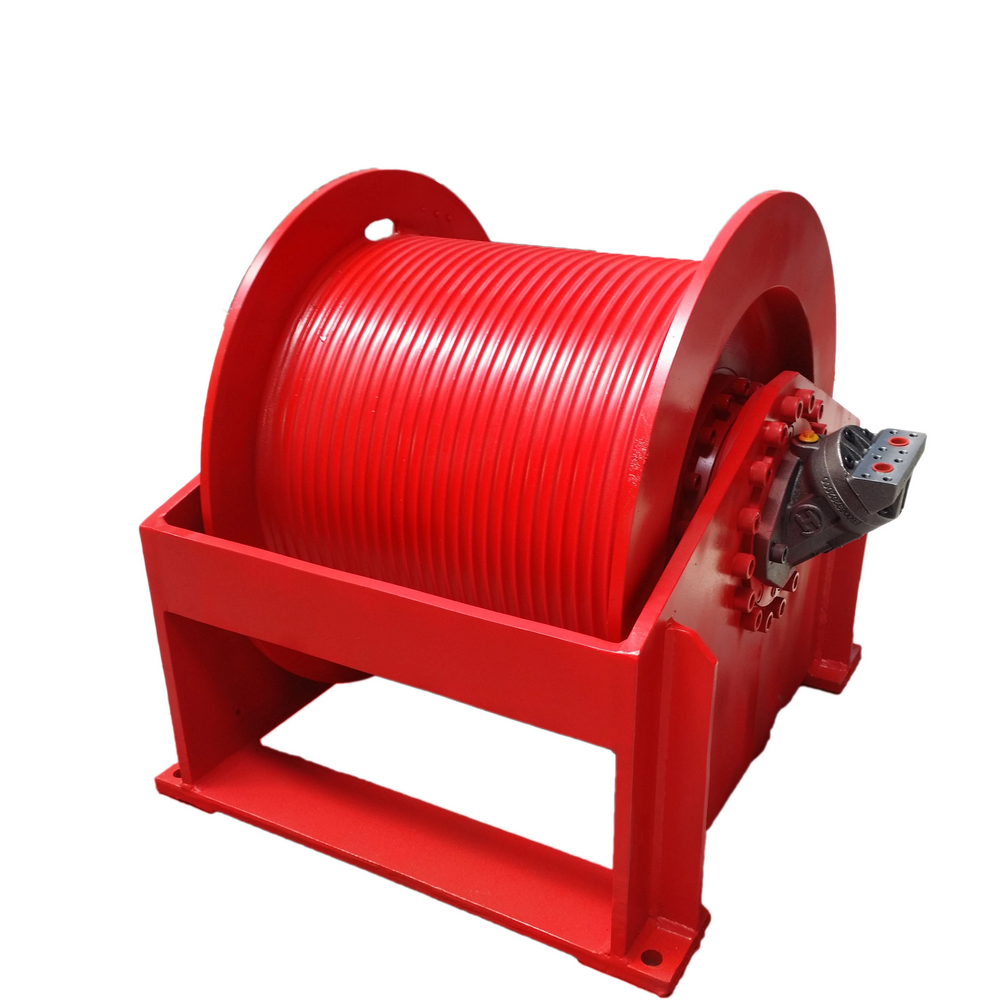
For many heavy-duty applications, a Hydraulic Winch is preferred over electric winches, particularly where high line pull and continuous duty are required.
The Hydraulic Winch excels in long and demanding cycles.
- Hydraulic Winch systems deliver consistent pulling power without significant performance drop as long as hydraulic pressure and flow are maintained.
- Electric winches may lose line pull as batteries discharge or as motors heat up, making Hydraulic Winch solutions more reliable in continuous or professional use.
Hydraulic power offers high torque in a compact package and works well in extreme conditions.
- A Hydraulic Winch can be sealed against dust, mud, salt water, and vibration, which is critical for marine, mining, and off-road crawler machinery.
- While installation cost is higher, the long-term reliability and robustness of a Hydraulic Winch often reduce total cost of ownership in heavy-duty fleets.
For crawler equipment like excavators, drilling rigs, and tracked cranes, the Hydraulic Winch is often combined with planetary gearboxes and track drives. This integration enables compact, high-torque solutions for lifting, pulling, and motion control.
- Planetary winch drives fully integrated into the drum minimize overall dimensions and protect gears and bearings from external contamination.
- On crawler undercarriages, Hydraulic Winch assemblies, travel drives, and swing drives share similar hydraulic circuits, simplifying machine design and maintenance while optimizing total system performance.
The Hydraulic Winch is used anywhere heavy loads need to be pulled, lifted, or tensioned with precise control.
Hydraulic Winch solutions are common on mobile machinery where engine-driven hydraulics are already available.
- Recovery trucks and off-road vehicles use a front or rear-mounted Hydraulic Winch for vehicle recovery, slope access, and load positioning.
- Construction and drilling machines utilize the Hydraulic Winch for boom hoisting, mast handling, and pipe pulling where smooth control and high reliability are essential.
In marine and industrial environments, a Hydraulic Winch delivers dependable power under continuous duty.
- Ships and offshore platforms rely on Hydraulic Winch systems for mooring, anchoring, towing, and deck handling, where exposure to salt water and shock loads is routine.
- Industrial plants may use a Hydraulic Winch for crane hoists, conveyor tensioning, and maintenance tasks where robust mechanical and hydraulic design is required.
Safe and efficient use of a Hydraulic Winch requires correct operating procedures suited to the hydraulic system design.
A brief inspection before each use helps protect the operator and the equipment.
- Check hydraulic oil level, hose condition, fittings, and the Hydraulic Winch structure for leaks, corrosion, or mechanical damage.
- Inspect the rope for kinks, broken wires, flattened sections, and confirm correct anchoring on the drum of the Hydraulic Winch.
Good operating habits extend the life of the Hydraulic Winch and improve safety.
- Start pulls gradually, allowing the Hydraulic Winch to build tension smoothly instead of applying sudden shock loads that can damage the rope or mounting.
- Keep personnel away from the rope line and potential recoil path, and never exceed the rated line pull of the Hydraulic Winch.
Regular maintenance is vital to keep a Hydraulic Winch performing safely and efficiently over its service life.
The hydraulic circuit supporting the Hydraulic Winch must remain clean and stable.
- Replace filters at recommended intervals and monitor oil cleanliness to avoid abrasive wear in the motor, valves, and planetary gearbox.
- Maintain proper oil temperature and viscosity to ensure the Hydraulic Winch develops full torque without cavitation or overheating.
Mechanical components and the rope need periodic attention.
- Lubricate bearings and rotating interfaces according to the manufacturer's schedule and verify that the brake of the Hydraulic Winch engages and releases correctly.
- Replace rope when it shows wear beyond accepted limits, and ensure the first wraps are tightly wound so the Hydraulic Winch can transmit full load without slippage.
Although a Hydraulic Winch provides powerful and smooth pulling, incorrect use can create serious hazards.
Respecting design limits is the foundation of safe operation.
- Always match the rated capacity of the Hydraulic Winch to the structure, anchor points, and supporting equipment to prevent structural failures.
- Use snatch blocks and rigging hardware with sufficient rating, and calculate line pull increases when redirecting rope from the Hydraulic Winch.
Human factors play a major role in Hydraulic Winch safety.
- Operators must be trained in system controls, emergency shut-down procedures, and correct hand signals or communication protocols.
- Clear worksite rules, exclusion zones, and lockout procedures for maintenance significantly reduce risks when working around a Hydraulic Winch.
For manufacturers designing new machinery, integrating a Hydraulic Winch requires careful engineering.
The Hydraulic Winch must be matched to the pump, valves, and machine duty profile.
- Engineers calculate required line pull, line speed, and duty cycle to select motor displacement, working pressure, and gearbox ratio for the Hydraulic Winch.
- They also verify that the machine's hydraulic pump and cooling capacity can support the Hydraulic Winch without compromising other functions.
Mechanical integration strongly affects reliability.
- The frame and mounting points must withstand maximum line pull and dynamic loads from the Hydraulic Winch without deformation.
- Rope path geometry, fairleads, and sheaves are designed to keep consistent spooling on the drum and avoid side loading the Hydraulic Winch bearings.
A Hydraulic Winch converts hydraulic energy from a pump into high torque at the drum to pull or lift heavy loads with precise control, long duty cycles, and excellent durability in harsh environments. By understanding the power source, motor, planetary gearbox, brake, control valves, and circuit design, engineers and operators can integrate a Hydraulic Winch into crawler undercarriages, cranes, deck machinery, and recovery equipment to achieve safe, efficient, and reliable performance. With proper selection, installation, operation, and maintenance, a Hydraulic Winch becomes a core element in high-value industrial and mobile machinery worldwide.
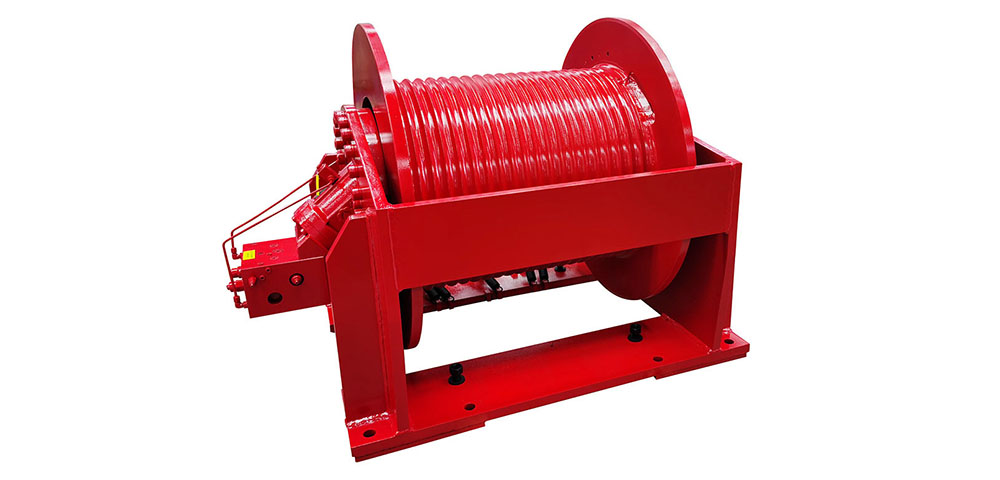
A Hydraulic Winch works by pressurizing hydraulic fluid with a pump and directing it through valves to a hydraulic motor, which then drives a gearbox and drum to wind or unwind rope. The system follows Pascal's law, meaning pressure applied to the fluid is transmitted uniformly, allowing the Hydraulic Winch to generate high pulling force in a compact package.
A Hydraulic Winch offers higher continuous pulling power, better heat dissipation, and more consistent performance during long or heavy pulls compared with many electric winches. For professional fleets, marine operations, and tracked construction machinery, a Hydraulic Winch typically delivers better reliability and lower life-cycle cost under demanding duty cycles.
The capacity of a Hydraulic Winch depends on working pressure, motor displacement, gearbox ratio, drum diameter, rope layers, and structural design of the frame and mounting. When sizing a Hydraulic Winch, engineers must consider maximum line pull, required line speed, duty cycle, and safety margins for the specific application.
Service intervals for a Hydraulic Winch depend on operating hours, environment, and load severity, but routine inspections are usually recommended before each shift, with more detailed checks at scheduled intervals. Periodic preventive maintenance for a Hydraulic Winch typically covers hydraulic oil quality, filters, hoses, seals, brake performance, and rope condition.
Yes, a Hydraulic Winch is often combined with planetary winch gearboxes integrated in the drum, as well as with travel and swing drives on tracked equipment. This modular approach allows OEMs to build compact, high-torque Hydraulic Winch and drive solutions for crawler machines, cranes, drilling rigs, and marine equipment using shared hydraulic systems.


