
Views: 222 Author: Amanda Publish Time: 2026-01-09 Origin: Site


Content Menu
● What Is a Planetary Gearbox?
● What Does “Speeds” Mean in a Planetary Gearbox?
● Core Components of a Planetary Gearbox
● How Many Speeds Can One Planetary Gear Set Provide?
● Why Multi‑Stage Planetary Gearboxes Add More Speeds
● Examples: How Many Speeds in Real Systems?
● Industrial Planetary Gearbox: Fixed and Multi‑Speed Designs
● How Clutches and Brakes Create Multiple Speeds
● Speed Ratios and Torque in a Planetary Gearbox
● Advantages of Multi‑Speed Planetary Gearbox Designs
● Typical Applications of Planetary Gearbox Speeds
● How Many Speeds Does a Planetary Gearbox Need?
● Design Considerations When Choosing Speeds
● Maintenance Impact of Multi‑Speed Planetary Gearboxes
● Future Trends in Planetary Gearbox Speeds
● FAQ about Planetary Gearbox Speeds
>> (1) How many speeds can a single planetary gear set provide?
>> (2) Why do automatic transmissions use multiple planetary gearboxes?
>> (3) Do industrial planetary gearboxes usually have multiple speeds?
>> (4) How is the gear ratio of a planetary gearbox calculated?
>> (5) When should I choose a multi‑speed planetary gearbox instead of a single‑speed unit?
A planetary gearbox can provide anything from a single fixed reduction to many different “speeds” (gear ratios), depending on how many gear sets, clutches, and brakes are used. In real machines and transmissions, multi‑speed planetary gearbox designs commonly offer 2–10 or more forward ratios plus reverse, especially when several planetary stages are combined in one compact housing.

A planetary gearbox is an epicyclic gear train that uses a central sun gear, multiple planet gears, a ring gear, and a carrier to transmit power. Because several planet gears share the load and mesh simultaneously, a planetary gearbox delivers high torque density in a compact package.
- In a typical planetary gearbox, the sun gear is in the center, planet gears revolve around it, the ring gear surrounds the planets, and the carrier holds the planets and usually connects to the output shaft.
- By choosing which member acts as input, which is held stationary, and which serves as output, the planetary gearbox can produce reduction, overdrive, or even reverse rotation.
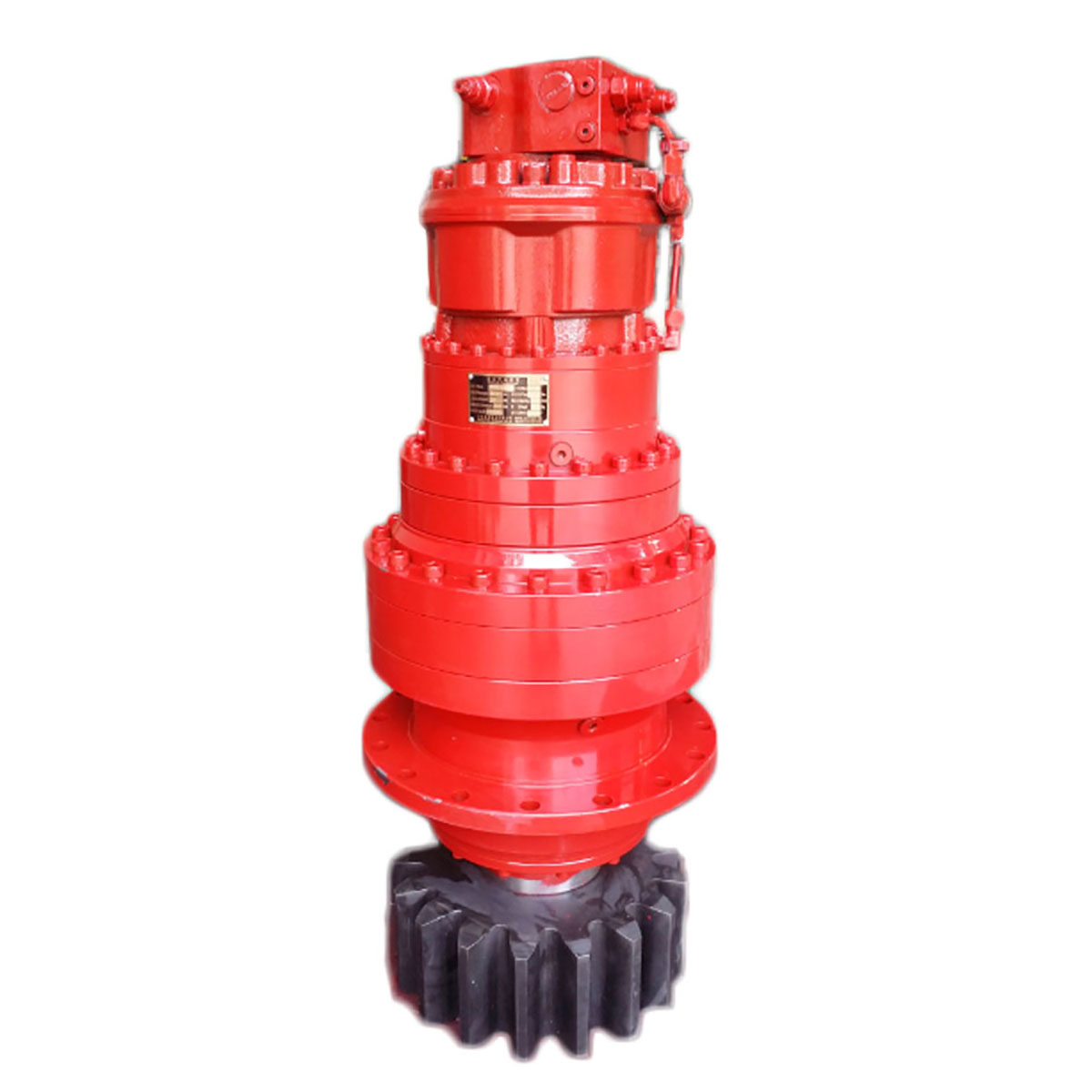
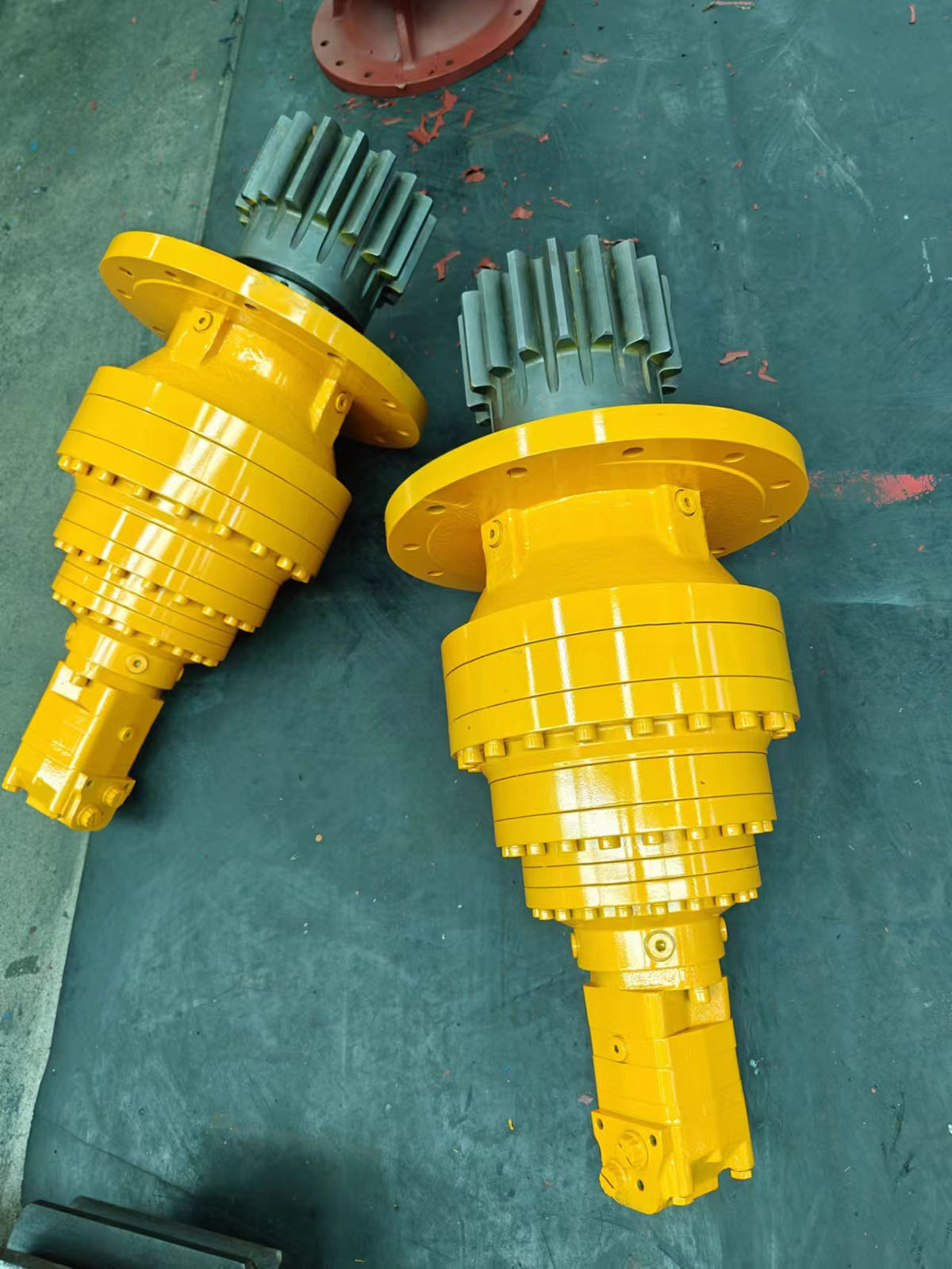
For OEMs using crawler machines, winches, travel drives, and swing drives, the planetary gearbox configuration allows very high output torque within limited installation space.
When asking how many speeds a planetary gearbox has, “speeds” usually refers to the number of distinct gear ratios the gearbox can deliver. Each gear ratio corresponds to a specific relationship between input speed and output speed, often combined with a defined torque multiplication factor.
- A single‑ratio industrial planetary gearbox has only one “speed,” even though it may operate over a wide range of input speeds.
- A multi‑speed planetary gearbox, like those in automotive transmissions or servo drives, can shift between several fixed ratios, giving multiple usable speeds at the output.
This is why some catalog planetary gearbox units list only a ratio such as 10:1 or 25:1, while multi‑speed planetary gearbox systems in vehicles advertise 4‑speed, 6‑speed, 8‑speed or even 10‑speed designs.
The number of speeds a planetary gearbox can provide is strongly influenced by its internal components and how they are controlled. The key elements are simple but very flexible.
- Sun gear: The central gear that often serves as the input in a planetary gearbox and engages all planet gears simultaneously.
- Planet gears and carrier: Several planets share the torque and rotate on the carrier, which usually acts as the output element of the planetary gearbox.
- Ring gear: An internally toothed gear surrounding the planets; when fixed, driven, or used as output, it changes the effective ratio of the planetary gearbox.
By deciding which member is fixed, which is driven, and which connects to the load, engineers can generate different speeds from the same planetary gearbox layout.
A single simple planetary gear set can theoretically produce several different speed ratios depending on which member is driven, which is held, and which becomes the output. In practice, designers choose a subset of these modes that give useful ratios and can be controlled reliably by clutches and brakes.
- With one planetary gearbox set, you can obtain at least: one or more reduction speeds, one overdrive speed, and one reverse speed, plus a neutral when all elements are allowed to rotate freely.
- In many automatic transmissions, one planetary gear set is capable of multiple forward speeds and reverse if every possible clutching combination is considered, although not all are used in commercial units.
However, most industrial planetary gearbox units in machinery use a simple, fixed arrangement that gives one speed because the gearbox is not intended to shift during operation.
To extend the ratio range and increase the number of speeds, engineers often stack several planetary gear sets in series, forming a multi‑stage planetary gearbox. The output of one stage becomes the input of the next stage, and the overall ratio is the product of each stage's ratio.
- For example, if one planetary gearbox stage has a 7:1 ratio and another stage has a 7:1 ratio, the total reduction becomes 49:1, giving a very slow, high‑torque output speed.
- Multi‑stage planetary gearbox layouts slightly reduce efficiency and increase length, but they allow designers to achieve ratios in the hundreds or thousands when needed for heavy‑duty winches, crawler drives, or slew drives.
In automotive and off‑highway transmissions, multiple planetary gear sets are also arranged with clutches and brakes, so a single compact multi‑stage planetary gearbox can provide many different forward and reverse speeds.
Real‑world systems show how planetary gearbox design translates into the number of speeds a user can select.
- Typical 4‑speed automatic transmissions use two planetary gear sets to provide four unique forward ratios plus reverse.
- More advanced automatic transmissions use three or more planetary gear sets to reach 6, 8, 9 or 10 forward speeds within a compact planetary gearbox module.
In bicycle hub gears, 3‑speed, 7‑speed, or 11‑speed internal hubs use multi‑stage epicyclic trains, allowing shifting while stationary because the entire planetary gearbox is integrated into the rear hub shell.
In industrial machinery, there are two main categories: fixed‑ratio planetary gearbox units and multi‑speed planetary gearbox systems. Each category serves different application needs.
- Fixed‑ratio planetary gearbox products offer one precise reduction ratio with high efficiency and are common in servo systems, conveyors, mixers, and automation equipment.
- Multi‑speed planetary gearbox systems combine planetary stages with selectable clutches, allowing machine tools, printing lines, or special equipment to switch between several speeds under load.
For heavy‑duty equipment such as track chassis, hydraulic winches, travel drives, and swing drives, high‑ratio fixed‑speed planetary gearbox drives often provide the best balance of robustness and simplicity.
Multi‑speed planetary gearbox systems rely on clutches and brakes to change which gear element is fixed or driven. By engaging different combinations of these control elements, the same planetary gear set can produce several distinct ratios.
- When the ring gear is held and the sun gear is driven, the carrier typically delivers reduced speed and increased torque at the output of the planetary gearbox.
- When the carrier is held and the sun drives, the ring gear may rotate faster than the sun (overdrive) and sometimes in the opposite direction, giving a higher‑speed, lower‑torque output from the planetary gearbox.
In automatic transmissions, hydraulic or electronic control modules operate multiple clutches so that the planetary gearbox shifts smoothly between speeds without interrupting power flow.
Each speed of a planetary gearbox corresponds not only to a different output speed but also to a specific torque multiplication. The basic reduction ratio when the sun is the input and the ring is fixed can be calculated from the tooth counts of the gears.
- A common relation in this configuration is Gear Ratio=1+Zring/Zsun, where Zis the number of teeth on each gear.
- For example, if the sun gear has 16 teeth and the ring gear has 48 teeth, the planetary gearbox will have a 4:1 reduction, so the carrier turns once for every four revolutions of the sun.
By combining several such stages and selecting different paths through the planetary gearbox using clutches, designers create multiple effective speeds while keeping the gearbox compact and efficient.
Multi‑speed planetary gearbox solutions offer several advantages for mobile equipment, construction machinery, and industrial automation. These benefits explain why this architecture is widely used in demanding applications.
- A planetary gearbox has high efficiency because several gears share the load and mesh simultaneously, reducing tooth stress and improving power density.
- A planetary gearbox provides a wide range of speed ratios in a compact, coaxial layout, which is ideal for crawler drives, swing drives, wind turbines, and servo systems where space and weight are critical.
In hybrid vehicles and advanced automatic transmissions, the planetary gearbox also enables power‑split operation, combining engine and motor torque through multiple speeds to optimize fuel economy and performance.
Different industries use the multi‑speed capability of planetary gearbox systems in specific ways to match process, power, and control needs.
- In industrial machinery such as metal‑processing machine tools, multi‑speed planetary gearbox units drive spindles and large rollers, allowing precise speed regulation and high torque in a compact frame.
- In mobile and construction equipment, planetary gearbox drives are integrated into track undercarriages, wheel drives, winches, and slew drives to provide the very low speeds and high torque needed for heavy loads and difficult terrain.
Engineers can specify either a robust single‑speed planetary gearbox with a high reduction or a multi‑speed planetary gearbox with selectable working speeds as required by each machine's duty cycle.
The “right” number of speeds for a planetary gearbox depends on the machine's duty cycle, load profile, and control requirements. More speeds improve flexibility and efficiency, but add cost and complexity.
- Heavy winches and crawler travel drives often work well with a single‑speed or two‑speed planetary gearbox, using hydraulic flow and pressure control for finer speed adjustments.
- Road vehicles and high‑performance machines benefit from multi‑speed planetary gearbox designs with many ratios, so the engine or motor can operate near its optimal efficiency point across a wide range of operating conditions.
For many OEMs, the best solution is a planetary gearbox that provides just enough speeds to cover starting, working, and transport conditions without unnecessary mechanical complexity.
Selecting how many speeds a planetary gearbox should provide involves several key engineering trade‑offs. Careful analysis of these factors ensures a reliable and cost‑effective solution.
- Load and torque requirements: High starting torque or frequent overloads may favor a planetary gearbox with deeper reduction, even if that means fewer distinct speeds.
- Control and automation: If the system already uses advanced electronic control, adding multiple mechanical speeds in the planetary gearbox might not be necessary because variable‑speed drives can handle fine adjustments.
The final choice often balances mechanical simplicity against performance, aiming for a planetary gearbox with enough speeds to achieve smooth operation without over‑engineering the system.
More speeds typically mean more components, which affects maintenance planning for any planetary gearbox. Extra care is needed in high‑speed, high‑load environments.
- Multi‑speed planetary gearbox units contain additional clutches, brakes, bearings, and seals that require monitoring for wear, lubrication quality, and operating temperature.
- Fixed‑ratio planetary gearbox units usually have fewer moving parts beyond gears and bearings, so they are easier to maintain and may enjoy longer service intervals in harsh working conditions.
Regardless of the number of speeds, keeping lubricant clean and within the correct viscosity range is essential to protect gear teeth and bearings inside any planetary gearbox.
Modern trends in electrification and digital control are changing how many mechanical speeds a planetary gearbox actually needs. Designers can combine electric control with mechanical ratios for optimal results.
- Electric and hybrid drives may use fewer physical speeds in the planetary gearbox because electric motors can efficiently cover a wide speed range with torque control from inverters.
- At the same time, high‑precision industries such as robotics still rely on finely optimized planetary gearbox ratios to combine compact dimensions with minimal backlash and high torsional stiffness.
As control systems become smarter, future planetary gearbox designs may focus on fewer, more efficient speeds combined with advanced electronic control rather than very large numbers of mechanical ratios.
A planetary gearbox can offer anything from a single fixed reduction ratio to many different speeds, depending on how many planetary stages, clutches, and brakes are used. Simple industrial planetary gearbox units often provide one precisely defined speed, while multi‑stage planetary gearbox systems in vehicles, bicycles, and advanced machinery can achieve 3, 4, 7, 8, 10 or more distinct ratios in a compact, efficient design.
By understanding how planetary gear sets combine and how control elements select different power paths, designers can tailor planetary gearbox solutions to each application's torque, speed, and efficiency requirements. Whether for track undercarriages, hydraulic winches, travel drives, swing drives, or automation systems, a correctly configured planetary gearbox will deliver the exact number of speeds needed to meet demanding operating conditions.
A single planetary gear set can theoretically provide several speeds, including multiple reductions, an overdrive, a reverse, and a neutral, depending on which element is held or driven. In practice, designers select only the most useful ratios, so a single‑set planetary gearbox in a transmission typically contributes to a limited number of forward speeds and sometimes to reverse.
Automatic transmissions use multiple planetary gear sets so that the combined planetary gearbox can deliver many forward speeds and reverse within a compact housing. By engaging different clutches and brakes around these planetary gear sets, the control system selects distinct ratios without interrupting torque flow or driver comfort.
Most industrial planetary gearbox products are fixed‑ratio units designed to deliver one precise reduction speed with very high efficiency and torque capacity. Multi‑speed planetary gearbox systems exist in machine tools and special equipment, but they are more complex and are chosen when the process requires discrete speed steps as well as high torque.
When the sun gear is the input and the ring gear is fixed, the reduction ratio of a planetary gearbox can be calculated from the tooth counts asGear Ratio=1+Zring/Zsun. Designers use this relation and similar formulas for other configurations to size planetary gearbox stages and ensure the required speed and torque at the output shaft.
Choose a multi‑speed planetary gearbox when the application needs several discrete working speeds for efficiency, process control, or comfort, such as in vehicles, machine tools, or complex automation systems. Choose a single‑speed planetary gearbox when you need maximum robustness, simplicity, and high torque at one main working speed, as in many winch, track drive, and swing drive applications.
Short introduction (≈300 characters):
This article explains how many speeds a planetary gearbox can have, from single fixed‑ratio units to complex multi‑stage systems in vehicles and industrial equipment, covering gear set design, torque, ratios, applications, and how to choose the right planetary gearbox speeds.


