
Views: 222 Author: Amanda Publish Time: 2026-01-10 Origin: Site


Content Menu
● Core Keywords and Search Intent
● Understand Your Job and Worksite First
● Key Factors When Choosing an Excavator
>> Worksite Environment and Ground Conditions
>> Applications and Attachments
>> Size, Operating Weight, and Transportability
● Excavator Size Classes and Typical Uses
>> Compact and Mini Excavators
● Performance Specifications to Review
>> Digging Depth, Reach, and Dump Height
>> Lifting Capacity and Stability
>> Engine Power, Hydraulics, and Efficiency
● Operator Comfort, Safety, and Technology
>> Safety Systems and Telematics
● Total Cost of Ownership Considerations
>> Fuel Consumption and Maintenance
>> Brand Support, Warranty, and Resale Value
● Compact vs Large Excavator Overview
● Step-by-Step Excavator Selection Checklist
>> Seven Practical Selection Steps
● Market and Technology Trends for 2025–2026
>> Emissions Regulations and Alternative Powertrains
>> Digital Jobsite Integration
● Common Selection Mistakes to Avoid
>> Under-Specifying or Over-Specifying the Machine
● Ownership Strategy: Rent, Lease, or Buy
>> Matching Ownership to Utilization
>> Building a Mixed Fleet Strategy
● Recommended Visual Enhancements
● FAQs About Choosing an Excavator
>> 1. What is the most important factor when choosing an excavator?
>> 2. How do I know what excavator size I need?
>> 3. Are compact excavators powerful enough for demanding work?
>> 4. Which specifications should I focus on besides horsepower?
>> 5. How does total cost of ownership influence my decision?
Choosing the right excavator in 2026 requires a clear method that connects job conditions, performance needs, and total cost of ownership. An optimized selection approach helps contractors and fleet managers avoid under-sizing or over-investing while maximizing productivity across diverse projects.[1][2]
For search visibility, this guide targets how to choose an excavator, excavator buying guide, excavator size selection, and compact vs large excavator. These queries reflect users who are comparing specifications, applications, and cost implications before renting or purchasing.[2][3][4][1]
Every excavator decision should start with a precise understanding of the workload and the environment where the machine will operate. Clear definitions reduce the risk of selecting a machine that struggles with productivity, mobility, or safety.[5][6][1]
- List typical tasks: trenching, mass excavation, demolition, pipe laying, grading, landscaping, or material handling.[6][5]
- Note jobsite constraints: access width, overhead obstacles, underground utilities, and allowable ground pressure.[7][1]
- Estimate annual utilization hours to guide rental, leasing, or ownership decisions.[4]
Worksite conditions strongly influence the choice between tracks, rubber tracks, or wheels and affect long-term operating costs. Matching undercarriage and machine type to ground conditions improves traction, stability, and surface protection.[1][2][5][7]
- Soft or muddy ground often calls for steel tracks with wide shoes or low ground-pressure designs.[7]
- Paved or finished surfaces may benefit from rubber tracks or wheeled excavators to minimize surface damage.[2]
- Confined urban sites favor compact machines with short or zero tail swing for safer maneuvering.[8][2]

Attachments transform an excavator into a flexible tool carrier for varied tasks throughout the project lifecycle. Correctly matching attachments to hydraulic capabilities and coupler systems is essential for safe and efficient operation.[9][10][6][2]
- General-purpose and trenching buckets for everyday excavation and utilities.[5]
- Tilt and grading buckets for precise slope work and finishing.[10]
- Hydraulic breakers, augers, and compaction tools for demolition, drilling, and soil densification.[3][9]
Confirm that hydraulic flow, pressure, and auxiliary circuits align with attachment requirements.[10][2]
Size and operating weight affect digging capacity, lifting performance, and logistics. Balancing these factors helps achieve productivity targets without excessive transport complexity.[11][1][2][7]
- Compact excavators are effective where access is restricted and lighter transport is needed.[8][7]
- Medium excavators suit many general construction and infrastructure projects.[12][1]
- Large excavators support high-volume excavation in quarries, mining, and major civil works.[11][7]
Compact and mini excavators typically fall below about 10 tons operating weight. Their compact size and maneuverability make them especially useful on urban, residential, and small utility projects.[2][7][8]
- Operate efficiently in narrow streets, backyards, and congested service corridors.[8]
- Offer easier transport with lighter trailers and reduced permit requirements.[2]
- Provide lower fuel consumption and simpler operation for small crews.[2]
Medium excavators bridge the gap between compact machines and heavy mining or mass-excavation equipment. They are widely used on roadworks, commercial construction, and regional infrastructure sites.[6][12][1][5]
- Provide stronger digging forces and larger bucket capacities for higher production rates.[6][11]
- Maintain reasonable transport requirements compared with very large machines.[12][11]
- Adapt well to a broad mix of applications and attachments.[6]
Large excavators focus on maximum production in demanding applications. Their higher operating weight and power require careful planning but deliver strong returns on high-volume jobs.[7][6]
- Common in mining, quarrying, major earthmoving, and large infrastructure projects.[7][6]
- Require heavy-haul transport equipment and often special permits.[4][2]
- Demand experienced operators to manage power, reach, and stability.[6]
Excavator geometry determines whether key tasks can be completed efficiently from suitable positions. Checking these dimensions against project needs prevents frequent repositioning and rework.[4][12][6]
- Digging depth should exceed the maximum trench or foundation depth with an allowance for safe working practices.[4][6]
- Horizontal reach influences cycle time and the ability to work over obstacles or shoring.[6]
- Dump height must accommodate truck or hopper side walls for smooth loading cycles.[12]
Lifting operations, especially with pipes, structures, or heavy attachments, require attention to lifting charts and stability. Safe operation depends on real capacities at specific radii and boom positions rather than headline numbers.[3][1][6]
- Use lift charts to verify capacities at the most demanding radius and height combinations.[6]
- Consider counterweights, track width, and undercarriage design to support stable lifting.[7][2]
- Account for any extra weight from quick couplers and heavy attachments.[6]
Engine output and hydraulic system design together define cycle times and fuel efficiency. Matching power to workload ensures responsive performance without unnecessary fuel use.[1][11][2]
- Higher horsepower supports fast multi-function operation when backed by capable hydraulics.[11][6]
- Advanced hydraulic systems can improve controllability and productivity at lower fuel burn.[11][2]
- Selectable work modes help operators adapt fuel use to actual task demands.[2]
A comfortable, low-stress working environment supports better productivity and fewer errors. Cab quality influences how long operators can work safely and efficiently each day.[11][6]
- Look for ergonomic seating, low vibration, and intuitive control layouts.[11]
- Large windows, cameras, and effective lighting improve visibility around the machine.[6]
- Climate control helps maintain consistent performance in challenging weather.[11]
Modern excavators incorporate safety features and telematics that support safe use and proactive fleet management. These technologies reduce risk while providing data for smarter decisions.[4][2][6]
- Overload warnings, work-zone limits, and stability aids can reduce lifting hazards.[6]
- Telematics platforms track location, hours, fuel consumption, and fault codes.[4][2]
- Remote monitoring supports preventive maintenance and uptime planning.[4]
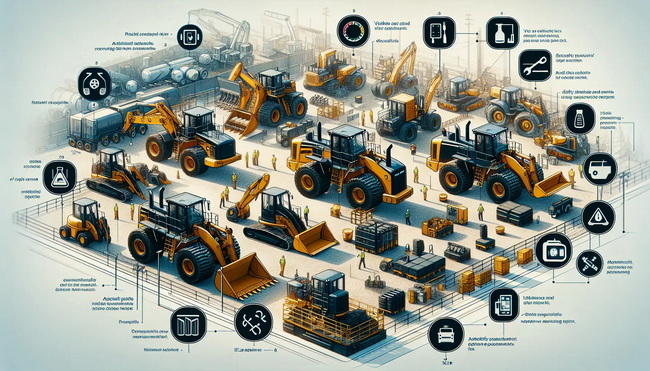
Over the lifespan of an excavator, operating costs often exceed the initial purchase price. Understanding fuel and maintenance patterns is essential for accurate budgeting.[12][4][11]
- Compare fuel consumption under typical loads rather than only at full power.[2][11]
- Plan for regular inspections, fluid changes, and undercarriage wear.[12][4]
- Evaluate how easily parts and technical support can be obtained in your region.[4]
After-sales support and residual value shape the long-term financial outcome of an excavator purchase. Strong networks and recognized brands often help protect uptime and asset value.[3][12][11]
- Review dealer coverage, response times, and service capabilities.[3]
- Compare standard and extended warranty options for major components.[3]
- Consider historical resale values and demand for specific models or brands.[12][11]
Factor | Compact Excavator | Large Excavator |
Typical operating weight | Up to about 10 tons | Above about 30 tons |
Best suited applications | Urban work, utilities, landscaping | Mining, quarrying, large earthworks |
Transport requirements | Lighter trailers, simpler permits | Heavy haul equipment, more permits |
Ground impact | Lower ground pressure on many surfaces | Higher ground pressure, needs stronger bases |
Cost profile | Lower acquisition and fuel costs | Higher costs but higher maximum output |
This overview helps align machine class with project scale, terrain, and budget priorities.[8][7]
A structured selection process turns diverse requirements into a clear machine choice. The following steps provide a concise framework for decision-making.[1][2]
- Define core applications and typical materials handled or excavated.[1]
- Record worksite constraints, including access, ground conditions, and local regulations.[1][7]
- Choose an appropriate size class: compact, medium, or large.[8][7]
- Verify key performance specs: digging depth, reach, lift capacity, and operating weight.[4][6]
- Match attachments and hydraulic capabilities to current and future tasks.[9][10]
- Evaluate operator comfort, safety systems, telematics, and dealer support.[11][6]
- Compare total cost of ownership across shortlisted models over the expected life.[4][11]
<strong>Visual suggestion:</strong> Add a funnel-style graphic illustrating the seven steps from requirements to final selection.
Regulations and customer expectations are driving more efficient engines and new power options. These developments influence both purchasing decisions and project planning.[2][7][6]
- Tier 4 and Stage V standards push cleaner diesel solutions in many regions.[2]
- Hybrid and electric compact excavators are emerging for urban and indoor sites.[7][6]
- Lower emissions can support project compliance and tender requirements.[2]
Excavators increasingly operate within connected jobsites where data supports planning and control. Integrating machines into digital workflows can enhance efficiency and consistency.[4][6]
- Grade control and machine guidance reduce over-digging and rework.[6]
- Payload weighing systems help track productivity and truck loading.[6]
- Fleet platforms consolidate telematics from multiple machines for centralized management.[4]
Selecting a machine that is too small or too large can create operational and financial issues. Aligning capacity with realistic workloads is crucial.[5][12][7]
- Machines that are too small may suffer from overload, slower cycles, and higher wear.[12]
- Machines that are unnecessarily large increase fuel, transport, and acquisition costs.[7]
- Balanced sizing improves return on investment and operator acceptance.[6]
Operators can provide practical insight into how a machine will behave on real jobsites. Involving them early leads to better adoption and safer operation.[5][11][6]
- Encourage operators to participate in demonstrations and trials.[6]
- Collect feedback on visibility, control feel, and ergonomics during real tasks.[11]
- Use their experience to refine configuration and attachment choices.[6]
Ownership models should reflect utilization patterns, cash flow needs, and project pipelines. A clear view of projected hours supports rational decisions.[3][4]
- Short-term, seasonal, or highly variable work often favors rental.[4]
- Steady high utilization over years supports purchase or long-term lease.[3][4]
- Financing conditions and tax treatment also influence the best approach.[4]
Many contractors combine owned and rented excavators for flexibility. This balance helps manage both daily needs and peak demand.[3][12][4]
- Core machines can be owned for predictable, everyday tasks.[4]
- Specialized or very large machines can be rented when needed.[4]
- This approach limits capital exposure while preserving operational agility.[3]
Strategic visuals can make specifications and trade-offs easier to understand for both technical and non-technical readers. Well-placed visual elements also improve engagement and time on page.[2][6]
- An infographic summarizing size classes and example jobs after the size-class section.
- A comparison chart of fuel consumption versus bucket capacity in the performance section.
- A short explainer video on reading lift charts in the lifting capacity section.
- An interactive machine outline with hotspots for key components such as boom, arm, undercarriage, and cab.
Selecting the right excavator has long-term consequences for project schedules, operating costs, and safety. To turn these guidelines into a specific machine configuration for your projects, contact Kemer's technical team for a one-to-one selection review, including job analysis, specification comparison, and lifecycle cost estimation. Use the inquiry form or contact details on this page to request a tailored excavator recommendation and pricing proposal aligned with your next project schedule.
The most important factor is how well the excavator aligns with the main applications and worksite conditions, including digging depth, reach, space limitations, and ground conditions. Size, power, and attachments all need to support these requirements without excessive cost or complexity.[5][1][6]
Start from maximum trench depth, required reach, and lifting needs, then review operating weight classes and specification sheets until you find models that meet these criteria with a margin of safety. When frequent work occurs in tight spaces, compact or short-tail-swing machines are often the most practical choice.[8][7][2]
Modern compact excavators offer strong digging forces and capable hydraulics for utilities, landscaping, and light to medium construction tasks. They are not intended to replace large production machines but often deliver the best productivity in confined or sensitive environments.[3][8][7]
Beyond horsepower, attention should go to operating weight, lift capacity at working radius, digging depth, reach, hydraulic flow and pressure, and undercarriage configuration. These parameters have a more direct impact on real-world performance, safety, and daily output.[11][6]
Total cost of ownership includes fuel, maintenance, repairs, downtime, and resale value over the machine's life. A slightly more efficient and better-supported excavator can significantly reduce cost per operating hour and cost per cubic meter moved.[12][11][2][4]
[1](https://hawkexcavator.com/specs-brochures/how-to-choose-an-excavator/)
[2](https://www.bobcat.com/na/en/buying-resources/excavators/compact-excavator-buyers-guide/key-factors-when-choosing)
[3](https://www.bobcatofsouthshore.com/blog/what-are-the-key-factors-to-consider-when-buying-an-excavator--88494)
[4](https://www.dtitrucks.com/blog/a-comprehensive-guide-to-buying-the-right-excavator--103089)
[5](https://hawkinsgraves.com/choosing-the-right-excavator.html)
[6](https://www.clevelandbrothers.com/blog/choosing-the-right-excavator-essential-factors-and-types)
[7](https://www.constructionbusinessowner.com/equipment/go-big-or-go-compact-size-matters-when-it-comes-your-excavator)
[8](https://bobcatoftherockies.com/knowledge-center/how-to-choose-the-right-compact-excavator-size/)
[9](https://www.ijert.org/how-specialized-excavator-attachments-improve-job-site-productivity)
[10](https://hawkexcavator.com/specs-brochures/guide-to-excavator-attachments/)
[11](https://www.bobcatofportland.com/blog/top-factors-to-consider-when-buying-an-excavator--98123)
[12](https://www.brookstractor.com/blog/your-guide-to-buying-an-excavator--97347)


