
Views: 222 Author: Amanda Publish Time: 2026-01-04 Origin: Site


Content Menu
● What Is a Planetary Gearbox?
● Core Components and Their Roles
● Step 1: Define Performance Requirements
● Step 2: Select Gearbox Configuration and Ratios
● Step 3: Choose Tooth Counts and Gear Geometry
● Step 4: Load Sharing, Planet Count, and Stiffness
● Step 5: Materials, Heat Treatment, and Surface Engineering
● Step 6: Bearings, Lubrication, and Thermal Management
● Step 7: Housing, Sealing, and Mechanical Integration
● Step 8: Verification, Analysis, and Prototyping
● Typical Applications of Planetary Gearbox
● Design Tips for Practical Implementation
● FAQ
>> 1) What is a planetary gearbox?
>> 2) Why choose a planetary gearbox instead of a parallel shaft gearbox?
>> 3) How many stages can a planetary gearbox have?
>> 4) How is gear ratio calculated in a planetary gearbox?
>> 5) How can noise be reduced in a planetary gearbox?
Designing a planetary gearbox is about balancing load capacity, efficiency, compact size, and manufacturability while ensuring smooth, reliable operation in demanding applications. The planetary gearbox achieves high torque density through its unique epicyclic layout, making it a preferred choice for mobile machinery, industrial automation, and winch and travel drive systems.[1][2][3][4][5][6]

A planetary gearbox is an epicyclic gear system consisting of a central sun gear, several planet gears, an internal ring gear, and a carrier that holds the planets. In a typical layout, the sun gear sits at the center, the planets orbit around it, and the ring gear forms the outer internal-tooth gear, while the carrier connects the planet shafts and often acts as the output. This arrangement allows the planetary gearbox to deliver high reduction ratios and large torque in a compact, coaxial configuration.[2][3][4][5][6][7][8][9][1]
Because multiple planet gears share the transmitted load, the planetary gearbox spreads forces more evenly than a simple parallel-shaft stage. This load sharing increases torque capacity and stiffness while limiting overall size, which is why the planetary gearbox is widely adopted for heavy-duty drives such as track drives, swing drives, and hydraulic winches.[4][5][6][9][1][2]
Every planetary gearbox is built around four fundamental elements, plus supporting structures and bearings that keep everything aligned.[3][5][7][1][4]
- Sun gear: The central gear, usually connected to the input shaft, transmitting power into the planetary gearbox by driving the planet gears.[7][1][4]
- Planet gears: Several identical gears that mesh with both the sun and ring, orbiting around the sun and sharing torque in the planetary gearbox.[1][3][4][7]
- Ring gear: The internal gear surrounding the planet gears; it may be fixed or used as input or output, depending on the planetary gearbox configuration.[8][10][11][7]
- Carrier: The structure supporting the planet shafts, which often acts as the output in high-torque planetary gearbox designs and transfers load to the external shaft or hub.[3][4][7]
Beyond these, a planetary gearbox also includes the housing, bearings, shafts, seals, and lubrication paths. The housing locks the ring gear, supports bearings, and ensures alignment, while seals prevent lubricant leakage and contamination ingress, which is essential for long-term planetary gearbox reliability.[5][6][3]
The design process for a planetary gearbox starts with a clear understanding of what the application demands. Without precise requirements, later decisions about ratios, tooth geometry, and materials will be inefficient or even unsafe.[6][12][13][2]
Key requirement categories include:
- Torque and speed: Determine input speed, desired output speed, and both continuous and peak torque levels; these values set the required reduction ratio and torque capacity of the planetary gearbox.[13][2][4][6]
- Duty cycle: Consider operating hours per day, start-stop frequency, shock loading, and reversals, as these factors affect fatigue life, thermal load, and lubrication strategy in the planetary gearbox.[14][2][13]
- Space and weight: One reason to select a planetary gearbox is compactness, so define maximum diameter, length, and mass limits early in the design process.[9][2][5]
- Environment: Temperature extremes, moisture, dust, and vibration influence material selection, seal type, and lubrication method for the planetary gearbox.[5][6][3]
Well-documented requirements make it easier to trade off ratio, number of stages, and gear size. For example, a compact winch drive may push the planetary gearbox toward higher module gears and multiple stages to achieve both the needed torque and a short axial length.[2][6][3][5]
After defining requirements, the next step is choosing the configuration of the planetary gearbox and its transmission ratios. The unique versatility of planetary gear trains allows different input-output combinations using the same tooth counts.[10][11][7][8]
Designers decide:
- Which member is fixed: Usually the ring gear is fixed, but some planetary gearbox designs fix the carrier or sun for special functions.[11][7][8]
- Input and output members: Commonly, the sun is driven and the carrier is the output, but alternative layouts can reverse direction or provide different ratios using the same planetary gearbox.[7][8][11]
- Number of stages: Single-stage planetary gearbox designs typically cover ratios around 3:1 to 10:1, while higher ratios are achieved by stacking stages in series.[9][13][2]
The kinematic relationships in a planetary gearbox are often expressed through equations such as Willis' formula, which relates the angular velocities of the sun, ring, and carrier. These relationships guide the selection of tooth counts to achieve the desired ratio while maintaining feasible geometry in the planetary gearbox.[15][8][10][11][13]
For high reduction applications, such as travel drives or slewing drives, a multi-stage planetary gearbox is common. Several planetary stages may be combined with a final spur or bevel stage, allowing designers to distribute the overall reduction and loading across multiple meshes.[6][2][3][5]
Tooth count selection is at the heart of planetary gearbox design. The relative numbers of teeth on the sun, planets, and ring determine the ratio, gear spacing, and possibility of evenly distributing planets around the sun.[10][13][15][7]
Important geometric rules:
- In a basic planetary gearbox, the ring tooth count equals the sun tooth count plus twice the planet tooth count; this ensures compatible meshing between all three components.[15][7][10]
- The sum of ring and sun teeth should be divisible by the number of planet gears, which allows planets to be evenly spaced around the sun without interference or repeat contact patterns.[13][10][15]
- Minimum tooth counts are limited by undercut and strength; designers may adjust module or use profile shifts to prevent weak tooth roots in the planetary gearbox.[10][13]
Geometry choices also include:
- Spur vs helical: Spur gear planetary gearbox designs are simpler to manufacture and easier to assemble, while helical gears provide smoother, quieter operation and higher load capacity at the expense of axial forces that must be managed.[9][13][10]
- Module and pressure angle: Larger modules increase tooth size and strength, whereas higher pressure angles can boost load capacity but affect contact patterns and sensitivity to misalignment in the planetary gearbox.[13][10]
In practice, the gear designer iterates between tooth counts, center distances, and housing limits. The goal is to fit the planetary gearbox within the specified envelope while meeting ratio, load, and life requirements.[2][10][13]
One of the most powerful advantages of a planetary gearbox is its ability to share torque among several planet gears. This feature increases transmitted torque without equally increasing gear size.[4][1][5][9]
Key points about load sharing:
- Increasing the number of planets in a planetary gearbox raises torque capacity and torsional stiffness, though practical limits arise from space and manufacturing tolerances.[4][9][13]
- Perfect load sharing is not automatic; small errors in geometry and stiffness can cause one planet to carry more load than the others, reducing life for the planetary gearbox.[14][15][10][13]
- The carrier and planet shafts must be designed with adequate stiffness so that deflections under load do not disturb gear alignment or mesh quality in the planetary gearbox.[16][14][13]
To improve load distribution, designers often use floating sun or carrier concepts, or flexible supports that allow minor adjustments under load. This floating arrangement can help the planetary gearbox automatically balance tooth loads among planets. Advanced analyses, such as finite element modeling and dynamic simulations, are widely used to predict and refine load sharing behavior.[16][14][13]
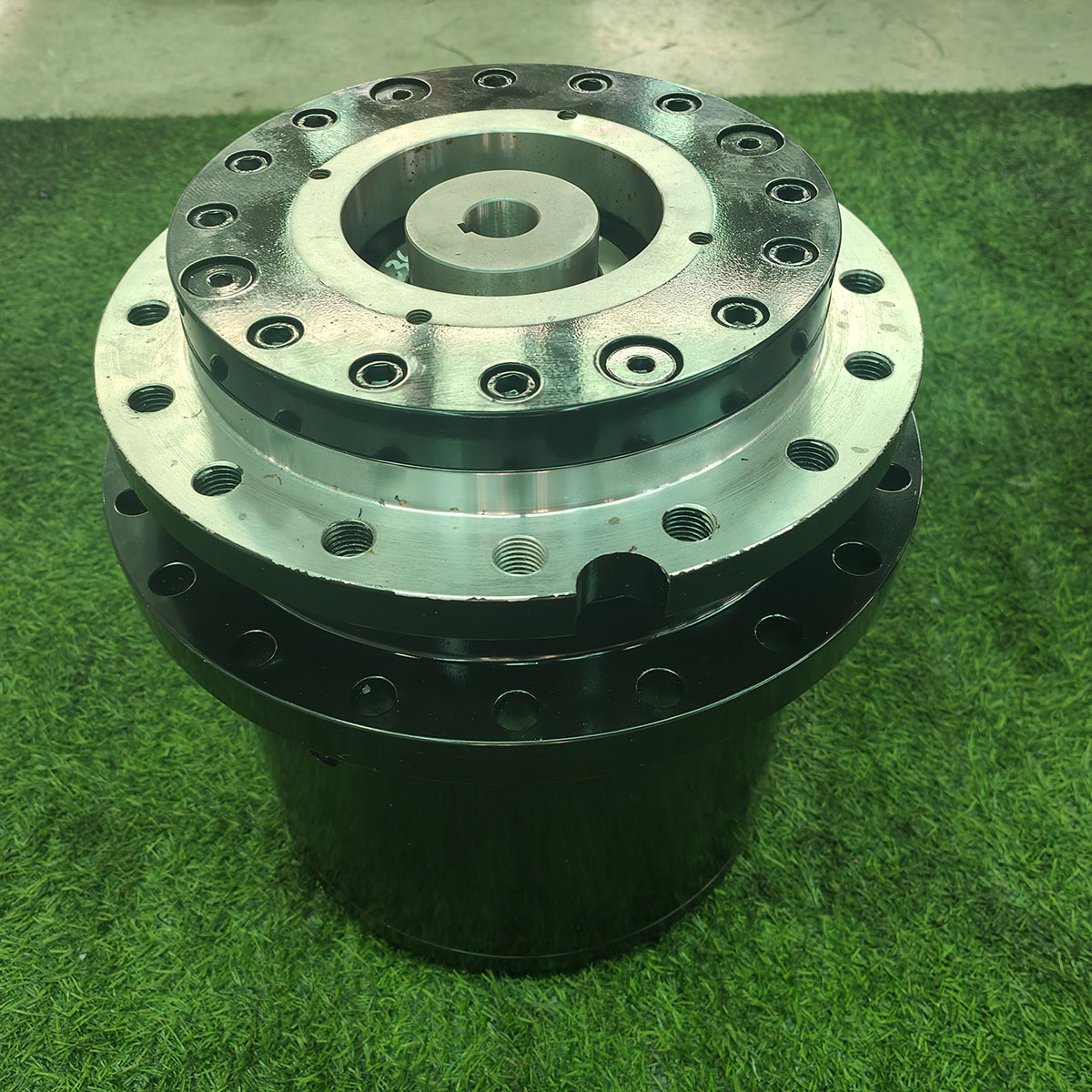
Material and heat treatment choices strongly influence the lifespan and reliability of a planetary gearbox. High contact stresses and cyclic bending loads demand hardened teeth and tough core materials.[3][6][13]
Typical strategies include:
- Case-hardened alloy steels for gears and shafts: Carburized and ground teeth offer high surface hardness and fatigue resistance while preserving a tough core, which suits heavily loaded planetary gearbox arrangements.[3][13]
- Through-hardened or nitrided gears for moderate loads and cost-sensitive planetary gearbox designs, often combined with fine finishing to reduce noise.[16][13][3]
- Ductile iron or forged steels for carriers and housings, providing stiffness and resistance to shock loads encountered by the planetary gearbox in off-road or winch duties.[13][3]
Surface engineering further refines performance. Nitriding, shot peening, and superfinishing improve fatigue strength and reduce friction in the tooth contacts inside the planetary gearbox. Proper surface roughness helps maintain stable lubricant films, minimizing wear and micropitting in the planetary gearbox over long service intervals.[16][3][13]
Reliable bearings and lubrication are essential for the planetary gearbox, as the compact layout traps heat and concentrates loads in relatively small volumes.[5][6][3]
Bearing selection considerations:
- Planet gears typically run on needle or cylindrical roller bearings, or sometimes bushings in low-speed or economical planetary gearbox designs.[14][3][13]
- The supporting bearings for input and output shafts must handle radial and axial loads, especially in helical gear planetary gearbox configurations that generate axial forces.[5][3][13]
- Bearing life calculations must match the duty cycle and reliability goals of the planetary gearbox, with safety margins for shock or overload events.[14][13]
Lubrication and cooling:
- Oil bath lubrication is common in sealed planetary gearbox housings, where gears dip into oil and fling it around the housing to wet all meshes and bearings.[3][5]
- High-speed or high-power planetary gearbox designs may use forced lubrication with pumps, jets, and filters to ensure clean, cool oil reaches critical surfaces.[14][16][3]
- Synthetic lubricants may be chosen for extended drain intervals, elevated temperature capability, and improved efficiency in the planetary gearbox.[6][3]
Thermal analysis helps confirm that the planetary gearbox can dissipate heat generated by losses. If necessary, external cooling arrangements such as fins, fans, or oil coolers are added to keep temperatures within safe limits.[13][16][14]
The housing of a planetary gearbox is more than a simple enclosure; it defines alignment, transmits reaction forces, and interfaces with the machine structure.[6][5][3]
Design considerations:
- The housing must maintain precise center distances and carrier support to preserve gear alignment and backlash settings, even under high torque loads.[5][3][13]
- Seals protect the planetary gearbox from dust, water, and mud while retaining lubricants; common types include radial shaft seals and face seals tailored to environmental conditions.[3][5]
- Mounting interfaces such as flanges, feet, or torque arms allow the planetary gearbox to be bolted or integrated directly into tracked vehicles, cranes, or industrial equipment.[6][5][3]
In many modern drive solutions, the planetary gearbox is integrated with hydraulic or electric motors and sometimes with brakes or couplings. For example, travel drives may combine a hydraulic motor, multi-stage planetary gearbox, and parking brake into a single compact module that bolts to the machine frame.[5][6][3]
Before releasing a planetary gearbox into production, the design must be verified using analytical calculations, simulation tools, and physical testing. This step ensures that the planetary gearbox meets performance and durability expectations.[16][13][14]
Verification activities:
- Gear strength calculations based on standards, checking tooth bending and contact stress to confirm the planetary gearbox meets fatigue life targets.[13]
- Dynamic analysis to understand natural frequencies, vibration modes, and noise behavior of the planetary gearbox, especially in multi-stage or high-speed systems.[14][16]
- Prototype testing on rigs that replicate real-world torque, speed, and duty cycles, measuring temperature, efficiency, and wear patterns inside the planetary gearbox.[16][13][14]
Test results often feed back into design refinements, such as changes in tooth microgeometry, carrier stiffness, or lubrication strategies. Through iterative improvements, designers obtain a planetary gearbox that satisfies both performance and cost objectives for the intended market.[13][16]
The planetary gearbox is used wherever high torque, compact size, and high efficiency must be combined. Different sectors exploit its strengths in slightly different ways.[2][4][9][6][5]
Common application areas:
- Industrial automation and robotics, where precise servo planetary gearbox solutions provide accurate positioning and low backlash.[4][6][5]
- Construction machinery and material handling equipment, using heavy-duty planetary gearbox units in winches, track drives, and swing drives.[9][2][6][5]
- Automotive transmissions and e-mobility systems, relying on compact multi-stage planetary gearbox trains to deliver multiple ratios efficiently within limited space.[8][2][9]
In each case, the planetary gearbox is tailored with specific materials, ratios, sealing, and integration methods to match the operational environment. For example, a planetary gearbox in a tracked excavator must cope with shock loads and dirt, while a robotic planetary gearbox emphasizes precision and low noise.[2][4][6][3][5]
When moving from theory to real-world design, some practical guidelines help ensure the planetary gearbox performs reliably and economically.[4][2][3][5][13]
Useful tips include:
- Start from realistic load spectra rather than single-point torque values, so the planetary gearbox is designed for actual operating conditions.[2][14][13]
- Consider manufacturability and tolerances early; extremely tight tolerances may improve planetary gearbox performance but raise costs significantly.[16][13]
- Plan for service and maintenance access, including drain plugs, inspection ports, and accessible mounting bolts to simplify planetary gearbox inspection and oil changes.[6][3][5]
By combining solid analytical design with practical experience and testing, a planetary gearbox can deliver long, trouble-free service in demanding applications worldwide.[4][2][3][5][6][13]
Designing a planetary gearbox requires a structured engineering approach that begins with clear performance requirements and proceeds through configuration selection, tooth geometry design, materials and heat treatment, bearing and lubrication choices, housing design, and rigorous verification. When these steps are executed carefully, the planetary gearbox offers unmatched torque density, efficiency, and durability across industries from robotics and industrial automation to heavy mobile machinery and winch or travel drive systems. By understanding how each design decision affects load sharing, thermal behavior, noise, and service life, engineers can create planetary gearbox solutions that meet global customer expectations for reliability and performance.[11][7][10][9][2][3][4][5][6][13]
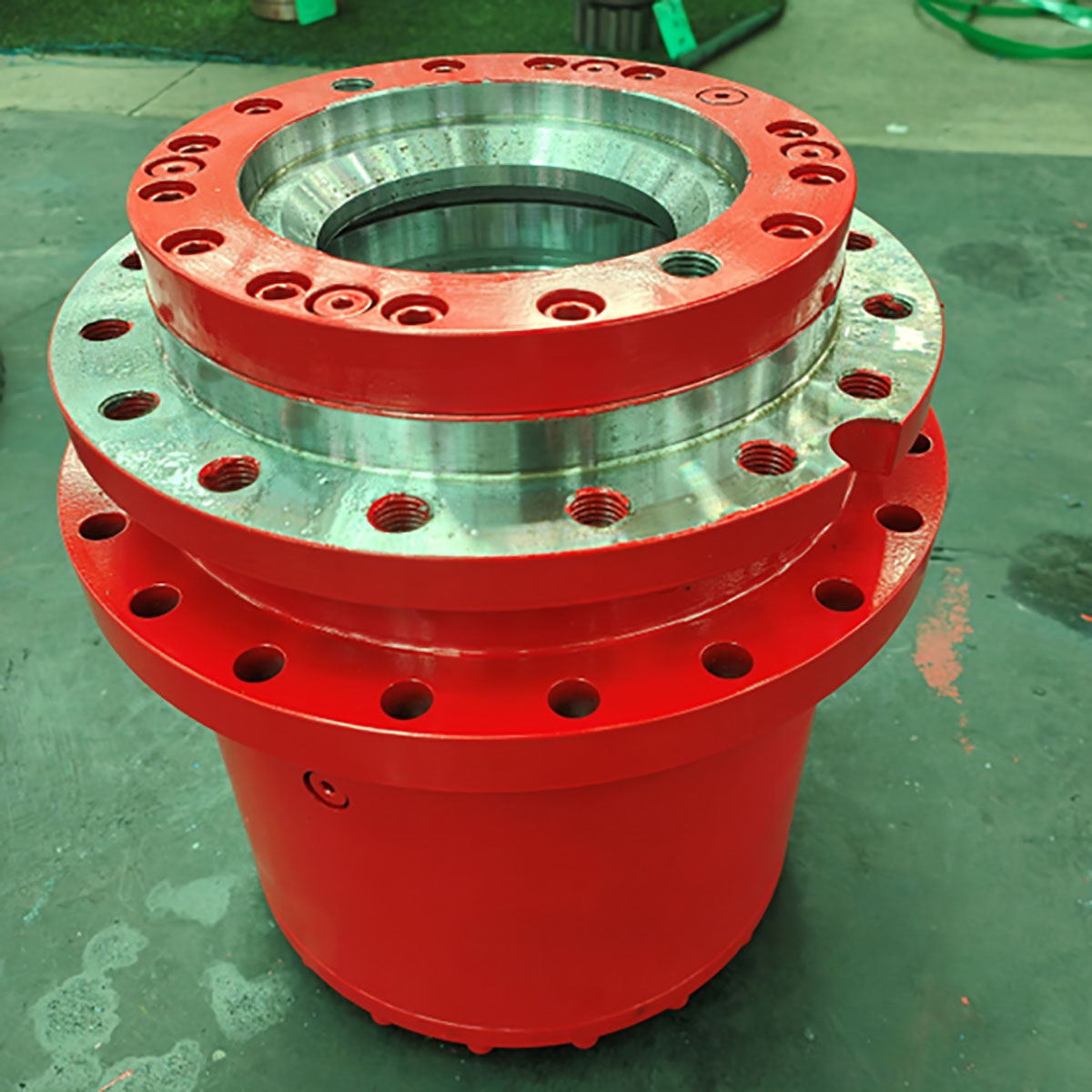
A planetary gearbox is an epicyclic gear train composed of a sun gear, multiple planet gears, a ring gear, and a carrier that supports the planets. The planets mesh simultaneously with both the sun and ring, providing compact, coaxial power transmission with high torque capability. Because several planets share the load, the planetary gearbox can handle higher torque in a smaller package than many conventional gearboxes and is widely used in industrial, mobile, and robotic applications.[1][7][8][9][2][3][4][5][6]
A planetary gearbox offers higher torque density, better load sharing, and a more compact form factor compared with many parallel shaft designs. Multiple planet gears distribute the transmitted torque around the sun, allowing the planetary gearbox to carry large loads without excessively increasing size. In addition, the coaxial input and output arrangement simplifies integration in many machines, making the planetary gearbox especially attractive in space-constrained applications like track drives, winches, and servo axes.[9][2][4][5][6]
A planetary gearbox can range from a single stage to multiple stages stacked in series, depending on the required overall reduction ratio and torque. Single-stage planetary gearbox units commonly provide ratios of about 3:1 to 10:1, while multi-stage designs may achieve overall ratios well above 100:1. When adding stages, designers must carefully manage alignment, cumulative backlash, heat generation, and housing stiffness to ensure the multi-stage planetary gearbox maintains efficiency and reliability.[9][2][3][5][6][13]
The gear ratio in a planetary gearbox depends on which gear is fixed, which is the input, and which is the output. The fundamental relationships between sun, ring, and carrier speeds are often expressed using equations such as Willis' formula, which connects angular velocities and tooth counts. By selecting appropriate numbers of teeth on the sun and ring gears and choosing the fixed member, the designer can realize multiple ratios with the same planetary gearbox hardware, making the configuration exceptionally flexible.[7][8][11][15][10][13]
Noise reduction in a planetary gearbox typically focuses on tooth geometry, manufacturing precision, and dynamic behavior. Using helical gears, carefully ground tooth flanks, and optimized microgeometry reduces excitation and promotes smoother meshing in the planetary gearbox. In addition, ensuring good load sharing between planets, maintaining proper backlash, using appropriate lubricants, and designing a stiff housing all contribute to lower vibration and reduced noise levels in the planetary gearbox during operation.[10][3][9][14][13][16]
[1](https://gearmotions.com/fundamentals-planetary-gear-systems/)
[2](https://www.machinedesign.com/mechanical-motion-systems/article/21834331/planetary-gears-the-basics)
[3](https://mechtex.com/blog/what-is-planetary-gearbox-and-what-are-its-components)
[4](https://teknic.com/what-is-a-planetary-gearbox/)
[5](https://www.stober.com/blog/how-does-a-planetary-gearbox-work/)
[6](https://assunmotor.com/blog/planetary-gearbox/)
[7](https://khkgears.net/new/gear_knowledge/gear_technical_reference/gear_systems.html)
[8](https://en.wikipedia.org/wiki/Epicyclic_gearing)
[9](https://www.metmo.co.uk/blogs/news/planetary-gears-explained-a-design-written-in-the-stars)
[10](https://drivetrainhub.com/notebooks/gears/geometry/Chapter%204%20-%20Planetary%20Gears.html)
[11](https://www.tec-science.com/mechanical-power-transmission/planetary-gear/transmission-ratios-of-planetary-gears-willis-equation/)
[12](https://www.reddit.com/r/FSAE/comments/1h2myv9/planetary_gearbox_design/)
[13](https://pesjournal.net/journal/v6-n2/18.pdf)
[14](https://ntrs.nasa.gov/api/citations/19840017959/downloads/19840017959.pdf)
[15](https://woodgears.ca/gear/planetary.html)
[16](https://ntrs.nasa.gov/api/citations/20040086788/downloads/20040086788.pdf)


