


Content Menu
● Understanding Hydraulic Winches
● How Does a Hydraulic Winch Work?
● Key Components of a Hydraulic Winch
>> Brake System
>> Control Valves and Manifold
>> Hydraulic Power Pack and Accessories
● Advantages of a Hydraulic Winch
>> High Continuous Pulling Power
>> Durability in Harsh Environments
>> Flexible Integration and System Design
● Common Applications of Hydraulic Winches
>> Construction and Infrastructure
>> Mining and Industrial Plants
>> Rescue, Towing, and Special Vehicles
>> Offshore Energy and Renewable Projects
● Hydraulic Winch vs Electric Winch
● Design and Selection Considerations
● Maintenance of a Hydraulic Winch
>> Preventive Service and Upgrades
● Advanced Control and Automation of Hydraulic Winches
>> Proportional and Servo Control
>> Integration with Machine and Plant Systems
● Why Choose a Hydraulic Winch from a Specialist Manufacturer?
>> 1) What is a hydraulic winch?
>> 2) How does a hydraulic winch work?
>> 3) Where is a hydraulic winch commonly used?
>> 4) What should be considered when choosing a hydraulic winch?
>> 5) How do you maintain a hydraulic winch for long service life?
A hydraulic winch is a heavy-duty pulling and lifting device powered by pressurized hydraulic fluid instead of electricity, built for continuous, high-torque work in demanding environments. A hydraulic winch is widely used in construction, marine, mining, towing, and industrial applications where reliability, strength, and precise control are critical.
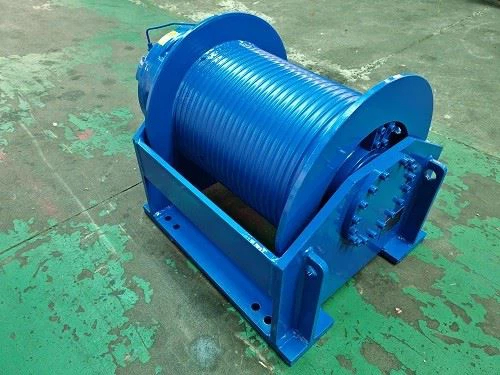
A hydraulic winch converts hydraulic energy from a pump into rotational motion at the winch drum to wind or unwind a cable under load. The hydraulic winch uses oil under pressure to generate torque, making it ideal for lifting or pulling heavy loads that would overload typical electric winches.
The hydraulic winch operates as part of a complete hydraulic system that includes a pump, reservoir, control valves, lines, and safety components. In many mobile machines and vehicles, the hydraulic winch is powered by an engine-driven hydraulic pump or power steering pump, allowing it to run as long as the engine is operating.
For an industrial manufacturer like Kemer, integrating a hydraulic winch with robust planetary gearboxes, travel drives, swing drives, and hydraulic motors creates a compact, high-performance pulling solution tailored to global heavy-duty markets.
The hydraulic winch is based on the principles of fluid power, where pressure applied to a confined fluid is transmitted equally in all directions and converted into mechanical force. When the hydraulic pump runs, it pressurizes the oil and sends it through directional and flow control valves to the hydraulic motor, which then turns the winch drum.
In a typical sequence, the prime mover (diesel engine, vehicle engine, or industrial drive) powers the hydraulic pump, which draws oil from the reservoir and produces flow at a defined pressure. Pressurized fluid moves through hoses and valves into the hydraulic motor on the hydraulic winch, where it generates torque and rotates the shaft. That torque is transmitted through a planetary gearbox to the drum of the hydraulic winch, which winds or unwinds the rope and moves the load.
Because flow and pressure are easy to control, the operator can finely adjust line speed and pulling force of the hydraulic winch for smooth, precise movement even under shock loads. The hydraulic winch system also incorporates brakes and counterbalance valves that hold or lower loads safely, providing both power and control in a single package.
A hydraulic winch is a system of carefully matched components rather than a single part, and each element plays a critical role in overall performance and safety.
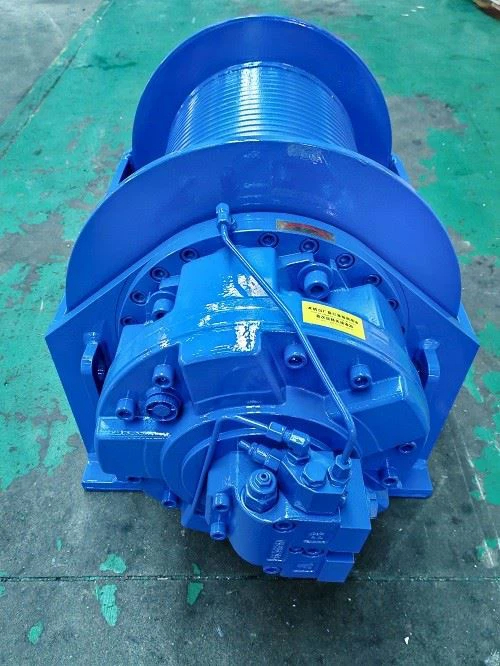
The hydraulic motor is the heart of the hydraulic winch, converting fluid energy into rotational motion. It receives pressurized oil from the pump and generates the torque needed to drive the drum of the hydraulic winch under heavy load. High-torque motors such as radial piston or axial piston types are often chosen for demanding hydraulic winch applications that require both power and efficiency.
Between the motor and drum, the planetary gearbox provides speed reduction and torque multiplication. By using multiple planet gears around a sun gear, the gearbox allows the hydraulic winch to deliver very high line pulls at controlled speeds. For a manufacturer like Kemer, expertise in planetary gearboxes and travel drives directly supports optimized torque density and compact design for hydraulic winch assemblies.
The drum of the hydraulic winch is a cylindrical spool designed to store and manage the wire rope or synthetic rope. Its diameter, width, and groove pattern influence line capacity, spooling quality, and the effective pulling force on each layer of rope. Proper rope selection for the hydraulic winch—including material, diameter, construction, and safety factor—is vital for safe, reliable operation in harsh environments.
A fail-safe brake is essential for any hydraulic winch because it must securely hold loads when power is removed or during emergency stops. Many hydraulic winch designs use spring-applied, hydraulically released multi-disc brakes that automatically lock the drum when hydraulic pressure drops. Counterbalance valves and load-control valves often work together with the brake to prevent uncontrolled lowering and to provide smooth, stable control of suspended loads.
Directional control valves govern forward, neutral, and reverse operation of the hydraulic motor, allowing the hydraulic winch to pull in, hold, or pay out the line. Flow control valves adjust line speed, while pressure relief valves protect the hydraulic winch from overload conditions and excessive system pressure. In advanced systems, proportional valves and electronic controllers provide fine, repeatable control of the hydraulic winch from joysticks, radio remotes, or automation systems.
The hydraulic power pack supplies the energy that drives the hydraulic winch. It includes the pump, reservoir, filters, cooler, and safety devices needed to condition and circulate the oil. Cleanliness, cooling capacity, and proper reservoir sizing directly influence the life of the hydraulic winch motor, gearbox, and valves. Accessories such as pressure gauges, temperature sensors, and diagnostic ports help technicians monitor the hydraulic winch system and maintain it efficiently.
A hydraulic winch offers multiple performance, safety, and durability advantages that make it the preferred choice for many heavy-duty and continuous-duty scenarios.
Because it relies on fluid power rather than an electric motor alone, a hydraulic winch can deliver high torque continuously without quickly overheating. This continuous-duty capability allows a hydraulic winch to work for long periods in tasks like anchor handling, pipeline pulling, and heavy vehicle recovery. Even as loads increase or duty cycles become more demanding, a properly designed hydraulic winch maintains stable performance.
The operator can tune the speed and direction of a hydraulic winch very precisely through valves or electronic controls. Smooth, stepless adjustment of flow produces controlled acceleration and deceleration, which protects both the load and the machine structure. In addition, the combination of mechanical brakes, counterbalance valves, and overload protection makes a hydraulic winch inherently safe when correctly sized and installed.
Hydraulic winch systems are well suited for use in harsh, dirty, and wet environments because they have fewer vulnerable electrical components. With suitable coatings, stainless hardware, and robust seals, a hydraulic winch can resist corrosion, shock, and vibration in marine, offshore, mining, and construction settings. Proper maintenance allows the hydraulic winch to achieve long service life with minimal downtime.
A hydraulic winch can share the same hydraulic circuit as other functions on a machine, such as travel drives, swing drives, and auxiliary tools. This makes a hydraulic winch attractive for OEMs like Kemer that design integrated crawler undercarriages, planetary gear systems, and hydraulic motors. The hydraulic winch can be placed strategically on the structure while hoses and manifolds manage the fluid routing, giving engineers great freedom to optimize layout, weight distribution, and service access.
The hydraulic winch is used wherever powerful, controlled pulling or lifting is needed, often in continuous or heavy-duty operations that would rapidly wear out lighter equipment.
In marine and offshore applications, a hydraulic winch is commonly deployed for anchoring, mooring, towing, and handling subsea tools. Shipboard hydraulic winch systems may control anchor chains, tug tow lines, and cargo handling gear. Offshore platforms rely on the hydraulic winch for positioning risers, umbilicals, and subsea structures in rough sea conditions where reliability is critical.
On construction sites, a hydraulic winch is used to lift, pull, or position large structural elements, pre-cast segments, and heavy equipment. Mounted on cranes, barges, and foundation rigs, the hydraulic winch handles tasks like pile extraction, bridge segment handling, and tunnel equipment relocation. When combined with crawler undercarriages, a hydraulic winch helps drilling and piling rigs maneuver safely on uneven or soft terrain.
Mining operations use a hydraulic winch for haulage, equipment relocation, and maintenance tasks in both surface and underground mines. The ability of a hydraulic winch to deliver high line pulls with precise control supports operations like conveyor belt maintenance, crusher relocation, and recovery of stuck vehicles. In industrial plants, a hydraulic winch assists with positioning heavy presses, molds, and production modules during installation and changeover.
Rescue and towing vehicles rely on a hydraulic winch to recover disabled vehicles, clear obstacles, and support emergency operations. Because the hydraulic winch is powered by the vehicle engine, it can deliver maximum effort without severely draining batteries. Fire trucks, utility trucks, and military vehicles also use a hydraulic winch for recovery, engineering support, and tactical mobility in challenging conditions.
In offshore wind, tidal energy, and subsea cable installation, the hydraulic winch plays a central role in laying and tensioning lines and structures. The combination of high pull capacity, reliable braking, and programmable control makes the hydraulic winch well suited for delicate operations where loads must be held or adjusted with millimeter precision in dynamic sea states.
A hydraulic winch and an electric winch appear similar from the outside, but their internal power sources and performance characteristics differ significantly.
An electric winch uses an electric motor driven by a vehicle battery or industrial power supply, which makes it easy to install and suitable for lighter or intermittent duty. However, electric motors in winches can overheat if subjected to long pulls or frequent starts under high load. A hydraulic winch, by contrast, uses energy from a hydraulic pump and fluid circuit, which spreads the thermal load across the entire hydraulic system and supports much longer duty cycles.
For light recreational, off-road, or occasional use, an electric winch often provides a cost-effective solution. For heavy industrial, marine, or continuous-duty projects, a hydraulic winch generally offers higher capacity, better controllability, and longer service life, making it the preferred choice for serious professional applications.
Correctly specifying a hydraulic winch requires careful analysis of both mechanical and hydraulic parameters to ensure safe, efficient operation.
Engineers start by defining the maximum line pull, line speed, and duty cycle required for the task. These values determine the torque and power needed from the hydraulic winch and inform the choice of motor displacement, gearbox ratio, and drum dimensions. The hydraulic system must then supply sufficient flow and pressure to meet these requirements, with margins for losses and environmental effects.
In addition to performance, designers consider environmental and regulatory factors. A marine hydraulic winch may need special corrosion protection and classification approvals, while a hazardous-area hydraulic winch might require certified components and special control strategies. Integration with other machine functions is also crucial: the hydraulic winch must work smoothly alongside travel drives, slewing drives, and auxiliary circuits without starving any function of flow or causing pressure spikes.
For companies like Kemer that specialize in track undercarriages, planetary gearboxes, walking drives, swing drives, and hydraulic motors, a hydraulic winch becomes an integral part of a complete motion system. By tailoring the hydraulic winch to the rest of the drivetrain, the manufacturer can deliver optimized performance, reduced weight, and simplified installation for OEM customers around the world.
Regular maintenance is key to maximizing the reliability and lifetime of any hydraulic winch, especially in harsh or safety-critical environments.
Operators should monitor the hydraulic oil level, cleanliness, and temperature, as contaminated or overheated fluid can rapidly damage motors, valves, and pumps. Filters must be replaced at scheduled intervals, and breather caps and seals on the reservoir should be inspected to prevent ingress of dirt or moisture. Any unusual noise, vibration, or temperature rise in the hydraulic winch system should be investigated promptly.
The rope on the hydraulic winch drum requires careful inspection for broken wires, flattening, corrosion, or kinks, and damaged sections should be removed or replaced according to standards. Proper spooling on the drum is important to avoid crushing or uneven loading of the rope, which can shorten its life. Brakes and load-holding valves should be tested regularly to ensure the hydraulic winch can safely hold and lower loads under all conditions.
Keeping up with the manufacturer's maintenance schedule for lubrication, bolt torque checks, and component replacement helps prevent unexpected failures of the hydraulic winch during critical operations. Over time, users may also choose to upgrade seals, hoses, or control elements to newer designs that resist wear and corrosion better, further extending the useful life of the hydraulic winch system.
Modern hydraulic winch systems increasingly incorporate advanced control technologies to improve precision, safety, and efficiency.
Instead of simple on/off directional valves, many hydraulic winch packages now use proportional or servo valves to modulate flow and pressure electronically. Paired with joysticks or remote controllers, this allows operators to vary the speed and torque of the hydraulic winch smoothly, even when handling delicate or irregular loads. Soft start and soft stop functions reduce shock loading on the structure and rope, extending component life.
Sensors measuring line tension, drum speed, and rope payout can feed data to the control system, allowing dynamic adjustments to keep the hydraulic winch operating within safe limits. For example, an overload protection function can automatically slow or stop the hydraulic winch if line tension exceeds a predefined threshold. In offshore and subsea work, active heave compensation systems use real-time vessel motion data to command the hydraulic winch to move in opposition to waves and keep loads stable.
In large plants or integrated machines, the hydraulic winch can be tied into a supervisory control system that coordinates multiple functions. This allows automated sequences—such as controlled lifts, synchronized pulls, or coordinated movement between a hydraulic winch and other actuators—to be executed at the press of a button. Remote diagnostics and data logging also support predictive maintenance by tracking the actual usage profile of the hydraulic winch over time.
Selecting a hydraulic winch from a manufacturer that deeply understands hydraulic drives and gear systems can significantly improve system performance and reliability. A company like Kemer, which specializes in track undercarriages, hydraulic winches, planetary gearboxes, travel drives, swing drives, and hydraulic motors, can design the hydraulic winch as part of a complete motion solution rather than as a standalone component.
This system-level approach ensures that the hydraulic winch matches the capabilities of the power unit, the structural strength of the machine, and the operating conditions of the application. It also simplifies installation and commissioning, because the hydraulic winch, gearbox, and associated drives are pre-engineered to work together. For global customers, this means fewer interface problems in the field, easier service, and a more efficient path to achieving demanding performance targets.
A hydraulic winch is a powerful, fluid-driven lifting and pulling device that uses pressurized oil, a hydraulic motor, and a planetary gearbox to deliver high torque and precise control at the winch drum. Compared with electric alternatives, a hydraulic winch offers superior continuous-duty performance, smoother control, and higher durability in tough environments such as marine, construction, mining, rescue, and industrial plants. When engineered by a specialist manufacturer that also produces planetary gearboxes, travel drives, swing drives, and hydraulic motors, a hydraulic winch becomes part of an integrated, high-performance motion system that meets the demanding needs of customers worldwide.
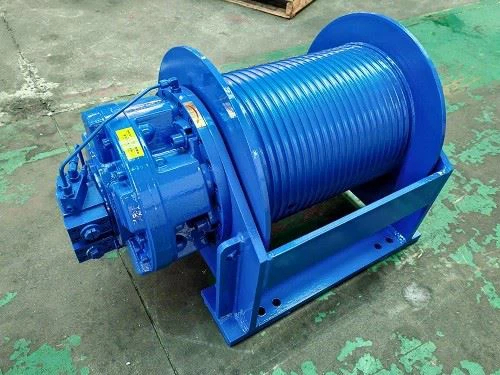
A hydraulic winch is a mechanical device that uses pressurized hydraulic fluid to power a motor and drum for lifting or pulling heavy loads. Instead of an electric motor, the hydraulic winch relies on a hydraulic pump and fluid circuit to generate the torque needed for demanding applications.
A hydraulic winch works by directing pressurized oil from a pump through control valves to a hydraulic motor, which then turns a gearbox and drum. As the drum of the hydraulic winch rotates, it winds in or pays out rope, converting the hydraulic energy into controlled linear pulling or lifting of the load.
A hydraulic winch is commonly used in marine and offshore operations, construction and foundation engineering, mining and industrial plants, and on towing and recovery vehicles. In these environments, the hydraulic winch provides a combination of high pulling power, precise control, and durability that is difficult to match with lighter-duty equipment.
When choosing a hydraulic winch, it is important to define the required line pull, line speed, duty cycle, and rope capacity, as well as the available hydraulic pressure and flow. Environmental conditions, control requirements, and integration with gearboxes, undercarriages, and other hydraulic functions must also be evaluated to ensure the hydraulic winch is properly sized and configured.
To maintain a hydraulic winch, operators should keep hydraulic oil clean and at the correct level, replace filters on schedule, and inspect hoses and seals for leaks or damage. Regular checks of the rope, brakes, and valves, along with proper lubrication and adherence to the manufacturer's service intervals, help ensure the hydraulic winch remains safe, reliable, and productive over many years of operation.


