
Views: 222 Author: Amanda Publish Time: 2026-01-09 Origin: Site


Content Menu
● What Is a Planetary Gearbox?
● Core Components That Define Gear Ratio
>> Sun Gear
>> Ring Gear
● Basic Gear Ratio Formula in Planetary Gearboxes
● How Changing Tooth Counts Changes Gear Ratio
>> Effect of Sun and Ring Tooth Counts
>> Teeth Compatibility and Planet Count
● How Different Configurations Change Gear Ratio
>> Sun as Input, Ring Fixed, Carrier as Output
>> Carrier as Input, Ring Fixed, Sun as Output
>> Ring as Input, Sun Fixed, Carrier as Output
>> Fixed Carrier “Star” Configuration
● How Planetary Gearboxes Multiply Torque
● Multiple Stages and Compound Planetary Gearboxes
● Planetary Gearboxes in Real Applications
● How to Calculate Planetary Gearbox Ratio Step by Step
>> Step 1: Identify Input, Output, and Fixed Member
>> Step 2: Obtain Tooth Counts
>> Step 3: Apply the Correct Relationship
>> Step 4: Translate Ratio into Speed and Torque
● Advantages of Planetary Gearboxes for Ratio Control
● Using Planetary Gearboxes with Hydraulic Motors and Winch Drives
● Design Considerations for Planetary Gearbox Ratios
● Materials, Heat Treatment, and Surface Hardening
● Lubrication and Cooling in Planetary Gearboxes
● Noise, Vibration, and Backlash
● Maintenance and Service of Planetary Gearboxes
● Common Failure Modes and Prevention
● FAQ About Planetary Gearboxes
>> 1. How does a planetary gearbox work?
>> 2. How is the gear ratio of a planetary gearbox calculated?
>> 3. Why are planetary gearboxes used in winch and travel drives?
>> 4. What limits the maximum ratio of a single-stage planetary gearbox?
>> 5. How efficient is a planetary gearbox compared with other gear types?
A planetary gearbox changes gear ratio by rearranging which element (sun, planets, ring, or carrier) is the input, which is fixed, and which is the output, while using specific tooth-number combinations to set the exact reduction or overdrive. By changing this configuration, the same planetary gearbox can deliver high-torque speed reduction, high-speed overdrive, or even reverse rotation within a compact package for applications such as winch drives, travel drives, and swing drives.
To help engineers, OEMs, and machine builders, this guide explains how a planetary gearbox works, how tooth counts set the gear ratio, and how different configurations transform speed and torque in real applications.
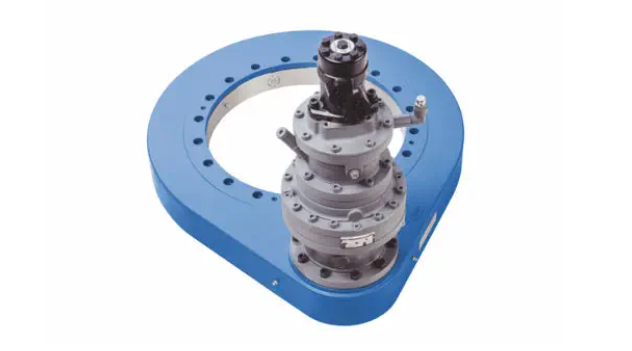
A planetary gearbox is a compact gear system made of a central sun gear, multiple planet gears, an internal-tooth ring gear, and a carrier that holds the planets. In most designs, the sun gear receives input power, the planets share the load while orbiting, and the carrier or ring gear provides the output, allowing high torque density in a small diameter.
In winch drives, travel drives, swing drives, and hydraulic motor drives, the planetary gearbox is often integrated directly into the drum or hub to deliver high torque at low speed with excellent load distribution.
The sun gear is the central gear connected to the input shaft in many planetary gearbox designs, and its tooth count is a key parameter in gear ratio formulas. A smaller sun gear relative to the ring gear increases the reduction ratio because the planets “walk” more slowly around the ring for each turn of the sun.
Several planet gears mesh with both the sun gear and the ring gear and are supported by the carrier, which often serves as the output member. Because multiple planets share the load at once, the planetary gearbox can transmit high torque with high efficiency and low backlash, which is essential in precise industrial and mobile machinery.
The ring gear is the outer gear with internal teeth, typically fixed to the housing in common reduction configurations. Its tooth count, combined with the sun tooth count, not only sets the planetary gearbox ratio but must also satisfy compatibility rules such as the ring teeth equaling sun teeth plus twice planet teeth.
The gear ratio of a single-stage planetary gearbox depends on which member is fixed and which is used as input and output. For the widely used case where the sun gear is the input, the ring gear is fixed, and the carrier is the output, the basic reduction ratio is often expressed as a function of the ring and sun tooth counts.
In this common configuration, the planetary gearbox reduces speed and multiplies torque, for example a sun with relatively few teeth and a ring with more teeth gives a significant reduction, so the carrier turns once for several turns of the sun. This behavior is ideal for winch drives and travel drives that require slow, powerful rotation from a higher-speed hydraulic motor or electric motor.
For the standard sun-input, ring-fixed, carrier-output planetary gearbox, increasing the ring gear tooth count or decreasing the sun gear tooth count raises the reduction ratio. As a result, designers tune the relationship between ring and sun teeth to achieve ratios such as 3:1, 4:1, 5:1, or higher in a single stage, while respecting geometric constraints and tooth-meshing rules.
Because the planets mesh between the sun and ring, the ring gear must always have more teeth than the sun gear, which limits the maximum ratio for a single planetary gearbox stage. For very high ratios, multiple planetary stages are often stacked.
The tooth numbers of a planetary gearbox must satisfy certain conditions to ensure that the planets mesh correctly with both the sun and ring. In addition, the sum of sun and ring teeth usually needs to be compatible with the number of planets so the planets can be spaced evenly around the sun without interference, which directly affects how many planets can share the load.
These compatibility rules mean that planetary gearbox designers often work from allowed tooth combinations tables to hit the desired ratio while maintaining manufacturable geometry and smooth operation.
This is the classic reduction configuration: the sun gear acts as the input, the ring gear is held stationary, and the planet carrier becomes the output. In this arrangement, the planetary gearbox produces high-torque, low-speed output with a ratio determined by the relative tooth counts, and it is widely used in winch drives, travel drives, and swing drives.
Because the planets share the reaction forces against the fixed ring gear, the planetary gearbox can transmit large torque in a compact, coaxial package, ideal for integrating directly into a drum or hub.
If the carrier is the input, the ring gear remains fixed, and the sun gear is the output, the planetary gearbox behaves as a speed increaser. In this mode, the sun spins faster than the carrier, producing higher speed and lower torque at the output, and the direction of rotation can differ from the reduction case.
This configuration is useful when a planetary gearbox is used not only for reduction but also for compact speed-boosting functions in specific motion-control and drive systems.
Another possible configuration uses the ring gear as the input, the sun gear fixed, and the carrier as the output, again giving a reduction ratio that can be calculated with similar relationships. In this case, the planetary gearbox still reduces speed but with different torque flow paths, which can be applied in automatic transmissions and special drive layouts.
Because a planetary gearbox is symmetrical, engineers can choose which shaft is easiest to drive and which is easiest to mount as output, then compute the ratio for that configuration using the appropriate equations.
When the planet carrier is fixed, the sun gear can be the input and the ring gear the output, creating a speed-increase mode where the ring spins faster than the sun. In this “star” configuration, the planetary gearbox provides overdrive and often reverse rotation, as the internal mesh can cause the output to rotate in the opposite direction to the input.
Although less common in winch or travel drive gearboxes, this mode is valuable in specialized drivetrains and motion systems requiring compact overdrive stages.
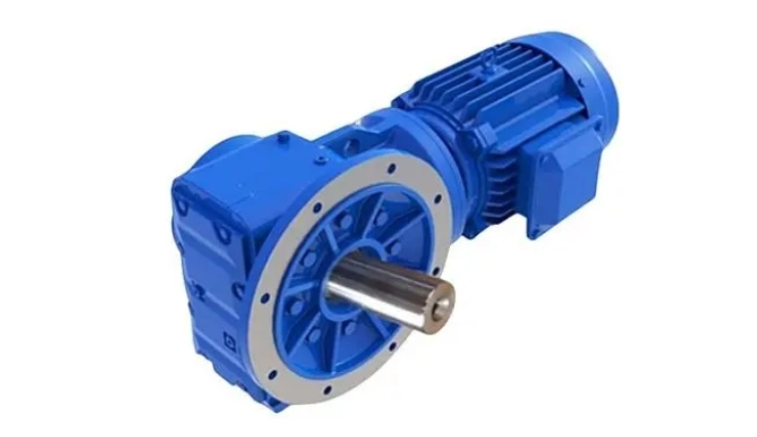
In reduction configurations, the planetary gearbox reduces output speed while increasing torque roughly in proportion to the gear ratio, minus efficiency losses. Because multiple planets engage the sun and ring simultaneously, the loaded tooth contact area is high, allowing the planetary gearbox to carry more torque than a simple parallel-shaft gear pair of similar size.
With high efficiencies and robust load sharing, high-quality planetary gearbox designs deliver most of the input power to the output, making them ideal for high-duty-cycle industrial drives, winch drives, and travel drives driven by hydraulic motors.
To reach higher overall ratios than a single stage can provide, multiple planetary gearbox stages are often placed in series on the same shaft line. For example, two planetary stages each with a moderate ratio can combine to yield a very high overall reduction, giving extremely slow, powerful rotation for hoisting and travel drives without using oversized gears.
Compound planetary gearbox designs can also use planets with multiple gear sections and different tooth counts, allowing very high ratios in compact volumes, which is common in automotive automatic transmissions and advanced industrial drives.
Planetary gearbox technology is widely used in excavators, bulldozers, drilling rigs, industrial automation, robotics, wind turbines, and many other sectors. In winch drives and swing drives, the planetary gearbox is mated with hydraulic motors and brakes to form compact, high-torque modules that mount directly in the drum or swing bearing.
Planetary gearboxes are also common in automotive transmissions, especially in hybrid and electric vehicles, where their flexibility in changing gear ratio and distributing torque helps achieve efficient, smooth power delivery.
The first step in calculating planetary gearbox ratio is to decide which element is the input, which is fixed, and which is the output (sun, ring, or carrier). The gear ratio relationship changes depending on this configuration, so correctly identifying the roles is essential before doing any calculations.
For a winch drive planetary gearbox where the motor drives the sun, the ring is fixed to the housing, and the carrier is the output to the drum, the standard reduction relationships apply.
Next, the engineer needs the tooth numbers of the sun and ring gears and, if necessary, the planet gears to verify compatibility. Manufacturers of planetary gearbox products often provide these values or directly specify the available ratios in their catalogs and technical documentation.
These tooth counts are not arbitrary; they are carefully chosen to meet the planetary gearbox's ratio target, load capacity, and geometric constraints.
For the common planetary gearbox configuration with sun as input, ring fixed, carrier as output, the reduction ratio is computed using a standard formula that links the ring and sun tooth counts. Other configurations, such as carrier input or ring input, use modified relationships that can reverse rotation or create overdrive, all derived from the relative motions of the sun, planets, and ring.
Engineers and students often refer to planetary gearbox ratio tutorials, diagrams, and worked examples that show step-by-step derivations and calculations for various setups.
Once the planetary gearbox ratio is known, input speed can be divided by the ratio to estimate output speed, and input torque can be multiplied by the ratio (times efficiency) to estimate output torque. For example, a planetary gearbox with a moderate reduction will reduce a high input speed to a lower output speed and multiply the torque accordingly.
This speed–torque conversion is the core reason planetary gearboxes are used: they allow a relatively small motor to deliver the large torque required by winches, travel drives, swing drives, and other heavy-duty mechanisms.
Planetary gearbox designs offer high power density, high efficiency, and excellent load sharing, which make them ideal wherever precise gear ratio control is required in limited space. Their coaxial layout and multiple planets allow high torque output with low noise and low backlash, important for applications like robotics, CNC machinery, and positioning systems.
Because a planetary gearbox can be easily reconfigured by changing tooth counts or choosing different input and output members, the same basic hardware platform can support many ratios and duty classes for global OEMs.
In winch drives, the planetary gearbox is often integrated with a hydraulic motor and brake into a compact unit that mounts in or on the drum. The planetary gearbox reduces motor speed to the line speed required at the drum and multiplies torque so the winch can safely pull high loads with controlled speed.
Similar planetary gearbox modules are used in travel drives for crawler undercarriages and swing drives for slewing upper structures, where the ratio selection directly defines travel speed, swing speed, and available tractive or slewing torque.
When choosing a planetary gearbox ratio, engineers must balance required torque, speed, size, efficiency, and cost. A higher reduction ratio increases torque but also increases internal forces, which can demand stronger bearings, larger shafts, and better lubrication.
Thermal limits are another consideration, because a planetary gearbox operating at high power and high duty cycle will generate heat; ratio selection and housing design must allow adequate cooling to maintain oil life and component durability.
The gears inside a planetary gearbox are usually made of high-quality alloy steels that can be carburized, nitrided, or induction-hardened to provide a tough core and wear-resistant surface. Proper heat treatment ensures that the planetary gearbox teeth can withstand repeated loading without pitting, scuffing, or cracking.
Surface finishing and grinding improve contact patterns and reduce noise, which is especially important in high-speed planetary gearbox applications in automation and robotics.
Lubrication is critical for any planetary gearbox, because the sliding and rolling contacts between sun, planets, and ring must be separated by a stable oil film. Designers choose gear oils or greases with appropriate viscosity, additives, and temperature range to match speed, load, and ambient conditions.
In high-power planetary gearbox applications, forced lubrication or integrated cooling channels may be used to manage oil temperature and extend service life, especially when the gearbox is sealed inside a winch drum or crawler hub.
A well-designed planetary gearbox can run with low noise and vibration thanks to symmetric load sharing and multiple planet contacts. However, tooth profile quality, alignment of carriers, and stiffness of the housing all affect the acoustic behavior of the planetary gearbox.
Backlash must also be controlled; too much backlash causes jerky motion, while too little can lead to excessive heat and wear. Precision planetary gearbox products for servo applications often use optimized tooth geometry, preloaded bearings, and carefully set clearances to achieve low backlash.
Although a planetary gearbox is generally robust, regular maintenance helps ensure long life. Typical maintenance tasks include checking oil level and condition, monitoring seals and breathers, and inspecting for abnormal noise, vibration, or temperature rise.
For winch drives, travel drives, and swing drives, periodic inspection of fasteners, mounting interfaces, and external brakes is also necessary, because misalignment or loose joints can create extra loads inside the planetary gearbox.
Common failure modes in planetary gearboxes include surface pitting, tooth breakage, bearing wear, and oil degradation. Many of these issues can be traced to overload, poor lubrication, contamination, or misalignment.
Careful selection of planetary gearbox ratio, correct integration with the motor and driven machine, and adherence to manufacturer limits on torque and shock loading help prevent most problems and provide reliable service in tough working environments.
A planetary gearbox changes gear ratio by using the unique interaction of sun, planet, ring, and carrier gears, together with carefully selected tooth counts and different choices of which member is fixed, driven, or used as the output. By applying the appropriate relationships between the gear teeth and respecting tooth compatibility rules, designers can configure a planetary gearbox for high reduction, overdrive, or even reverse rotation in a compact, efficient unit suitable for winch drives, travel drives, swing drives, and many other applications.
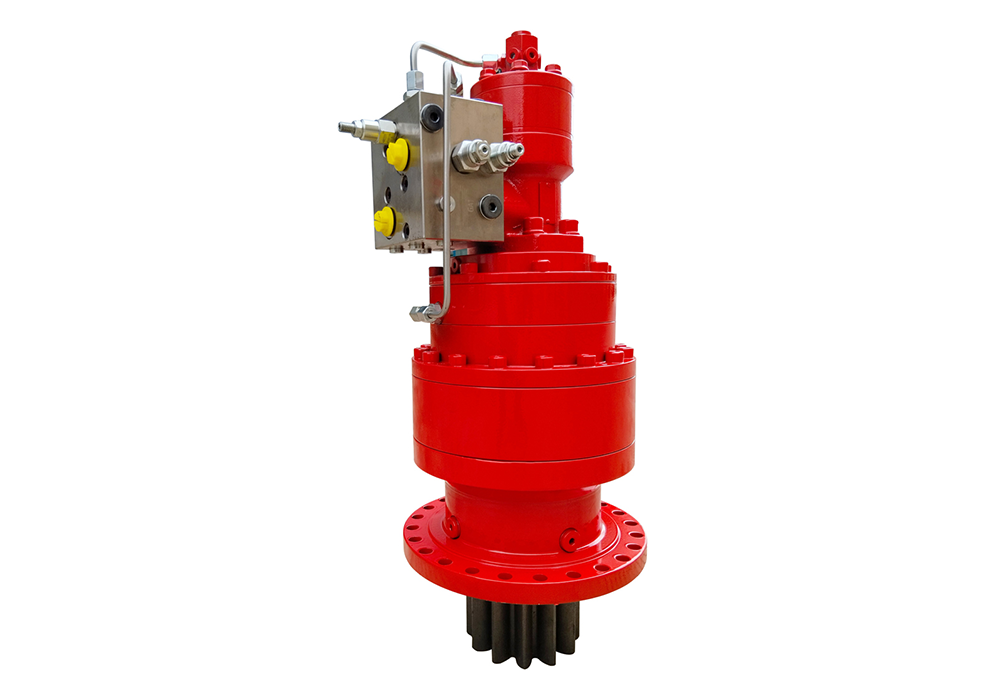
A planetary gearbox works by having a central sun gear drive multiple planet gears that roll inside an internal-tooth ring gear while supported by a carrier. As the sun spins, the planets both rotate on their own axes and orbit, causing the carrier or ring to turn at a speed determined by the gear ratio and configuration.
The gear ratio of a planetary gearbox depends on which member is fixed and which members are input and output, with the common reduction setup using a well-known relationship between ring and sun tooth counts. Other configurations, such as carrier input or ring input, use modified formulas that can reverse rotation or create overdrive, all derived from the relative motions of the sun, planets, and ring.
Planetary gearboxes are used in winch drives and travel drives because they offer high torque density, compact size, and efficient torque multiplication, all of which are essential for heavy-duty pulling and driving under limited space. Their ability to integrate with hydraulic motors and brakes into sealed, drum- or hub-mounted modules makes the planetary gearbox a preferred solution for crawler machines, cranes, drilling rigs, and other mobile equipment.
The maximum ratio of a single-stage planetary gearbox is limited by tooth geometry constraints, especially the requirement that the ring gear must have more teeth than the sun gear while keeping planet size and spacing practical. If the sun and ring tooth counts get too far apart, the planets become impractically large or small, so very high ratios are usually achieved by using multiple planetary stages or compound planetary gearbox designs.
A well-designed planetary gearbox can reach very high efficiencies, because multiple teeth share the load and sliding losses are relatively low compared with some other gear systems. This high efficiency, combined with high torque capacity and compactness, makes the planetary gearbox one of the most effective solutions for modern industrial and mobile drive applications.


