
Views: 222 Author: Amanda Publish Time: 2026-01-09 Origin: Site


Content Menu
● What Is a Planetary Gearbox?
● Why Torque Calculation Matters
● Key Terms Used in Planetary Gearbox Torque Calculations
● Basic Torque Formulas for Planetary Gearbox
● Step 1 – Determine Required Output Torque
● Step 2 – Consider Dynamic and Peak Torque
● Step 3 – Relate Motor Power to Gearbox Torque
● Step 4 – Use Gear Ratio for Torque Amplification
● Step 5 – Include Efficiency in Torque Calculation
● Step 6 – Check Gearbox Ratings Against Calculated Torque
● Torque Balance in Planetary Gear Trains
● Application Considerations for Planetary Gearbox Torque
● Thermal and Lifetime Limits in Planetary Gearbox Torque
● Inertia and Acceleration Effects on Planetary Gearbox Torque
● Misalignment, Shock, and Safety Factors
● Using Planetary Gearbox for Motor Optimization
● How Visual Aids Help Understand Planetary Gearbox Torque
● Practical Tips for Torque Calculation of Planetary Gearbox
● FAQ About Planetary Gearbox Torque
>> 1. How do you calculate output torque of a planetary gearbox?
>> 2. Why does a planetary gearbox provide higher torque than a standard gearbox?
>> 3. What efficiency should be used when calculating torque of planetary gearbox?
>> 4. How do peak loads affect planetary gearbox torque selection?
>> 5. Can planetary gearbox torque be increased by adding more stages?
A planetary gearbox multiplies motor torque through its gear ratio and efficiency, allowing compact drives to deliver very high output torque to heavy-duty machines. To calculate torque of a planetary gearbox correctly, engineers must link motor power, speed, ratio, and real load conditions into clear formulas and practical checks.[1][2]
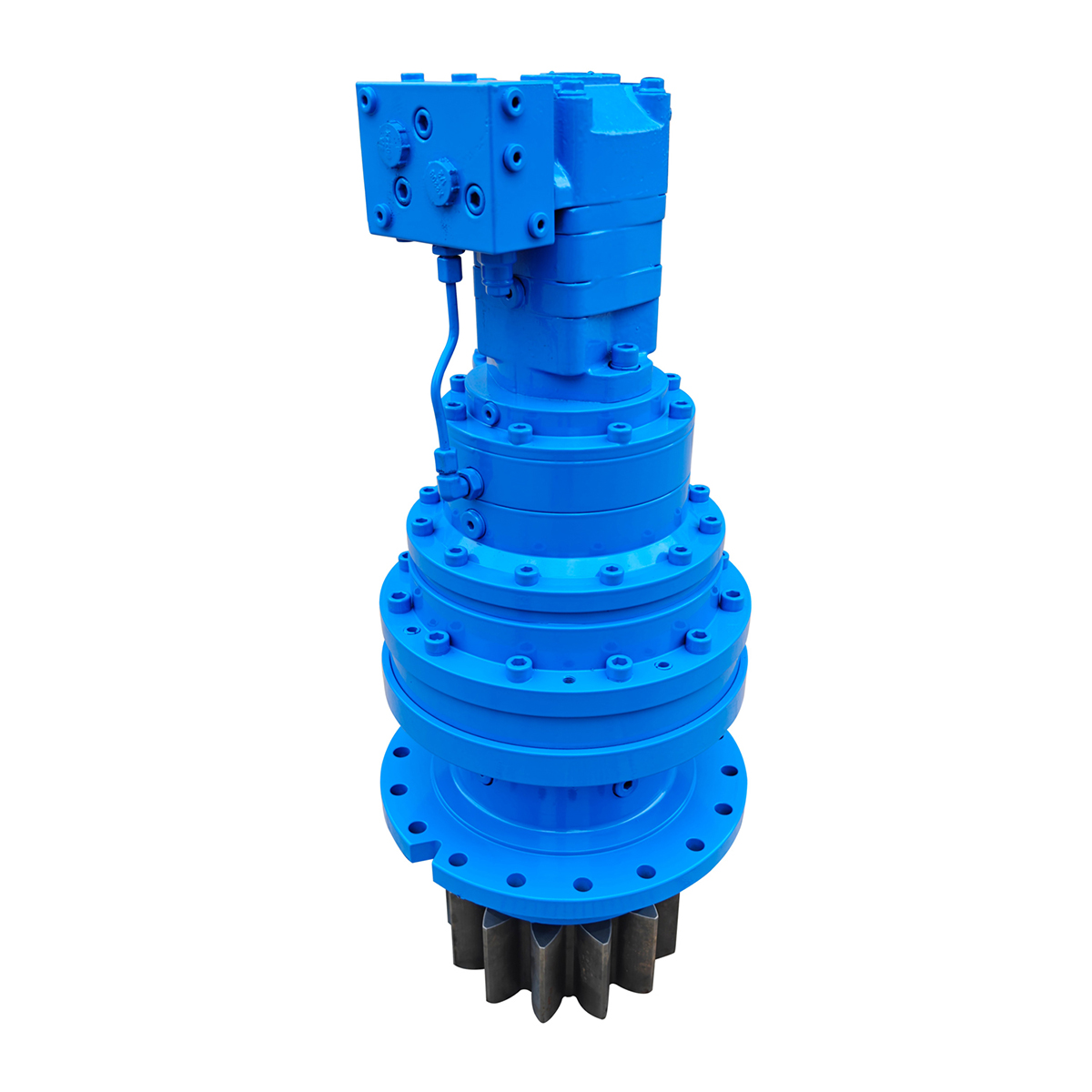
A planetary gearbox is a coaxial gear reducer consisting of a central sun gear, multiple planet gears in a carrier, and an outer ring gear that share torque through several mesh points at once. This structure gives a planetary gearbox high torque density, compact size, and low backlash compared with conventional parallel-shaft gearboxes.
- A planetary gearbox can be configured with the sun, ring, or carrier as input, output, or fixed, giving multiple ratios and motion directions.
- Because several planet gears engage simultaneously, a planetary gearbox distributes load across many teeth and can transmit more torque without increasing overall size.
Correct torque calculation ensures that a planetary gearbox is neither undersized (risk of failure) nor oversized (unnecessary cost and weight) for the application. Continuous torque, peak torque during acceleration, and emergency stop torque must all stay within the planetary gearbox ratings with an adequate safety margin.
- The lifetime of a planetary gearbox strongly depends on keeping required torque, including dynamic peaks, below the maximum permissible load torque.
- Accurate torque calculation allows machine builders to choose smaller motors and planetary gearbox units while still achieving required performance and reliability.
To work confidently with torque calculations, it helps to clarify several fundamental terms used in planetary gearbox selection. These parameters appear in datasheets, sizing software, and engineering formulas.
- Rated torque of a planetary gearbox is the continuous torque that can be transmitted at the output shaft without exceeding temperature and fatigue limits over the service life.
- Peak torque of a planetary gearbox is the higher short-term torque that can be carried for limited durations during acceleration, shock, or emergency events.
- Gear ratio of a planetary gearbox is the ratio of input speed to output speed; in a reduction design it is greater than one and directly related to torque multiplication.
- Efficiency describes how much mechanical power is lost inside the planetary gearbox due to friction, churning, and seal drag; it typically remains high but is never exactly 100%.
At the most fundamental level, motor torque relates to power and speed; this same relationship applies at the input and output of a planetary gearbox. In practical engineering, torque T (in N·m) for a rotating shaft can be related to power P (in kW) and speed n (in rpm) by a standard formula.
- General motor torque formula: T = 9550 × P / n, where 9550 is a constant combining unit conversions for kW and rpm..
- For a planetary gearbox, the theoretical output torque equals input torque multiplied by gear ratio and efficiency factor: Tout ≈ Tin × i × η.
The first step is to calculate the required output torque of the planetary gearbox from the external load, including forces, radii, or linear motion demands. In many applications such as conveyors, wheels, winches, or rotary actuators, torque is the product of tangential force and radius.
- Basic load torque: Tload = F × R, where F is tangential force (N) and R is effective radius (m).
- For mechanisms converting linear to rotary motion, servo motor torque can be approximated from required force, screw radius, and reduction ratio using T = F × R × i.
In real systems, the planetary gearbox rarely sees only steady torque; acceleration, deceleration, shock loads, and emergency stops generate peaks that can exceed nominal values. The peak torque during acceleration or deceleration must remain below the maximum load torque rating of the planetary gearbox, typically specified by the manufacturer.
Continuous torque defines what a planetary gearbox can carry indefinitely without overheating or fatigue, while peak torque defines short-term allowable overload.
Designers usually apply a service factor based on duty cycle, shock level, and operating environment so the selected planetary gearbox comfortably handles all torque peaks.
Once the required output torque and speed are known, the next step is to connect motor power with planetary gearbox torque using the power–speed–torque formula. The motor must provide enough torque at its speed so, after planetary gearbox reduction and efficiency, the output torque meets or exceeds load requirements.
- Motor torque: Tmotor = 9550 × Pmotor / nmotor, with Pmotor in kW and nmotor in rpm.
- Given a planetary gearbox with gear ratio i and efficiency η, output torque becomes Tout = Tmotor × i × η, and this must be greater than or equal to required load torque with margin.
A planetary gearbox increases torque while reducing speed; for a reduction gear, output torque is roughly proportional to gear ratio, minus efficiency losses. For example, a 10:1 planetary gearbox can deliver nearly ten times the motor torque at one-tenth of the motor speed, assuming high mechanical efficiency.
- Typical modern planetary gearbox efficiency can exceed 95%, especially in precision motion control applications with well-designed gear meshes.
- Multi-stage planetary gearbox designs provide higher ratios, but each stage introduces additional losses, so the overall torque gain must always be multiplied by cumulative efficiency.
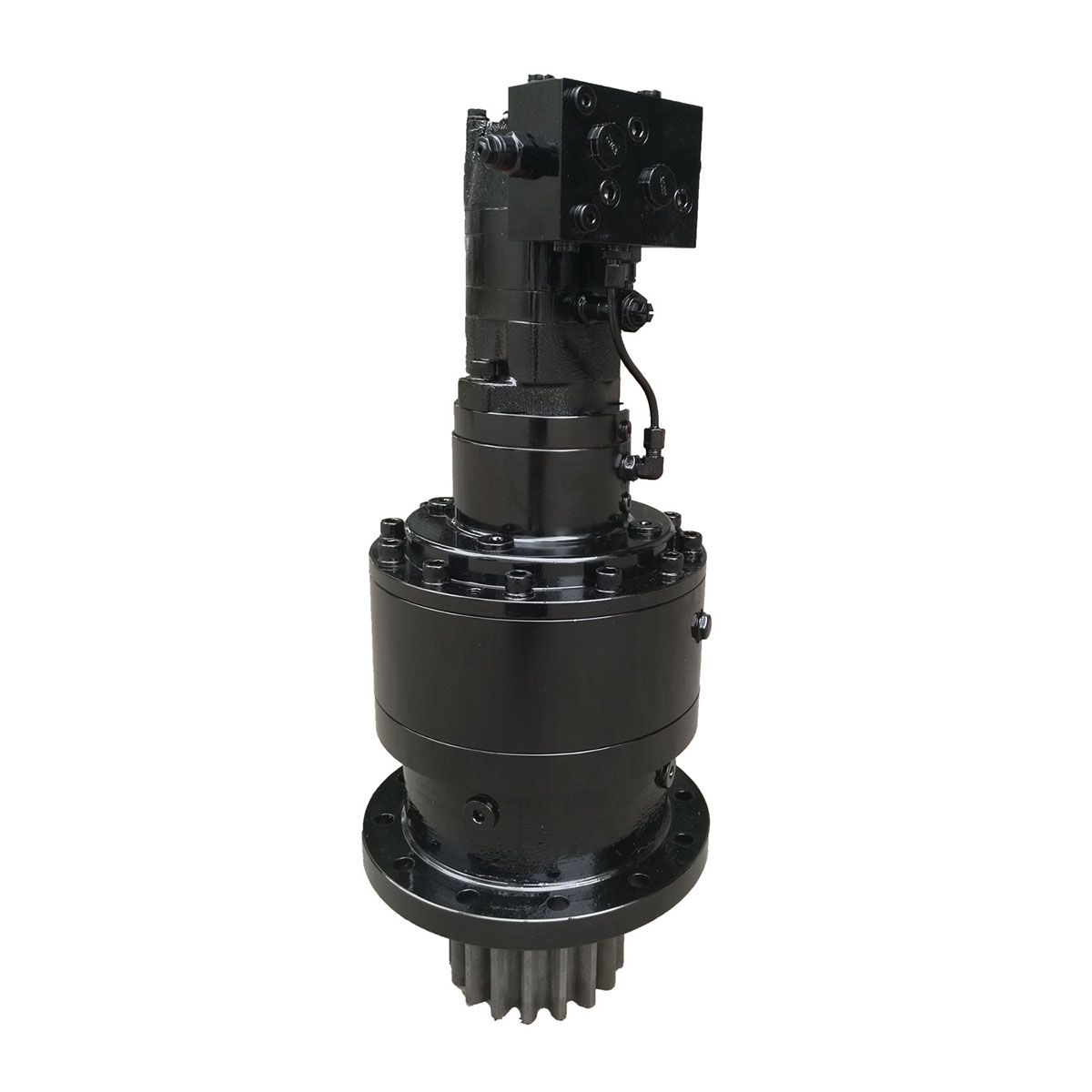
Ignoring efficiency leads to optimistic torque values that may overload the planetary gearbox in reality, so efficiency must appear explicitly in calculations. Manufacturers often provide efficiency values for one-stage, two-stage, or three-stage planetary gearbox units under rated load.
- Reducer torque can be expressed as: Tout = 9550 × Pmotor / nout × η, considering speed ratio and usage coefficient.
- For a planetary gearbox, typical efficiency factors range around 0.94–0.98 per stage; multiply them across stages to obtain the total efficiency term in the torque equation.
After computing required output torque and expected torque from the chosen planetary gearbox, the values must be compared with catalog ratings. The selected planetary gearbox should exceed the calculated continuous and peak torque by the safety factor recommended for the duty class.
Planetary gearbox catalogs typically list rated output torque, allowable peak torque, emergency stop torque, and sometimes fatigue torque for long service life.
If calculated torque exceeds any limit or approaches it too closely, a larger planetary gearbox or a different ratio must be chosen to protect gears, bearings, and shafts.
Planetary gear trains share torque among the sun, planet carrier, and ring, and engineers often analyze torque balance using conservation relationships and equivalent gear models. For torque calculations at the system level, planets usually do not appear individually; instead, the net torque at each coaxial member is considered.
- In epicyclic gear analysis, the sun, ring, and carrier torques satisfy equilibrium conditions, and rotational energy flows are balanced across the planetary gearbox.
- Specialized software and analytical models can calculate torque at each member and tooth contact inside a planetary gearbox, but for selection, catalog torque ratings for the complete unit are typically used.
Different applications impose different torque patterns on a planetary gearbox, from smooth servo motion to heavy shock loads in tracked vehicles or winches. The planetary gearbox must be chosen not only for nominal torque but also for torsional stiffness, backlash, radial and axial load capacity, and environment.
- Precision automation applications use a planetary gearbox for high torque with low backlash, while heavy industrial drives prioritize robustness and shock resistance.
- In mobile equipment and undercarriage drives, a planetary gearbox often combines with hydraulic motors and brake systems, so torque calculation must coordinate with hydraulic pressure and flow design.
Even if torque remains within mechanical limits, continuous high loading can overheat lubricants and bearings inside a planetary gearbox. Engineers therefore treat thermal capacity and lifetime calculations as equally important as pure torque numbers.
- Allowable continuous torque for a planetary gearbox is sometimes derated at higher ambient temperatures or at low speeds where cooling is reduced.
- Fatigue life of gears and bearings in a planetary gearbox depends on the cube or higher power of load, so modest increases in torque can significantly reduce calculated life.
- When a planetary gearbox runs with frequent starts and stops, equivalent mean torque over the duty cycle is used to estimate bearing life and pitting resistance.
- Manufacturers often provide life adjustment factors so users can relate required planetary gearbox torque spectrum to an expected service life in hours or cycles.
During acceleration and deceleration, the motor must overcome not only external load but also inertia of the planetary gearbox and driven components. This inertial component adds to torque and can be critical in high-dynamic systems.
- Reflected inertia at the motor side is the load inertia divided by the square of the planetary gearbox ratio, which helps reduce motor torque peaks.
- However, the planetary gearbox itself has inertia; when accelerated quickly, this internal inertia also contributes to peak torque at the gear meshes.
- Engineers calculate acceleration torque using Tacc = J × α, where J is total inertia and α is angular acceleration; this torque adds to static load torque..
- High-cycling servo systems often dominate planetary gearbox selection by acceleration torque rather than by static torque alone.
Real-world conditions such as misalignment, mounting stiffness, and shock loads can increase the stress levels inside a planetary gearbox beyond ideal calculations. To account for uncertainty, planetary gearbox selection always includes suitable safety factors.
- Shock factors are higher for applications with impact loads, irregular material flow, or sudden starts compared with smooth continuous drives.
- Soft couplings and flexible mountings help isolate a planetary gearbox from extreme torsional spikes but do not eliminate the need for generous torque margins.
- For heavy-duty mobile machinery, designers often choose a planetary gearbox one size larger than the minimum calculated option to ensure reliable field performance.
- Documentation for each planetary gearbox series usually provides recommended service factors for different machine categories and duty types.
A well-chosen planetary gearbox lets designers run smaller, higher-speed motors at their most efficient operating points while still delivering the required torque at the load. Because a planetary gearbox reduces reflected inertia and multiplies torque, it improves stability and controllability of motion systems.
- By matching planetary gearbox ratio to motor speed, engineers can use a smaller motor with lower torque rating but achieve higher torque at the output shaft.
- Proper torque and inertia matching between motor and planetary gearbox improves acceleration response, positioning accuracy, and energy efficiency in servo applications.
Engineering schematics and 3D animations that show sun, planet, and ring motion provide a clear intuitive picture of how a planetary gearbox multiplies torque through speed reduction. Educational videos on torque in epicyclic trains illustrate the relationship between input speed, gear ratio, and torque distribution among the members of a planetary gearbox.
- Cutaway models and rotating diagrams help engineers visualize how several planet gears share torque at once inside a planetary gearbox.
- Simulation tools and dynamic animations allow designers to test different torque profiles and ratios for a planetary gearbox before building physical prototypes.
Several practical rules help engineers avoid mistakes when calculating torque for a planetary gearbox in real projects. These tips combine formula-based calculations with catalog data and safety factors.
- Always start with the required output torque at the load, not with the motor, and include friction, gradients, and process forces in the calculation.
- Account for duty cycle and thermal limits; a planetary gearbox may handle high peak torque briefly but overheat if average torque is too high for continuous operation.
- Consider the entire drivetrain: couplings, brakes, and bearings must withstand the same or higher torque than the planetary gearbox output.
- Use manufacturer selection guides and engineering tools to verify torque, safety factors, and life expectancy of the chosen planetary gearbox.
Calculating torque of a planetary gearbox begins with defining load torque, then translating motor power, speed, and gear ratio into output torque using standard formulas and efficiency factors. By checking continuous and peak torque against catalog ratings and applying realistic safety factors, engineers can select a planetary gearbox that delivers high torque density, long life, and reliable performance in demanding applications.
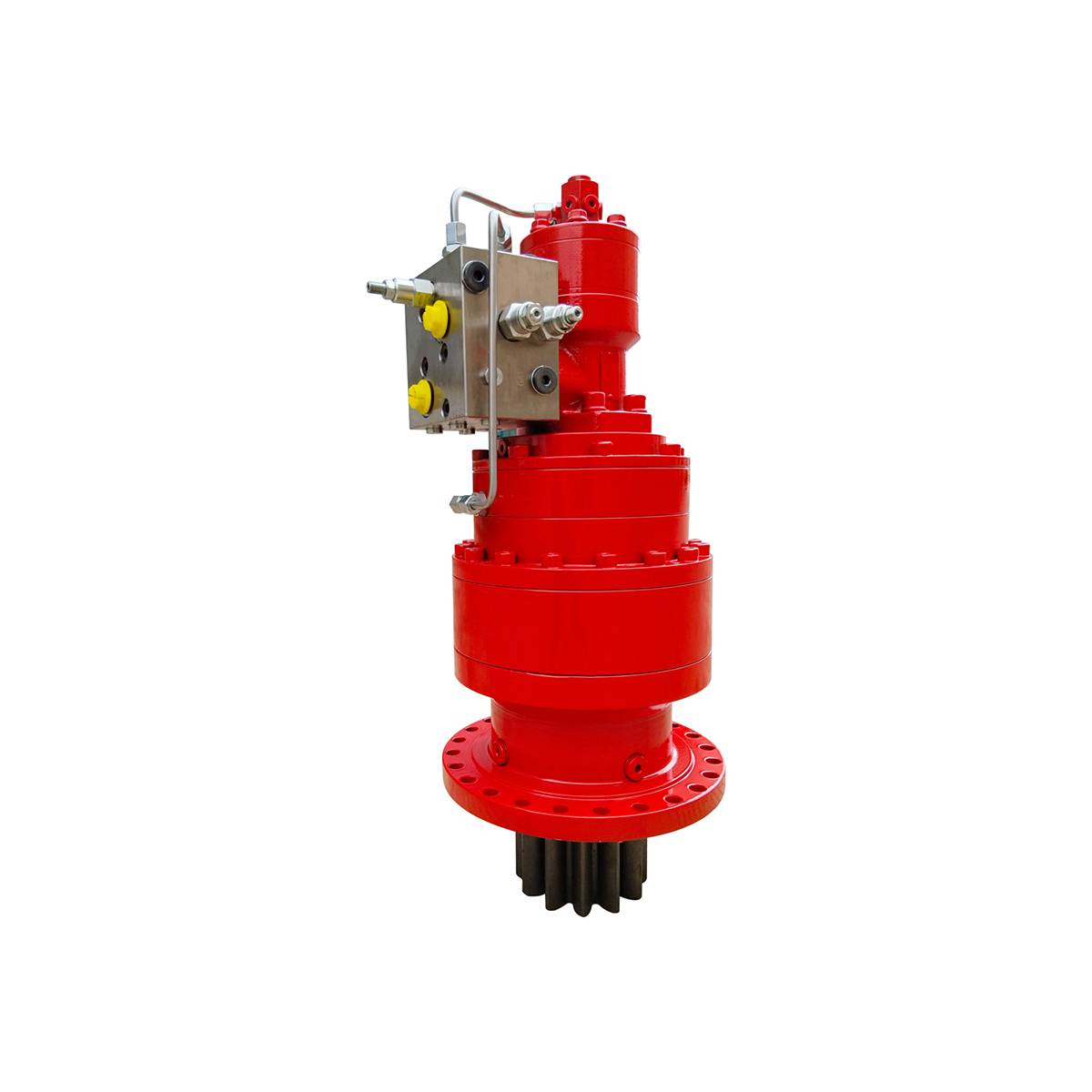
Output torque of a planetary gearbox is approximated by multiplying motor torque by gear ratio and efficiency, using Tout ≈ Tmotor × i × η. Motor torque itself can be calculated from power and speed with Tmotor = 9550 × Pmotor / nmotor for kW and rpm units.
A planetary gearbox shares load across multiple planet gears, so more teeth are engaged simultaneously and the same package size can transmit higher torque. The coaxial, compact layout also reduces bending loads and allows smaller bearings, further boosting torque capacity of the planetary gearbox.
Modern precision planetary gearbox designs often achieve 94–98% efficiency per stage under rated load, depending on lubrication and quality. When multiple stages are combined in one planetary gearbox, overall efficiency is the product of stage efficiencies and must be included in torque calculations.
Peak loads during acceleration, deceleration, or impact can briefly raise torque in a planetary gearbox above continuous levels, so selection must consider peak and emergency stop torque ratings. If calculated peak torque of the application exceeds allowable values, a larger planetary gearbox or different ratio is required to avoid fatigue or tooth damage.
Adding stages increases the total gear ratio, which raises theoretical output torque of the planetary gearbox for a given motor torque. However, each additional stage reduces overall efficiency and lengthens the gearbox, so torque gains must be balanced against losses, space, and cost.
[1](https://teknic.com/what-is-a-planetary-gearbox/)[2](https://www.3fgearbox.com/how-to-calculate-the-torque-of-planetary-gearbox.html)


