
Views: 222 Author: Amanda Publish Time: 2026-01-10 Origin: Site


Content Menu
● How Sectional Barges Support Dredging and Excavation
● Core Advantages in Marine and Civil Projects
>> Versatility and Modular Flexibility
>> Efficient Transportation and Mobilization
>> Cost-Effectiveness Over the Asset Life
>> Stability, Safety, and Operational Control
>> Environmental and Access Advantages
● Key Use Cases and Industries
● Technical Criteria When Selecting Sectional Barges
>> Load Capacity and Deck Strength
>> Dimensions, Draft, and Modular Sizes
>> Connection Systems and Assembly Design
>> Propulsion, Station Keeping, and Positioning
>> Durability, Coatings, and Maintenance
● Comparison With Other Barge Types
● Project Planning Workflow for Sectional Barge Operations
>> Defining Scope and Constraints
>> Aligning Equipment and Barge Configuration
>> Logistics, Assembly, and Commissioning
>> Operations, Monitoring, and Optimization
>> Demobilization and Asset Management
● Focused Call to Action: Plan Your Next Water-Based Project
>> 1. Are sectional barges the same as truckable barges?
>> 2. Can sectional barges handle heavy cranes and large excavators?
>> 3. Are modular barges suitable for offshore environments?
>> 4. What affects the service life of sectional barges?
>> 5. Can sectional barge layouts be customized to specific projects?
Sectional barges are modular floating platforms that can be disassembled for transport and reassembled on-site, making them ideal for supporting dredging, marine construction, and heavy civil projects in both inland and coastal waters. Their unique combination of flexibility, mobility, and load capacity, along with the integration of a track undercarriage, enhances their maneuverability and stability. This makes sectional barges a valuable asset for contractors operating in constrained, shallow, or remote environments.[2][3][1]
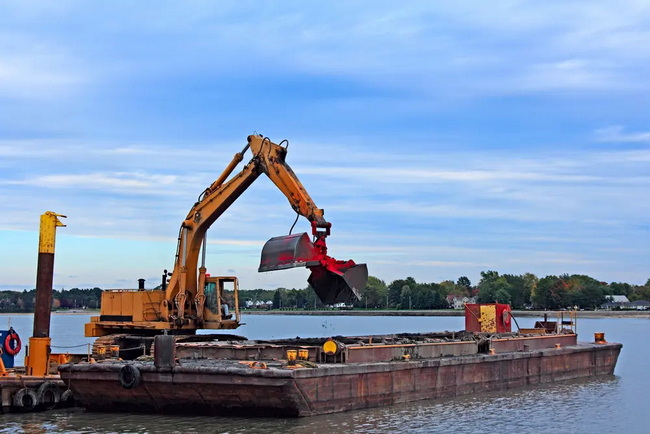
Sectional barges are made up of multiple interlocking steel modules that connect to form a flat, stable working deck for equipment and material handling. Unlike one-piece barges, these modules can be configured into different lengths and widths to match varying project demands and site conditions.[4][5][1][2]
Each module typically features a flat top and bottom, internal framing, and secure connection points designed for fast assembly and disassembly. The basic function remains similar to early barges used for bulk transport, but the modular format unlocks modern efficiency for multi-site project portfolios.[1][2][4]
Sectional barges frequently serve as platforms for excavator-based mechanical dredging, where equipment like long reach excavators, clamshells, or draglines remove sediment from riverbeds, harbors, and lakes. They also support hydraulic dredging systems that pump sediment as slurry through pipelines to disposal, reclamation, or processing sites.[6][2][1]
On these projects, the barges provide a robust, level deck that can carry excavators, pumps, generators, and control cabins while maintaining stability under dynamic loads. Many setups combine sectional barges with advanced control technologies and extended reach equipment to achieve precise dredge depths and slopes.[5][7][8][1]
The modular structure of sectional barges allows teams to tailor deck dimensions and buoyancy to each project, from compact platforms to large multi-module assemblies. This enables a single barge fleet to support dredging, pile driving, bridge work, shoreline stabilization, and temporary access solutions across different regions.[2][5][6][1]
Because modules can be rearranged into new footprints, contractors can respond quickly to changing project scopes or new job awards without investing in separate, dedicated vessels. This flexibility is particularly valuable for firms managing multiple concurrent water projects.[9][5]
Sectional barges are sized so that individual modules can be hauled over the road by standard trucks, and in some cases rail or container transport. Once onsite, cranes or suitable lifting equipment assemble modules into a complete barge at the launch area, reducing dependence on marine delivery.[3][7][1]
This approach shortens mobilization timelines and cuts costs for projects on inland rivers, reservoirs, or remote lakes that lack deep-draft access. It also simplifies demobilization, as modules can be disassembled and redeployed to the next project with minimal idle time.[7][3][4][6]
Sectional barges help lower total cost of ownership because one modular system can handle many different tasks and work environments. Contractors avoid purchasing multiple single-purpose barges and instead rely on scalable configurations that adapt to equipment changes and new contracts.[5][6][1]
Operating costs also benefit from reduced port fees, flexible storage options for modules, and streamlined maintenance routines that focus on individual sections rather than a single large hull. Over time, this can generate substantial savings across a diversified marine project portfolio.[10][4]
Modern sectional barges are engineered for stability under heavy equipment loads, especially when operators configure sufficient beam and length for the intended machinery and operations. By adjusting the number and layout of modules, teams can improve transverse and longitudinal stability to match sea state and load dynamics.[3][4][1][5]
Additional systems such as spud poles, anchors, or jack-up features can be integrated to hold position during dredging, lifting, or precision construction. This enhances safety, reduces unplanned movement, and helps operators maintain high productivity even in variable weather and currents.[4][3]
Because heavy machinery operates from water rather than disturbed shoreline, sectional barge projects can minimize ground impacts and reduce the need for temporary roads or causeways in sensitive areas. Modular transport further limits land clearing and infrastructure requirements at remote or protected sites.[1][3][4]
These characteristics support better alignment with regulatory expectations, particularly on environmental remediation, habitat restoration, and conservation-related projects. Thoughtful barge sizing and positioning can also reduce wake and footprint within confined or ecologically sensitive waterways.[6][4]
Sectional barges contribute to a wide range of water-based operations worldwide, particularly where access or depth constraints make traditional barges impractical.[6][1]
- Dredging and maintenance of navigation channels, ports, marinas, and intake structures.[1][6]
- Marine and civil construction, including bridge foundations, piers, docks, and cofferdams.[2][3]
- Transportation of equipment and materials across rivers, lakes, and coastal zones where temporary crossings are needed.[4][1]
- Mining and energy operations that require floating platforms for drilling, processing, or support in inland basins.[4][1]
- Environmental remediation, habitat restoration, and emergency response following floods, storms, or spills.[3][6]
In many of these situations, sectional barges serve as the enabling infrastructure that allows other specialized machinery to operate effectively and safely.[6][1]
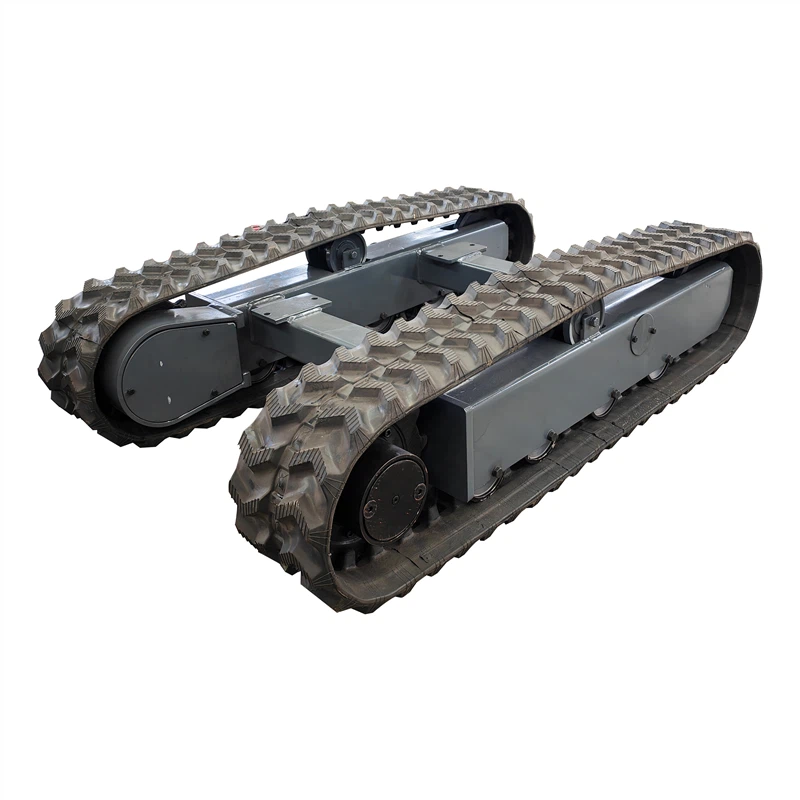
Selecting appropriate load capacity is essential for safe barge operation with excavators, cranes, and material stockpiles. Total rated load and deck loading values determine which machine sizes and lifts can be supported without compromising structural integrity.[10][5][2][4]
Decision makers should account for equipment weight, attachments, counterweights, and maximum expected live loads from material handling or crane picks. Factoring in dynamic effects from waves, slewing, and movement is critical for long-term reliability and safety.[10][3]
Common module sizes, such as 20 ft or 40 ft units, provide a building-block approach to creating the required deck footprint. Smaller modules can ease road transport and tight-site assembly, while larger modules reduce the number of connections and assembly time.[5][4][6]
Project planners must consider channel width, turning basins, water depth, and any bridge or overhead restrictions when defining barge dimensions. Draft characteristics influence where the barge can safely operate, especially in shallow or seasonally variable waterways.[3][6]
Modern sectional barges use pin-and-pocket or mechanical locking systems to join modules securely. Robust, corrosion-resistant hardware and clearly defined assembly procedures support repeatable, safe builds over multiple deployments.[9][10][4]
Evaluating compatibility with existing barge fleets and understanding required crew skills, tools, and inspection routines helps streamline both setup and long-term maintenance. Proper training and documentation are central to maintaining structural performance and safety.[10][4]
Some sectional barges rely solely on tugs or workboats for movement, while others integrate thrusters or shallow-water propulsion systems. The appropriate choice depends on water depth, current, maneuvering requirements, and site complexity.[11][1][3][6]
For precision work, spud systems and advanced positioning tools such as RTK/GPS enable accurate barge placement and monitoring of excavation or dredging operations. This combination reduces rework, controls over-dredging, and helps document compliance with design requirements.[8][7]
Sectional barges are typically constructed from marine-grade steel and protected by coatings intended to withstand corrosion, abrasion, and cyclic loading. Regular inspections should focus on paint systems, welds, connection interfaces, and deck wear from tracked equipment or dropped materials.[4][10]
The modular design simplifies repair and replacement, since individual sections can be serviced or swapped without removing the entire barge from service. With consistent maintenance, these assets can remain productive across many years and project cycles.[10][4]
Barge type | Best use cases | Transport & mobilization | Stability & control | Typical limitations |
Sectional barges | Multi-site dredging, marine construction, and work in shallow or restricted waterways. | Over-the-road truckable modules; rapid reconfiguration between projects. | High, due to adjustable width/length and use of spuds or anchors. | Requires assembly time and trained crews for safe connections. |
Spud barges | Heavy lifting, pile driving, and crane work where high positional stability is essential. | Typically moved by tug; not modular or truckable. | Very high stability using seabed-anchored spud poles. | Less suitable for remote inland sites and narrow access routes. |
Conventional deck barges | Material transport and general staging in ports and large waterways. | Delivered via waterways; usually too large for road transport. | Good for static loads but not optimized for tight or shallow sites. | Limited flexibility and higher dependence on marine infrastructure. |
This comparison highlights the unique role of modular platforms in portfolios that must cover diverse geographies and job types.[6][3]
Planning begins with clear objectives for depth, area, and volume, along with a full understanding of environmental limits and regulatory requirements. Early engagement with stakeholders and permitting authorities helps align barge selection and configuration with both operational and compliance needs.[4][6][3]
Assessing access routes, water levels, seasonal variations, and existing infrastructure informs whether sectional barges will provide sufficient reach and flexibility.[6][3]
The next step is matching barge capacity and dimensions to excavator size, attachments, support equipment, and material handling methods. Proper engineering ensures that weight distribution and center of gravity remain within safe limits for anticipated sea states and operational modes.[5][10][4]
Configurations should be reviewed for deck space, clear travel paths for machinery, and locations for spuds, anchors, and safety systems such as railings and access ladders.[4][3]
Transport planning focuses on hauling modules to a suitable launch site, staging them for assembly, and coordinating lifting equipment and crew schedules. Standardized connection details and sequencing improve assembly speed and reduce the risk of errors.[10][1][4][3]
Commissioning activities include leak checks, structural inspections, and verification of installed equipment, propulsion, and safety systems before full production begins.[10][4]
During active work, teams monitor production rates, fuel usage, and equipment wear to identify opportunities for incremental improvements. Adjustments to ballast, spud locations, or barge orientation can enhance stability and efficiency in varying wind and current conditions.[4][6][3]
Accurate record-keeping supports performance benchmarking, future project planning, and continuous improvement across a fleet of sectional barges.[6][3]
After project completion, modules are disassembled, cleaned, inspected, and prepared for storage or redeployment. Documenting coating condition, connection hardware, and structural observations helps prioritize maintenance and extend service life.[10][4]
A structured asset management approach ensures that sectional barges remain ready for rapid mobilization to upcoming projects, preserving their strategic value.[7][6]
Well-selected sectional barges can transform the economics and feasibility of dredging, marine construction, and inland waterway projects by combining modular flexibility with robust performance. Matching barge configuration, equipment selection, and site conditions is the key to unlocking safe, productive, and repeatable results across your project pipeline.[1][3][6]
For upcoming work that involves constrained access, variable depths, or remote locations, take the next step by engaging a specialist to evaluate your requirements, review site parameters, and specify a modular platform configuration aligned with your production and safety targets. A tailored consultation today can help ensure the right sectional barge solution is in place before tenders are submitted, bids are finalized, or construction windows open.[3][6]
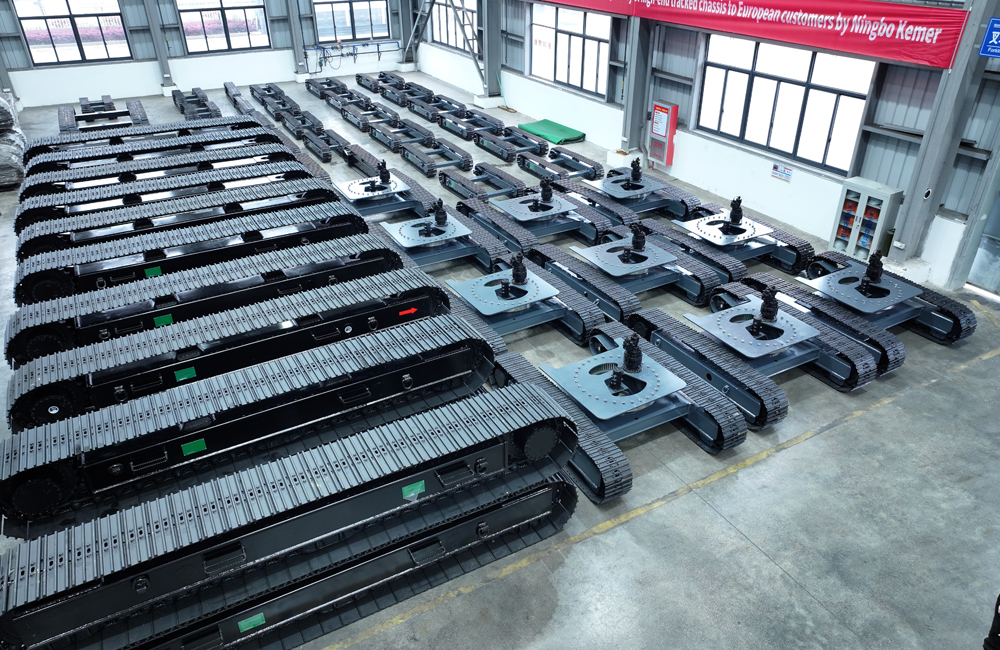
These terms are often used interchangeably to describe modular barge units designed for transport by truck or similar overland methods. The essential concept is a barge that can be broken down into sections, shipped efficiently, and reassembled at the work site.[2][4][3]
Many systems are engineered for significant crane and excavator loads, with models rated for hundreds of tons and high deck load capacities when properly configured. Final suitability depends on matching machine specifications and lift plans to verified barge ratings.[2][10][3]
Sectional barges are most commonly used on inland waterways and nearshore areas, though certain designs are certified for specific offshore or coastal conditions. Project teams should verify design limitations, class requirements, and environmental criteria before offshore deployment.[4][6]
Service life is influenced by material quality, coating performance, operational exposure, and maintenance practices. Regular inspections and timely repair of coatings, welds, and connection components allow these assets to remain productive for many years.[10][4]
Layouts can be tailored by varying the number, size, and arrangement of modules, as well as by adding features such as spud wells, railings, tie-downs, and equipment mounts. This modular approach enables close alignment between platform design and project-specific equipment, access, and safety requirements.[5][6][4]
[1](https://hawkexcavator.com/specs-brochures/what-you-need-to-know-about-sectional-barges/)
[2](https://www.eiffeltrading.com/blog/post/what-is-a-sectional-barge)
[3](https://pilebuck.com/choosing-right-barge-construction-project-key-factors-consider/)
[4](https://www.baarsbv.com/en/sectional-barges/)
[5](https://modbarge.com/products/modular-sectional-barges/)
[6](https://eddypump.com/products/modular-sectional-barges/)
[7](https://hawkexcavator.com/products/modular-sectional-barges/)
[8](https://eddypump.com/products/hawk-vision-rtk-gps-dredge-positioning-system-for-excavators/)
[9](https://poseidonbarge.com)
[10](https://www.eiffeltrading.com/blog/post/what-to-consider-when-purchasing-a-used-sectional-barge)
[11](https://www.youtube.com/watch?v=Mk1UrSCkfzw)
[12](https://pilebuck.com/buyers-guide-barges/)


