
Views: 222 Author: Amanda Publish Time: 2026-01-01 Origin: Site


Content Menu
>> Standard All-Purpose Rubber Tracks
>> Heavy-Duty and Severe-Service Tracks
>> Interchangeable Tread Patterns
>> Specialised Skid Steer And MTL Tracks
>> Emerging Hybrid And Eco-Focused Track Designs
● Rubber Tracks, Steel Tracks, And Tyres Compared
>> Key Performance Differences
● Core Benefits Of Rubber Tracks
>> Reduced Surface Damage And Ground Pressure
>> Improved Operator Comfort And Safety
>> Lower Noise Levels For Sensitive Sites
>> Versatile Traction In Diverse Conditions
>> Cost-Effective Lifecycle Value
● How To Choose The Right Rubber Tracks
>> Step-By-Step Track Selection Checklist
● Real-World Uses And Case Insights
● Expert Maintenance Tips For Longer Track Life
>> Daily And Weekly Maintenance Routine
>> Operating Techniques That Protect Tracks
>> Lubrication, Rotation, And Storage Best Practices
● When To Replace Rubber Tracks
● Rubber Tracks In Modern Fleets
● Align Your Tracks With Your Jobs
● Frequently Asked Questions About Rubber Tracks
>> 1. How long should quality rubber tracks last
>> 2. Are rubber tracks better than steel tracks for every job
>> 3. How can operators tell if rubber tracks are worn out
>> 4. Do different tread patterns really make a noticeable difference
>> 5. How often should the undercarriage be cleaned
Rubber tracks are now a core technology in modern construction, agriculture, landscaping, and compact equipment fleets, offering a powerful balance of traction, surface protection, and cost control compared with steel tracks or tyres. This enhanced guide explains rubber track types, key benefits, real-world applications, expert selection tips, and maintenance best practices so equipment owners can maximise uptime, safety, and ROI in 2026 and beyond.[1][2]

Rubber tracks are continuous belts made from a blend of natural and synthetic rubber reinforced with steel cords and forged metal inserts, designed to carry heavy equipment over demanding terrain while protecting the undercarriage. Their flexible construction allows the track to conform to uneven ground, spreading machine weight over a larger footprint than tyres and reducing ground pressure.[3][4]
- Commonly used on mini excavators, compact track loaders, multi-terrain loaders, mini dumpers, and agricultural machines.[3]
- Typical design includes a tread pattern, carcass layers, embedded steel cables, and drive lugs that engage with sprockets in the undercarriage.[5]
Compared with traditional steel tracks, rubber tracks provide quieter operation, lower vibration, and less surface damage, making them suitable for urban and residential environments.[6]
Choosing the correct rubber track type is essential to reduce wear, fuel consumption, and unplanned downtime. Different machines, terrains, and duty cycles require tailored tread designs, rubber compounds, and internal structures.[2][7]
Standard tracks are general-duty solutions built for light to medium applications where versatility is more important than extreme durability.[3]
- Typical use cases: landscaping, residential construction, light earthmoving, small civil projects, and farm work.[1]
- Design focus: balanced traction, operator comfort, and acceptable wear life on a mix of soil, gravel, and paved surfaces.[2]
These tracks are often specified on OEM machines as a cost-effective starting point for contractors working on mixed job sites.[3]
Heavy-duty rubber tracks are engineered for demanding, abrasive, and high-impact conditions where standard tracks wear too quickly.[6]
- Reinforced with thicker rubber, stronger steel cords, and more robust metal inserts to resist cuts, chunking, and carcass failure.[8]
- Best suited to demolition, forestry, quarry work, high-hour construction fleets, and machines operating frequently on rock or broken concrete.[1]
Although upfront price is higher, severe-service tracks can be more cost-effective over their full life in harsh environments thanks to extended wear life and fewer change-outs.[9]
Tread pattern has a direct impact on traction, floatation, ride quality, and surface protection. Many fleets switch between patterns to match seasonal conditions or project requirements.[7][2]
Common patterns include:[7]
- Block tread: versatile pattern for gravel, turf, asphalt, sand, and clay; ideal for general use and mixed conditions.
- Multi-bar lug: slim lugs with closely spaced bars for high traction and smooth ride in mud, wet ground, and all-season work on flat surfaces.
- Zig-zag or chevron: aggressive self-cleaning lugs that enhance grip on slopes, snow, and sticky soils.
Selecting the right pattern reduces slippage, improves safety, and can extend track life by reducing scrubbing and heat build-up.[2]
Skid steers and multi-terrain loaders place unique loads on their undercarriage due to frequent turning and high manoeuvrability.[10]
- Short-pitch technology on certain skid steer tracks reduces vibration and “bouncing” at transport speed, improving operator comfort and machine stability.[5]
- Multi-terrain loader tracks often use softer compounds and wider footprints to increase floatation and lower ground pressure in soft, wet, or sandy sites.[1]
For these machines, correct track choice has a strong impact on fuel use, cycle times, and daily operator fatigue.[11]
Recent developments focus on hybrid constructions and more sustainable compounds to meet environmental and performance targets.[12]
- Hybrid systems may combine rubber with bolt-on steel or polyurethane pads for mixed hard and soft surfaces.[13]
- Manufacturers are optimising rubber formulations to increase abrasion resistance while limiting environmental impact as the global rubber track market grows toward an estimated USD 1.63 billion by 2032.[14]
These innovations create opportunities for fleets to align performance, sustainability, and lifecycle cost goals.[12]
Rubber tracks sit between steel tracks and tyres, combining elements of both while offering unique advantages. Selecting the right undercarriage type should consider ground conditions, job type, budget, and noise restrictions.[8][1]
Aspect | Rubber Tracks | Steel Tracks | Pneumatic Tyres |
Surface impact | Low; protect turf, asphalt, and concrete. | High; can gouge, crack, and rut sensitive surfaces. | Moderate; localised ground pressure can leave ruts on soft soil. |
Noise and vibration | Quiet, low vibration; ideal for urban work. | Loud, high vibration; best for remote or heavy industrial sites. | Quieter than steel but less stable on rough terrain. |
Traction | Excellent on mud, snow, sand, and mixed terrain. | Superior on rock, steep slopes, and extreme conditions. | Good on roads, limited off-road performance in deep mud or snow. |
Durability in harsh terrain | Moderate; can wear faster on sharp rock. | Very high; long life in severe conditions. | Prone to punctures and sidewall damage. |
Fuel efficiency | Often better due to lighter weight and lower rolling resistance. | Higher fuel use due to weight and drag. | Efficient on paved roads; varies off-road. |
Rubber tracks are usually the best choice where surface protection, noise limits, and mixed terrain are key, while steel tracks dominate in extreme, abrasive environments.[1]
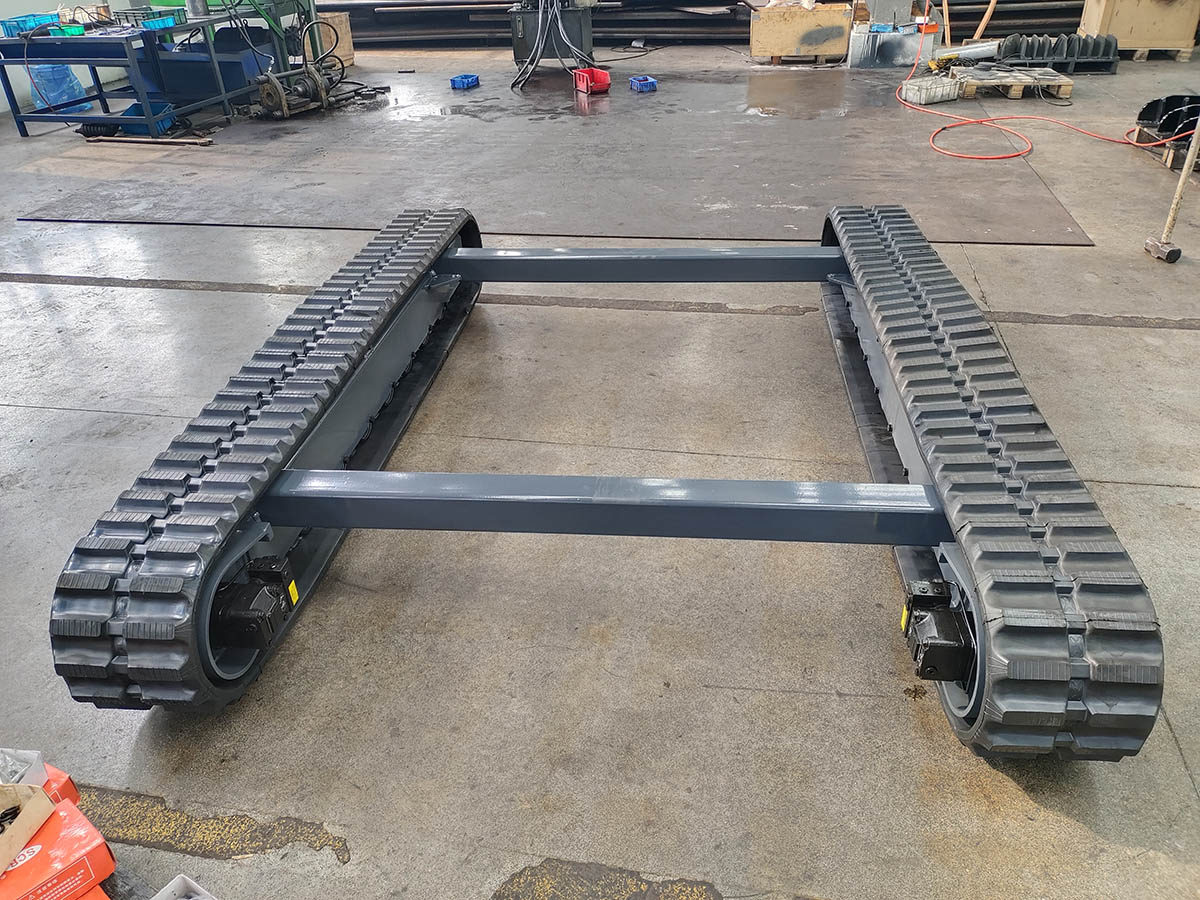
Rubber tracks deliver a combination of performance and site compatibility that many fleets cannot achieve with other undercarriage systems.[4]
The wide footprint and flexible carcass of rubber tracks spread machine weight more evenly than tyres or steel tracks.[1]
- This lowers ground pressure, helping machines operate on soft soils, lawns, and newly paved surfaces without severe rutting or scarring.[4]
- Rubber treads glide over turf and landscaped areas, which is critical for residential projects, sports fields, and high-value commercial landscapes.[1]
Contractors increasingly specify rubber-tracked equipment where property damage claims or reinstatement costs would erode project profitability.[9]
Rubber's natural damping properties reduce vibration transmitted through the undercarriage and into the cab.[4]
- Lower vibration and noise decrease operator fatigue during long shifts and support better focus and control.[6]
- Smoother operation enhances stability on uneven ground, helping reduce the risk of slips, skids, and loss-of-control incidents.[3]
Over time, improved comfort can also contribute to lower absenteeism and more consistent productivity across crews.[11]
Rubber tracks operate much more quietly than steel, which is crucial when working near homes, hospitals, schools, or commercial centres.[6]
- Noise reductions help fleets meet strict municipal or project-specific sound limits.[1]
- Quieter machines improve neighbour relations and reduce complaints on long-running jobs.[9]
This noise advantage makes rubber tracks especially valuable in urban and night-shift operations.[1]
Modern tread designs and compounds provide reliable grip across mud, snow, sand, gravel, and compacted soils.[7]
- Self-cleaning patterns help shed mud and snow, maintaining contact with the ground.[2]
- Multi-bar and chevron designs offer all-season traction without compromising ride quality on firm surfaces.[7]
This versatility enables fleets to deploy fewer machine variants while still covering a broad range of work.[3]
With correct operation and maintenance, rubber tracks can offer favourable lifecycle cost, especially in mixed or soft terrain conditions.[11]
- Proper track tension, cleaning, and inspection can extend life from 2,000 hours to significantly higher figures in compact equipment.[11]
- Reduced damage to finished surfaces and infrastructure often offsets higher purchase price compared with tyres.[1]
When paired with proactive undercarriage care, rubber tracks provide strong ROI for owner-operators and fleets.[15]
Selecting the correct rubber tracks goes beyond matching size and tread; it requires aligning undercarriage design with application, duty cycle, and cost objectives.[2]
1. Define primary applications
- Identify whether machines work mainly in residential, civil, agricultural, industrial, or forestry environments.[1]
- Note typical ground types: soft soil, turf, sand, gravel, rock, concrete, or asphalt.[2]
2. Estimate duty cycle and utilisation
- High-hour machines or rental fleets benefit from heavy-duty tracks with reinforced carcasses.[5]
- Seasonal or low-hour machines may prioritise comfort and cost over extreme abrasion resistance.[3]
3. Match tread pattern to terrain
- Block tread for general construction and landscaping on varied surfaces.[7]
- Multi-bar or turf-friendly patterns for golf courses, sports fields, and delicate lawns where surface protection is critical.[1]
4. Verify compatibility with undercarriage
- Ensure sprocket pitch, roller spacing, and guide dimensions match the track's design to prevent de-tracking and uneven wear.[5]
- Check manufacturer recommendations for approved sizes and load ratings.[3]
5. Account for noise and regulatory demands
- Urban and night-shift work usually requires quieter rubber tracks instead of steel.[1]
- Harsh quarry or demolition sites may warrant steel or severe-service rubber to avoid frequent replacements.[9]
A structured checklist supports data-driven track choices and reduces costly mismatches between machine and application.[2]
Rubber tracks enable contractors to bid and execute projects that would be difficult or uneconomical with tyres or steel alone.[1]
- Residential earthworks: Compact track loaders with turf-friendly tracks can grade, backfill, and landscape without destroying driveways or lawns.[4]
- Urban utility work: Mini excavators on rubber tracks can trench in tight streets or footpaths with lower noise and less risk of cracking concrete or pavers.[9]
- Agriculture and turf: Tracked machines spread weight over a wide area, limiting soil compaction around crop root zones and on sports surfaces.[4]
These use cases show how the right rubber track configuration turns undercarriage choices into practical on-site advantages.[1]
Undercarriage wear often accounts for a major share of lifetime ownership cost, so disciplined maintenance is essential. Good practices can significantly extend the service life of rubber tracks compared with neglected systems.[15][11]
- Inspect tracks visually for cuts, missing lugs, exposed steel cords, sidewall cracks, oil leaks, and uneven wear patterns.[15]
- Clean undercarriage components after shifts to remove packed mud, stones, and debris around sprockets, rollers, and idlers.[10]
- Check track tension and adjust to the manufacturer's specification, especially after working in mud or rock.[11]
Routine cleaning and tension checks are among the simplest yet most powerful ways to prevent premature failure.[11]
Operator behaviour has a strong effect on rubber track life.[10]
- Avoid constant spinning or tight pivot turns on hard surfaces that scrub tread and overheat rubber.[15]
- Plan travel paths to work with the terrain instead of against slopes where possible.[10]
- Limit travel speed over sharp rocks and kerbs and use ramps rather than climbing obstacles directly where feasible.[1]
Training operators in these habits reduces unplanned downtime and keeps machines productive.[11]
- Lubricate moving undercarriage parts according to service schedules to minimise friction and heat.[16]
- Rotate directional tracks (where applicable) to balance wear across front and rear idlers and sprockets.[17]
- Store idle machines on clean, dry ground under shelter, away from prolonged UV exposure and standing water that can degrade rubber.[16]
Consistent lubrication, rotation, and proper storage support maximum track life and protect the undercarriage system.[17]
Recognising end-of-life indicators early helps avoid failures that can damage the machine or cause safety incidents.[15]
- Deep cuts or missing sections of tread that expose steel reinforcement or leave structural voids.[5]
- Spotty or severe sidewall cracks, especially near guide lugs or edges where de-tracking becomes more likely.[16]
- Repeated loss of tension, frequent de-tracking, or significant vibration that persists even after proper adjustment.[11]
Many compact track loader applications see average rubber track life around a few thousand hours, but careful maintenance can significantly extend this range. Timely replacement safeguards undercarriage components that are more costly to repair.[15][11]
As global demand for both steel and rubber tracks grows, equipment owners are refining fleet strategies to match undercarriage type with job mix.[12]
- Rubber tracks are increasingly the default for compact equipment in construction, landscaping, and municipal work due to their versatility and surface protection.[1]
- Steel tracks remain important for heavy excavators and dozers in mining, demolition, and large-scale earthmoving.[9]
With the rubber track market projected to reach about USD 1.63 billion by 2032, undercarriage choices are becoming a strategic lever for competitiveness and profit growth.[14]
Undercarriage strategy has a direct impact on uptime, safety, and operating cost, and small decisions about rubber track type, pattern, and maintenance routines compound over the life of a fleet. Review current machines, ground conditions, and failure history now, then consult a specialist undercarriage partner to specify application-matched rubber tracks, undercarriage components, and drive solutions for each key machine so the next project runs smoother, quieter, and more profitably than the last.[12][1]
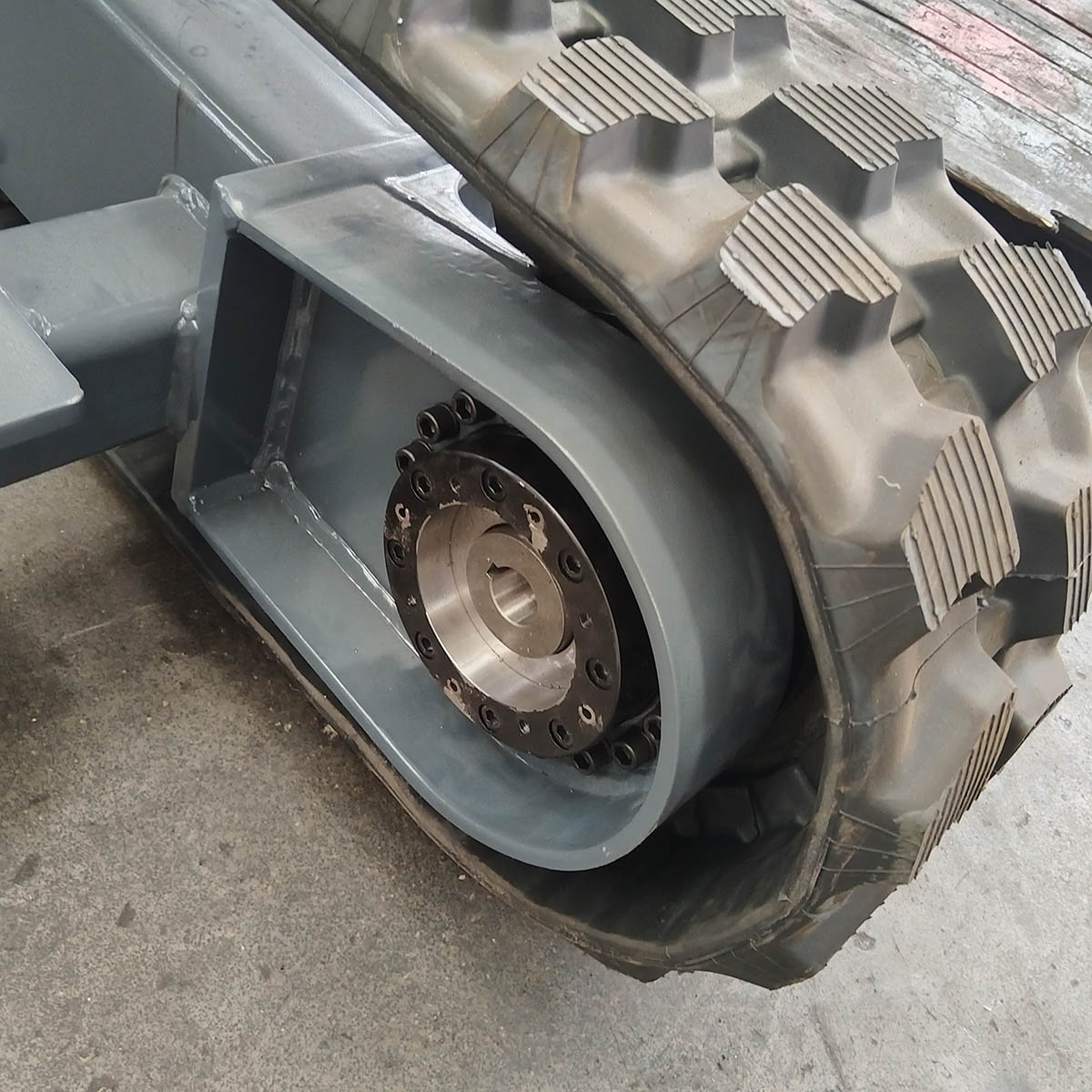
Under typical conditions, compact track loader rubber tracks often last around a few thousand hours, and fleets that maintain tension, clean daily, and inspect regularly can significantly extend that lifespan.[11]
No. Rubber tracks are ideal for mixed or soft terrain, urban work, and surface protection, while steel tracks deliver superior durability and traction in extreme, abrasive conditions such as quarries and demolition sites.[9]
Warning signs include deep cuts, missing lugs, exposed steel cords, severe sidewall cracking, frequent de-tracking, and persistent vibration even after proper tensioning.[15]
Yes. Block, multi-bar, turf, and aggressive patterns each balance traction, self-cleaning, ride comfort, and surface protection differently, so the right choice depends on primary terrain and applications.[7]
Daily cleaning is recommended, and several cleanings per shift may be needed in muddy or sandy conditions to prevent packed debris from accelerating wear and causing failures.[10]
[1](https://www.greenindustrypros.com/design-installation/compact-equipment/article/22950109/fortishd-choosing-rubber-or-steel-tracks)
[2](https://www.macallister.com/tips-for-choosing-rubber-tracks/)
[3](https://primesourceco.com/latest-news/a-guide-to-rubber-track-equipment-undercarriage-system/)
[4](https://www.mclarenindustries.com/us/en/news-and-resources/articles/26/rubber-track-maintenance-tips/)
[5](https://www.skidsteersolutions.com/inside-the-cab-skid-steer-solutions/complete-guide-to-tracks/)
[6](https://beartracks.net/blogs/news/rubber-tracks-vs-steel-tracks-which-is-best-for-your-heavy-machinery)
[7](https://trackpads.com.au/rubber-track-patterns-why-they-matter-and-how-to-choose-the-right-one/)
[8](https://www.tvh.com/learning-hub/rubber-versus-steel-tracks-which-one-to-pick)
[9](https://insights.made-in-china.com/Comparing-Rubber-Tracks-Vs-Steel-Tracks-Examining-Their-Differences-and-Meeting-User-Needs-in-Construction-Machinery_lTYtKaivJEDF.html)
[10](https://www.skidsteers.com/blog/skid-steer-and-excavator-rubber-track-and-undercarriage-maintenance-guide/)
[11](https://compactequip.com/compact-track-loaders/best-practices-for-compact-track-loader-rubber-track-maintenance/)
[12](https://www.coherentmarketinsights.com/market-insight/steel-tracks-and-rubber-tracks-market-6099)
[13](https://wearpartsnow.com/complete-guide-to-rubber-track-pads-types-benefits-and-maintenance/)
[14](https://www.marketsandmarkets.com/PressReleases/rubber-track.asp)
[15](https://trackpads.com.au/rubber-tracks-wearing-out-too-fast/)
[16](https://www.crawlerundercarriage.com/news/how-to-properly-maintain-the-rubber-track-undercarriage/)
[17](https://maxamtire.com/5-ways-to-extend-the-life-of-your-rubber-tracks/)


