
Views: 216 Author: Ningbo Kemer Publish Time: 2025-12-25 Origin: Site


Content Menu
● Why the 12-Ton Hydraulic Winch is the Cornerstone of Heavy-Duty Lifting
>> Unrivaled Lifting Capacity with Precise Control
>> Superior Performance and Continuous Output from Hydraulic Power
>> Durability and Reliability in Demanding Environments
>> Professional Considerations Meeting E-E-A-T Standards
● Extensive Application Scenarios for the 12-Ton Hydraulic Winch
>> Efficiency Assurance in Construction Engineering
>> Robust Support for Mining and Forestry Operations
>> Stable Foundation for Marine and Port Operations
>> Key Equipment for Vehicle Recovery and Special Operations
>> Ningbo Kemer: Providing Customized OEM Solutions for Various Industries
● Comparing the 12-Ton Hydraulic Winch with Other Winch Types
>> 12-Ton vs. 10-Ton and 20-Ton Hydraulic Winches
>> Core Advantages of Hydraulic Winches vs. Electric Winches
● In-Depth Technical Parameter Analysis: How to Choose the Most Suitable Winch
● Key Factors to Consider When Choosing a 12-Ton Hydraulic Winch
>> Precise Matching of Load Capacity and Safety Factor
>> Installation and Integration: Ensuring Seamless Connection
>> Budget, Long-Term Value, and Return on Investment
>> OEM Perspective: The Value of Customization Services from Design to Production
● Maintenance and Safety Tips for Your 12-Ton Hydraulic Winch
>> Daily Inspection and Preventive Maintenance Checklist
>> Safe Operating Procedures and Risk Mitigation
>> Professional Advice for Extending Winch Lifespan
● Conclusion - The Perfect Combination of Power and Trust
● Frequently Asked Questions (FAQ)
>> 1. What are the main application areas for a 12-ton hydraulic winch?
>> 2. Compared to electric winches, what are the core advantages of a 12-ton hydraulic winch?
>> 5. How can I perform daily maintenance on a 12-ton hydraulic winch to extend its lifespan?
In the demanding world of heavy-duty lifting and pulling operations, selecting the right equipment is paramount to project success. Especially for industries such as construction machinery, marine vessels, mining equipment, and special vehicles, a high-performance, reliable hydraulic winch is indispensable. As a leading Chinese OEM service provider specializing in the hydraulic winch industry—Ningbo Kemer Engineering Machinery Co., Ltd.—we deeply understand the urgent needs of brand owners, wholesalers, and manufacturers for high-quality, customized solutions. This article will delve into why the 12-ton hydraulic winch stands out as an ideal choice for heavy-duty lifting tasks and how Ningbo Kemer, through its professional OEM customization services, helps your brand achieve a leading position in the market.
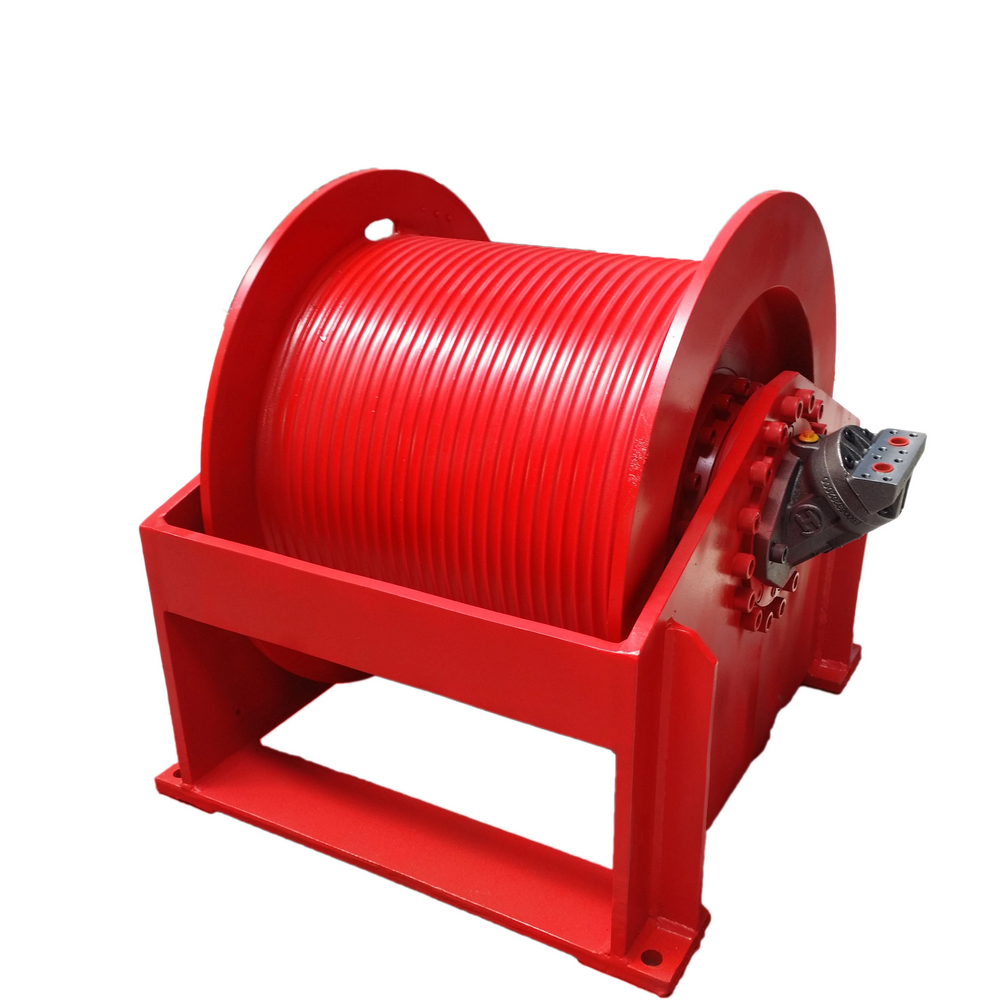
The 12-ton hydraulic winch has carved out a unique niche among lifting equipment due to its balanced lifting capacity, exceptional performance, and reliability in harsh environments. It represents not just immense power, but also unwavering steadfastness in the most critical moments.
◆ Heavy Load Capability: A 12-ton hydraulic winch boasts a powerful pulling force of approximately 24,000 lbs, allowing it to effortlessly move oversized machinery, steel structures, heavy logs, or ores. It cleverly balances sufficient industrial-grade power with a moderate size, avoiding unnecessary over-configuration.
◆ Smooth and Precise Operation: The hydraulic system provides continuous and constant torque output, ensuring that the load is lifted or pulled smoothly and without shock. This precise control is crucial for hoisting fragile components or those requiring accurate positioning, significantly reducing operational risks.
◆ Safety Margin Assurance: Opting for a 12-ton class winch provides ample safety margin for most heavy-duty applications. This means that even in the face of unexpected situations or unanticipated load fluctuations, the equipment can maintain stable operation, effectively preventing overload and potential equipment damage.
Compared to electric or manual winches, hydraulic winches demonstrate unparalleled endurance and consistency.
◆ Continuous Uninterrupted Operation: Hydraulic winches can operate continuously for extended periods without overheating, which is vital in industrial environments requiring long hours of high-intensity work. Their high energy conversion efficiency ensures a sustained and stable power output.
◆ Constant Torque Output: From start to finish, the hydraulic system delivers constant torque, ensuring consistent pulling or lifting force throughout the operation, especially suitable for applications requiring prolonged tension.
◆ Adaptability to Extreme Conditions: Hydraulic systems are highly adaptable to harsh environments. Whether in extreme cold or heat, or humid and dusty conditions, they maintain stable operational performance.
The 12-ton hydraulic winch is designed from the outset for the toughest working conditions, aimed at providing long-term, reliable service.
◆ Robust Anti-Corrosion Structure: Utilizing high-strength alloy steel and professional surface treatment processes, it offers excellent corrosion resistance, making it particularly suitable for marine, chemical, and other wet or corrosive environments.
◆ Planetary Gear System: The compact and efficient planetary gear drive system is the core of a hydraulic winch. It smoothly handles shock loads, delivers high torque output, and significantly extends equipment life.
◆ Normally Closed Brake System: This is a critical safety feature. The brake remains engaged unless hydraulic pressure releases it. Even in the event of hydraulic system failure or power loss, it securely holds heavy loads, ensuring the safety of personnel and equipment.
As experts in the hydraulic winch field, we understand the importance of E-E-A-T (Experience, Expertise, Authoritativeness, Trustworthiness) for content quality.
◆ Industry Standards and Certifications: Excellent 12-ton hydraulic winch products should comply with international and national standards, such as ISO, CE, etc. These certifications are vital guarantees of product quality and safety, and are principles we strictly adhere to when providing products for our OEM customers.
◆ Material Science and Engineering Design: From the drum and wire rope to the valve block, the material selection and precision machining of each component directly impact the winch's performance and lifespan. For example, using high-quality seals effectively prevents leaks and extends the hydraulic system's service life, while selecting high-strength wire rope directly relates to lifting safety.
◆ Professional Technology and Knowledge: An experienced team of engineers is at the core of designing and manufacturing high-performance hydraulic winches. They must not only be proficient in hydraulic principles but also understand the specific requirements of different application scenarios, translating theoretical knowledge into reliable product solutions.
The unique capabilities of the 12-ton hydraulic winch make it indispensable across several core industries, providing reliable solutions for various heavy-duty tasks.
On construction sites, the 12-ton hydraulic winch is a powerful tool for improving efficiency and ensuring safety.
◆ Steel Structure Hoisting: Precisely lifts large steel beams and precast concrete components, ensuring installation accuracy.
◆ Equipment Handling: Moves heavy construction machinery, generator sets, or other building materials.
◆ Cable Laying: Pulls large power or communication cables, especially in complex terrain or underground operations.
◆ Tower Crane and Crawler Crane Assistance: Acts as an auxiliary lifting or pulling device to enhance the working capacity and flexibility of large machinery.
The harsh mining and forestry environments demand more from winches, and the 12-ton hydraulic winch is up to the task.
◆ Ore Haulage and Equipment Towing: In underground mines or open-pit operations, it pulls ore carts, conveyor belts, or disabled heavy mining equipment.
◆ Log Collection: Efficiently and safely pulls and stacks massive logs in rugged forest terrain.
◆ Rescue and Clearing: Used for rescue operations after mine collapses or for clearing obstacles from forestry roads.
The corrosiveness and complexity of the marine environment pose significant challenges to equipment, making hydraulic winches an ideal choice.
◆ Ship Anchoring and Towing: Used for anchoring and weighing anchor operations of ships, or as a towing system for tugboats.
◆ Dock Loading/Unloading and Equipment Hoisting: At ports and docks, it assists in hoisting heavy cargo or moving large marine equipment.
◆ Offshore Platform Operations: Supports mooring, material transfer, and other operations on offshore drilling platforms and Floating Production Storage and Offloading (FPSO) units.
◆ Fishing and Hauling: Serves as a trawl or net hauling winch for fishing vessels, providing powerful pulling force.
The 12-ton hydraulic winch plays a crucial role in emergency recovery and special operations.
◆ Heavy Vehicle Recovery: Mounted on wreckers or emergency rescue vehicles, it is used to pull overturned, stuck in mud, or broken down large trucks and buses.
◆ Military and Field Operations: In field or military environments, it is used for towing heavy equipment, setting up temporary facilities, or clearing obstacles.
◆ Agricultural Machinery Assistance: In agricultural production, it pulls farm implements or assists with operations in complex terrain.
As a professional hydraulic winch OEM manufacturer, Ningbo Kemer Engineering Machinery Co., Ltd. not only offers standardized 12-ton hydraulic winch products but also focuses on customized design and production according to clients' specific needs. No matter which industry your brand specializes in, we can provide the most suitable solution:
◆ Tailored Customization: We customize the winch's dimensions, mounting method, control system, and surface treatment based on your equipment interface, hydraulic system parameters, operating environment, and performance requirements.
◆ Brand Integration: Our OEM services ensure that the products are perfectly integrated into your brand system, from appearance design to performance parameters, consistent with your brand image and technical standards.
◆ Technical Support: We provide comprehensive technical support from conceptual design, prototype development to mass production, assisting clients in solving challenges encountered during product integration and application.
◆ Cost Control and Efficiency Improvement: Leveraging large-scale production and advanced manufacturing processes, we can offer more competitive OEM pricing while ensuring quality, helping you improve the overall cost-effectiveness of your products.
Understanding the differences between various winch types and tonnages helps in making informed purchasing decisions.
| Feature | 10-Ton Hydraulic Winch | 12-Ton Hydraulic Winch | 20-Ton Hydraulic Winch |
|---|---|---|---|
| Load Capacity | Suitable for medium vehicles, light construction equipment, and general industrial pulling. | Highly versatile, suitable for most heavy construction, mining, marine, and transportation applications. | Designed for ultra-heavy-duty mining, large offshore platforms, and extreme specialized engineering. |
| Application Range | Narrower, more inclined towards medium to low-intensity operations. | Broadest, the "gold standard" for most industrial applications. | Narrower, limited to projects with extreme load demands. |
| Cost-Effectiveness | Lower acquisition cost, but potential increased risk or shorter lifespan due to insufficient load capacity. | Optimal balance of performance and price, high return on investment. | High acquisition cost, and may have overkill performance. |
| Size & Weight | Usually more compact. | Moderate, easy to integrate into various equipment. | Larger and heavier, requiring more installation space and structural strength. |
| Safety Margin | Lower, increased risk when facing unexpected overloads. | High, providing ample additional safety assurance. | Extremely high, but may lead to resource waste. |
Conclusion: The 12-ton hydraulic winch is undoubtedly the best balance of versatility, performance, and cost-effectiveness. It offers ample power to handle most heavy challenges while avoiding over-investment and unnecessary equipment bulk.
| Feature | Hydraulic Winch | Electric Winch |
|---|---|---|
| Power Source | Relies on the vehicle's or equipment's hydraulic system. | Relies on an electrical system (DC or AC). |
| Continuous Operation | Can work continuously for long periods, no overheating risk. | Long-term heavy loads may cause motor overheating, requiring cooling time. |
| Torque Output | Provides constant, smooth torque, especially suitable for high-intensity, continuous operation. | High starting torque, but performance may degrade under prolonged heavy loads. |
| Speed Control | Infinitely variable speed, smooth and precise control. | Usually fixed speed, some high-end products may have multi-stage speed control. |
| Environmental Adaptation | Strong adaptability to harsh environments (e.g., humid, dusty, low temperature). | Higher environmental requirements, waterproof and dustproof ratings need special attention. |
| Safety Braking | Normally closed brake, automatic engagement on power loss or pressure drop, safe and reliable. | Mostly friction brakes or eddy current brakes, braking effectiveness on power loss depends on design. |
| Installation Complexity | Requires integration with the hydraulic system, relatively complex installation. | Relatively simple installation, only requires power connection. |
| Initial Cost | Usually higher than electric winches of equivalent pulling force. | Usually lower than hydraulic winches. |
| Maintenance Cost | Stable long-term operation, relatively low maintenance requirements. | Motor carbon brushes, wiring, and other wear parts may require regular replacement or maintenance. |
Choosing the right 12-ton hydraulic winch requires a deep understanding of its technical parameters and a balance of these against actual application scenarios.
◆ Rated Line Pull: This is the winch's core indicator, referring to the maximum pulling force the winch can generate on the first layer of rope. Ensure it is greater than your maximum expected load, with a 20%-30% safety margin.
◆ Working Pressure & Flow: This determines how much power and speed the winch can obtain from the hydraulic pump. It must perfectly match your hydraulic system to avoid insufficient performance or system overload.
◆ Wire Rope Capacity: The length and diameter of wire rope the winch drum can accommodate. Choose the appropriate capacity based on your working height or pulling distance.
◆ Gear Ratio: The larger the gear ratio, the greater the output torque and the slower the speed; and vice versa. Planetary gear reducers typically offer efficient and compact reduction solutions.
◆ Braking Type: Normally closed multi-disc friction brakes are standard for industrial-grade hydraulic winches, providing the highest level of safety.
◆ Mounting Dimensions & Weight: Ensure the winch can be successfully installed on your equipment and does not negatively impact the equipment's overall structure and center of gravity.
◆ Protection Class: Especially for winches working outdoors or in harsh environments, an IP protection rating is required for dust and water resistance.
Choosing a 12-ton hydraulic winch for your equipment is a significant investment decision. In addition to the technical parameters mentioned above, several critical factors need careful consideration.
◆ Maximum Load Estimation: Always base your winch selection on the maximum load your equipment might encounter (not just the average load). For example, in recovery operations, a towed vehicle might generate much higher traction resistance than its own weight due to being stuck in mud.
◆ Reserve Safety Margin: It is strongly recommended to choose a winch with a rated line pull 20% to 30% higher than your maximum load. This safety factor is crucial as it protects the equipment in unexpected situations, prevents overload damage, and extends the winch's lifespan.
◆ Complexity of Working Conditions: Consider the complexity of the operating environment, such as gradients, friction, and shock loads, as these will increase the actual required pulling force.
◆ Space Constraints: Ensure the dimensions and weight of the chosen winch are compatible with your equipment's installation space. Compact design is crucial, especially for vehicle-mounted or space-limited applications.
◆ Hydraulic System Compatibility: The winch's working pressure and flow must be compatible with your existing hydraulic system's pumps, valves, and hoses. Incompatibility can lead to reduced performance, system damage, or safety hazards.
◆ Mounting Brackets and Structure: The winch mounting bracket must be robust and capable of withstanding the pulling force under maximum load. Correct installation alignment reduces vibration and wear, ensuring smooth winch operation.
◆ Control System Integration: Consider the winch's control method (manual, remote, electro-hydraulic integration) and ensure it can be seamlessly integrated with your equipment's operating platform for ease of use.
◆ Initial Investment: High-quality hydraulic winches typically have a higher initial cost than lower-end products. However, viewing it as a long-term investment rather than a one-time purchase will yield more value.
◆ Operating Costs: Consider energy consumption, maintenance frequency, and spare parts costs. Due to their durability and reliability, hydraulic winches generally exhibit lower maintenance costs over long-term operation.
◆ Downtime Costs: In industrial applications, equipment downtime means significant economic losses. A reliable hydraulic winch can minimize failures, thereby reducing the hidden costs associated with downtime. Choosing a high-quality product is key to protecting your entire operation from unnecessary risks.
◆ Brand Reputation: For OEM customers, the quality of selected components directly affects their product's brand reputation. Choosing stable, reliable hydraulic winches is an important way to enhance the competitiveness of your end products.
As a professional OEM service provider, Ningbo Kemer deeply understands the importance of customization for brand owners and manufacturers.
◆ Responsiveness to Unique Needs: We don't just provide products; we offer solutions. For the unique needs of different customers, such as special mounting methods, specific protection levels, or unique performance curves, we can provide professional custom designs.
◆ Supply Chain Optimization: By partnering with Ningbo Kemer, you can obtain a stable supply of high-quality products, optimize your procurement process, and reduce supply chain risks. We provide consistent product quality and on-time delivery, ensuring your production schedule remains unaffected.
◆ Collaborative Technical Development: Our engineering team can work closely with your R&D department to jointly develop new generations of hydraulic winch products that meet future market demands, thereby enhancing your product competitiveness at the source.
◆ Cost Control and Efficiency Improvement: Leveraging large-scale production and advanced manufacturing processes, we can provide you with more competitive OEM pricing while ensuring quality, helping you improve the overall cost-effectiveness of your products.
Correct maintenance and strict adherence to safety regulations are crucial for ensuring the long-term stable operation and safety of your 12-ton hydraulic winch.
Regular maintenance not only extends winch life but also prevents potential issues.
Daily Check:
◆ Wire Rope/Cable: Check for signs of wear, breakage, kinking, corrosion, or excessive stretching.
◆ Connections: Check all bolts, nuts, and pins for tightness, looseness, or damage.
◆ Hydraulic Lines: Check for leaks, cracks, or signs of aging.
◆ Brake Function: Confirm that the brake is working properly and can effectively hold the load.
Weekly/Monthly Check (depending on usage frequency):
◆ Hydraulic Fluid Level and Quality: Check if the hydraulic oil tank level is sufficient and if the oil is clean, without discoloration or emulsification. Replace hydraulic fluid and filter elements if necessary.
◆ Lubrication: Thoroughly lubricate gears, bearings, drum support points, and other moving parts to ensure smooth operation.
◆ Seals: Check if oil seals and O-rings are intact and without leakage.
◆ Structural Components: Check the winch body and mounting base for cracks, deformation, or other structural damage.
Annual Inspection:
◆ Comprehensive Disassembly and Testing: Thoroughly inspect core components, including gear wear, bearing clearance, and brake disc wear.
◆ Pressure Test: Conduct a pressure test on the hydraulic system to ensure it operates correctly under rated conditions.
◆ Replace Worn Parts: Replace all parts that have reached their service life or are severely worn.
◆ Never Overload: Strictly adhere to the winch's rated load capacity and never allow overloading. Overloading is a primary cause of equipment damage and safety accidents.
◆ Wear Protective Gear: Operators must wear personal protective equipment such as gloves, hard hats, and safety shoes.
◆ Maintain Safe Distance: When the winch is operating, operators and unauthorized personnel must maintain a safe distance from the wire rope, drum, and load. Avoid standing in the direction of tension of the wire rope.
◆ Smooth Start and Stop: Operate smoothly when starting and stopping, avoiding abrupt acceleration or deceleration to reduce shock to the winch and load.
◆ Regular Training: Provide professional safety training to operators, familiarizing them with winch operating procedures, emergency handling methods, and safety precautions.
◆ Emergency Stop Mechanism: Ensure that the emergency stop button or pull cord is easily accessible and fully functional.
◆ Choose High-Quality Wire Rope: Use high-quality, wear-resistant, and fatigue-resistant wire rope, and inspect and replace it regularly.
◆ Correct Rope Spooling: Ensure the wire rope is wound evenly and neatly on the drum, avoiding messy or crossed wraps, which effectively reduces wear on the wire rope and drum.
◆ Cleaning and Anti-Corrosion: Regularly clean the exterior of the winch, remove mud and oil stains, and apply anti-corrosion treatment to easily corroded parts.
◆ Avoid No-Load Operation: Try to avoid long-term no-load operation of the winch to reduce unnecessary wear.
◆ Professional Maintenance: For complex faults or annual overhauls, it is recommended to seek professional repair services to ensure the equipment is properly handled.
The 12-ton hydraulic winch is not only an indispensable core equipment for heavy-duty lifting and pulling tasks but also a crucial guarantee for industrial efficiency, safety, and reliability. Its excellent lifting capacity, smooth output from the hydraulic system, and durable performance in harsh environments have earned widespread recognition from professionals across various industries.
For brand owners, wholesalers, and manufacturers seeking high-performance, highly reliable hydraulic winch solutions, choosing a partner with profound professional knowledge and extensive OEM experience is essential. Ningbo Kemer Engineering Machinery Co., Ltd. is precisely that trustworthy partner. We are not just product providers; we are your strategic ally in technical innovation and market expansion. From precise design to meticulous manufacturing, from stringent quality control to comprehensive after-sales support, we are committed to providing you with customized hydraulic winch OEM services that exceed expectations.
Choosing Ningbo Kemer means choosing to walk with professionalism, quality, and efficiency. Let your brand gain more customer trust in fierce market competition through excellent product performance.
Contact Ningbo Comaer Engineering Machinery Co., Ltd. today to explore your exclusive 12-ton hydraulic winch OEM customization solution and inject powerful momentum into your heavy-duty lifting tasks!
Answer: The 12-ton hydraulic winch is widely used in heavy-duty lifting and pulling scenarios such as construction engineering (hoisting steel structures, equipment handling), mining and forestry (hauling ore carts, towing logs), marine and port operations (ship anchoring, dock loading/unloading), vehicle recovery (towing heavy vehicles), and various special operations.
Answer: The core advantages of a 12-ton hydraulic winch lie in its ability to work continuously for long periods without overheating, providing constant and smooth torque output, stronger adaptability to harsh environments, and a more secure and reliable normally closed brake system, ensuring stability and safety under heavy loads and complex conditions.
Answer: Ningbo Kemer offers comprehensive OEM customization services, including custom design, prototype development, mass production, and full technical support based on specific customer requirements (such as dimensions, mounting methods, performance parameters, control systems, and protection ratings). This ensures seamless product integration with the client's brand and meets their specific market needs.
Answer: In addition to rated line pull, other factors to consider include working pressure and flow (must match the hydraulic system), wire rope capacity (length and diameter), gear ratio, braking type (normally closed is safer), mounting dimensions and weight, and protection class (dust and water resistance).
Answer: Daily maintenance includes checking the wire rope/cable, connections, hydraulic lines, and brake function daily; weekly/monthly checks of hydraulic fluid level and quality, lubrication of moving parts, and inspection of seals and structural components; and annual comprehensive disassembly, testing, and replacement of worn parts. Additionally, strictly follow safe operating procedures to avoid overloading and improper operation.


