
Views: 222 Author: Amanda Publish Time: 2026-01-01 Origin: Site


Content Menu
● What Are Rubber and Steel Excavator Tracks?
● Quick Comparison: Rubber vs Steel
>> At-a-Glance Decision Matrix
● Advantages of Rubber Excavator Tracks
>> Surface Protection and Client Satisfaction
>> Noise Reduction and Operator Comfort
>> Versatile Traction on Mixed Ground
● Where Steel Tracks Remain the Best Choice
>> Heavy-Duty and Extreme Conditions
>> Dedicated Heavy Machines and Long-Term Use
● Cost, Lifecycle, and Total Ownership
>> Fleet Utilisation and Machine Flexibility
● Practical Track Selection Framework
>> Five-Step Selection Process
>>> Step 1: Define Primary Environment
>>> Step 2: Assess Surface Sensitivity
>>> Step 3: Consider Noise and Access Rules
>>> Step 4: Analyse Duty Cycle and Load
>>> Step 5: Review Budget and Ownership Strategy
● Best Practices to Extend Rubber Track Life
>> Undercarriage Cleaning Routine
>> Smooth Driving and Reduced Scrubbing
● Modern Innovations in Rubber Track Technology
>> Construction and Compound Improvements
>> Application-Specific Tread Designs
● Optimise Your Undercarriage Strategy
● FAQ: Rubber Excavator Tracks vs Steel
>> 1. Do rubber excavator tracks last as long as steel tracks?
>> 2. Are rubber tracks worth the higher replacement frequency?
>> 3. Can a machine be converted from steel to rubber tracks?
>> 4. Are rubber tracks suitable for cold or snowy environments?
>> 5. How often should track tension be checked on rubber tracks?
Choosing between rubber excavator tracks and steel tracks is no longer a simple durability question; it is a strategic decision that affects job-site access, lifecycle cost, operator comfort, and client satisfaction. This guide explains when rubber tracks outperform steel, where steel still wins, and how to maximise track life with practical, real-world tips.[1][2][3]

Rubber excavator tracks are continuous belts made from reinforced rubber compounds with embedded steel cords and metal cores, combining flexibility with structural strength. They are common on mini and midi excavators, compact track loaders, and other machines working on finished or sensitive surfaces.[4][6][7]
Steel excavator tracks are assembled from linked metal shoes pinned together to create a rigid, highly durable chain. They are widely used for aggressive terrain, heavy-duty excavation, demolition, quarrying, and large-scale earthmoving.[2][1]
Use this high-level overview as a starting point for selecting the appropriate track type.
Factor / Condition | Rubber Excavator Tracks | Steel Excavator Tracks |
Typical applications | Urban jobs, landscaping, utilities, residential builds, road maintenance | Quarries, demolition, forestry, heavy earthmoving, rocky sites |
Ground / surface impact | Low-protects asphalt, concrete, turf, and pavers | High-can chip, crack, or rut finished surfaces |
Noise and vibration | Quieter, smoother ride, less operator fatigue | Louder, higher vibration, more operator fatigue |
Traction-soft or mixed ground | Excellent on soft, muddy, and mixed surfaces | Strong on loose rock, clay, and extreme slopes |
Durability in severe conditions | Shorter life on abrasive or jagged terrain | Longer life in harsh, abrasive environments |
Fuel efficiency | Lighter, can reduce fuel consumption | Heavier, can increase fuel burn on some machines |
Surface sensitivity | Suitable for finished and delicate surfaces | Generally unsuitable without additional protection |
On mixed or finished surfaces, the low impact of rubber tracks on ground conditions is often the most important advantage.[8][4]
- Rubber distributes machine weight over a wide footprint, reducing soil compaction, rutting, and turf damage.[11][8]
- Finished infrastructure such as asphalt, concrete, and decorative paving is much less likely to be chipped or cracked, which reduces reinstatement costs after a project.[5][4]
Noise and vibration significantly influence productivity, safety, and community acceptance.[6][4]
- Rubber's inherent shock-absorbing properties reduce vibration transmitted to the cab, which helps lower operator fatigue on long shifts.[4][6]
- Rubber tracks run quieter than steel, which is essential near residential areas, hospitals, and schools, and helps with compliance on sites that have strict noise windows.[1][4]
Track design has a strong impact on performance across different surfaces.[6][1]
- Modern rubber tread patterns offer secure traction on wet asphalt and smooth concrete, where steel can slip more easily.[11][1]
- On soft soils and landscaping sites, the wider footprint of rubber tracks increases stability and reduces the risk of bogging or excessive disturbance.[8][1]
For certain environments, the properties of steel tracks still make them the more appropriate option.[2][1]
- In quarries, demolition, forestry, and other severe applications, steel shoes tolerate sharp rock, concrete rubble, rebar, and heavy impact better than rubber.[10][2]
- On steep slopes and very uneven ground, the rigid structure and aggressive grousers of steel can provide superior traction and pushing power.[9][1]
In fleets that run dedicated heavy-duty equipment, steel undercarriages can be an efficient solution.[1][2]
- Machines assigned exclusively to harsh environments often achieve a lower cost per hour with steel, due to longer service life under those conditions.[2][1]
- Some operators combine steel undercarriages with removable rubber pads to balance durability and surface protection across varied projects.[5][8]
Initial purchase price is only one part of the overall cost of using excavator tracks.[8][2]
- Rubber tracks may need more frequent replacement on abrasive sites, but they often reduce fuel usage, surface repair expenses, and transport-related damage claims.[6][2]
- Steel tracks usually last longer in severe conditions, yet can increase spending on ground protection, noise mitigation, and reinstatement when used on finished infrastructure.[5][2]
The ability to redeploy machines quickly across different tasks and locations has a direct financial impact.[4][5]
- Machines fitted with rubber tracks can move between excavation, backfilling, and final grading on paved areas without changing undercarriage configuration, helping to maximise utilisation.[4][5]
- Combining steel chains with rubber pads can turn a single excavator into a multi-role unit that is suitable for both raw ground and sensitive surfaces.[5][8]
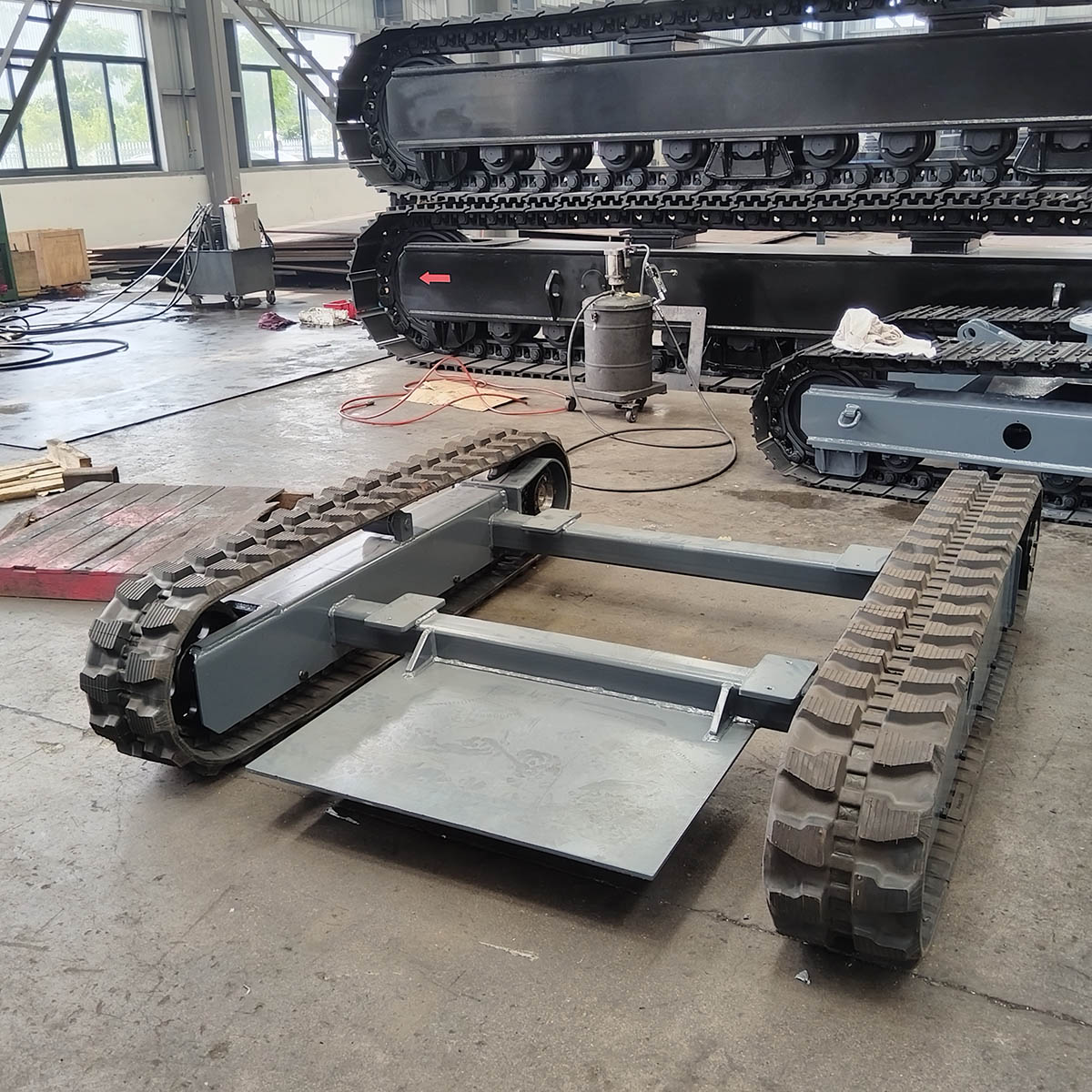
This straightforward framework helps align track choice with actual working conditions.[1][2]
Determine where the machine spends most of its time.[2][1]
- For urban, residential, landscaping, and utility projects, rubber tracks or rubber-padded solutions often provide the best balance of performance and protection.[6][4]
- For quarries, mines, demolition, and forestry, steel tracks generally perform better and offer longer life.[1][2]
Evaluate how critical it is to protect existing surfaces.[8][4]
- Finished surfaces such as concrete, asphalt, pavers, and sports turf require undercarriage solutions that minimise damage risk, which points strongly towards rubber tracks.[4][8]
- Bare ground, blasted rock, and bulk earthmoving sites tolerate greater surface disturbance, where steel's durability often prevails.[2][1]
Check local regulations and client expectations regarding noise and operating windows.[4][1]
- In community-sensitive projects with strict limits on noise and working hours, the quieter operation of rubber tracks can be a clear advantage.[1][4]
- Remote industrial zones may have fewer constraints, allowing steel tracks without impacting approvals or stakeholder relationships.[9][1]
Look at how the machine is used throughout a typical project.[2][1]
- Light-to-medium duty work, frequent travel, and mixed tasks generally pair well with rubber undercarriages.[11][6]
- Continuous heavy pushing, ripping, and high-impact breakout typically favour steel tracks for strength and resistance to deformation.[1][2]
Match undercarriage investment to the expected lifecycle of the machine.[2][1]
- Rental fleets and businesses that swap machines regularly may prioritise versatility and operator preference, areas where rubber performs strongly.[3][8]
- Long-term owners of specialised heavy machines may achieve a lower excavator-hour cost by choosing steel for their primary undercarriage.[1][2]
Correct track tension is essential for both rubber track life and undercarriage reliability.[7][1]
- Tracks that are too tight increase load on rollers, idlers, and final drives, which leads to accelerated wear and higher fuel consumption.[7][2]
- Tracks that are too loose are more likely to derail, damaging sprocket teeth and track lugs and causing unscheduled downtime.[7][1]
Routine cleaning protects the track carcass and metal components from accelerated abrasion.[7][1]
- Mud, clay, sand, and rubble trapped around the undercarriage increase friction and create uneven wear patterns.[7][1]
- Regular cleaning using a pressure washer or mechanical tools at the end of each shift, especially in clay or abrasive soils, can significantly extend service life.[7][1]
Operator habits directly influence the lifespan of rubber tracks.[11][1]
- Sharp, on-the-spot turns on hard ground cause scrubbing and sidewall stress, so gradual or three-point turns should be used instead.[11][1]
- Travel over sharp debris, exposed rebar, or jagged concrete should be minimised, and curbs or similar obstacles should be crossed slowly and at a right angle whenever possible.[2][1]
Slope technique matters for both safety and track longevity.[9][6]
- Where conditions allow, machines should travel straight up and down slopes instead of traversing sideways, which reduces side-loading on the rubber track sidewalls.[9][1]
- Sudden changes in direction or rapid acceleration on inclines should be avoided, particularly when surfaces are wet or unstable.[6][9]
Recent developments have made rubber tracks significantly more robust than earlier generations.[8][7]
- Enhanced rubber compounds with better cut and tear resistance reduce the risk of chunking and sidewall damage in mixed-use environments.[8][7]
- Continuous steel cord reinforcement and optimised metal cores increase strength, reduce stretching, and improve sprocket engagement for more precise tracking.[6][7]
Different environments benefit from specialised tread configurations.[6][8]
- Tread patterns designed for snow and ice maximise edge grip and stability in cold climates.[8][6]
- Patterns for soft soils or landscaping focus on flotation and minimal surface disturbance while preserving traction.[11][6]
A well-chosen undercarriage is central to reliable performance, predictable costs, and safe operation across every project your machines tackle. The right balance between rubber and steel tracks depends on your ground conditions, noise and surface requirements, duty cycles, and long-term ownership plans.[3][8][1][2]
If your fleet operates across a mix of urban, infrastructure, and demanding earthmoving jobs, now is the right time to review track choices and maintenance practices with an expert team that understands undercarriages, travel drives, winch drives, swing drives, planetary gearboxes, and hydraulic motors. Reach out today for a tailored undercarriage assessment and a solution that aligns your excavator tracks with the real-world challenges of your global projects.[5][8]
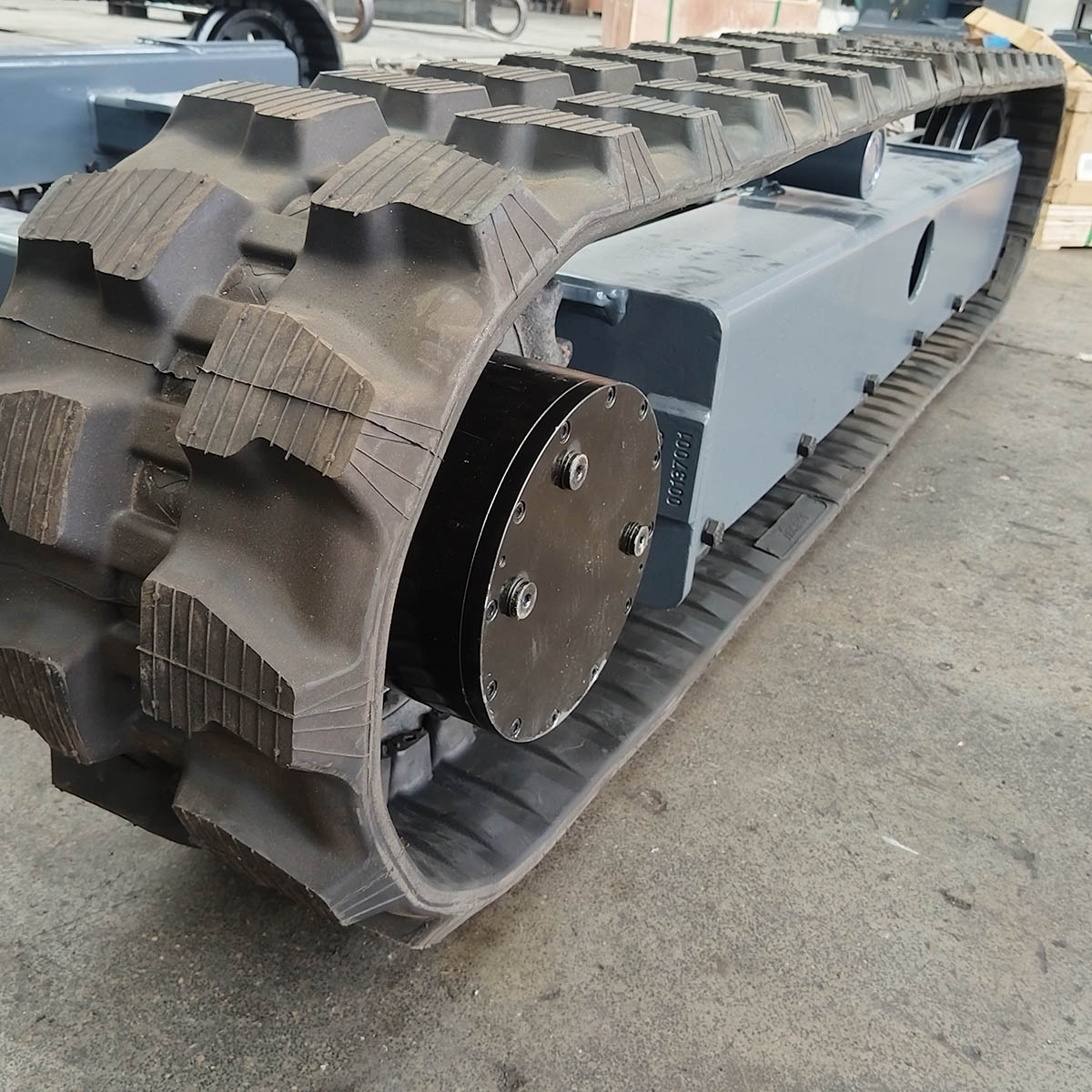
In severe applications such as quarries and demolition, steel tracks usually last two to three times longer than rubber because they tolerate abrasion and sharp impacts better. On mixed or urban sites, however, the lower ground damage and higher versatility of rubber can improve overall cost-effectiveness despite a shorter raw lifespan.[4][8][1][2]
For operations that regularly work on asphalt, concrete, and landscaped surfaces, the savings in repairs, noise control measures, and customer satisfaction often justify the more frequent replacement of rubber tracks. Fuel savings due to lower weight can further enhance the total cost of ownership in these scenarios.[5][4][6][2]
Many compact excavators and track loaders can be specified or retrofitted with rubber tracks, but this depends on undercarriage design, sprocket profile, and clearance. Compatibility should always be confirmed with the machine manufacturer or an undercarriage specialist before conversion.[3][7][6]
Rubber tracks can perform well in cold or snowy regions when matched with tread patterns and compounds suitable for low temperatures and icy surfaces. However, frequent work on sharp frozen rock still favours steel tracks for maximum durability.[6][8][1][2]
Track tension should be checked at least weekly under normal conditions and daily in muddy or highly variable ground. The tension should always follow the sag specification provided by the machine manufacturer.[7][6][1]
[1](https://ahmcorp.com/blogs/news/steel-tracks-vs-rubber-tracks)
[2](https://www.greenindustrypros.com/design-installation/compact-equipment/article/22950109/fortishd-choosing-rubber-or-steel-tracks)
[3](https://www.itrpacific.com.au/blogs/news/2025/Jun/16/rubber-tracks-vs-steel-tracks-job-site-guide)
[4](https://northamericantrack.com/en/blog/the-benefits-of-using-rubber-tracks-for-your-heavy-machinery)
[5](https://apacinsider.digital/the-strategic-advantage-of-excavator-rubber-track-pads-in-apacs-construction-boom/)
[6](https://compactequip.com/mini-excavators/tread-wisely-a-guide-to-mini-excavator-tracks/)
[7](https://www.itrworld.com/itr-magazine/how-to-measure-and-replace-rubber-tracks-2023/)
[8](https://industrialtire.org/the-rise-of-rubber-tracks-in-material-handling-and-construction-equipment-trends-and-innovations/)
[9](https://www.heavyequipmentforums.com/threads/steel-vs-rubber-tracks.112910/)
[10](https://typhonmachinery.com/guide-to-skid-steer-and-excavator-tracks/)
[11](https://www.skidsteers.com/blog/top-5-advantages-of-using-a-mini-excavator-with-rubber-tracks/)


