
Views: 222 Author: Amanda Publish Time: 2026-01-09 Origin: Site


Content Menu
● What Is a Planetary Gearbox?
● Single‑Speed vs Multi‑Speed Planetary Gearbox
● How Multi‑Speed Planetary Gearboxes Work
● Can One Planetary Gearbox Provide 5 Speeds?
● Design Approaches to a 5‑Speed Planetary Gearbox
● Multi‑Stage Planetary Gearbox and Gear Ratios
● Planetary Gearbox in Automatic and Racing Transmissions
● Planetary Gearbox Applications in Heavy Equipment
● Benefits of a 5‑Speed Planetary Gearbox
● Engineering Challenges of 5‑Speed Planetary Gearbox Design
● Planetary Gearbox Integration with Hydraulic and Electric Drives
● Planetary Gearbox in Compact, High‑Torque Kemer Solutions
● Using Planetary Gearbox Design to Meet Global Customer Needs
● Practical Considerations When Specifying a Multi‑Speed Planetary Gearbox
● FAQ
>> 1. Does a planetary gearbox normally have multiple speeds?
>> 2. How do engineers create 5 speeds with a planetary gearbox?
>> 3. Is a 5‑speed planetary gearbox practical for heavy equipment?
>> 4. What are the main advantages of a multi‑speed planetary gearbox?
>> 5. How can Kemer support custom planetary gearbox projects?
A planetary gearbox can absolutely be designed to provide 5 speeds by combining multiple planetary stages and selectively controlling which elements are driving, held, or driven through clutches and brakes. Modern multi‑speed automatic transmissions and specialized racing gearboxes are real‑world examples of 5‑speed planetary gearbox systems. For a manufacturer like Kemer focused on planetary gearbox technology for winch drives, travel drives, swing drives, and hydraulic motors, this multi‑speed capability opens powerful design options for compact, high‑torque transmissions.[1][2][3][4][5][6][7][8][9]

A planetary gearbox is a compact gear system made of a central sun gear, several planet gears mounted on a carrier, and an outer ring gear with internal teeth. This architecture allows the planetary gearbox to transmit high torque in a small package with excellent load sharing between the planet gears.[10][6][11]
Because each gear element can be used as input, output, or held stationary, one planetary gearbox can produce several different speed and torque combinations depending on how it is controlled. This flexibility is one of the main reasons the planetary gearbox is widely used in automatic transmissions, mobile machinery, robotics, and industrial drives.[6][11][10]
A basic planetary gearbox where the ring is fixed, the sun is driven, and the carrier is the output behaves like a single fixed‑ratio reduction stage with high torque multiplication. By changing which element is held and which is driven, the same planetary gearbox can provide different ratios, including reduction, direct drive, overdrive, and even reverse.[10][6]
In many industrial travel drives, winch drives, and swing drives, the planetary gearbox is used as a fixed‑ratio reduction unit optimized for torque, not for multiple “road speeds.” In contrast, automotive and racing transmissions combine several planetary gearbox stages and multiple clutch/brake elements to create multi‑speed gearboxes with 4, 5, 8, 10, or more forward speeds.[2][3][4][5][7][9][1][6]
A multi‑speed planetary gearbox uses one planetary stage or several stages, plus clutches or brakes that selectively lock or release the sun, carrier, or ring to change the ratio. When one element is locked and another is driven, the relative motion of the planets around the sun defines the speed reduction or overdrive of the planetary gearbox.[2][10]
By combining ratios of several planetary stages in series (multi‑stage design), the planetary gearbox can achieve a wide spread of overall ratios with smooth transitions between speeds. Multi‑stage planetary gearbox designs typically use per‑stage ratios of roughly 3:1 to 10:1, which are then multiplied together to reach very high overall reductions or overdrive values.[11][1]
Yes, mechanical design and transmission theory clearly show that a planetary gearbox can be configured to provide 5 or more discrete speeds. Patented designs describe five‑speed planetary automatic transmissions that use multiple planetary gear sets and friction elements to deliver five forward ratios from a compact gearbox package.[5][9][2]
In drag‑racing applications, modular planetary manual gearboxes are built by stacking several planetary modules in line, and manufacturers explain that a four‑speed planetary gearbox can be converted to a five‑speed simply by adding another planetary stage. This modular approach demonstrates that the planetary gearbox concept is inherently scalable to any practical number of speeds when packaging and cost allow.[3][5]
Several design strategies can be used to realize a 5‑speed planetary gearbox:
- Using multiple planetary gear sets in series, with clutches and brakes controlling which elements are locked or connected to create five distinct gear ratios.[9][2]
- Using a modular inline planetary gearbox architecture where each module adds one “speed,” as seen in multi‑speed racing transmissions that stack planetary stages.[3][5]
- Using a multi‑stage planetary gearbox where each stage has different ratios and different input/holding configurations to step through five effective speeds.[1][11]
In all of these designs, the planetary gearbox relies on the same basic components: sun, planet gears, ring gear, and carrier, but the control system (clutches, brakes, or hydraulic actuation) determines how many speeds are available. For Kemer, such architectures can be adapted to create 5‑speed travel drives or winch drives that share a common planetary gearbox platform with different control packages.[5][10][2]
A multi‑stage planetary gearbox combines two or more planetary stages to achieve higher or more finely spaced ratios. Each stage of a planetary gearbox typically offers a moderate ratio (for example between 3:1 and 10:1), and the overall ratio is the product of the individual stages.[11][1]
Because multi‑stage planetary gearbox designs are common, engineers can tune gear tooth counts and stage combinations to produce the set of ratios required for a 5‑speed transmission. By selecting efficient combinations (for instance, favoring moderate per‑stage ratios instead of extreme ones), a multi‑stage planetary gearbox can deliver good efficiency across all five speeds.[1][2]
In modern automatic transmissions, the planetary gearbox set is the core element that provides multiple forward speeds and reverse within a compact housing. These systems use hydraulic or electronic controls to engage clutch packs that alter the power path through one or more planetary gearbox sets, generating several gear ratios from basically the same gears.[9][3][5]
Racing gearboxes such as Lenco‑style transmissions are described as series of planetary gear sets mounted inline, where each planetary module effectively acts like a two‑speed section. When multiple planetary gearbox modules are combined, a five‑speed version simply includes enough stages and engagement mechanisms to give five sequential speeds while maintaining very high torque capacity and fast shifting.[3][5]
Outside automotive and racing, the planetary gearbox is widely used in heavy equipment where high torque and compact size are critical. Typical applications include crawler excavators, bulldozers, swing mechanisms, winch drives, drilling rigs, wind turbines, marine deck machinery, and industrial automation.[4][7][8][6]
In these sectors, the planetary gearbox often serves as a fixed‑ratio final drive or winch drive rather than a multi‑speed transmission, but multi‑stage planetary gearbox configurations still allow optimization of torque and speed to match the hydraulic motor or electric motor characteristics. For Kemer, integrating planetary gearbox technology into track undercarriages, hydraulic winches, swing drives, and travel drives supports high load capacity and precise motion control across a wide range of crawler and lifting applications.[7][8][4][6]
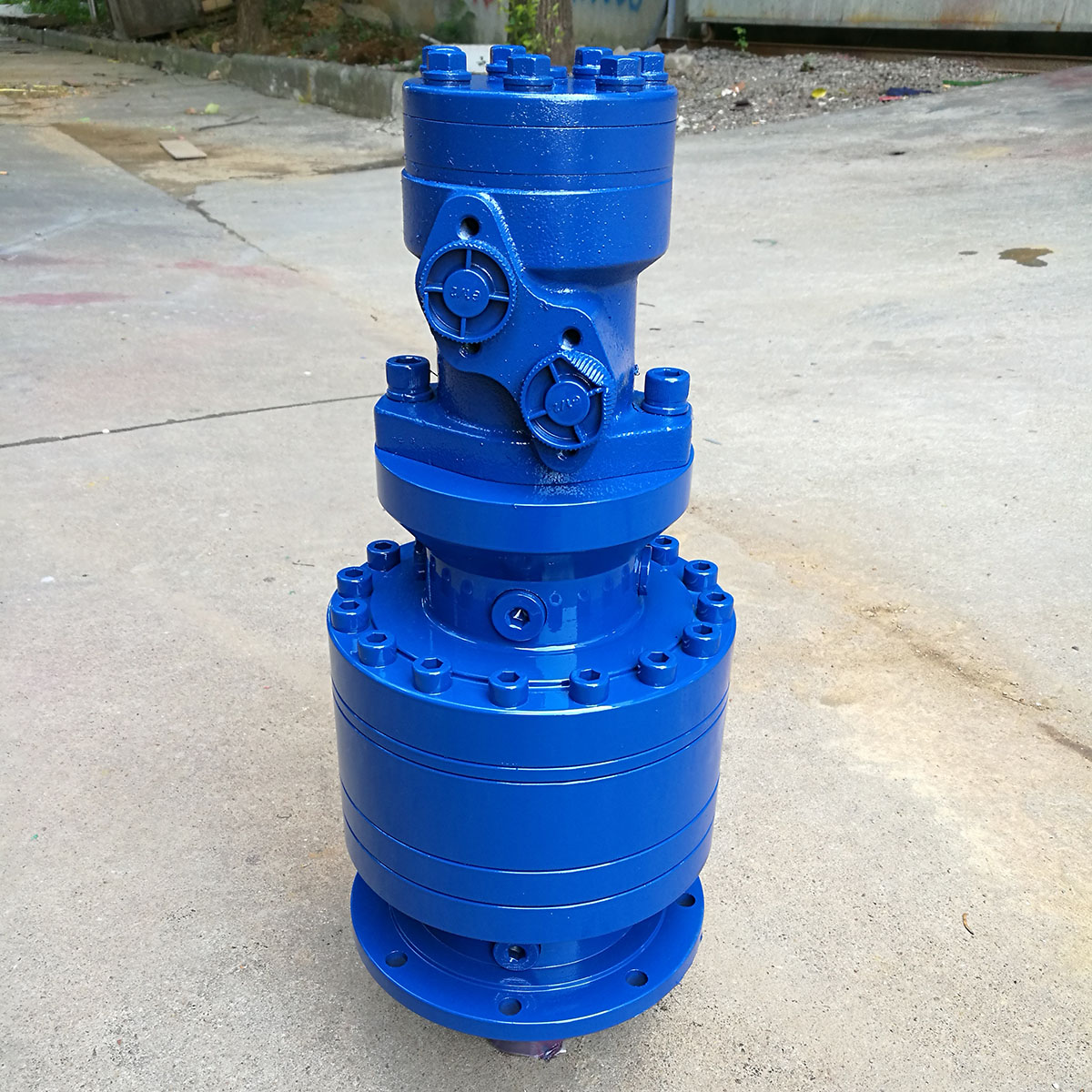
Designing a planetary gearbox with five speeds provides several performance advantages:
- Better engine or motor efficiency by keeping operating speeds in an optimal range across different loads, similar to automotive multi‑speed transmissions.[6][3]
- Higher flexibility and controllability for mobile machinery, where a planetary gearbox with multiple speeds allows both fine low‑speed control and efficient high‑speed travel.[8][4][6]
- Potentially reduced size and weight versus equivalent multi‑shaft gear trains because the planetary gearbox transmits torque through multiple gear mesh points simultaneously.[10][5][6]
For Kemer's global customers, a 5‑speed planetary gearbox integrated into a travel drive or winch transmission can offer smooth starts, strong pulling at low speed, and economical cruising at higher speeds, all within a compact housing.
While technically feasible, a 5‑speed planetary gearbox must overcome several engineering challenges related to complexity, cost, and durability. Each additional speed requires extra clutches or planetary stages, increasing the number of parts, potential failure points, and control complexity.[2][5][1]
Thermal management, lubrication, and noise control also become more demanding as more planetary gearbox stages and clutches share space in a compact housing. Careful selection of tooth profiles, materials, surface treatments, and lubrication paths is essential to maintain high efficiency and long life in a multi‑speed planetary gearbox under heavy cyclical loads.[6][11][1]
In many modern machines, the planetary gearbox is directly coupled with a hydraulic motor or electric servo motor, forming a compact gear‑motor unit. Hydraulic winch drives, swing drives, and travel drives frequently use planetary gearbox stages to convert fluid power into high torque at the drum or sprocket, with excellent controllability.[4][7][8][6]
Adding multiple speeds to such systems can be achieved either mechanically (multi‑speed planetary gearbox with clutches) or by varying motor speed while using a multi‑stage planetary gearbox as a fixed reduction. Kemer's focus on planetary gearbox technology for hydraulic winches, swing drives, and travel drives allows the company to engineer integrated solutions where gear ratios, motor displacement, and control valves are tuned as a system.[8][4][6]
Planetary gearbox drives are especially suited to crawler track undercarriages, where high torque, shock resistance, and compact radial dimensions are critical around the sprocket. For travel drives, a planetary gearbox can be combined with a hydraulic motor in a sealed unit that delivers reliable torque and speed control in harsh environments.[7][4][6]
For winch drives and swing drives, a planetary gearbox built into the drum or swing housing integrates safely with brakes and hydraulic motors, offering smooth, controllable motion even under heavy dynamic loads. By leveraging multi‑stage planetary gearbox designs, Kemer can supply custom travel drives, winch drives, and swing drives tailored to the torque and speed requirements of construction, mining, offshore, and industrial equipment.[4][7]
Because the planetary gearbox can be configured as single‑stage, multi‑stage, fixed‑ratio, or multi‑speed, it provides a flexible platform for global OEMs who require different variants on a shared architecture. For example, one customer may require a high‑reduction planetary gearbox travel drive for steep, slow crawler work, while another needs a similar housing with ratios optimized for faster travel speeds.[11][8][1][4][6]
By standardizing on planetary gearbox modules and adapting stages, ratios, and control elements, manufacturers like Kemer can provide custom winch drives, swing drives, and travel drives with short development times and strong reliability. This modular approach supports a broad portfolio of planetary gearbox solutions across sectors such as infrastructure, energy, marine, mining, and material handling.[7][8][4][6]
When an equipment designer or buyer considers a 5‑speed planetary gearbox, several practical factors must be evaluated:
- Required input power and torque, as well as the duty cycle and load spectrum the planetary gearbox must handle.[1][6]
- Packaging constraints around the winch, track drive, or swing system, including allowable diameter, length, and weight for the planetary gearbox assembly.[4][7]
- Control strategy: mechanical, hydraulic, or electronic actuation for shifting between the planetary gearbox speeds, and the integration with the machine's existing hydraulic or electrical systems.[5][8][3]
Partnership with an experienced planetary gearbox manufacturer like Kemer allows global customers to align these engineering constraints with production cost, reliability targets, and after‑sales service requirements.
A planetary gearbox is far more than a simple fixed‑ratio reduction unit; its unique sun‑planet‑ring architecture allows multiple power paths, making multi‑speed designs not only possible but widely used. Evidence from automotive, industrial, and racing applications confirms that a planetary gearbox can be configured as a 5‑speed or even higher‑speed transmission by combining multiple stages and carefully controlled clutches and brakes.[9][2][3][5]
For demanding crawler, winch, and swing applications, multi‑stage planetary gearbox solutions already deliver high torque density, efficiency, and durability, and the same design principles can extend to multi‑speed drives when required. By leveraging deep engineering in planetary gearbox technology, Kemer can help global customers develop compact, high‑performance travel drives, winch drives, and swing drives that meet modern expectations for control, productivity, and reliability.[8][6][11][7][1][4]
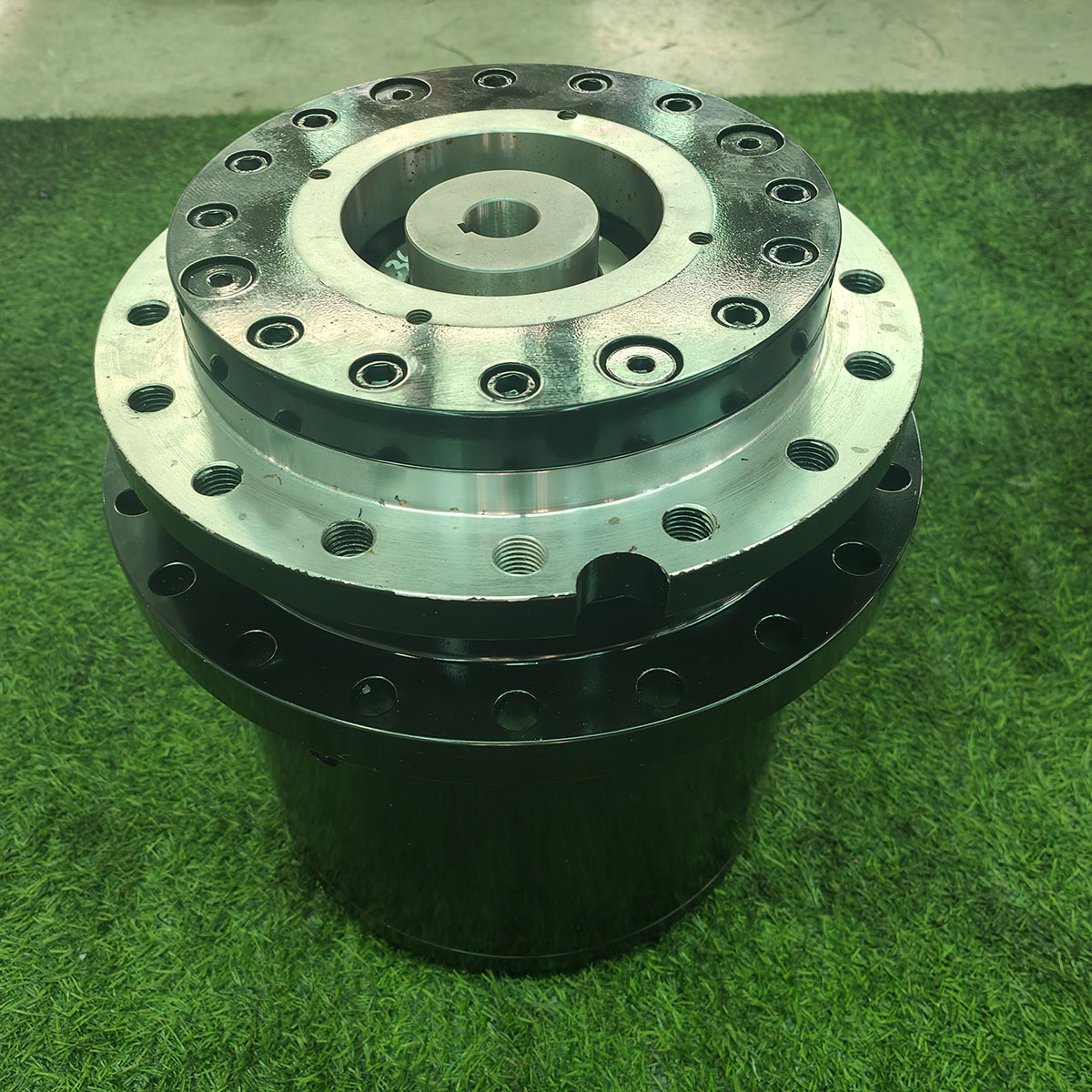
In many industrial machines, a planetary gearbox is used as a single fixed‑ratio reduction stage to deliver high torque at low speed. However, when combined with clutches and multiple gear sets, the same planetary gearbox principles can provide several discrete speeds in automotive or specialized transmissions.[10][2][3][5][6][7][9][4]
Engineers combine two or more planetary gearbox stages and use clutches or brakes to selectively lock and drive different elements in each stage. By defining specific combinations for each gear, the planetary gearbox can achieve five forward ratios with controlled step sizes between them.[2][5][9][1]
Yes, but the decision depends on cost, complexity, and the machine's duty cycle. Many heavy machines already rely on multi‑stage planetary gearbox travel drives and winch drives, and adding multiple speeds can make sense where wide operating speed ranges and efficiency gains justify the extra hardware.[6][7][8][1][4]
A multi‑speed planetary gearbox offers better efficiency, improved traction and control over a wide speed range, and compact packaging with high torque density. Because torque is shared among multiple planet gears, the planetary gearbox can transmit high loads while maintaining a relatively small diameter compared with conventional gear trains.[3][5][10][6]
As a specialist in crawler track drives, hydraulic winch drives, swing drives, planetary gearbox units, and hydraulic motors, Kemer can work with OEMs to define ratios, stages, and control concepts tailored to each application. By combining planetary gearbox design expertise with experience in travel drives, winch drives, and swing drives, Kemer helps global customers develop efficient, robust, and serviceable transmissions for demanding markets.[7][8][4][6]
[1](https://www.neugart.com/en-us/wiki/multi-stage-gearbox)
[2](https://asmedigitalcollection.asme.org/mechanicaldesign/article/143/11/113401/1106115/A-New-Methodology-for-Multistage-Multispeed)
[3](https://www.reddit.com/r/AskEngineers/comments/18e87fv/manual_transmission_with_planetary_gear_set/)
[4](https://shop.dovertwg.com/mechanical/planetary-gear-drives/planetary-gear-drives-with-glide-swing-TWI)
[5](https://www.youtube.com/watch?v=4f9lFhMsLGg)
[6](https://www.jkongmotor.com/planetary-gearbox.html)
[7](https://www.bonfiglioli.com/usa/en/product/fw-series-o-k_winch-drives_winch-drives)
[8](https://www.bonfiglioli.com/usa/en/product/300m-series_industrial-heavy-duty-geared-products_planetary-geared-units)
[9](https://patents.google.com/patent/US6007450A/en)
[10](https://www.metmo.co.uk/blogs/news/planetary-gears-explained-a-design-written-in-the-stars)
[11](https://assunmotor.com/blog/planetary-gearbox/)
[12](https://www.youtube.com/watch?v=V10Kx9vpdmI)
[13](https://teknic.com/products/planetary-gearboxes/)
[14](https://endless-sphere.com/sphere/threads/planetary-clutch-dual-speed.8542/)
[15](https://www.reddit.com/r/MechanicalEngineering/comments/n68yqn/designing_a_two_stage_planetary_gearbox/)


