
Views: 222 Author: Amanda Publish Time: 2026-01-09 Origin: Site


Content Menu
● What Is a Planetary Gearbox?
● How Many Gears Are in a Planetary Gearbox?
● Core Components of a Planetary Gearbox
>> Sun Gear
>> Planet Gears
>> Ring Gear
● Simple vs. Compound Planetary Gearbox
● Why Use Multiple Planet Gears?
● How a Planetary Gearbox Works
● Gear Ratios and Tooth Counts in a Planetary Gearbox
● Applications of Planetary Gearbox in Mobile Machinery
● Advantages of Planetary Gearbox Design
● Planetary Gearbox in Winch and Track Drives
● How Many Stages Can a Planetary Gearbox Have?
● Maintenance Considerations for Planetary Gearbox
● FAQ
>> 1. How many gears are in a basic planetary gearbox?
>> 2. Why do most planetary gearbox designs use three or four planet gears?
>> 3. Can a planetary gearbox have more than one stage?
>> 4. What determines the gear ratio of a planetary gearbox?
>> 5. Where is a planetary gearbox typically used in mobile machinery?
A planetary gearbox is a compact, high‑torque transmission that normally contains several interacting gears arranged around a central axis. In most industrial and mobile machinery applications, a planetary gearbox uses three main gear types and multiple planet gears to share load efficiently in a small housing.
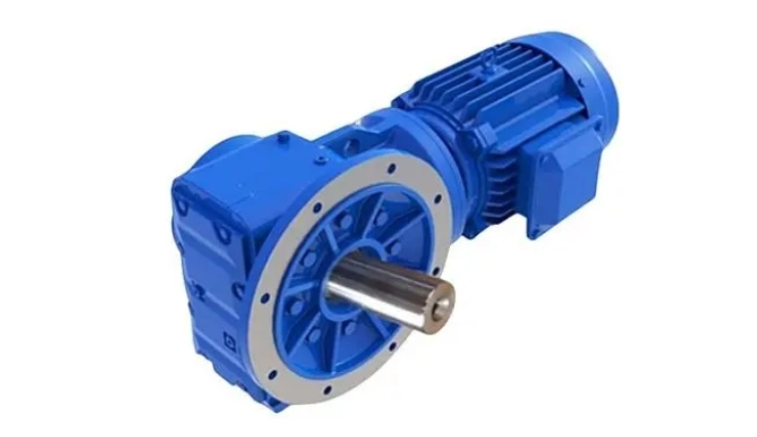
A planetary gearbox is a gear reduction unit that uses a central sun gear, surrounding planet gears, and an internal ring gear to transmit torque.
The planet gears rotate around the sun gear while meshing with the internal teeth of the ring gear, and the carrier holding the planets delivers the output torque.
A planetary gearbox belongs to the broader family of epicyclic gearing, where at least one gear's axis moves relative to another.
Because all gears in a planetary gearbox are arranged coaxially, the design is very compact and well suited to mobile machinery, winches, and integrated hydraulic motor drives.
In its simplest form, a planetary gearbox consists of three fundamental gear types: one sun gear, multiple planet gears, and one internal ring gear.
Most simple planetary gearbox designs have three or four planet gears arranged symmetrically, so a typical single‑stage planetary gearbox will contain 1 sun gear, 3–4 planet gears, and 1 ring gear (5–6 gears total).
For higher torque or higher reduction, a planetary gearbox may use compound or multi‑stage arrangements.
In these cases, the planetary gearbox can combine several sets of sun, planet, and ring gears, so the effective number of gears may increase into dozens inside one compact planetary gearbox housing.
When engineers talk about “how many gear” a planetary gearbox has, they often distinguish between:
- The number of gear *types* (sun, planet, ring)
- The number of gear *elements* (how many suns, how many planets, how many rings across all stages)
This distinction is important, because even a single‑stage planetary gearbox can have more or fewer planets depending on torque and size requirements.
A planetary gearbox has four structural elements that define how many gears it uses and how it behaves under load.
Understanding each element helps engineers and buyers select the right planetary gearbox for crawler undercarriages, winch drives, slewing drives, and hydraulic motor systems.
The sun gear is the central driving gear in a planetary gearbox and usually receives power from a hydraulic or electric motor.
Its tooth count and pitch circle diameter strongly influence the gear ratio and torque capacity of the planetary gearbox.
Because the sun gear engages all planet gears at once, its accuracy and surface finish have a major effect on noise and longevity.
Hardening, grinding, and precision machining help the sun gear in a planetary gearbox withstand high cycle loads and shock.
Planet gears are arranged around the sun gear and mesh with both the sun and the internal ring gear in the planetary gearbox.
A simple planetary gearbox normally uses three or four identical planet gears so that the load is shared evenly, increasing torque density and overload capacity.
Using multiple planets gives several benefits:
- Higher torque capability for a given diameter
- Better load sharing and reduced tooth stress
- Improved torsional stiffness and lower backlash
In heavy‑duty crawler drives and winch drives, the planet gears in a planetary gearbox must endure high shock loads, frequent starts, and reversing.
Robust materials and case‑hardening treatments are therefore standard for quality planetary gearbox designs.
The ring gear (or internal gear) is a large gear with internal teeth that surrounds the planet gears in the planetary gearbox.
In many designs, the ring gear is fixed to the housing, but in some arrangements it can serve as an input or output to achieve different ratios and rotation directions.
Because the ring gear in a planetary gearbox is often part of the housing, it must combine strength with precise tooth geometry.
Any misalignment between the ring gear and the planet gears can create uneven contact, increasing wear and noise inside the planetary gearbox.
The planet carrier is not a gear itself but a rigid structure that supports the planet gears and usually provides the output shaft of the planetary gearbox.
Because several planet gears share the torque, the carrier lets a planetary gearbox deliver high output torque with low vibration and high reliability in heavy‑duty systems.
The carrier also defines the relative positions of the planet gears in the planetary gearbox.
It must be stiff enough to keep planet axes parallel and evenly spaced around the sun gear, even under peak load and shock.
The total number of gears inside a planetary gearbox depends on whether it uses a simple or compound configuration.
Simple planetary gearbox designs focus on robustness and compact size, while compound planetary gearbox designs aim at very high ratios and flexible speed steps.
A simple planetary gearbox has one sun gear, one ring gear, one carrier, and a set of planet gears (usually 3–4).
This type of planetary gearbox is widely used in crawler travel drives, planetary winches, and swing drives, where high torque and compactness are more important than multiple speed steps.
In a simple planetary gearbox, all planet gears are identical and arranged at equal angles around the sun.
This symmetry keeps the center of mass on the axis and helps the planetary gearbox run smoothly at high speed.
A compound planetary gearbox uses multiple planetary stages or stepped planet gears so more than one sun and ring pair works together along the shaft.
This structure means a compound planetary gearbox can have several sun gears, several sets of planet gears, and several ring gears, greatly increasing the total gear count.
Compound planetary gearbox designs are ideal where a large reduction ratio is needed in limited space, such as drill drives, large winches, and wheel drives.
By combining stages, the planetary gearbox can achieve very high ratios without using excessively large gear diameters.
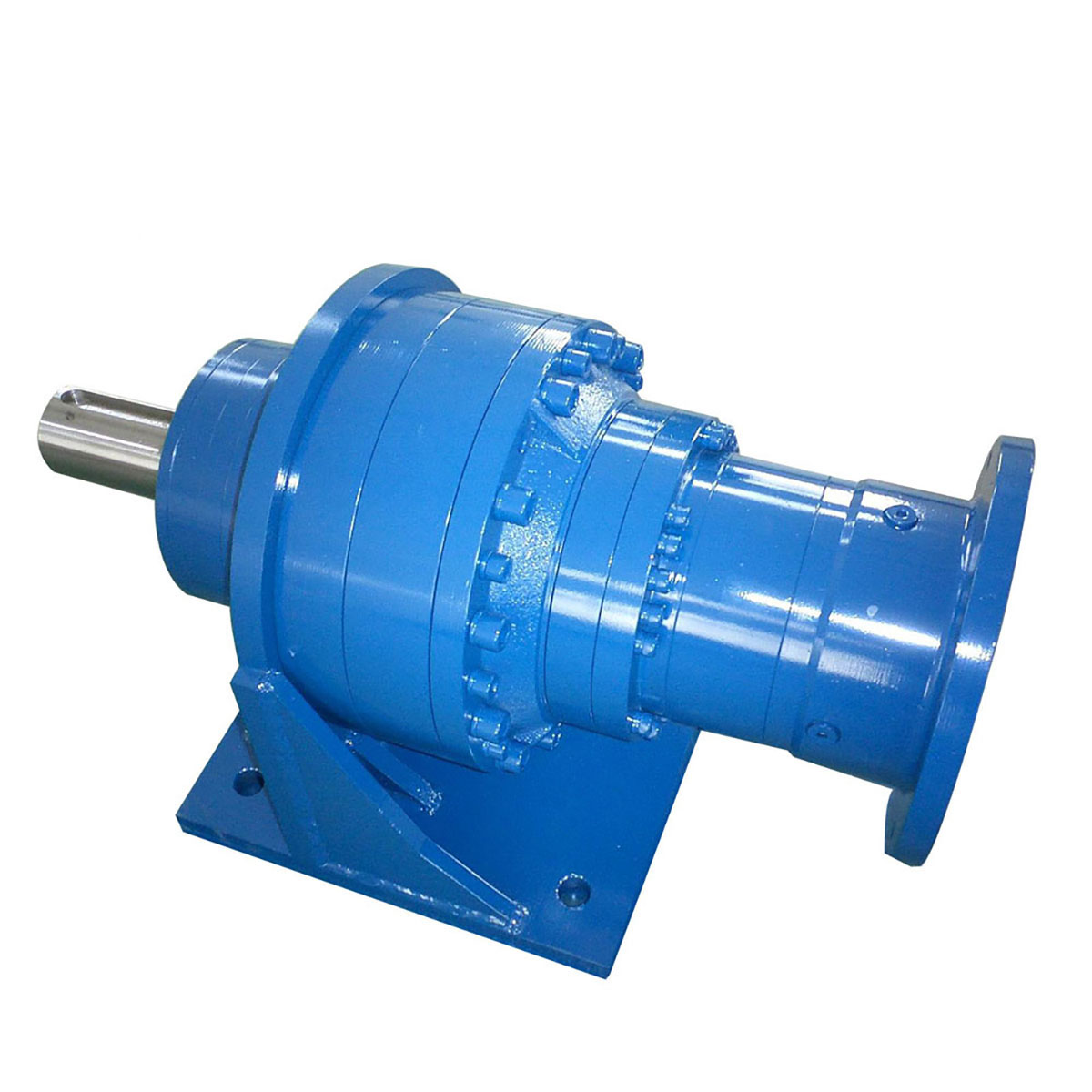
The number of planet gears in a planetary gearbox is usually three or four, but special designs can use more to spread load and increase efficiency.
By having several planet gears meshing simultaneously with the sun and ring, a planetary gearbox can transmit high torque while keeping individual tooth stress relatively low.
For heavy‑duty machinery such as crawler undercarriages, planetary winches, and slewing drives, this multi‑planet arrangement lets a planetary gearbox handle shock loads and frequent reversing.
At the same time, using multiple planets keeps the planetary gearbox compact so that it fits easily inside track drives, drum hubs, and compact hydraulic motor outputs.
In a standard single‑stage planetary gearbox, the motor drives the sun gear, which then drives the planet gears, which roll inside the ring gear and turn the carrier.
Because the planets rotate around the sun while also spinning on their own axes, the planetary gearbox achieves high gear reduction in a small volume with smooth power transfer.
If the ring gear is fixed and the sun gear is the input, the carrier becomes the output and turns more slowly than the sun, with higher torque at the output of the planetary gearbox.
Changing which member is fixed, which is input, and which is output allows the same planetary gearbox gear set to provide reduction, overdrive, or reverse direction depending on the application.
The ratio of a simple planetary gearbox depends mainly on the number of teeth on the sun and ring gears.
When the ring is fixed, the reduction ratio can be expressed as 1 plus the tooth count of the ring gear divided by the tooth count of the sun gear.
Tooth counts must obey basic meshing and spacing rules so the planets fit exactly between the sun and ring gears in the planetary gearbox.
This means engineers cannot choose sun, planet, and ring tooth counts independently; they must follow geometrical relationships to keep the planetary gearbox running smoothly and quietly.
Multi‑stage planetary gearbox designs multiply the ratios of each individual stage.
For example, a first stage ratio of 5:1 followed by a second stage ratio of 4:1 will give an overall planetary gearbox ratio of 20:1.
Because of their compact size and high torque density, planetary gearbox units are widely used in mobile machinery and industrial drives.
Typical applications include crawler travel drives, winch and hoist drives, swing drives, and integrated hydraulic motor gearboxes where the planetary gearbox is mounted directly on the motor or drum.
In excavators and loaders, the planetary gearbox is used in track drives and swing drives to provide slow, powerful rotation with precise control.
In cranes, drilling rigs, mining machines, marine winches, and port equipment, planetary gearbox solutions deliver reliable lifting and pulling torque in very tight spaces.
The way gears are arranged inside a planetary gearbox gives several performance advantages compared with simple parallel‑shaft gearboxes.
Key advantages include:
- High torque density: Multiple planet gears share the load, so a planetary gearbox can transmit high torque in a small diameter.
- High efficiency and smooth running: Continuous tooth engagement in the planetary gearbox keeps power transfer smooth and reduces torque ripple.
- Coaxial layout: Input and output are on the same axis, making the planetary gearbox easy to integrate with hydraulic motors, electric motors, or drum shafts.
- Flexible ratios: By combining stages, a planetary gearbox can cover a wide range of gear ratios without greatly increasing outer diameter.
These advantages make the planetary gearbox a preferred solution for manufacturers of crawler undercarriages, winch systems, swing drives, and industrial automation.
In winch drives, a planetary gearbox is often built directly into the drum hub so that motor torque is multiplied before it reaches the rope layer.
This embedded planetary gearbox layout allows compact, powerful winch systems with high line pull, good speed control, and long service life.
For crawler undercarriages and track drives, a planetary gearbox combines with a hydraulic motor to form a travel drive unit.
The planetary gearbox reduces motor speed to low track speed while boosting torque enough to move heavy machines through mud, rock, or gradients with reliable traction.
A planetary gearbox may use a single stage for moderate ratios or multiple stages for high ratios where space is limited.
Two‑stage or three‑stage planetary gearbox designs place several planetary sets in series on the same shaft, multiplying the overall gear reduction while keeping the drive compact and robust.
As stages are added, the total number of gears in the planetary gearbox increases rapidly, because each stage adds its own sun gear, several planet gears, and a ring gear.
This modular approach allows manufacturers to tailor planetary gearbox torque, speed, and mounting options to suit winches, travel drives, swing drives, and other demanding applications.
Even though a planetary gearbox is compact and sealed, regular inspection and lubrication are crucial for long‑term performance.
Checking oil level, oil condition, and operating temperature helps prevent pitting, wear, and bearing damage inside the planetary gearbox under heavy loads.
Seal health is especially important, because contamination by water, mud, or abrasive dust can shorten the life of gears and bearings in the planetary gearbox.
Following the manufacturer's guidelines on oil change intervals, load limits, and startup procedures keeps the planetary gearbox reliable in demanding winch and crawler applications.
A typical single‑stage planetary gearbox contains one sun gear, several planet gears, and one internal ring gear, giving a total of roughly five to six gears in a compact coaxial unit.
When multiple stages or compound arrangements are used, a planetary gearbox can contain many more gears, but the same sun‑planet‑ring principle always delivers high torque, smooth operation, and flexible ratios for winches, crawler drives, and industrial machinery.
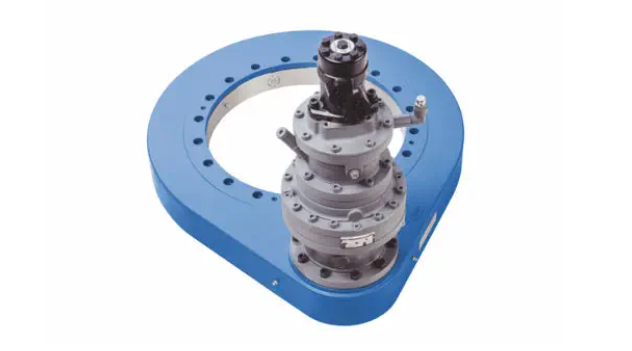
A basic planetary gearbox uses one sun gear, three or four planet gears, and one internal ring gear.
That means a simple single‑stage planetary gearbox normally contains about five to six gears in total inside the housing.
Using three or four planet gears allows the planetary gearbox to share torque across multiple mesh points, reducing tooth stress and increasing load capacity.
This symmetrical arrangement also improves balance and reduces vibration so the planetary gearbox runs smoothly at high input speed.
Yes, a planetary gearbox can combine two or more stages, each with its own sun, planet, and ring gears.
By stacking stages, a multi‑stage planetary gearbox achieves very high reduction ratios in a compact space for heavy‑duty winch and travel drive applications.
In a simple planetary gearbox, the gear ratio mainly depends on the tooth counts of the sun and ring gears and on which member is fixed.
By choosing appropriate tooth numbers and stage combinations, designers can configure a planetary gearbox for low‑speed, high‑torque outputs or for faster, lighter‑duty operation.
In mobile machinery, a planetary gearbox is commonly used in crawler travel drives, swing drives, winch drives, and integrated hydraulic motor drives.
These applications benefit from the high torque density and compact size of the planetary gearbox, which fits easily into track hubs, drum hubs, and slewing structures.


