
Views: 222 Author: Robert Publish Time: 2026-01-24 Origin: Site


Content Menu
● The Role of Hydraulic Hoist Winches in South Korea's Key Industries
● Types of Suppliers Serving the Korean Hydraulic Hoist Winch Market
● Kemer as a Global Partner for Korean Hydraulic Hoist Winch Projects
● Key Technical Features Offered by Leading Hydraulic Hoist Winch Manufacturers and Suppliers
● Applications of Hydraulic Hoist Winches in the Korean Market
● How Korean Buyers Evaluate Hydraulic Hoist Winch Manufacturers and Suppliers
● Best Practices for Cooperating with Global Hydraulic Hoist Winch Manufacturers and Suppliers
● FAQ – Hydraulic Hoist Winch Manufacturers and Suppliers in South Korea
>> 1. Which industries in South Korea rely most on hydraulic hoist winches?
>> 2. Why do many Korean buyers prefer hydraulic hoist winches over electric winches?
>> 4. How should Korean companies evaluate potential Hydraulic Hoist Winch Manufacturers and Suppliers?
>> 5. Can Korean shipyards and OEMs combine local fabrication with imported winch packages?
South Korea has become one of the most important hubs in Asia for heavy industry, shipbuilding, offshore engineering, and advanced construction equipment. In these demanding sectors, buyers constantly look for dependable Hydraulic Hoist Winch Manufacturers and Suppliers that can deliver high‑torque, safe, and efficient lifting and pulling solutions for their projects. As global competition increases, Korean shipyards, EPC contractors, and OEM machine builders are paying closer attention to which Hydraulic Hoist Winch Manufacturers and Suppliers can offer the best balance of performance, reliability, and cost.
Hydraulic hoist winches are critical components for ships, offshore platforms, port equipment, construction machinery, and industrial plants. They handle tasks such as hoisting and lowering heavy loads, handling anchors and chains, tensioning lines, and positioning structures with high precision. Because these operations involve significant risks and large capital investments, Korean buyers tend to prefer Hydraulic Hoist Winch Manufacturers and Suppliers with strong engineering capabilities, robust quality control, and a proven record of successful projects.
In this article, we will explore why South Korea is such a dynamic market for hydraulic hoist winches, what types of local and international suppliers are active there, and how a professional manufacturer like Kemer can support Korean customers with integrated hydraulic winch and drive solutions. You will also find practical guidance on how to evaluate and select Hydraulic Hoist Winch Manufacturers and Suppliers for long‑term cooperation in South Korea.
South Korea's economy is heavily connected to industries that require powerful and reliable lifting and pulling systems. Shipbuilding, offshore oil and gas, marine engineering, ports, steel production, and large‑scale construction all rely on hydraulic hoist winches for daily operations. In these environments, winches must work under high load, harsh weather, and continuous duty cycles, often with limited downtime allowed for maintenance.
In shipyards and on vessels, hydraulic hoist winches are used for anchor handling, mooring operations, cargo handling, ramp lifting, and supporting deck cranes. Offshore platforms use hoist winches to raise and lower equipment, handle subsea tools, and manage complex lifting tasks where precise control and safety are essential. Ports and terminals use heavy winches for handling bulk materials, moving large modules, and assisting in special transport operations.
Construction sites, especially those involving heavy civil works and infrastructure projects, also need robust winches for pile driving, lifting precast elements, and positioning equipment. In steel mills and heavy industrial plants, hoist winches assist in ladle handling, furnace maintenance, and various auxiliary lifting jobs. Because failure in any of these applications can lead to costly downtime and safety risks, Korean operators are highly selective when they choose Hydraulic Hoist Winch Manufacturers and Suppliers.

The Korean market for hydraulic hoist winches is served by several categories of suppliers, each offering different strengths. Understanding this landscape helps buyers understand where local capabilities end and where cooperation with global Hydraulic Hoist Winch Manufacturers and Suppliers becomes advantageous.
First, there are marine and deck machinery manufacturers based in South Korea. These companies design and build equipment such as anchor windlasses, mooring winches, towing winches, and other hydraulic systems tailored to shipbuilding and offshore applications. They typically have deep knowledge of classification rules, marine standards, and the specific needs of local shipyards and ship owners.
Second, there are heavy transfer and lifting system specialists. These firms provide large capacity transfer systems, shiplifts, self‑propelled modular transporters, and other heavy‑duty lifting and moving solutions. Their projects often require multiple synchronized winches, complex control systems, and special engineering to handle extreme loads and long travel distances.
Third, there are hydraulic component suppliers. These companies focus on supplying hydraulic pumps, motors, valves, hoses, manifolds, and other parts used in winch systems and construction machinery. While they may not manufacture complete winches themselves, they are essential partners for both local OEMs and global Hydraulic Hoist Winch Manufacturers and Suppliers who want to integrate their products into Korean equipment.
Finally, there are international Hydraulic Hoist Winch Manufacturers and Suppliers such as Kemer that offer complete winch packages, planetary gearboxes, hydraulic motors, and related driveline components for global OEMs. These suppliers often cooperate with Korean engineering companies, integrators, and distributors to provide customized solutions that meet local standards and project requirements.
Kemer is an engineering‑driven manufacturer specializing in crawler undercarriages, hydraulic hoist winches, planetary gearboxes, travel drives, winch drives, swing drives, and hydraulic motors. With this comprehensive product portfolio, Kemer is well positioned among global Hydraulic Hoist Winch Manufacturers and Suppliers to support Korean customers who need integrated mechanical and hydraulic solutions.
Kemer's hydraulic hoist winches are designed around high‑efficiency planetary gearboxes and carefully matched hydraulic motors. This combination delivers high torque in a compact package, allowing OEMs and equipment builders to save space while still achieving the required pulling force and speed. Kemer's winches can be adapted to different drum sizes, line pulls, and mounting configurations, making them suitable for a wide range of applications, from construction machinery to offshore support equipment.
In addition to winches, Kemer produces travel drives and swing drives that are widely used on crawler machinery, drilling rigs, and special vehicles. By sourcing both winches and driveline components from the same manufacturer, Korean OEMs can simplify their supply chain and ensure compatibility between key functional modules. This integrated approach gives Kemer an advantage over more narrowly focused Hydraulic Hoist Winch Manufacturers and Suppliers.
Kemer also emphasizes engineering cooperation. The company can provide 3D models, technical drawings, installation guidance, and hydraulic circuit suggestions to help Korean engineering teams integrate hydraulic hoist winches into their designs. This type of close cooperation is important when projects involve complex requirements such as synchronized multi‑winch lifting, special safety functions, or tight space constraints.
When comparing Hydraulic Hoist Winch Manufacturers and Suppliers for projects in South Korea, buyers should understand the technical features that differentiate basic products from advanced engineered solutions. Modern hydraulic hoist winches often include a combination of mechanical, hydraulic, and control features that together improve performance, safety, and reliability.
Structurally, high‑quality winches use robust frames and drums made from high‑strength materials to withstand static and dynamic loads, as well as shock and vibration. The drum design must ensure proper rope winding, good support for the rope layers, and safe termination of the rope end. For marine and offshore service, corrosion‑resistant coatings and materials are essential.
On the drivetrain side, planetary gearboxes are commonly used because they allow high torque transmission in a compact, coaxial design. When integrated into the drum, planetary gearboxes minimize overall length, save space, and protect internal components. Hydraulic motors are selected according to the required speed, torque, pressure, and flow, and must be matched carefully to the gearbox ratios to achieve the desired line speed and pulling force.
In terms of braking, many hydraulic hoist winches use multi‑disc brakes that are spring applied and hydraulically released. This configuration is often considered fail‑safe because the brake automatically engages when hydraulic pressure is lost, helping to hold the load securely. Some winches also incorporate dynamic braking and shock‑absorbing functions to manage sudden load changes.
Control systems range from simple directional valves to advanced proportional or electro‑hydraulic systems with remote control and automation functions. Higher‑end solutions can manage synchronized lifting using multiple winches, constant tension control, overload protection, and data logging for maintenance and safety records. Hydraulic Hoist Winch Manufacturers and Suppliers that can provide integrated control solutions often have an edge in complex projects.

Because South Korea has such a diversified heavy industry base, hydraulic hoist winches supplied by various Hydraulic Hoist Winch Manufacturers and Suppliers find use across many applications.
In marine and offshore:
- Anchor handling and chain handling on ships and offshore units.
- Mooring operations for vessels and floating platforms.
- Deck crane hoisting and auxiliary lifting systems.
- Ramp lifting and vehicle deck operations on roll‑on/roll‑off vessels.
In shipyards:
- Prefabricated block handling and position control.
- Support for heavy transfer systems and shiplift installations.
- Assistance in launching and docking operations.
In ports and terminals:
- Hoisting systems for special cargo handling.
- Tensioning systems for mooring lines.
- Assistance in moving large modules and structures.
In construction and heavy civil works:
- Lifting and lowering of construction components and equipment.
- Support for foundation works, pile driving, and drilling rigs.
- Use on crawler cranes and special lifting machines.
In steel mills and industrial plants:
- Ladle handling and furnace maintenance operations.
- Service winches for maintenance platforms and access systems.
- Auxiliary hoisting duties for overhaul and repair tasks.
In all these areas, the performance of hydraulic hoist winches directly impacts safety, project schedules, and the efficiency of operations. Choosing experienced Hydraulic Hoist Winch Manufacturers and Suppliers is therefore a strategic decision, not just a simple component purchase.
Korean buyers, especially in shipbuilding and heavy industry, usually follow a structured process when they evaluate new Hydraulic Hoist Winch Manufacturers and Suppliers. Price is important, but it is rarely the only factor. Technical capability, quality assurance, and long‑term support are often more critical for success.
Typical evaluation criteria include:
- Engineering capability
Buyers review whether the supplier can perform detailed calculations, propose optimal gear ratios, and design winches that meet specific load and duty cycle requirements. They also check whether the supplier understands relevant standards and classification rules when marine or offshore projects are involved.
- Product range and customization
Buyers prefer Hydraulic Hoist Winch Manufacturers and Suppliers that offer a broad range of line pulls, drum sizes, and speeds, and are willing to customize mounting, rope capacity, and control options for specific projects. The ability to provide complete winch packages, including hydraulic motors, gearboxes, brakes, and optional accessories, is a strong advantage.
- Quality and certifications
Many Korean companies require suppliers to operate under recognized quality systems such as ISO 9001. They also look for existing references in similar applications, performance data, and test reports. For marine projects, approvals from classification societies can be important.
- Delivery and project management
On‑time delivery and clear project communication are critical. Korean buyers often check how well Hydraulic Hoist Winch Manufacturers and Suppliers handle documentation, progress reporting, factory acceptance tests, and coordination with other equipment suppliers.
- Service and after‑sales support
Finally, buyers evaluate the availability of spare parts, technical support, commissioning assistance, and training. Long‑term relationships are often built with Hydraulic Hoist Winch Manufacturers and Suppliers that can respond quickly when issues arise and support equipment throughout its service life.
Kemer and other global suppliers that aim to work closely with Korean customers must be prepared to meet these expectations and show flexibility in engineering cooperation, documentation, and project handling.
When Korean shipyards, EPC contractors, or OEMs cooperate with international Hydraulic Hoist Winch Manufacturers and Suppliers, both sides benefit from clear communication and early involvement. Successfully integrating a hydraulic hoist winch into a complex system requires detailed understanding of loads, duty cycles, environmental conditions, and interface points.
Some best practices include:
- Engaging winch suppliers early in the design phase, so they can contribute to layout decisions, structural considerations, and hydraulic system design.
- Sharing accurate load spectra, operating profiles, safety factors, and classification requirements to ensure the winch is correctly sized and specified.
- Requesting 3D models and interface drawings early, so that mechanical interfaces and space claims are properly managed in the overall design model.
- Clarifying responsibilities for control systems, such as whether the winch supplier or the buyer's own automation team will design the control logic and panels.
- Planning factory acceptance tests and site commissioning together, so that performance can be verified and operators can receive training before full‑scale operation begins.
By following these steps, Korean buyers can build strong, long‑term partnerships with Hydraulic Hoist Winch Manufacturers and Suppliers that support not only initial project delivery but also long‑term maintenance, upgrades, and modernization.
South Korea's status as a global leader in shipbuilding, offshore engineering, heavy industry, and advanced construction has created a large and demanding market for hydraulic hoist winch solutions. In this environment, buyers carefully evaluate Hydraulic Hoist Winch Manufacturers and Suppliers based on engineering strength, product quality, customization ability, and long‑term service support. Local deck machinery builders, heavy lifting system specialists, and hydraulic component suppliers all play key roles in supporting Korean projects.
At the same time, global Hydraulic Hoist Winch Manufacturers and Suppliers such as Kemer contribute specialized winches, planetary gearboxes, travel drives, swing drives, and hydraulic motors that help Korean OEMs and contractors build high‑performance equipment. By combining local fabrication and project know‑how with international hydraulic and driveline expertise, Korean companies can achieve safe, efficient, and cost‑effective solutions for marine, offshore, port, industrial, and construction applications.
For decision‑makers in South Korea, the most successful strategy is to develop long‑term partnerships with Hydraulic Hoist Winch Manufacturers and Suppliers that can provide integrated solutions, consistent quality, and responsive support throughout the life of their equipment. When these conditions are met, hydraulic hoist winches become reliable assets that enable complex projects and support Korea's continued industrial growth.
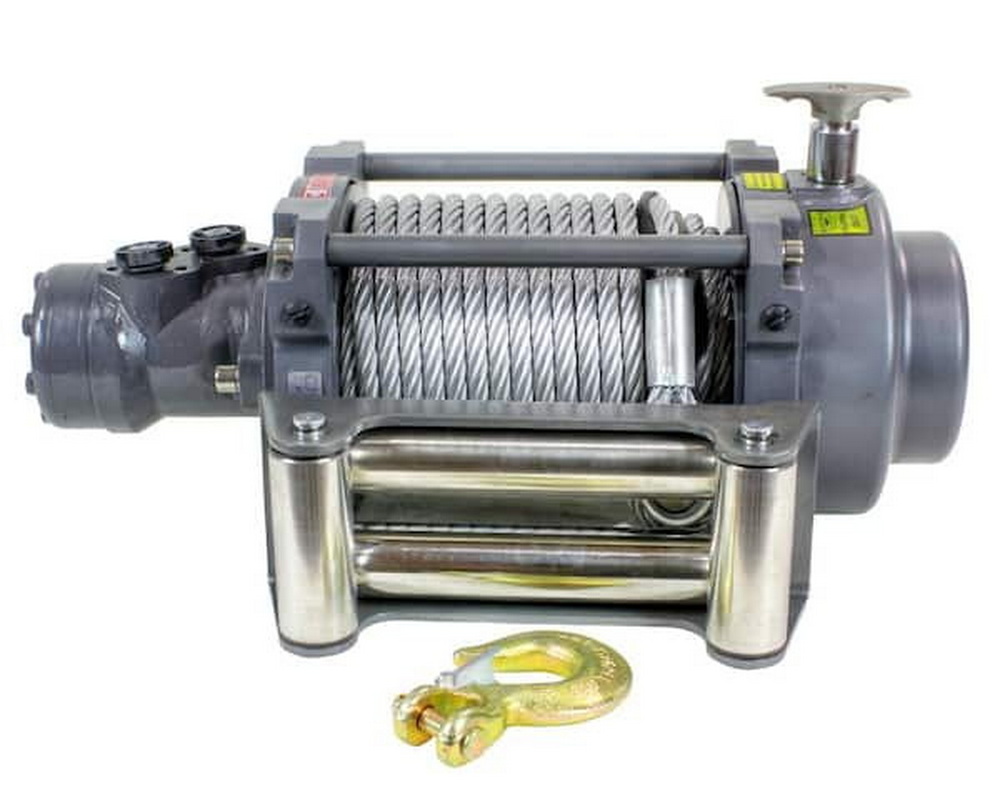
The industries in South Korea that rely most on hydraulic hoist winches are shipbuilding, offshore oil and gas, marine engineering, ports and terminals, steel production, and heavy construction. These sectors use hydraulic hoist winches for tasks such as anchor handling, mooring, cargo handling, ramp lifting, heavy module transfer, and foundation work. Because the loads are large and the duty cycles are long, they prefer to work with experienced Hydraulic Hoist Winch Manufacturers and Suppliers that can provide durable and safe systems.
Many Korean buyers prefer hydraulic hoist winches over electric winches because hydraulic systems generally offer higher torque density, better performance in continuous duty, and smoother control under heavy loads. Hydraulic hoist winches can handle harsh environments, such as marine and offshore applications, with better resistance to overload and shock. When sourced from competent Hydraulic Hoist Winch Manufacturers and Suppliers, hydraulic solutions also integrate well with existing hydraulic power systems on vessels, cranes, and construction machinery.
Kemer offers several advantages compared to many other Hydraulic Hoist Winch Manufacturers and Suppliers. It not only produces hydraulic hoist winches but also manufactures planetary gearboxes, travel drives, swing drives, winch drives, and hydraulic motors. This allows Kemer to provide integrated driveline packages that simplify design and sourcing for OEMs. In addition, Kemer focuses on engineering cooperation, offering customization, technical drawings, and hydraulic circuit guidance to help Korean customers integrate winches into their equipment designs effectively.
Korean companies should evaluate potential Hydraulic Hoist Winch Manufacturers and Suppliers by examining engineering capability, product range, quality systems, reference projects, delivery performance, and after‑sales service. They should verify that the supplier can perform proper calculations for load and duty cycle, provide the required documentation and certifications, and support the project through testing, commissioning, and training. It is also important to check the availability of spare parts and the supplier's willingness to support long‑term maintenance and upgrades.
Yes, Korean shipyards and OEMs often combine local fabrication with imported winch packages from specialized Hydraulic Hoist Winch Manufacturers and Suppliers. Local companies may fabricate structures, support frames, and other steelwork, while sourcing hydraulic hoist winches, gearboxes, and motors from international partners like Kemer. This approach allows Korean firms to leverage their own fabrication strengths and project management capabilities, while still benefiting from advanced winch technology and driveline expertise from global suppliers.


