
Views: 222 Author: Amanda Publish Time: 2026-01-04 Origin: Site


Content Menu
● Planetary Gearbox Fundamentals
● How a Planetary Gearbox Works
● Main Components of a Planetary Gearbox
● Advantages of a Planetary Gearbox
>> Single‑Stage Planetary Gearbox
>> Multi‑Stage Planetary Gearbox
>> Right‑Angle Planetary Gearbox
>> Precision Servo Planetary Gearbox
>> Heavy‑Duty Industrial Planetary Gearbox
● Applications of Planetary Gearbox
>> Industrial Automation and Robotics
>> Automotive and Off‑Highway Vehicles
>> Construction, Mining, and Mobile Machinery
>> Aerospace, Medical, and Specialized Equipment
● Planetary Gearbox vs Traditional Gearboxes
● Design and Selection Considerations
>> Compatibility With Motors and Drives
>> Environmental and Duty Conditions
● Maintenance and Reliability of Planetary Gearbox
● Planetary Gearbox in Integrated Drive Systems
>> 1. What is a planetary gearbox in simple words?
>> 2. Why is a planetary gearbox so efficient?
>> 3. Where is a planetary gearbox most commonly used?
>> 4. How do I choose the right planetary gearbox ratio?
>> 5. Does a planetary gearbox require a lot of maintenance?
A planetary gearbox is a compact, high‑torque transmission system that uses a central sun gear, multiple planet gears, and an internal ring gear arranged on a common axis. Because several gears share the load simultaneously, a planetary gearbox can deliver high torque, excellent efficiency, and precise motion control in a much smaller package than many traditional gearboxes.[1][2]

A planetary gearbox (also called an epicyclic gearbox) is built around three primary gears and a supporting carrier. At the center sits the sun gear, around it rotate several planet gears, and surrounding them is the ring gear with internal teeth.[3][4]
All of these elements are held together by a carrier that supports the planet gears and often serves as the output member of the planetary gearbox. The unique coaxial arrangement of the input and output shafts keeps the planetary gearbox compact while distributing torque evenly through multiple gear meshes.[5][1]
In many industrial designs, the planetary gearbox is enclosed in a robust housing, with precision bearings and seals to maintain lubrication and prevent contamination. This structure enables a planetary gearbox to handle demanding duty cycles in harsh environments while maintaining alignment and stiffness.[6][7]
In a typical configuration, the sun gear acts as the input, the ring gear is held stationary, and the carrier becomes the output. As the sun gear rotates, it drives the planet gears, which roll between the sun and the fixed ring gear and cause the carrier to turn at a reduced speed but higher torque.[1][5]
The reduction ratio of this kind of planetary gearbox depends mainly on the number of teeth on the sun and ring gears. A commonly cited relationship for a simple planetary gearbox with a fixed ring gear and sun input is:[5]
Gear Ratio = 1 + {Ring Gear Teeth}/{Sun Gear Teeth}
This expression shows why the planetary gearbox can achieve significant reduction in a compact space by selecting appropriate tooth counts.[5]
By changing which member is fixed, driven, or used as output, the same planetary gearbox can provide different ratios and even reverse rotation. For example, holding the sun gear and driving the ring gear can create a different output speed on the carrier, while driving the carrier and taking output from the sun or ring produces yet another behavior.[4][8]
Multiple mesh points in a planetary gearbox mean torque is carried through several teeth at once instead of a single gear pair. This load sharing is one of the main reasons the planetary gearbox can handle high torque despite its relatively small size.[2][1]
Every planetary gearbox is built around four essential elements that must be precisely manufactured and aligned.[3]
- Sun gear: Central gear that usually receives power from the motor and transfers it to the planet gears in the planetary gearbox.[3]
- Planet gears: Multiple gears that engage with both the sun and ring gears and rotate on pins mounted in the carrier.[1]
- Ring gear: Large internal gear with inward‑facing teeth that surround the planet gears and help define the ratio of the planetary gearbox.[4]
- Carrier: Rigid frame that supports the planet gears on shafts or pins and commonly acts as the output member of the planetary gearbox.[5]
Around these core parts, a planetary gearbox typically includes bearings, shafts, seals, and a housing that ensures accurate alignment and proper lubrication. High‑quality planetary gearbox designs use alloy steels, surface hardening, and optimized tooth profiles to increase load capacity and service life.[7][6]
The planetary gearbox provides several performance advantages that make it a preferred solution in many modern machines.[9]
- High torque density: Because multiple planet gears share the load, a planetary gearbox can transmit more torque than many other gearbox types of similar size.[2]
- High efficiency: A single‑stage planetary gearbox often reaches efficiency levels above 95%, especially when properly lubricated and aligned.[10]
- Compact, coaxial design: The input and output shafts lie on the same axis, allowing a planetary gearbox to be installed in tight spaces and inline drives.[1]
- Low backlash and high stiffness: The geometry of the planetary gearbox, along with multiple contact points, yields good torsional rigidity and low backlash when designed for precision.[11]
- Smooth, quiet operation: Balanced forces and continuous tooth engagement reduce vibration and noise, making the planetary gearbox suitable for noise‑sensitive environments.[2]
These advantages combine to make the planetary gearbox particularly attractive for servo systems, mobile machines, and high‑performance industrial drives. Engineers value the ability to achieve high torque, accuracy, and reliability without sacrificing space or energy efficiency, which often leads to the planetary gearbox being specified as a key component in modern motion systems.[12][7]
There is not just one universal planetary gearbox design; instead, manufacturers offer many configurations tailored to specific performance needs.[6]
A single‑stage planetary gearbox uses one sun, one set of planet gears, and one ring gear to achieve a moderate reduction ratio, often between about 3:1 and 10:1. This type of planetary gearbox is very efficient and compact, making it popular for servo motors and smaller automation tasks.[13][5]
When higher ratios are required, designers can combine several stages in series to build a multi‑stage planetary gearbox. For example, two stages might achieve overall ratios of 30:1 or more, while three‑stage planetary gearbox units can reach very high reductions without becoming excessively large.[11][5]
A right‑angle planetary gearbox integrates bevel or hypoid gearing to turn the direction of the output shaft by 90 degrees while preserving the benefits of planetary gearing. This kind of planetary gearbox is useful where the drive layout demands a right‑angle configuration but space and performance requirements are still strict.[7][11]
For applications such as robotics, CNC machinery, and pick‑and‑place equipment, a precision servo planetary gearbox is designed with very low backlash and high torsional rigidity. This type of planetary gearbox works closely with servo or stepper motors to deliver accurate positioning and fast acceleration.[9][11]
For cranes, winches, track drives, and wind turbines, the heavy‑duty industrial planetary gearbox is optimized for large loads, shock resistance, and long service life. Such a planetary gearbox typically has thick housings, reinforced bearings, and high‑capacity gear sets to withstand demanding conditions.[7][2]
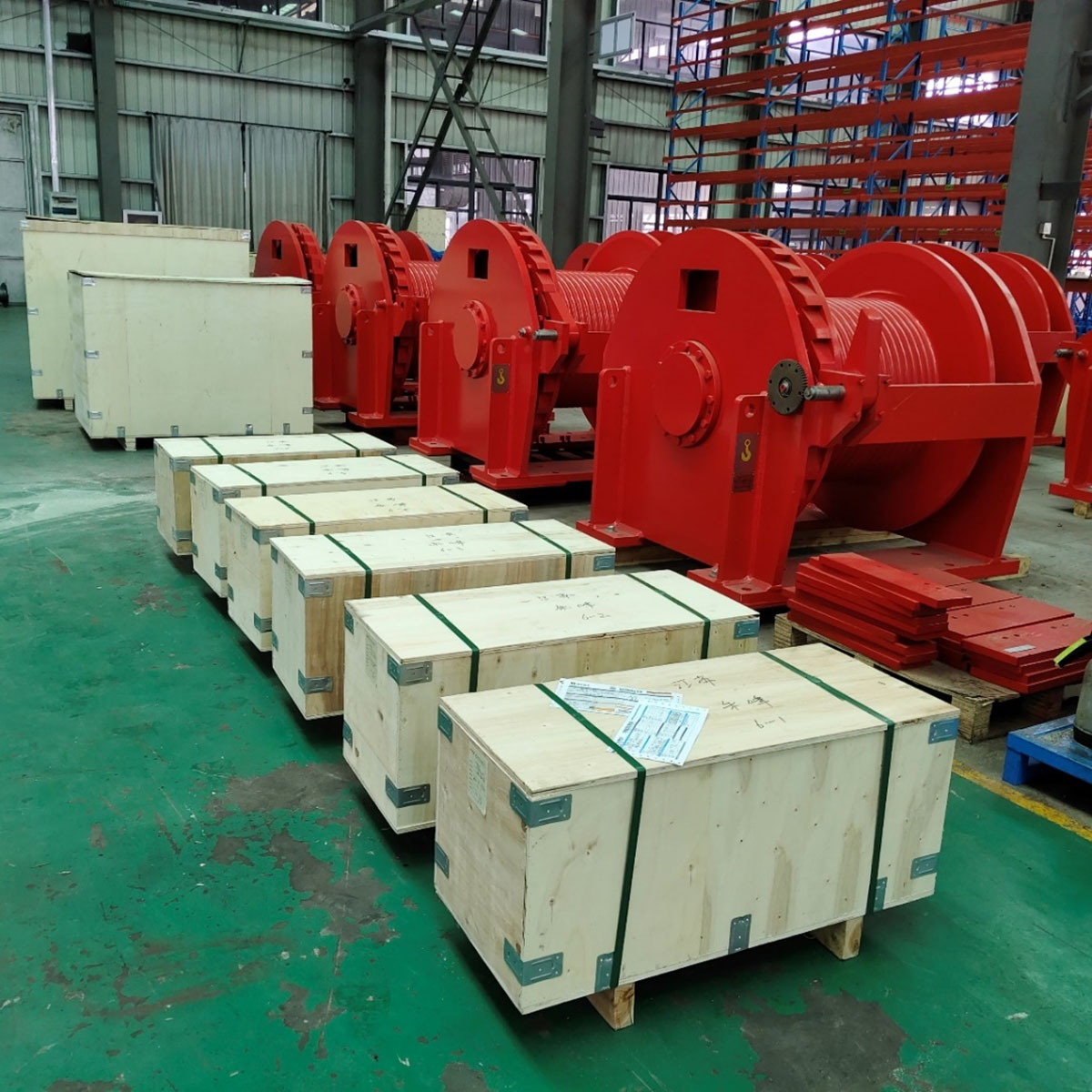
Because of its combination of torque, efficiency, and compact design, the planetary gearbox is found in a wide range of industries.[12]
In factory automation, a planetary gearbox is used to drive conveyor belts, indexing tables, packaging machines, and robotic arms. The low backlash and high stiffness of a servo‑grade planetary gearbox help maintain precise motion profiles and accurate positioning in these systems.[6][7]
Vehicle transmissions are classic examples where a planetary gearbox provides multiple gear ratios in a compact, coaxial layout. Automatic transmissions and hybrid drivetrains often use a planetary gearbox to split and recombine power from engine and motor, enabling smooth shifting and high efficiency.[14][12]
In tracked machines, drilling rigs, and lifting equipment, a planetary gearbox is integrated into track drives, wheel drives, hoists, and swing drives. A hydraulic motor frequently feeds into a planetary gearbox in these systems, providing high torque at low speeds for controlled movement under heavy loads.[2][7]
Wind turbines frequently use a planetary gearbox as part of their main drive to increase the speed from the slow‑moving rotor to the higher speed needed by the generator. The compactness and high torque capacity of the planetary gearbox make it well suited to nacelles where weight and space are limited.[12][7]
In aerospace and medical applications, where reliability and precision are critical, a planetary gearbox can be used in actuators, surgical robots, and specialized instruments. Here, the planetary gearbox delivers smooth, accurate motion in compact assemblies that must meet rigorous safety and performance standards.[6][2]
When designers compare a planetary gearbox with more conventional parallel‑shaft or worm gearboxes, several differences stand out.[9]
The planetary gearbox typically offers higher torque density because multiple planets share the load, whereas standard spur or helical gearboxes rely on fewer gear pairs. This means a planetary gearbox can often meet torque requirements with a smaller, lighter housing, which is critical in mobile and space‑constrained applications.[10][2]
Efficiency is another strong point for the planetary gearbox, especially in single‑stage arrangements. Traditional worm gearboxes, for example, can suffer from higher sliding losses and lower efficiency at high ratios, while a planetary gearbox maintains high efficiency and lower heat generation in comparable conditions.[15][10]
From a precision standpoint, a servo‑grade planetary gearbox is typically designed with tight tolerances and optimized tooth profiles to minimize backlash. Many general‑purpose gearboxes are not built to the same level of torsional stiffness and positioning accuracy, making the planetary gearbox a better choice for high‑performance motion control.[11][9]
On the other hand, planetary gearbox designs are more complex and can be more expensive than simple spur or helical units, especially in larger sizes or specialized configurations. For basic low‑load, low‑precision tasks, a traditional gearbox may still be the most economical option even though it lacks some advantages of a planetary gearbox.[16][10]
Choosing the right planetary gearbox for a specific application involves more than just selecting a ratio. Engineers must consider mechanical, thermal, and operational characteristics to ensure the planetary gearbox will perform reliably over its full service life.[13][2]
The first step is to determine the required output torque and speed, along with any peak or shock loads the planetary gearbox must withstand. From these values, designers look at rated torque, overload capacity, and service factors provided by planetary gearbox manufacturers.[13][5]
Backlash and torsional stiffness are crucial in positioning systems and synchronized drives. When the planetary gearbox is used with servo or stepper motors, the stiffness and backlash must align with the system's accuracy and responsiveness targets.[9][11]
A planetary gearbox must match the motor's speed, shaft dimensions, and mounting interface. Many manufacturers offer planetary gearbox models tailored to common motor flange standards, simplifying installation and alignment.[7][6]
Input speed limits, lubrication requirements, and noise constraints also need attention when matching a planetary gearbox to a motor. For high‑speed inputs, a planetary gearbox may need special bearings, cooling considerations, or specific lubrication systems.[11][13]
The environment influences the housing protection, sealing, and materials of the planetary gearbox. Dust, moisture, chemicals, and temperature extremes all affect the selection of seals, paint, and internal lubrication strategies for the planetary gearbox.[2][7]
Duty cycle, including starts, stops, reversals, and continuous running, affects thermal loading and fatigue life. For heavy cyclic duties, the planetary gearbox may require derating or a larger size to ensure adequate thermal and mechanical margins.[13][6]
Although a planetary gearbox is robust, proper maintenance is essential to achieve long service life and consistent performance. Maintenance routines typically focus on lubrication, inspection, and monitoring operating conditions.[7][2]
Regular checks of oil level and condition are critical, since lubrication quality directly influences wear inside the planetary gearbox. Contaminated or degraded lubricant can accelerate damage to gear teeth and bearings, so timely oil changes and filtration are important.[6][13]
Periodic inspections look for signs of overheating, unusual vibration, or noise, which can indicate misalignment, overloading, or damage inside the planetary gearbox. By addressing such issues early, operators can prevent more serious failures and extend the service life of the planetary gearbox.[2][7]
In many modern systems, sensors monitor temperature, vibration, and operating hours, feeding data into predictive maintenance tools. This condition‑based approach lets maintenance teams plan service when the planetary gearbox actually needs attention, rather than relying solely on fixed intervals.[14][12]
In advanced machinery, the planetary gearbox rarely operates in isolation; instead, it is part of a complete drive solution that can include motors, hydraulic systems, electronic controls, and structural components. The way the planetary gearbox integrates with these systems has a strong impact on overall performance and efficiency.[7][2]
For electric drives, a planetary gearbox is often mounted directly to the motor, creating a compact motor‑gearbox assembly that simplifies installation and reduces alignment challenges. In hydraulic systems, the planetary gearbox may be combined with a hydraulic motor for high‑torque, low‑speed applications like winches, track drives, and swing drives.[12][6]
Mechanical interfaces such as splined shafts, shrink discs, flanges, and torque arms help transfer forces from the planetary gearbox to the driven machine. Careful design of these interfaces ensures that torque is transmitted effectively and that the planetary gearbox is properly supported under peak loads and dynamic conditions.[13][7]
A planetary gearbox is a sophisticated yet compact gear system that uses a sun gear, planet gears, ring gear, and carrier to deliver high torque, efficient speed reduction, and precise motion in a small envelope. By distributing loads across multiple gears and maintaining a coaxial layout, the planetary gearbox achieves high torque density, excellent efficiency, and strong stiffness that outperform many traditional gearbox types in demanding applications.[1][2]
From industrial automation and robotics to mobile equipment, wind turbines, and aerospace actuators, the planetary gearbox has become a core technology wherever space is limited and reliability is critical. When properly selected, integrated, and maintained, a planetary gearbox can provide long‑lasting, high‑performance service that supports the productivity and safety of modern machinery.[12][7]
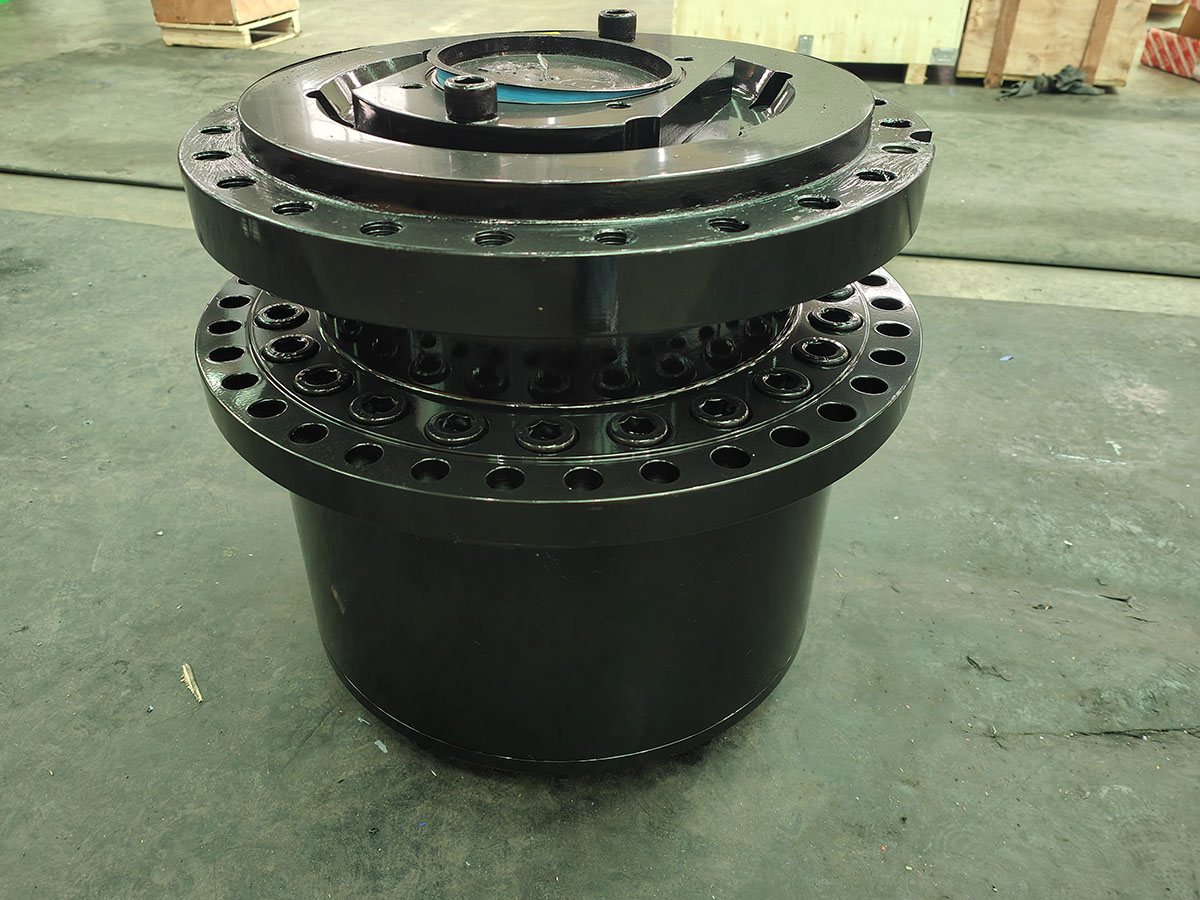
A planetary gearbox is a gear system where several small planet gears rotate around a central sun gear inside a larger ring gear to reduce speed and increase torque. Because many gears share the load, a planetary gearbox can transmit high torque while remaining compact and efficient.[3][2]
A planetary gearbox is efficient because its gears mostly operate in rolling contact, with multiple mesh points sharing the load and limiting sliding losses. Well‑designed single‑stage planetary gearbox units often achieve efficiency levels above 95% under normal operating conditions.[10][9]
A planetary gearbox is commonly used in robotics, industrial automation, vehicle transmissions, construction machinery, and wind turbines. Whenever engineers need high torque, compact size, and precise control, a planetary gearbox is usually one of the leading options.[12][7]
To choose a planetary gearbox ratio, you start from the desired output speed and torque and compare them with the motor's speed and torque. Select a planetary gearbox ratio that meets these needs while staying within the gearbox's rated torque, service factor, and backlash limits.[5][13]
A planetary gearbox does not usually require excessive maintenance if it is properly sized and lubricated, but regular checks are important. Routine inspection of lubricant condition, temperature, vibration, and noise helps ensure the planetary gearbox maintains reliable operation over many years.[2][7]
[1](https://www.machinedesign.com/mechanical-motion-systems/article/21834331/planetary-gears-the-basics)
[2](https://hansongearworks.com/the-applications-of-planetary-gearboxes-from-everyday-machines-to-space-exploration/)
[3](https://gearmotions.com/fundamentals-planetary-gear-systems/)
[4](https://khkgears.net/new/gear_knowledge/gear_technical_reference/gear_systems.html)
[5](https://teknic.com/what-is-a-planetary-gearbox/)
[6](https://assunmotor.com/blog/planetary-gearbox/)
[7](https://www.zddriver.com/news/industry-news/planetary-gearboxes-an-indepth-guide-to-types-applications-and-benefits.html)
[8](https://www.metmo.co.uk/blogs/news/planetary-gears-explained-a-design-written-in-the-stars)
[9](https://www.zddriver.com/news/industry-news/planetary-gears-vs-traditional-gearboxes-a-deep-dive-into-efficiency.html)
[10](https://hansongearworks.com/planetary-vs-standard-gearboxes-choosing-the-right-fit-for-your-operation/)
[11](https://www.sesamemotor.com/blog_detail/en/planetary-gearboxes-advantages)
[12](https://www.iqsdirectory.com/articles/gear/planetary-gears.html)
[13](https://www.powerelectric.com/motor-blog/planetary-gear-reducer-basics)
[14](https://kavitsu.com/in-what-applications-are-planetary-gearboxes-commonly-used-and-why.php)
[15](https://www.sgrgear.com/news/industry-news/planetary-gearbox-vs-traditional-gearbox-industrial-reliability.html)
[16](https://www.guomaolide.com/2025/07/04/how-does-a-small-planetary-gearbox-compare-to-other-gearbox-types/)


