
Kemer designs and manufactures hydraulic winches for construction machinery, crawler equipment, drilling rigs, lifting systems, marine equipment, and special-purpose vehicles. Our OEM solutions are engineered around load capacity, line speed, duty cycle, mounting requirements, and the hydraulic system of the host machine.
With experience in hydraulic motors, planetary gearboxes, winch drives, travel drives, swing drives, and crawler undercarriages, Kemer provides integrated hydraulic winch systems for equipment manufacturers, distributors, and machinery brands.
Rather than supplying standard catalog products only, we develop hydraulic winches according to the mechanical and hydraulic requirements of each application. This approach helps match torque, speed, braking performance, mounting dimensions, and operating conditions to the host machine.
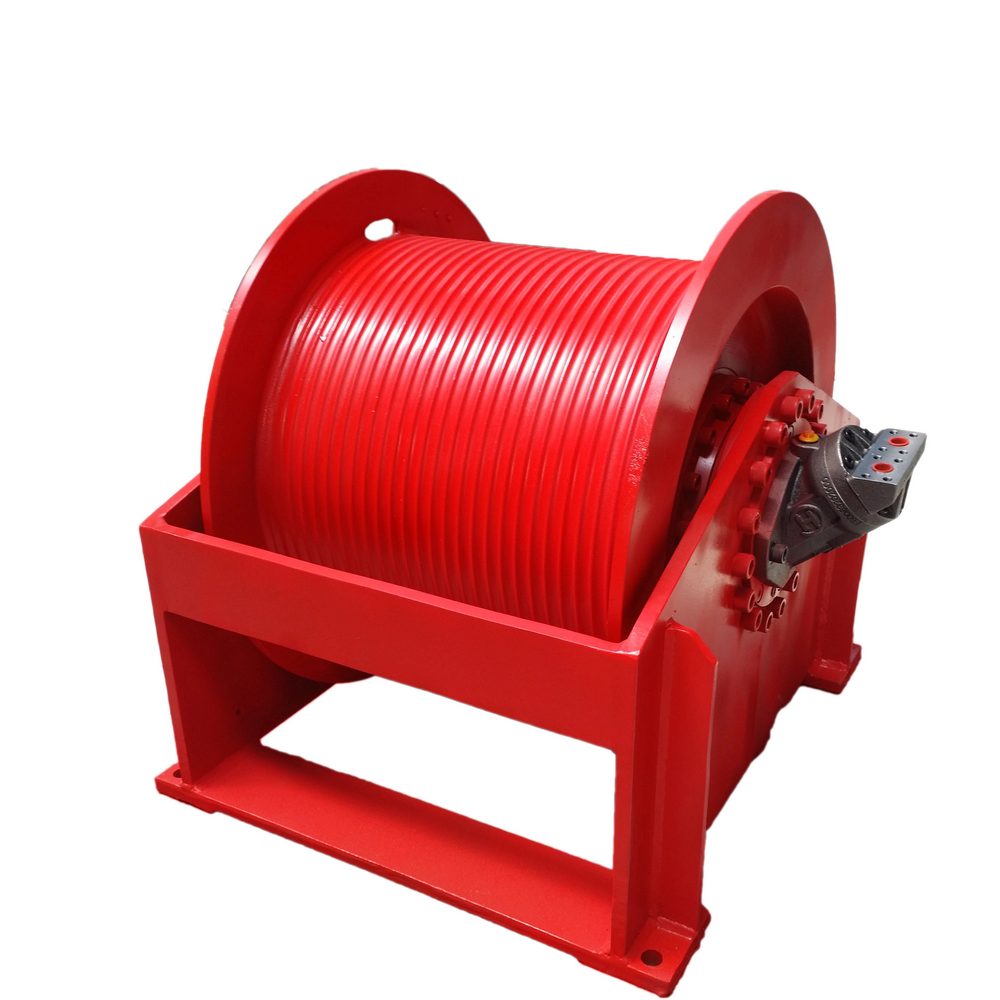
A hydraulic winch uses hydraulic power to generate mechanical torque for lifting, pulling, positioning, or recovering heavy loads. The hydraulic motor, planetary gearbox, drum, brake, and control system work together to determine the winch's overall performance.
Hydraulic winches are commonly selected for applications that require:
High starting and pulling torque
Controlled line speed and load movement
Frequent or continuous operating cycles
Integration with an existing hydraulic power system
Reliable operation in demanding outdoor environments
These characteristics make hydraulic winches suitable for crawler cranes, drilling equipment, mining machinery, forestry equipment, marine handling systems, recovery vehicles, and other heavy-duty machinery.
Hydraulic winch performance depends on the complete power transmission system rather than the drum alone. Kemer engineers each major component according to the required load, speed, duty cycle, and installation conditions.
The hydraulic motor converts hydraulic flow and pressure into rotational torque. Motor displacement and operating pressure directly influence winch speed, torque, and controllability.
High-efficiency hydraulic motor options
Low-speed, high-torque configurations
Displacement matched to application requirements
Stable operation under varying hydraulic conditions
The planetary gearbox provides the reduction ratio required to convert motor speed into the torque needed at the winch drum. Planetary gear architecture allows high reduction ratios in a compact package while distributing load across multiple gears.
High torque transmission capacity
Compact reduction design
Load distribution across planetary gears
Configuration for different winch torque requirements
Drum dimensions and groove geometry affect cable winding, rope capacity, line speed, and load distribution. Kemer can configure drum dimensions and structural components according to the installation space and operating requirements of the host machine.
Application-specific drum dimensions
Optimized cable groove geometry
High-strength structural materials
Precision machining for consistent cable winding
Braking performance is a critical part of a hydraulic winch system, particularly for lifting and load-positioning applications.
Hydraulic load-holding brake systems
Controlled load lowering
Brake performance verification during testing
Configuration according to application and safety requirements
OEM hydraulic winches often require more than selecting a standard model. Kemer can adapt the winch system to the mechanical, hydraulic, and operating requirements of the equipment.
Typical customization requirements include:
Rated load and maximum pulling force
Line speed and operating speed
Hydraulic motor displacement
Hydraulic pressure and flow requirements
Planetary gearbox reduction ratio
Drum diameter, width, and rope capacity
Mounting dimensions and bolt patterns
Brake configuration
Hydraulic port position and hose routing
This application-oriented approach allows the hydraulic winch to be integrated into the machine's existing hydraulic circuit and mechanical structure.
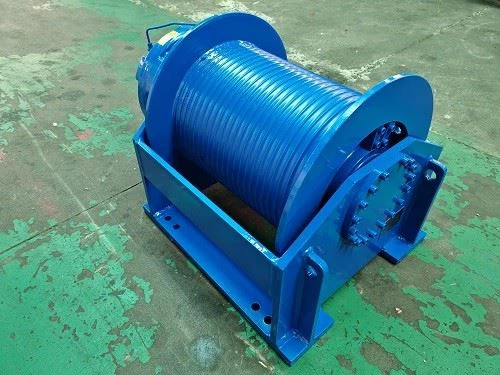
Kemer's hydraulic winch engineering is supported by experience across multiple power transmission components, including:
Hydraulic motors
Planetary gearboxes
Winch drives
Travel drives
Swing drives
Crawler track undercarriages
This integrated engineering capability helps us coordinate the hydraulic motor, gearbox, brake, drum, and mounting interface as one system rather than treating the winch as an isolated component.
Kemer follows a structured engineering and manufacturing process for OEM hydraulic winch projects.
Load and torque calculation
Duty cycle evaluation
Hydraulic system analysis
Structural design and engineering review
Mounting and interface verification
CNC machining of gears and housings
Controlled heat treatment processes
Precision component inspection
Controlled assembly procedures
Hydraulic winch assemblies can be evaluated through application-specific testing procedures, including:
Load testing
Hydraulic pressure testing
Brake performance testing
Continuous operation testing
Functional and dimensional inspection
Testing helps verify the mechanical, hydraulic, and braking performance of the completed winch before delivery.
Kemer hydraulic winches are designed for a wide range of heavy-duty equipment applications, including:
Crawler cranes and piling equipment
Drilling rigs and directional drilling equipment
Mining and material-handling machinery
Forestry and logging equipment
Marine and offshore handling systems
Recovery vehicles and special-purpose trucks
Each application requires different combinations of pulling force, line speed, duty cycle, braking capacity, and installation dimensions. Kemer evaluates these parameters before selecting or designing the appropriate winch configuration.
The appropriate winch technology depends on the machine architecture, available power source, operating cycle, environmental conditions, and required torque. The following comparison provides a general OEM engineering reference.
| Engineering Factor | Hydraulic Winch | Electric Winch |
|---|---|---|
| Power Source | Hydraulic circuit | Electrical system |
| Torque Characteristics | High torque at low speed | Depends on motor and control system |
| Duty Cycle | Suitable for demanding operating cycles | Depends on motor and thermal management |
| Integration | Integrates with hydraulic machinery | Integrates with electrical systems |
| Typical Applications | Heavy-duty mobile and industrial machinery | Vehicles, utility equipment, and electrically powered systems |
For OEM projects, the final selection should be based on the machine's power architecture, required load, operating cycle, control requirements, and installation conditions.

When evaluating a hydraulic winch manufacturer or OEM supplier, buyers should consider more than product specifications.
Engineering and application support
Hydraulic motor and gearbox expertise
Customization capability
Manufacturing and inspection capability
Load and functional testing
OEM production capacity and supply consistency
Technical support throughout the project
Kemer supports OEM customers from application analysis and engineering design through manufacturing, testing, and delivery.
Kemer combines hydraulic, mechanical, and planetary transmission engineering to develop hydraulic winches for heavy-duty machinery.
OEM-oriented engineering and customization
Hydraulic motor and planetary gearbox expertise
Integrated winch drive and power transmission capability
Application-specific load and speed configuration
Manufacturing, inspection, and testing processes
Support for long-term OEM supply programs
If you are developing construction, drilling, mining, marine, forestry, recovery, or other heavy-duty equipment, Kemer can help evaluate the hydraulic winch requirements for your application.
Contact Kemer's engineering team to discuss your required load, line speed, hydraulic pressure and flow, mounting dimensions, duty cycle, and customization requirements.
Yes. Kemer can configure hydraulic winches according to load, line speed, duty cycle, hydraulic requirements, mounting dimensions, drum specifications, and other application parameters.
Hydraulic winches are commonly used in construction machinery, crawler cranes, drilling rigs, mining equipment, forestry machinery, marine systems, recovery vehicles, and other heavy-duty applications.
Yes. Planetary gearboxes and winch drives are part of Kemer's power transmission product range and can be engineered to match hydraulic winch requirements.
Testing can include load testing, hydraulic pressure testing, brake performance verification, continuous operation testing, and functional inspection according to the requirements of the application.
Yes. Kemer provides engineering, manufacturing, testing, and technical support for OEM projects requiring repeat production and consistent product specifications.
Kemer provides engineered hydraulic winch solutions for heavy-duty machinery and OEM applications. By combining hydraulic motors, planetary gearboxes, winch drives, mechanical design, manufacturing, and testing capabilities, Kemer can develop hydraulic winches around the requirements of the complete machine.


