
Views: 222 Author: Amanda Publish Time: 2026-01-01 Origin: Site


Content Menu
● Core Components Inside a Final Drive
>> Output Shaft, Sprocket, and Housing
>> Bearings, Seals, and Lubrication
● How Final Drives Convert Power Into Torque and Traction
>> Torque vs Speed in Tracked Equipment
>> Hydraulic Flow, Pressure, and Control
● Matching Final Drives to Tracks and Applications
>> Rubber Tracks vs Steel Tracks
>> Operating Environment and Duty Cycle
● Expert Maintenance Practices to Extend Final Drive Life
>> Daily and Weekly Inspection Checklist
>> Oil Management and Scheduled Service
>> How Track Maintenance Protects Final Drives
● Choosing the Right Final Drive: Key Selection Factors
>> Selection Criteria Overview
● Real-World Scenario: Preventing a Costly Final Drive Failure
● Actionable Steps for Operators and Fleet Managers
>> 7-Step Final Drive Care Routine
● When to Upgrade or Replace a Final Drive
● Protect and Optimise Your Final Drives
● Frequently Asked Questions (FAQ)
>> 1. What does a final drive do on an excavator?
>> 2. How often should final drive oil be changed?
>> 3. What are the most common signs of final drive failure?
>> 4. Why is track tension important for final drive life?
>> 5. How do rubber and steel tracks affect final drive design?
A final drive is the last and most important link in a machine's powertrain, transforming hydraulic power into the torque and traction that keep tracked equipment moving safely and efficiently across demanding job sites. When optimised and maintained correctly, it protects the investment in rubber tracks, undercarriage, and hydraulic systems while minimising downtime and operating costs.[1][2]

A final drive is a compact power transmission assembly that delivers reduced-speed, high-torque output from the hydraulic motor to the sprocket and tracks of excavators, dozers, skid steers, and other tracked machines. It forms the last stage of the drivetrain, multiplying torque through gear reduction so the machine can push, dig, climb, and manoeuvre under heavy load without stalling.[2][3][1]
Typical applications include:
- Excavators with rubber or steel tracks working in construction, mining, and demolition.[1][2]
- Skid steers, compact track loaders, and posi-track machines operating on soft or uneven ground.[4][5]
- Crawler dozers and specialist tracked carriers that need continuous high-torque output.[6][7]
Because final drives sit close to the ground and connect directly to the tracks, they experience shock loads, vibration, and contamination that demand robust engineering and proactive care.[8][1]
Understanding the internal components of a final drive helps technicians diagnose issues, plan maintenance, and choose suitable replacement units. Each sub-system plays a distinct role in converting hydraulic energy into controlled track motion.[2][1]
The hydraulic motor converts pressurised hydraulic fluid from the main pump into rotational mechanical power at the final drive input. Motor design determines available speed range, direction control, and response under varying loads.[9][10][11][2]
Key hydraulic motor characteristics:
- Displacement: Defines how much fluid is required per revolution and influences torque output at a given pressure.[10][11]
- Pressure rating: Sets safe working limits and protects internal components from overload.[11][10]
- Control options: Fixed or variable displacement, two-speed travel, and integrated brakes for safer operation.[12][2]
Correct matching of motor characteristics to machine weight, undercarriage design, and duty cycle is critical for long-term reliability.[11][12]
The planetary gear system is the heart of the final drive's torque multiplication capability. By arranging sun, planet, and ring gears in a compact layout, it achieves high torque density within a relatively small housing.[3][10][1]
Typical planetary elements:
- Sun gear: Central drive gear connected to the hydraulic motor shaft.[3][1]
- Planet gears: Multiple gears orbiting the sun gear, sharing the load evenly to increase torque capacity and durability.[1][3]
- Ring gear: Internal gear that meshes with planet gears and helps define the overall reduction ratio.[3][1]
In many heavy-duty final drives, two or more planetary stages are combined to deliver higher gear reduction, converting high-speed, low-torque input into slow, powerful output at the sprocket. Multiple stages allow compact designs while still handling substantial loads in harsh environments.[10][3]
The output shaft transfers torque from the planetary carrier or ring gear to the drive sprocket that engages rubber or steel tracks. The sprocket tooth profile is engineered to mesh cleanly with track links or lugs, reducing slippage and uneven wear.[13][9][2][1]
Key design considerations include:
- Spline and key connections: Secure the sprocket under cyclic loads and prevent fretting or backlash.[2][1]
- High-strength housing: Protects gears and bearings from impact, misalignment, and external contamination.[8][1]
- Integrated brakes: Often mounted in or near the final drive to hold machine position on slopes or during lifting.[12][2]
Robust housing design is especially important in abrasive conditions where rocks, rebar, or debris frequently strike the outer cover.[4][13]
Bearings minimise friction and support radial and axial loads, while seals keep oil in and contaminants out. Final drives combine tapered roller bearings, ball bearings, and labyrinth seal arrangements to handle heavy loads and constant vibration.[8][1][3]
Critical points for reliability:
- High-quality seals: Multi-lip designs resist mud, water, and fine dust typical on construction sites.[4][8]
- Clean lubrication: Contaminated gear oil accelerates wear on gears and bearings, leading to premature failure.[9][4]
- Correct oil viscosity: Ensures film strength at high temperature while still flowing adequately in cold starts.[11][4]
Regular inspection of seals and oil condition is one of the most effective ways to extend final drive service life.[4][8]
Final drives balance torque and travel speed so tracked machines can move confidently while delivering strong digging, pushing, and lifting performance. The core principle is gear reduction: lower output speed in exchange for higher torque at the sprocket.[10][1][3]
For excavators, dozers, and track loaders, torque is usually more critical than top travel speed. Insufficient torque under load can lead to track stalling, overheating, and premature damage to both the final drive and undercarriage.[9][12][2][8]
Key implications:
- Higher gear reduction: Increases torque at the sprocket, ideal for digging in dense soils, climbing slopes, or pushing heavy loads.[3][10]
- Lower gear reduction: Provides faster travel speeds for long movements between work areas but reduces breakout and pushing force.[6][11]
- Two-speed travel motors: Allow operators to switch between high-torque work mode and faster travel mode on demand.[12][2]
The correct balance depends on machine size, attachment type, and primary operating environment.[6][12]
Hydraulic system settings directly influence final drive behaviour. Flow primarily affects rotational speed, while pressure determines available torque at a given motor displacement.[2][9][10][11]
Important relationships include:
- Increased flow leads to higher travel speed when traction and pressure limits are not exceeded.[10][11]
- Increased pressure enhances torque but also raises load on gears, bearings, and seals.[11][10]
- Incorrect calibration can cause overheating, sluggish response, noise, and leaks, which shorten component life.[8][9]
Optimised hydraulic settings should be validated under real working loads rather than only in no-load tests.[9][12]

Matching final drives to the undercarriage and application is central to reliable machine performance. Proper selection improves efficiency, operator confidence, and overall cost of ownership.[6][12]
Different track systems place distinct demands on the final drive. Rubber tracks emphasise vibration damping and surface protection, while steel tracks focus on durability and traction in extreme conditions.[5][13][4]
Key differences:
- Rubber tracks: Require smooth torque delivery, reduced shock loading, and careful control of track tension to minimise de-tracking and premature wear.[5][4]
- Steel tracks: Impose higher peak loads and impact, favouring final drives with reinforced housings, heavy-duty planetary stages, and higher torque capacity.[13][6]
- Posi-track systems: Distribute ground pressure across more contact points and demand accurate load sharing between final drives to maintain stability.[4][9]
Aligning sprocket design and gear reduction with the chosen track system helps to avoid accelerated wear and noise.[13][1]
Harsh environments amplify any weakness in final drive selection or maintenance. Mud, sand, rock, demolition debris, and corrosive materials each present unique challenges.[8][4]
When specifying or replacing a final drive, it is important to consider:
- Terrain: Abrasive sand and gravel accelerate seal wear and undercarriage erosion, requiring high-grade sealing systems and frequent cleaning.[13][4]
- Duty cycle: Continuous trenching or mining supports higher-capacity drives with improved heat dissipation and oil volume.[12][11]
- Ambient temperature: Extreme heat or cold affects oil viscosity, seal performance, and bearing preload.[11][4]
Selecting final drives rated for real-world operating conditions reduces unplanned downtime and warranty disputes.[9][12]
Proactive maintenance is one of the most cost-effective ways to protect final drives and undercarriage assemblies. A structured inspection and service routine can prevent minor issues developing into serious failures.[4][8][9]
Short, consistent inspections deliver significant reliability benefits. Operators and technicians can integrate simple checks into start-up and shutdown routines.[5][9][4]
Recommended routine checks:
1. Visual leak inspection
- Look for gear oil or hydraulic fluid around final drive housings, sprockets, and hoses.[8][4]
- Address wet areas promptly to avoid internal damage from low lubrication.[9][8]
2. Track and sprocket condition
- Inspect rubber tracks for cuts, exposed cables, missing lugs, and uneven wear.[14][5]
- Check sprocket teeth for hooking, chipping, or excessive thinning that can damage the drive.[13][9]
3. Cleanliness and debris build-up
- Remove packed mud, stones, and construction debris from around the drives and undercarriage.[13][4]
- Clean components run cooler, make leaks easier to spot, and reduce contamination risk.[15][4]
4. Noise and temperature
- Listen for grinding, knocking, or high-pitched whining that may indicate bearing or gear damage.[4][8]
- Monitor for unusual heat on the drive housing compared with the opposite side under similar loads.[8][9]
Oil condition is a strong indicator of internal health. Proper oil selection and change intervals help maintain a protective lubricating film on gears and bearings.[11][4][8]
Best practices include:
- Regular oil level checks: Verify levels after long workdays or heavy hauling, topping up with approved oils only.[4][8]
- Scheduled oil sampling: Inspect for metal particles, water, or sludge that may indicate wear, seal failure, or overheating.[9][8]
- Interval-based changes: Follow recommended intervals, shortening them in abrasive or high-temperature conditions.[11][4]
Combining oil analysis with visual and acoustic checks gives maintenance teams a more complete picture of drive condition.[8][4]
Neglecting track systems often leads directly to final drive failures. Poor track care overloads bearings, gears, and seals, even when the drive itself is well designed.[15][9]
Key protective habits:
- Correct track tension: Tracks that are too tight increase bearing loads, while loose tracks can de-track and shock-load the drives.[9][4]
- Frequent cleaning: Removing packed mud, snow, and debris stops abrasive material grinding against sprockets and seals.[15][13]
- Timely replacement: Retiring worn tracks, rollers, and idlers prevents them from damaging the final drive through misalignment or slippage.[13][9]
Integrating undercarriage inspections into final drive maintenance maximises the life of the entire travel system.[4][9]
Selecting an optimised final drive is a strategic decision that affects performance, fuel efficiency, and long-term maintenance cost. A structured approach helps ensure compatibility and reliability across the fleet.[6][12][11]
The following table summarises critical selection parameters and their impact.
Selection factor | Why it matters | Practical impact on performance |
Machine make/model | Ensures correct fitment, interface, and load rating. | Reduces installation time and avoids misalignment issues. |
Gear ratio | Defines balance between torque and travel speed. | Higher ratios improve digging power; lower ratios increase travel speed. |
Track type | Rubber vs steel tracks impose different load patterns. | Influences sprocket design, shock absorption, and seal robustness. |
Operating environment | Dirt, sand, rock, and temperature drive specification requirements. | Determines sealing system, housing strength, and oil choice. |
Duty cycle | Light, medium, or heavy continuous use. | Affects thermal design and expected service intervals. |
Placing a labelled cross-section diagram of a final drive beside this table can further clarify how each selection factor connects to specific components. A simple chart showing gear ratio versus travel speed and torque would also help visualise trade-offs.[7][10]
Case-style explanations help connect technical principles with field realities. Consider a tracked excavator working on mixed clay and rock with rubber tracks and frequent short travel cycles.[5][8][9][4]
Typical issues in such conditions include:
- Undercarriage packed with material, which traps heat around the final drives and accelerates seal wear.[13][4]
- Repeated short-distance travel with abrupt direction changes, which increases shock loads on gears and bearings.[15][9]
By implementing daily cleaning, weekly track tension checks, and quarterly oil analysis, maintenance teams can catch early signs of contamination or bearing fatigue before major damage occurs. Combining these practices with an appropriately specified, high-reduction final drive reduces the risk of unexpected downtime.[12][8][9][4]
Translating technical knowledge into clear, repeatable actions improves compliance and outcomes. The checklist below can be built into digital work orders, training materials, and pre-start procedures.[8][9][4]
1. Inspect for leaks at start-up and record any oil or fluid traces near the drives.
2. Clean around the drives and undercarriage after working in mud, sand, or snow.
3. Check track tension weekly and adjust to recommendations.
4. Listen for abnormal noises under load and compare left and right drives.
5. Measure drive housing temperature during heavy use to spot overheating trends.
6. Sample and inspect gear oil at defined intervals or when contamination is suspected.
7. Replace worn sprockets, tracks, rollers, and idlers promptly to protect the drives.[9][4]
Embedding this routine into standard operating procedures helps protect both final drives and the broader undercarriage system.[4][8]
Recognising the right time to repair, rebuild, or replace a final drive avoids catastrophic failures. Clear warning signs should trigger further diagnosis and planning.[12][8][9]
Common indicators include:
- Persistent noise such as grinding or whining that continues after basic adjustments or oil changes.[8][9]
- Excessive metal in oil, visible as particles or sludge during sampling or drain inspections.[4][8]
- Repeated overheating, where drives run hotter than normal under moderate loads.[12][8]
- Accelerated seal failures and frequent leaks despite correct track tension and cleaning.[13][4]
For heavily utilised fleets, cooperation with a specialist supplier that supports application engineering, product selection, and post-sale technical assistance is highly beneficial.[6][12]
To secure long-term reliability and performance, it is essential to pair high-quality final drives with expert engineering support, tailored gear ratios, and proven planetary gearboxes, hydraulic motors, winch drives, travel drives, swing drives, and tracked undercarriage solutions. For upcoming OEM projects, fleet upgrades, or replacement planning, prepare a clear brief describing machine types, working environments, and duty cycles, then partner with a specialist manufacturer capable of delivering customised, globally deployable drive solutions that reduce downtime and operating cost.[10][11][12]
By aligning component specification, preventive maintenance, and technical support, fleets can achieve robust torque, smooth travel, and dependable operation across construction, mining, and industrial applications worldwide.[6][12]
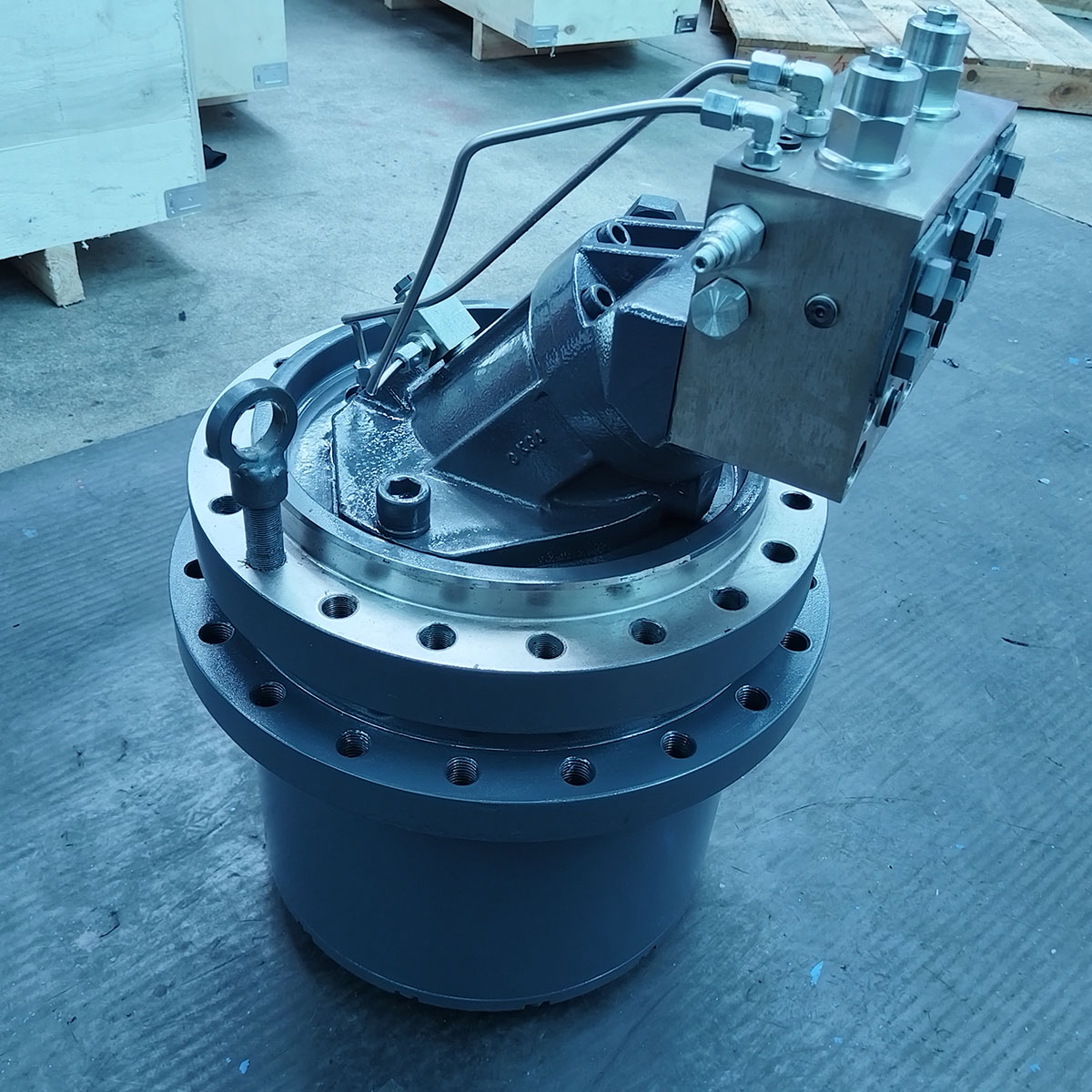
A final drive takes rotational power from the hydraulic motor and uses gear reduction to deliver low-speed, high-torque output to the sprocket and tracks. This enables the machine to dig, push, and travel over challenging terrain without stalling.[1][2][3][10]
Oil change intervals depend on the machine, application, and environment, but many heavy-duty operations benefit from shorter intervals in abrasive or high-temperature conditions. Manufacturer recommendations provide a baseline that can be refined using oil analysis results.[11][8][4]
Typical warning signs include abnormal noise, elevated operating temperature, oil leaks around seals, and visible metal particles in drained oil. Operators may also notice reduced travel power or uneven performance between left and right drives.[12][9][8]
Tracks that are too tight increase bearing and gear loads, while loose tracks can de-track and shock-load the drives. Correct tension protects seals, minimises wear, and ensures efficient power transfer from the final drive to the tracks.[15][9][4]
Rubber tracks prioritise smooth torque delivery and vibration control, encouraging drives with refined control and robust seals. Steel tracks demand higher torque capacity and more heavily reinforced housings to withstand impact and abrasive wear.[5][6][13][4]
[1](https://www.hrparts.com/blog/post/what-is-final-drive-diagram)
[2](https://precisionfinaldrives.com/blogs/maintenance/excavator-final-drive)
[3](https://en.wikipedia.org/wiki/Epicyclic_gearing)
[4](https://www.itrpacific.com.au/blogs/news/2025/Jun/16/final-drive-maintenance-checklist-tips)
[5](https://www.conequip.com/wp/conequip-101-learning/prolong-the-life-of-your-mini-excavators-rubber-tracks-with-regular-maintenance-expert-tips-and-tric)
[6](https://www.itrpacific.com.au/blogs/news/2025/Aug/25/choosing-right-final-drive-excavator-dozer)
[7](https://www.youtube.com/watch?v=Cd3-Tlk39x8)
[8](https://www.itrpacific.com.au/blogs/news/2025/Jun/2/final-drive-failure-warning-signs-repair-guide)
[9](https://shop.finaldriveparts.com/shop-talk-blog/how-track-maintenance-impacts-your-mini-excavators-final-drive-motor/)
[10](https://www.zddriver.com/news/industry-news/understanding-planetary-gear-motors-a-comprehensive-guide.html)
[11](https://teknic.com/what-is-a-planetary-gearbox/)
[12](https://constructionequip.com/aftermarket-final-drives-for-excavators-guide/)
[13](https://astrak.com/14-top-tips-for-maximising-the-life-of-your-rubber-tracks-2/)
[14](https://www.mclarenindustries.com/us/en/news-and-resources/articles/26/rubber-track-maintenance-tips/)
[15](https://www.cat.com/en_US/blog/maintain-cat-rubber-tracks.html)


