
Language
Views: 222 Author: Amanda Publish Time: 2026-01-10 Origin: Site


Content Menu
● What Is Deep Hole Digging With Excavators
● Core Considerations For Deep Hole Excavator Work
● Essential Excavator Attachments For Deep Holes
>> Common Deep Digging Attachments
● Why Long Reach Excavators Are Ideal For Deep Holes
● Long Reach Excavator Reach And Depth Capabilities
>> Representative Long Reach Configuration Data
● Increasing Precision With RTK GPS Positioning
● Safety: Maintaining Safer Distances From Deep Holes
● Underwater Excavation And Dredging With Long Reach
● Step‑By‑Step Workflow For Deep Hole Excavator Projects
>> 1. Site Assessment And Planning
>> 2. Equipment Selection And Setup
>> 4. Quality Control And Verification
>> 5. Backfilling Or Stabilization
● Top Product Upgrades For Deep Hole Excavator Projects
● Where To Add Visual Charts And Diagrams
● Frequently Asked Questions (FAQ)
>> 1. How deep can a long reach excavator dig safely
>> 2. Why should RTK GPS be used for deep hole excavations
>> 3. What is the difference between long reach and super long reach excavators
>> 4. When is an amphibious undercarriage needed for deep digging
>> 5. How do specialized attachments improve productivity in deep holes
Excavator deep hole digging requires the right attachments, long reach technology, and precise positioning systems to stay safe and productive while hitting exact depth and location targets. With modern long reach kits, RTK GPS, and amphibious undercarriages, contractors can turn a standard excavator into a high‑precision deep digging and dredging platform for land and underwater projects.[1][2][3]

Deep hole digging includes any excavation where the depth is large relative to the opening, such as tank pits, shafts, cofferdams, or underwater dredging cuts. These applications demand greater reach, accurate depth control, and careful ground stability management compared with standard trenching work.[2][4][1]
Key challenges include:
- Limited access and space at the surface.[1]
- Higher risk of wall collapse or cave‑ins at depth.[5][1]
- Difficulty seeing the bucket or pump, especially below water.[6][1]
Successful deep hole work starts with a structured evaluation of the site, equipment, and safety requirements. Ignoring these factors can lead to low productivity, rework, or serious safety incidents on the job site.[5][1]
Main considerations:
- Soil and geology: cohesive clays vs loose sands vs rock dictate bucket type, slope angles, and support systems.[4][1]
- Groundwater and water depth: deeper water requires better visibility systems and corrosion‑resistant components.[3][1]
- Required depth and reach: determines whether a standard, long reach, or super long reach configuration is appropriate.[7][2]
- Space constraints: tight jobs may favor long reach arms to work from a safe offset rather than over the edge.[2][1]
For compliant projects, follow regional excavation safety standards, including utility locating, shoring or sloping requirements, and safe setback distances.[5]
Deep hole applications often need specialized attachments to break, cut, or pump material at depth efficiently. Choosing the right tool for the material directly impacts cycle times, fuel burn, and tool life.[8][1]
- Excavator auger: Spiral tool that drills vertical holes and carries spoil out as it rotates, ideal for posts, piers, and piles.[1]
- Hydraulic breaker: High‑energy piston that fractures rock and reinforced concrete so it can be removed by bucket or clamshell.[8][1]
- Hydraulic hammer: Heavy‑duty percussive tool for thick rock layers, hardpan, and demolition inside deep cuts.[1]
- Dredge pump attachment: For underwater or saturated material removal, moving slurry instead of relying on buckets alone.[3][6]
When planning a package, match attachment weight and hydraulic flow to the carrier to avoid overload and maintain stable operation at full reach.[7][2]
Long reach excavators extend the boom and stick to deliver significantly more reach than standard machines, often up to about 2× the practical digging depth of a conventional configuration. This lets the operator work from safer ground away from the edge while still hitting target depth.[9][2][1]
Key advantages include:
- Greater working radius for deep excavation, dredging, and slope work.[2][7]
- Fewer machine moves across the site, which lowers cycle time, fuel use, and undercarriage wear.[9][2]
- Ability to reach across water, obstacles, or weak ground instead of positioning directly over the hole.[4][2]
Typical applications include:
- Deep foundations and tank pits.
- Canal, river, and port dredging.
- Settling ponds, tailings dams, and mine reclamation.
- Slope trimming and embankment work.[3][2]
For buyers and project planners, understanding real reach and depth capabilities is essential for selecting the correct long reach configuration. Reach and depth are influenced by excavator weight class, boom and stick length, and attachment size.[2][3]
Model (Long Reach Kit) |
Base excavator weight |
Approx. reach length |
Typical applications |
LRA1140 |
11–14 ton |
40 ft (12 m) reach |
Small ponds, drainage ditches, light dredging. |
LRA1543 |
15–17 ton |
43 ft (13 m) reach |
Canal cleaning, deeper trenches, construction ponds. |
LRA1845 |
18–22 ton |
45 ft (≈13.7 m) reach |
Larger dredging projects, settling ponds, reclamation. |
Some manufacturers also offer super long reach options that increase reach by up to around 40% beyond standard long reach, with proportionally reduced digging force for lighter material. These systems are typically chosen for silt, sand, and soft soils where reach matters more than breakout force.[10][9][2]
Deep hole digging becomes much more efficient and safer when the operator knows exactly where the bucket or pump is in three dimensions, even underwater. RTK GPS and dedicated excavator positioning systems provide this visibility directly in the cab.[6][1]
Key benefits:
- Survey‑grade positioning accuracy, often around 1 inch for the attachment tip in real time.[6][1]
- Visualization of bucket or pump position on a display to avoid over‑digging or under‑digging.[6][1]
- Integration with dredging and cut design models to follow target depths and slopes precisely.[6][3]
Systems combining GPS, RTK corrections, and angle sensors on boom, stick, and attachment continuously calculate the exact position, including below the water surface.[1][6]
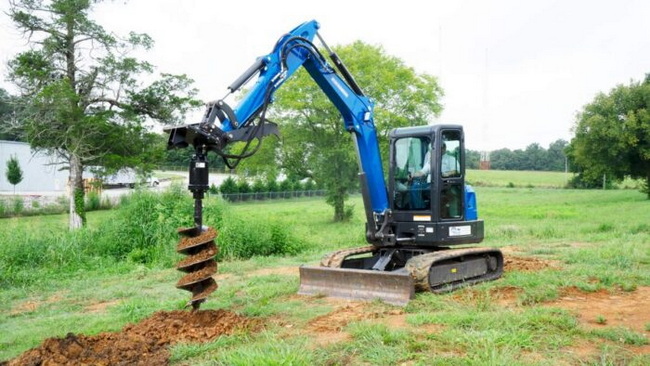
One of the main safety benefits of long reach excavators in deep hole work is the ability to keep the machine and operator further back from the edge. Staying away from unsupported ground reduces the risk of machine rollover or collapse into the excavation.[5][2][1]
Recommended practices:
- Maintain a setback distance based on soil type, depth, and regulatory guidance.[5]
- Avoid machine travel parallel to the edge at close distance, especially with the boom extended.[5]
- Monitor ground conditions for cracks, movement, or water seepage that signal instability.[5]
Using RTK GPS, the operator can dig to full depth and shape without repeatedly creeping closer to the hole to check progress.[1][6]
Deep hole digging often overlaps with underwater dredging work in rivers, ports, lagoons, and tailings ponds. When visibility is limited or zero, combining a long reach arm with a dredge pump and RTK GPS positioning provides precise underwater excavation.[6][1][3]
Typical underwater tasks:
- Removing silt and sediment from navigation channels and harbors.[7][3]
- Cleaning settling ponds, mining tailings, and wastewater lagoons.[3]
- Cutting underwater trenches for pipelines or cables.[7]
An amphibious undercarriage can be added so the excavator can operate in soft, marshy, or shallow water conditions where traditional crawlers would sink. This combination extends the operational range of the machine across land and water.[11][3]
A structured workflow helps operators and site managers maintain quality and safety on deep hole projects. The following high‑level sequence can be adapted to specific regulations and job conditions.[1][5]
- Survey utilities, soil types, and groundwater levels.[5]
- Define target depths, slopes, and allowable tolerances.[1]
- Identify access routes, spoil locations, and emergency egress paths.[5]
- Choose appropriate excavator size, long reach kit, and undercarriage configuration.[2][3]
- Select attachments such as buckets, augers, breakers, or dredge pumps for material types.[8][1]
- Install RTK GPS positioning system, mount sensors, and complete calibration.[6]
- Begin digging from a safe setback, using the in‑cab display to monitor depth and slope.[6][1]
- Control swing and loading patterns to keep spoil piles and equipment away from the edge.[1][5]
- Adjust boom and stick movements smoothly to avoid sudden load shifts at full reach.[4][2]
- Compare real‑time depth and slope against the digital design or survey model.[6]
- Mark completed sections and log as‑built data where required by the client or authority.[6]
- Schedule periodic independent checks using conventional survey instruments for critical structures.[5]
- When required, install shoring, liners, or stabilization materials before backfilling.[5]
- Use controlled lifts and compaction to avoid overstressing excavation walls and adjacent structures.[5]
- Restore surrounding surfaces, access routes, and water flow as specified in project documents.[5]
Choosing a well‑matched upgrade set can transform a conventional excavator into a high‑precision deep hole solution. The following table summarizes key upgrades and their roles.[12][1]
Upgrade |
Main function |
Key benefit in deep hole work |
Long reach excavator kit |
Extends boom and stick to increase reach and depth. |
Allows digging deeper from safer ground with fewer machine moves. |
RTK GPS positioning system |
Provides real-time attachment position with near-survey accuracy. |
Prevents over-digging and improves precision in land and underwater cuts. |
Amphibious undercarriage |
Enables operation on soft, swampy, or shallow water ground. |
Expands work area into wetlands, ponds, and marshes safely. |
Sectional barges |
Support excavators and pumps on water. |
Accesses mid-channel or offshore dredging locations. |
Specialized buckets and tools |
Match tool to material, from rock to silt and debris. |
Maximizes productivity and reduces wear at depth. |
Selecting integrated systems where these components are engineered to work together simplifies procurement, setup, and long‑term support.[13][12]
Targeted visual elements increase clarity, user engagement, and time on page.
Recommended placements:
- After the reach and depth capabilities section, add a chart comparing standard, long reach, and super long reach machines across weight classes and maximum depth.[2][3]
- In the RTK GPS section, insert a diagram showing boom, stick, and attachment sensors plus GPS antennas feeding a cab display.[1][6]
- In the underwater excavation section, use a side‑view schematic of an excavator on an amphibious undercarriage or barge working below the waterline.[11][3]
- Near the workflow section, present a flowchart summarizing the five main project phases from planning through backfilling.[1][5]
These visuals help engineers, estimators, and owners understand complex technical relationships at a glance.[14][2]
Deep hole and dredging projects place extreme demands on excavators, attachments, and positioning systems, so carefully engineered solutions deliver the best long‑term value. To translate the principles above into a practical package, prepare the key project details and partner with a specialist equipment provider.[12][1]
Concrete next steps:
- Define target depths, reach requirements, soil and water conditions, and regulatory constraints for upcoming projects.[1][5]
- List the current excavator models, weight classes, and hydraulic specifications in the fleet.[12][7]
- Request a tailored configuration that combines long reach kits, RTK GPS positioning, amphibious undercarriages, and application‑specific attachments to match those projects.
A focused request that includes these details enables a solutions team to propose a deep hole package optimized for safety, precision, and lifetime operating cost rather than a generic one‑size‑fits‑all setup.[12][3]
Safe digging depth depends on machine size, boom and stick length, soil type, and safety regulations, but long reach excavators can typically reach roughly twice the depth of comparable standard models. Always confirm limits with the manufacturer's charts and local safety codes.[2][1]
RTK GPS gives near‑survey‑grade accuracy for bucket or pump position, helping operators avoid over‑digging, minimize rework, and maintain consistent slopes and depths. It is particularly valuable when the work area is underwater or out of direct sight.[6][1]
Long reach machines extend reach and depth versus standard excavators, while super long reach configurations extend reach by up to about 40% further but with reduced digging force, making them best for lighter materials like silt or sand. Both options are used for deep excavation, dredging, and slope work in hard‑to‑access areas.[10][9][2]
An amphibious undercarriage is chosen when the excavator must work in swamps, wetlands, shallow water, or soft ground where conventional tracks cannot float or gain traction. It allows deep hole and dredging work in mixed land‑water environments with improved stability and mobility.[11][3]
Attachments such as augers, breakers, hammers, and dredge pumps are designed for specific material types, which increases penetration rates, reduces cycle time, and lowers wear on standard buckets. Matching tools to the job also improves fuel efficiency and reduces downtime.[8][1]
[1](https://hawkexcavator.com/specs-brochures/excavator-deep-hole-digging-applications/)
[2](https://hawkexcavator.com/long-reach-vs-super-long-reach-excavators/)
[3](https://hawkexcavator.com/long-reach-arm-excavator/dredging/)
[4](https://rocrents.com/blogs/understanding-the-reach-of-long-reach-excavators/)
[5](https://bestpractices.commongroundalliance.com/Portals/1/Best%20Practices%20Guide%20Version%2021%20PDF%20Download.pdf)
[6](https://eddypump.com/products/hawk-vision-rtk-gps-dredge-positioning-system-for-excavators/)
[7](https://www.cat.com/en_US/products/new/equipment/excavators/long-reach-excavation.html)
[8](https://www.ijert.org/how-specialized-excavator-attachments-improve-job-site-productivity)
[9](https://www.mechandlink.com/en/news-article/Long-boom-excavators-the-power-of-long-reach-in-construction)
[10](https://www.mechandlink.com/pl/news-article/Why-Long-Reach-Excavators-Are-Game-Changers-for-Deep-Excavation)
[11](https://www.daepumps.com/products/accessories/hawk-long-reach/)
[12](https://hawkexcavator.com)
[13](https://hawkexcavator.com/specs-brochures/)
[14](https://pluspumps.au/excavators-large-scale-construction/)


